
Senegal Birding Guide: Djoudj, the Langue de Barbarie, the Saloum Delta and the Gambia Link
Great White Pelicans nesting at Djoudj, gulls and terns off Saint-Louis, Scissor-tailed Kites at a Kaolack roost, White-crested Tiger Herons in the Saloum mangroves, and the delta lodges for birders.
On an island in the delta near Kaolack, as the evening cools, thousands of small grey and white kites drop out of the sky into the trees. Kousmar Island has hosted up to 28,000 wintering Lesser Kestrels and 36,000 Scissor-tailed Kites, according to BirdQuest’s report from its January and February 2026 tour, and the group watched the birds come in from tiny specks overhead to trees covered in kites, the branches more bird than leaf. It is one stop on a tour of what BirdQuest’s report calls the premier West African birding destination.
BirdQuest’s 2026 group recorded 345 species in just over 2 weeks, and the report notes that Senegal is less than 6 hours by air from Brussels or Paris, which is a short flight for a very long list. The classic route runs from the Senegal River delta in the north, down the coast to the Saloum Delta, and inland to the Gambia River. This guide covers the 3 wetlands at its heart: Djoudj, the Langue de Barbarie and the Saloum.
Djoudj: the pelican colony
Djoudj National Bird Sanctuary lies in the Senegal River delta in the far north. UNESCO, which lists it as a World Heritage Site, describes 16,000 ha of lake, streams, ponds and backwaters holding some 1.5 million birds of 365 species, more than 120 of them Palaearctic migrants. For many of those migrants it is the first stopover after crossing the Sahara, and after that crossing, a lake must look very good indeed. The nesting species UNESCO names are Great White Pelican, Purple Heron, African Spoonbill, Great Egret, Black-crowned Night Heron and Great Cormorant.
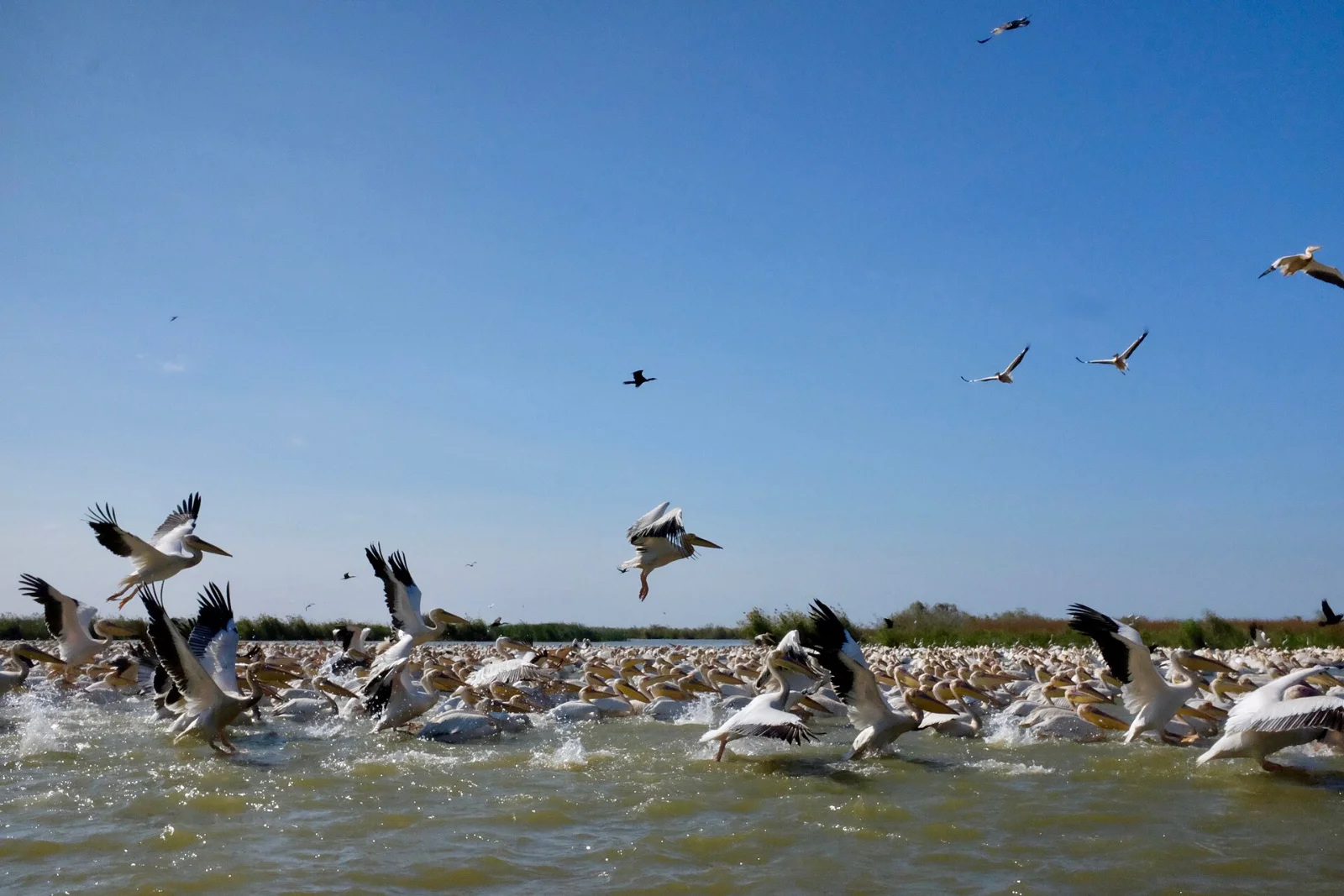
The pelicans are the spectacle, and a noisy, dusty one. BirdQuest’s group took a boat into the heart of the park to the breeding colony of Great White Pelicans in early February, when the young were well grown and exercising their wings in clouds of guano and dust, with flotillas of adults fishing in unison, like a synchronised swimming team with lunch built into the routine. Around the colony it found African Fish Eagles, African Darter, Reed and Great Cormorants, Whiskered and Caspian Terns and African Spoonbill beside the boat.
The water around the lake held vast numbers of White-faced Whistling Ducks with Fulvous Whistling Ducks, Greater and Lesser Flamingos, and rafts of wintering Garganey, Northern Shoveler and Northern Pintail, with at least 7 Marbled Ducks among them on Lake Khar, which takes some finding in a crowd that size. Family groups of Black Crowned Cranes flew over, and the wider area produced River Prinia, Allen’s Gallinule, Savile’s Bustard and Lesser Jacana.
Djoudj has had its troubles, most of them to do with water. UNESCO records that after the Diama dam was built downstream, the water balance changed, invasive aquatic plants spread and some colonies declined or disappeared, and the site was on the World Heritage in Danger list from 1984 to 1988 and again from 2000 to 2006.
Saint-Louis and the Langue de Barbarie
South of Djoudj, the old colonial town of Saint-Louis stands on a sandy spit beside the Atlantic. BirdQuest’s group birded its mudflats and lagoons for waders and scanned the gulls and terns. Slender-billed and Grey-headed Gulls were plentiful, the report says, because they breed in the nearby Langue de Barbarie National Park, and a Lesser Crested Tern flew past the beach. Kinkeliba Lodge, much further south, also names Audouin’s Gull, Slender-billed Gull and Caspian Tern for the coast, so gulls and terns are a theme the length of the country. Bring the patience that gull identification asks of everyone.
Kaolack and the kite roost
Inland on the way south, the Kousmar Island roost near Kaolack needs a boat, and then a pair of shoes you do not mind ruining. BirdQuest’s group drove over dry mudflats to the river channel, crossed in a wooden pirogue and walked through mud to the roosting trees, where 4 Northern White-faced Owls were roosting before the kites arrived, a fine warm-up act. The report’s advice is to arrive in good time and stay until the light fades, because the full show only develops as the temperature drops.
The Saloum Delta and the tiger heron
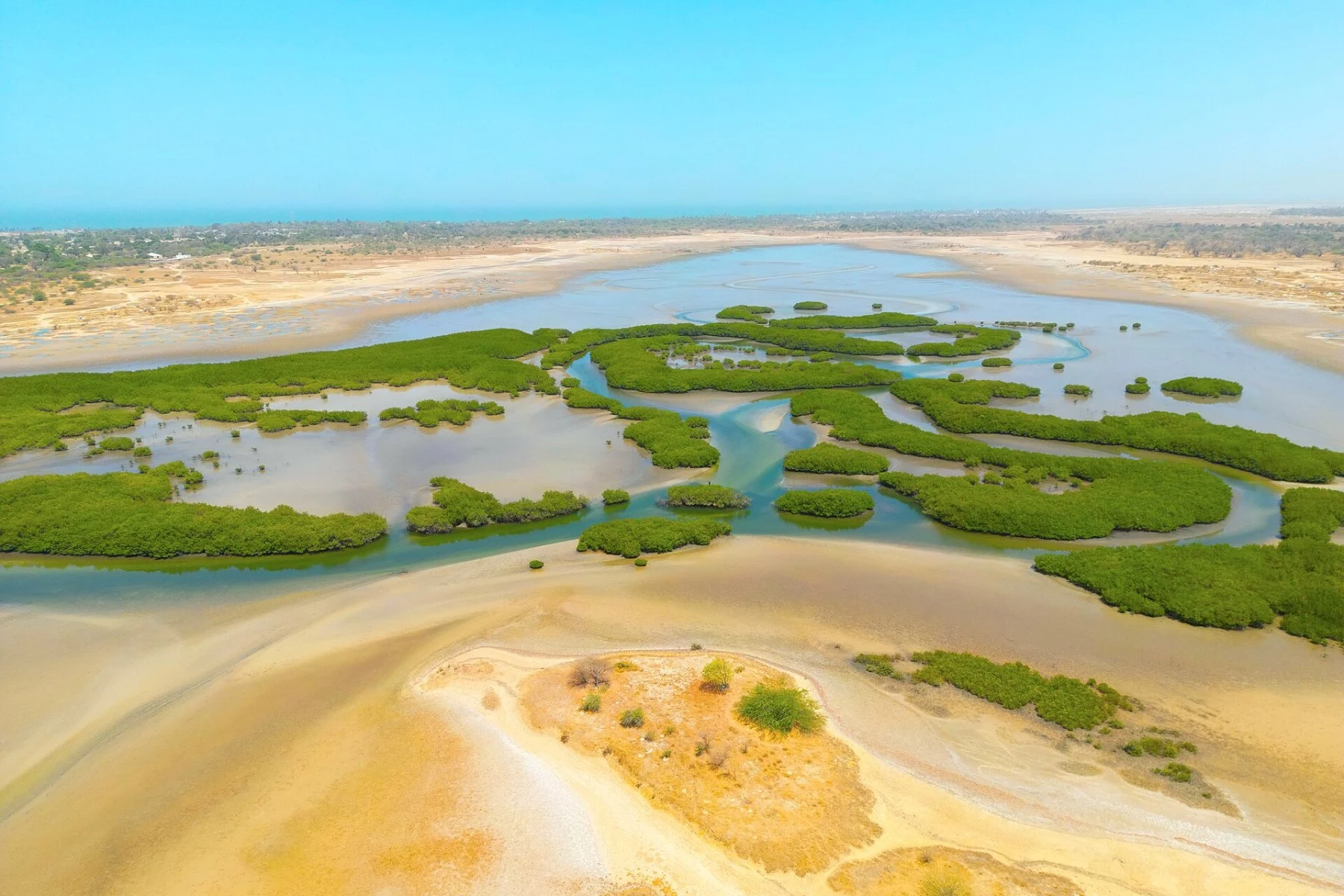
The Saloum Delta is where all 4 of the directory’s Senegal lodges are. UNESCO lists it as a World Heritage Site for its cultural landscape: 5,000 square kilometres formed by the arms of 3 rivers, with brackish channels around more than 200 islands and islets, mangrove forest and dry forest, and 218 shell mounds built up by people over the centuries.
For birders, the target is White-crested Tiger Heron, a secretive bird of the dense mangroves that does its best not to be the target of anything. BirdQuest’s group, based at Toubacouta, timed its boat trip for a falling tide and found 2 on the first afternoon and another the next morning, along with Goliath Heron, Mangrove Sunbird, African Finfoot, Palm-nut Vultures and Caspian, Gull-billed and Whiskered Terns. On land, Sipo Island, Sandicoly and Sangako Forest added Bearded Barbet, White-crowned Robin-Chat, Golden-tailed and Fine-spotted Woodpeckers, Yellow-gorgeted Greenbul and the scarce Yellow Penduline Tit.
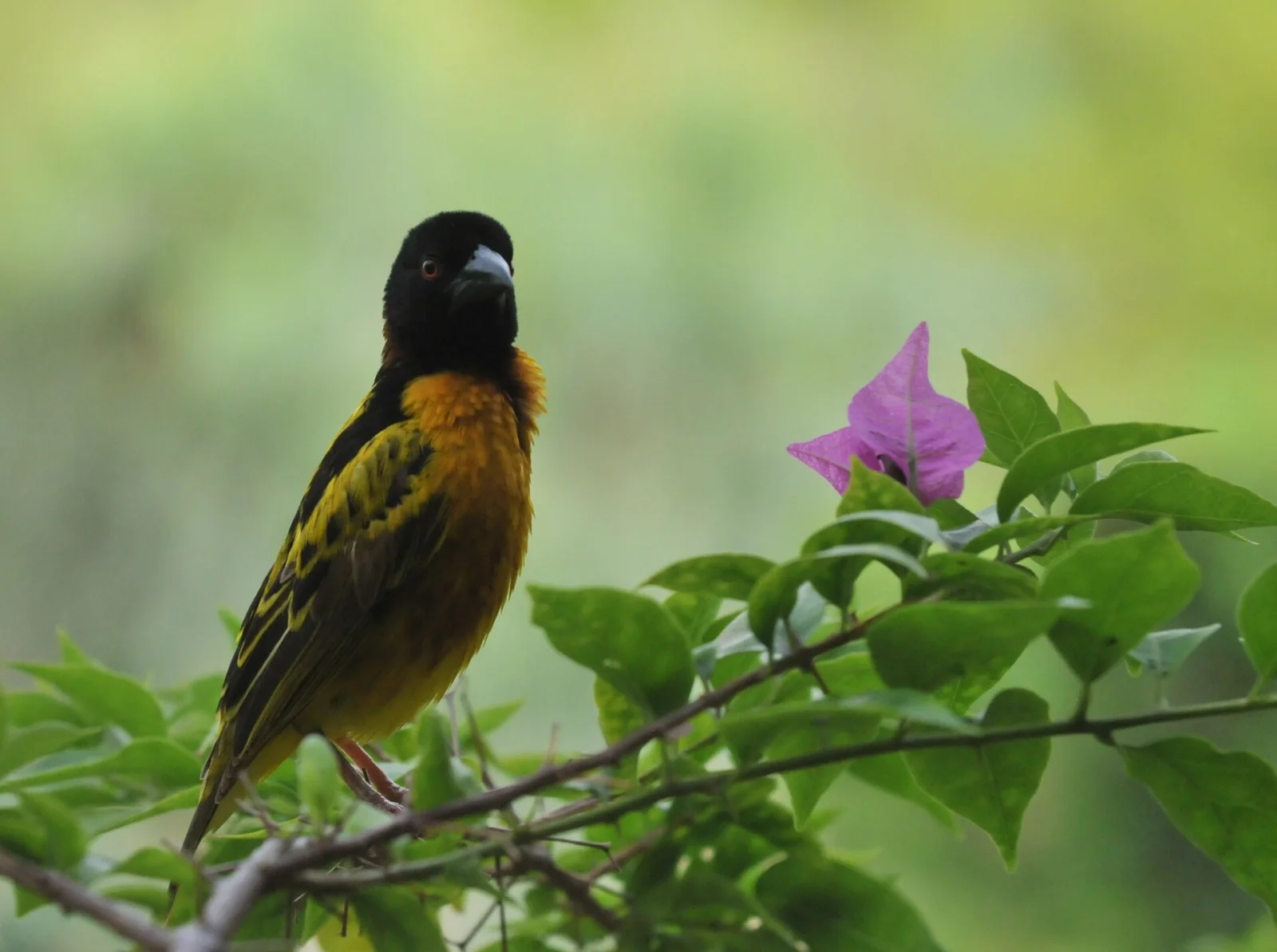
The delta lodges in the directory work as bases for exactly this. Campement du Niombato is a guesthouse of 4 rooms at Sandicoly, about 250 km south of Dakar, that sells a 9-day birding itinerary from November to May with walks and boat trips; it lists Senegal Batis, Swallow-tailed Bee-eater, Senegal Parrot, Yellow-crowned Gonolek and Western Plantain-eater from its grounds. Keur Saloum Resort, at Toubacouta, runs boat outings through the mangroves and tidal channels to an island where pelicans and other migrants roost, including Pelican Island and Sipo. Kinkeliba Lodge has round huts on Mar Lodj island, reached by pirogue from Dangane, about 1.5 hours by road from Blaise Diagne Airport; it runs a trip to a bird roost and gives more than 150 species for the delta, among them Great White and Pink-backed Pelicans and Goliath Heron. Écolodge de Simal has thatched huts beside a lagoon at Simal and runs pirogue trips through the mangrove channels.
The Gambia link
The Saloum Delta does not stop at the border, and neither do its birds. Senegal’s Delta du Saloum Ramsar site adjoins Niumi National Park in The Gambia, and in 2008 the 2 were declared the Niumi-Saloum Transboundary Ramsar Site. Niumi’s Ramsar sheet, for a park of 4,940 ha in the Gambia’s North Bank Region, records 303 resident and migratory bird species, Rhizophora mangrove forest and West African manatee.
That makes a combined trip natural: one wetland, 2 countries. Further up the Gambia’s north bank, Morgan Kunda Lodge is a community lodge at Jarjari beside the Bao Bolong Wetland Reserve, with a viewing platform over the wetland and local guides; it names Abyssinian Ground Hornbill, Beaudouin’s Snake Eagle and Bearded Barbet. For the rest of the Gambia, from Kotu Creek to the Egyptian Plovers upriver, see the Gambia birding guide. Senegal has its own Egyptian Plovers too: BirdQuest’s group saw them on the Gambia River at Wassadou, on the edge of Niokolo Koba National Park, where it also found Pel’s Fishing Owl, which made for a good day on one river.
When to go
The birding season is the northern winter, when the Palaearctic migrants are in, having had the same idea as every European on holiday. BirdQuest runs its tour from late January to mid-February. Campement du Niombato sells its birding itinerary from November to May and warns that roads can be difficult in the rainy season, and Morgan Kunda gives late October and November for arriving migrants, December for general birding, and March and April for coursers, sandgrouse and raptors. For the pelican colony with well-grown young, BirdQuest’s early February visit is the benchmark. For more on flamingo sites across the continent, see where to see flamingos.
Where to stay
The places to stay in Senegal’s Saloum Delta, and across the border in The Gambia, in the order they appear above:
| Place to stay | Where | For birders | From |
|---|---|---|---|
| Kinkeliba Lodge | Mar Lodj island, Saloum Delta, Senegal | Bird roost trip, gulls, terns, pelicans | Ask the lodge |
| Campement du Niombato | Sandicoly, Saloum Delta, Senegal | 9-day birding itinerary, guided walks and boat trips | €56.65 pp, full board |
| Keur Saloum Resort | Toubacouta, Saloum Delta, Senegal | Boat trips to pelican roost island and mangroves | Ask the lodge |
| Écolodge de Simal | Simal lagoon, Saloum Delta, Senegal | Pirogue trips through mangrove channels | FCFA 32,000 pp, triple room, half board (2026/27) |
| Morgan Kunda Lodge | Jarjari, North Bank, The Gambia | Wetland viewing platform, local bird guides | €46 pp, half board, 5+ nights (2026/27) |
Access, seasons and lodge details change, and the delta is reached by road and boat. Facts were checked on 14 November 2026 with BirdQuest’s 2026 Senegal tour report, UNESCO’s pages for Djoudj and the Saloum Delta, the Ramsar sheet for Niumi National Park and each listing on Birding Dispatch. Confirm boat trips and transfers with the lodge before you travel.
More from the Journal
 Namib-Naukluft and Sossusvlei for Birders: Dune Lark, Desert Raptors and the Naukluft SpecialsA lark that lives on the dunes and nowhere else, Lappet-faced Vultures nesting in the desert, coursers on the gravel plains and the northern specials around the Naukluft cliffs, in one of Africa's largest parks.
 Lake Baringo and Lake Bogoria Birding: The Owl Walks, the Cliffs and the FlamingosA local guide who knows where every nightjar and eagle-owl slept last night, thorn scrub full of hornbills, a Goliath Heron colony on a rock, and the flamingo lake next door that keeps rising.
 Akagera Birding: Rwanda’s Savanna, Lakes and Papyrus, and the Shoebill ChancesRed-faced Barbet in the southern woodland, Papyrus Gonolek and Carruthers's Cisticola in the swamps, a lake of hippos and lapwings, and a Shoebill that hides in the wetlands more than it shows.
The Pigeon Post
Every Thursday: 1 bird, 1 place to go and 1 place to stay, by email. Sign up and get our printable checklist of the 163 endemics of southern Africa.