
Queen Elizabeth and Murchison Falls Birding: the Kazinga Channel, the Nile Delta and Where to Stay
Skimmers on the Kazinga Channel, Harlequin Quail at Kasenyi, Rock Pratincoles below the falls and a Shoebill on the Nile delta, plus the 4 lodges in the directory.
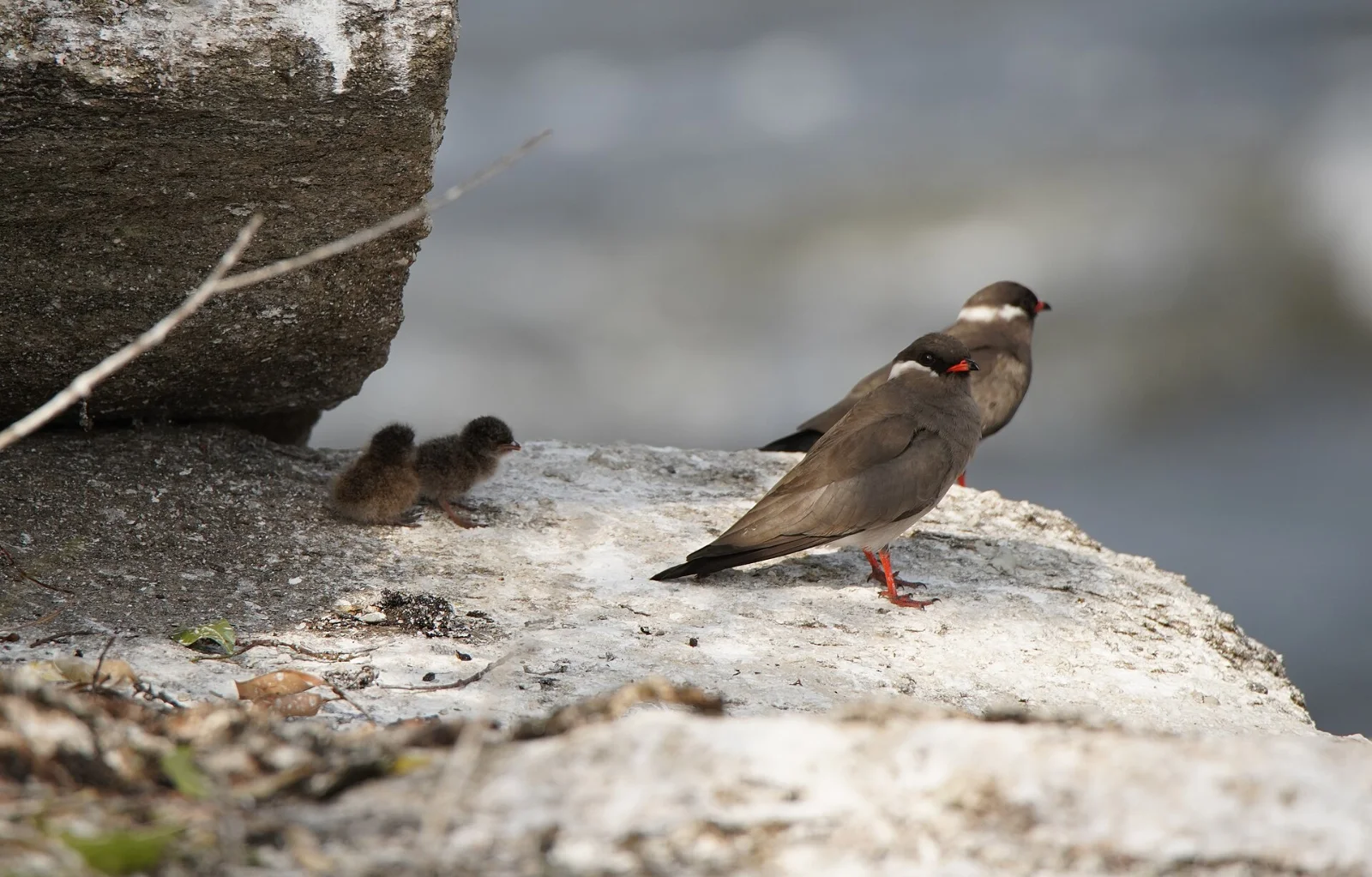
The boat captain at Murchison Falls was not sure the Rock Pratincoles would be there. On 30 June 2024 the Nile was running high, and the guide on a birding tour described in the Blairbirding blog explained that the birds usually sit on rocks near the base of the falls, rocks that were now under water. The pratincoles had made other arrangements. The group found perhaps 30 of them, flying and perched on branches, which suited the photographers better than rocks would have.
That is the trick with Uganda’s 2 big savanna parks: the birding is done from boats, and the water sets the terms. Queen Elizabeth National Park, in the west on the Kazinga Channel between Lake George and Lake Edward, has the most famous launch trip in the country. Murchison Falls National Park, in the north-west, has 2 boat trips on the Victoria Nile, one upstream to the falls and one downstream to the delta at Lake Albert, where the Shoebill lives. Mweya Safari Lodge gives 612 species for Queen Elizabeth; Philip Briggs, author of the Bradt guide to Uganda, gives more than 450 for Murchison. Between them they cover most of what a savanna birder could ask for, and a few things a savanna birder would never expect.
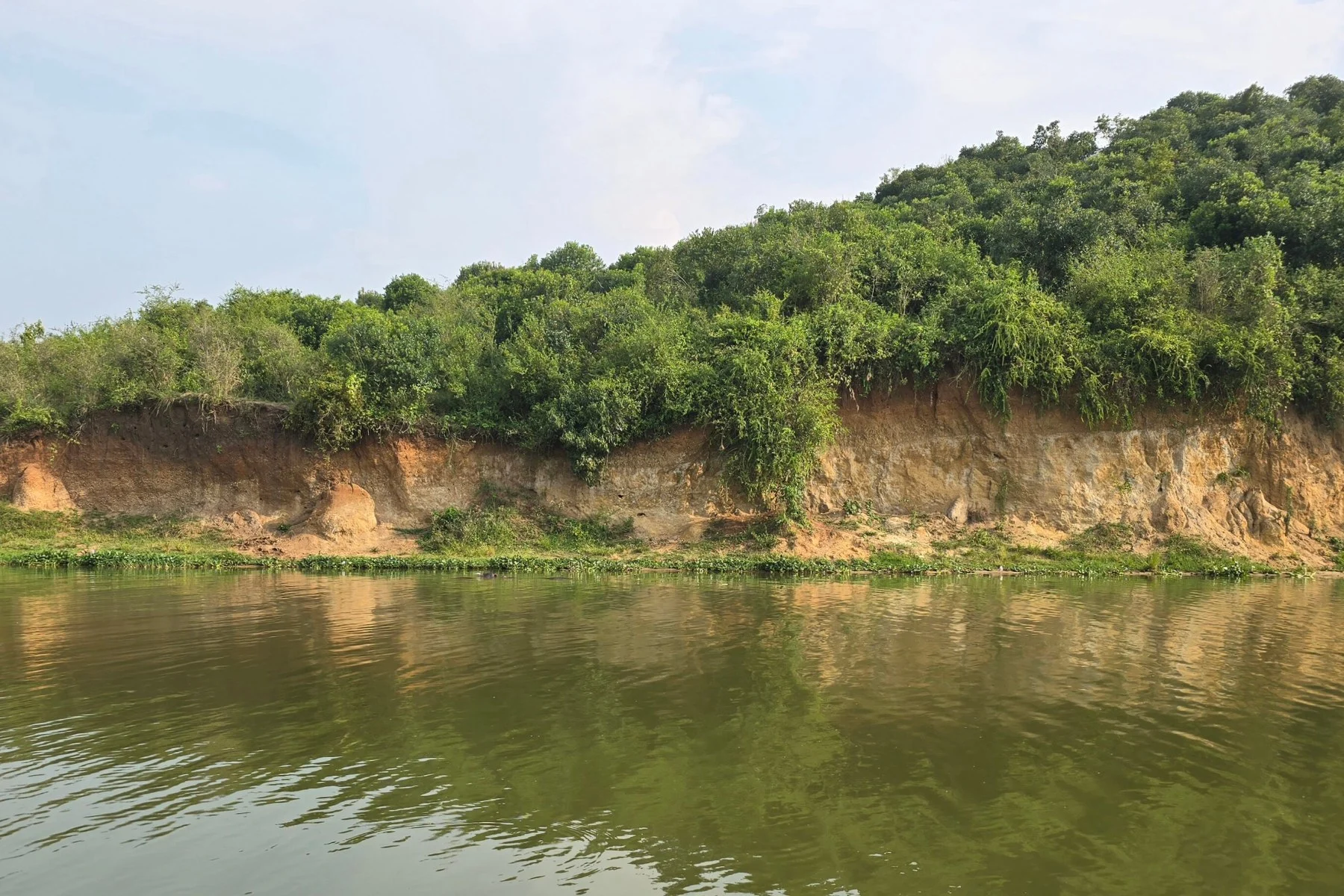
The Kazinga Channel launch
Field Guides ran its Queen Elizabeth day on its November 2025 tour around a 2-hour cruise on the channel with park rangers aboard, and the shores were lined with waterbirds: Kittlitz’s Plovers, a big flock of African Skimmers, Saddle-billed Stork, African Sacred Ibis, African Spoonbill, Great White and Pink-backed Pelicans and Goliath Heron. A hippo charged the boat and the ranger had to open the throttle, which is the Kazinga Channel’s way of reminding birders whose water it is. On the same cruise the group photographed a pair of White-fronted Bee-eaters, a species not known from Uganda, and so made the first documented record for the country. For the wider Uganda route and the park fees, see the Uganda birding guide.
Eagle-Eye Tours’ January 2026 group took its launch in the late afternoon. Its report singles out the African Skimmers on the sandbars below Mweya Lodge, rising in a whirling, squeaking flock and dropping back around the boat, and the waders, from Little Stints to Greenshanks and Ruff, so tame that the plumage detail showed once the engine was cut and the boat drifted in. That is the tip worth taking: ask the skipper to cut the engine near the sandbars, and let the birds forget about you.
Kasenyi and the savanna drives
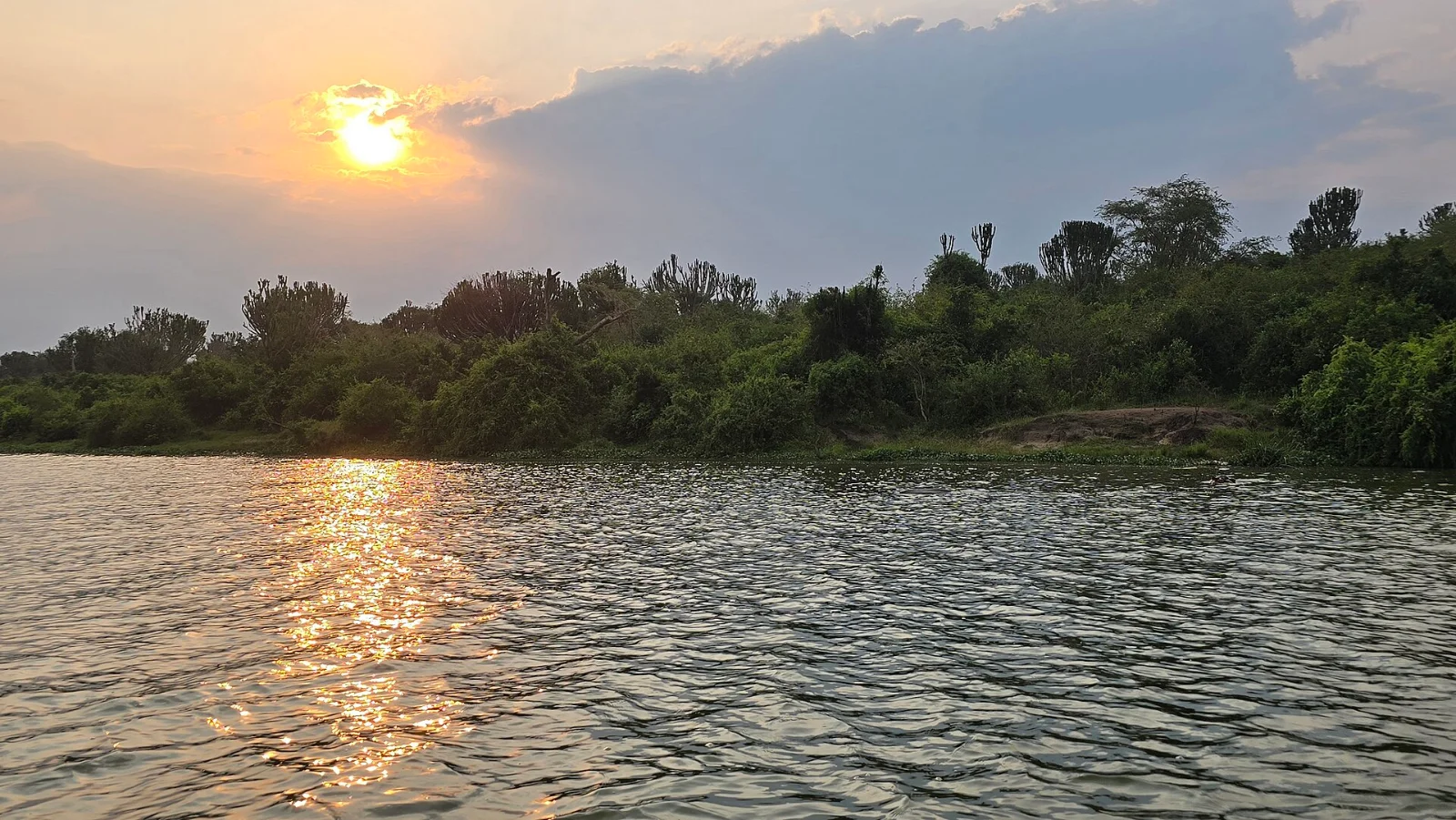
The launch is only half the day. Field Guides tallied about 140 species on its full day in the park, starting with drives along the tracks that turned up Crested Francolin, Beaudouin’s Snake Eagle, Marsh Tchagra, Isabelline Shrike, Moustached Grass Warbler, Fan-tailed Grassbird and Rufous-chested Swallow.
In the afternoon the group headed for the open grassland of the Kasenyi sector, and was held up on the way by 3 Verreaux’s Eagle-Owls, the kind of delay nobody complains about. At Kasenyi, Harlequin Quail were feeding beside the track in the burned areas, with Black-lored Babbler, Flappet Lark and African Firefinch, and a Serval’s ears showed above the grass. The drive in on the first evening had already produced Senegal Lapwing, a Martial Eagle, Grey-headed Kingfishers, Black-headed Gonolek, Crimson-rumped Waxbill and Green-winged Pytilia.
Even a delay can be productive here. When a storm damaged the next lodge on the route, the Field Guides group spent about an hour and a half on the lawn outside reception while the logistics were sorted out, and counted nearly 75 species, including Blue-spotted Wood Dove, a Black Heron doing its umbrella hunting, a Montagu’s Harrier, Brown-crowned Tchagra and a pair of Cardinal Woodpeckers. It is the most relaxed bird list in this article, and one of the longest.
Ishasha and Kyambura
Queen Elizabeth is large, and the directory has a lodge in each of its 2 quieter corners. In the south, Enjojo Lodge has 7 thatched cottages and a private Safari House at the edge of an acacia forest opposite the Katookye gate of the Ishasha sector, where swamp, acacia forest and grassland meet. It keeps a birder guide on hand for guests and names Shoebill among its birds.
In the east, Kyambura Gorge Lodge has 8 bandas facing Kyambura Gorge or the savanna. Its guides lead birding in a reclaimed wetland, it books the Kazinga Channel cruise, and it gives about 600 species for the area. Mweya Safari Lodge, the 44-room lodge on the Mweya Peninsula above the channel, has its own birding page and bird list to download, and names Shoebill, Papyrus Gonolek, Martial Eagle, Verreaux’s Eagle-Owl, White-tailed Lark and both flamingos. Field Guides stayed at Mweya in 2025, and had a Leopard appear beside the vehicles within sight of the lodge.
Murchison Falls: the boat to the falls
Briggs calls Murchison one of the best places in Uganda to look for a Shoebill, and says both of its boat trips are good for waterbirds. The upstream trip runs to the base of the falls, where the whole Nile pushes through a gap that Eagle-Eye’s guide puts at about 7 m. The boat can only get so close before the current wins.
The Blairbirding group logged 48 species on that afternoon trip in June 2024. Besides the pratincoles there was a Goliath Heron on its nest with a chick, African Woolly-necked and Marabou Storks, a single Black Heron, an African Openbill, Purple and Grey Herons, an African Spoonbill standing among buffalo, and 4 kingfishers: Pied, Malachite, Woodland and Giant. A juvenile Piapiac rode on the back of a Warthog, waiting for it to dig up an insect, which is one way to get around the park without paying for a vehicle.
The delta and the Shoebill
Shoebills, Briggs says, are seen most often on early morning boat trips to the Lake Albert delta. The Blairbirding group took the delta trip on 1 July 2024 and recorded 84 species. More than 3 dozen Red-throated Bee-eaters stole the show, with Northern Carmine, Swallow-tailed and 3 Olive Bee-eaters, called Madagascar Bee-eaters in the report. There were Black-billed Barbets, nesting Grey-headed Gulls in breeding plumage, a Black-headed Gull that the guides had never seen there, Greater Swamp Warbler and White-crested Turaco. And at the end of the trip, a Shoebill, which the group had to itself. For the odds at the delta against Mabamba and Bangweulu, see where to see a Shoebill.
On land, the north bank of the Nile is open savanna. The same group’s 4-hour morning drive there produced 70 species, among them Black-bellied and Denham’s Bustards, Heuglin’s Spurfowl, Abyssinian Ground Hornbill, Vinaceous Dove, Shelley’s Rufous Sparrow, Speckle-fronted Weavers, Senegal Thick-knee and Rüppell’s and White-backed Vultures. A night drive with a ranger found a Greyish Eagle-Owl sitting on the road on the way back, unbothered by the spotlight.
Nile Safari Lodge, on the south bank, has 8 bandas, and a specialist birding guide leads its birdwatching outings. It gives more than 450 species for the area and names Shoebill, Grey Crowned Crane and Abyssinian Ground Hornbill.
When to go
Briggs says Murchison’s birding is good all year and best from January to March. December to February is the driest stretch; April and May, and August to October, are the wettest, when roads can become impassable and trails slippery. Palaearctic migrants are present from November to April, and Nile Safari Lodge also rates the birding best from November to April. The trip reports here span the year: Field Guides in early November, Eagle-Eye in January, and the Blairbirding tour at the end of June, with the Nile in flood.
Fitting them together
The parks are far apart, so plan the drives. Nile Safari Lodge puts Murchison about 302 km, or 5 hours, by road from Kampala, with Bugungu airstrip about 15 km away. The Blairbirding group’s drive from Murchison back to Entebbe took more than 6 hours through congested towns. Queen Elizabeth sits on the road between Bwindi and Kibale, so most birders reach it on the way north from the forest endemics; for those, see Bwindi for birders. A night or 2 in each park, with both Murchison boats and the Kazinga launch, gives the water its chance, and the water does most of the work.
Where to stay
The places to stay in the 2 parks, in the order they appear above:
| Place to stay | Where | For birders | From |
|---|---|---|---|
| Enjojo Lodge | Ishasha sector, Queen Elizabeth NP, Uganda | Birder guide on hand, Shoebill named | Ask the lodge |
| Kyambura Gorge Lodge | Kyambura Gorge, Queen Elizabeth NP, Uganda | Guided wetland birding, Kazinga cruise, about 600 species | US$950 pp sharing, fully inclusive (2026 low season) |
| Mweya Safari Lodge | Mweya Peninsula, Queen Elizabeth NP, Uganda | Own bird list, Kazinga Channel boat trips | Ask the lodge |
| Nile Safari Lodge | South bank of the Nile, Murchison Falls NP, Uganda | Specialist birding guide, Shoebill, 450+ species | US$998 a banda, full board (2026 low season, single) |
Boat times, water levels and park fees in Uganda change. Facts were checked on 15 November 2026 with trip reports from Field Guides (November 2025), Eagle-Eye Tours (January 2026) and the Blairbirding blog (June and July 2024), Philip Briggs’s SafariBookings page on Murchison’s birds, and each listing on Birding Dispatch. Confirm launch and delta boat bookings with your lodge or the Uganda Wildlife Authority before you travel.
More from the Journal
 Namib-Naukluft and Sossusvlei for Birders: Dune Lark, Desert Raptors and the Naukluft SpecialsA lark that lives on the dunes and nowhere else, Lappet-faced Vultures nesting in the desert, coursers on the gravel plains and the northern specials around the Naukluft cliffs, in one of Africa's largest parks.
 Lake Baringo and Lake Bogoria Birding: The Owl Walks, the Cliffs and the FlamingosA local guide who knows where every nightjar and eagle-owl slept last night, thorn scrub full of hornbills, a Goliath Heron colony on a rock, and the flamingo lake next door that keeps rising.
 Akagera Birding: Rwanda’s Savanna, Lakes and Papyrus, and the Shoebill ChancesRed-faced Barbet in the southern woodland, Papyrus Gonolek and Carruthers's Cisticola in the swamps, a lake of hippos and lapwings, and a Shoebill that hides in the wetlands more than it shows.
The Pigeon Post
Every Thursday: 1 bird, 1 place to go and 1 place to stay, by email. Sign up and get our printable checklist of the 163 endemics of southern Africa.