
Birding Uganda: Albertine Rift Endemics, Bwindi and the Shoebill
A country the size of Great Britain with 1,080-plus species: where to find Uganda's Albertine Rift endemics, a Shoebill near Entebbe, and what it all costs.
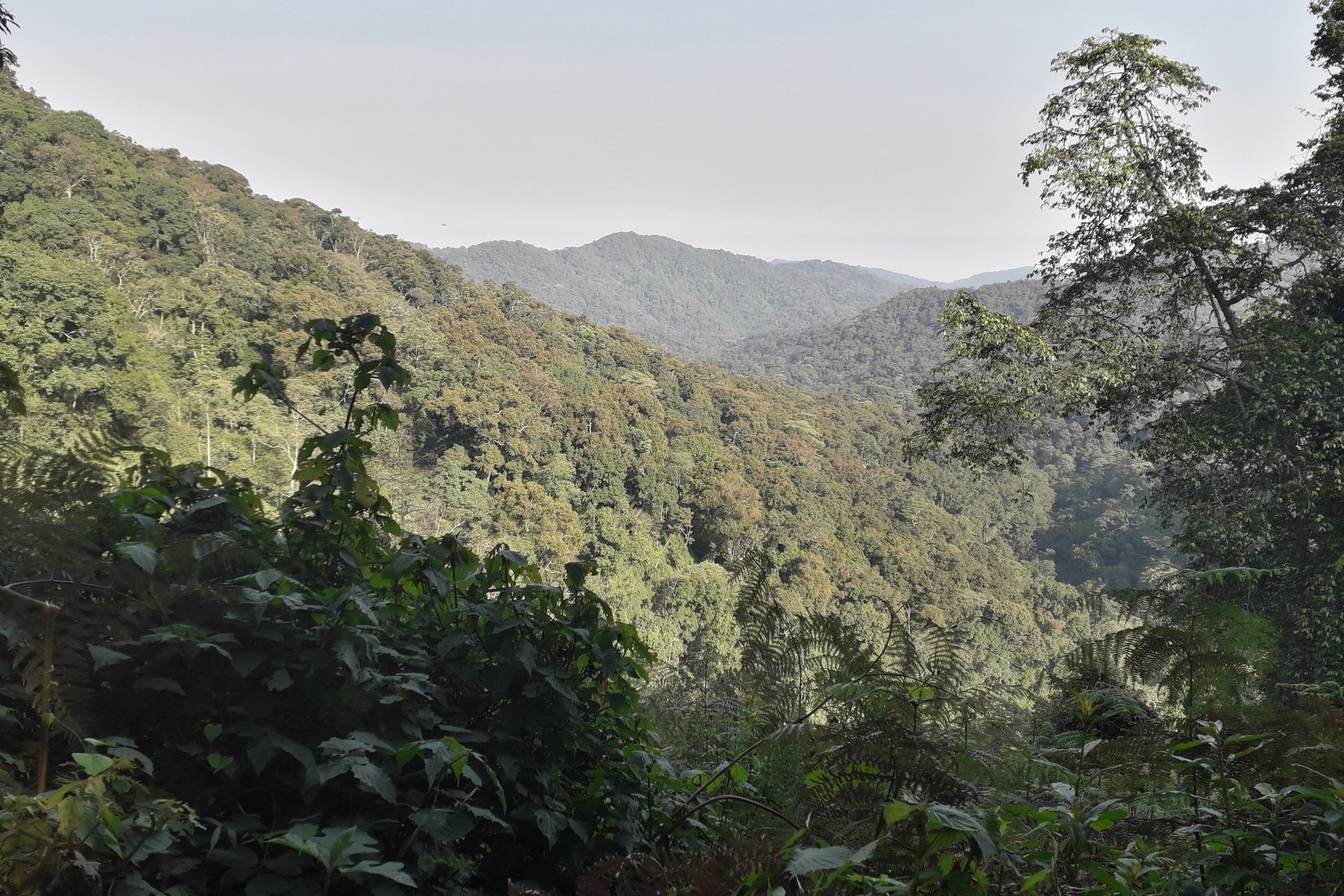
Uganda is about the size of Great Britain, and its bird checklist runs to more than 1,080 species. Philip Briggs, author of the Bradt guide to Uganda, ranks that fourth in Africa and puts it down to geography: eastern savanna, western rainforest and northern semi-desert all meet here. Only 1 bird, Fox’s Weaver, is endemic, which seems almost modest, but about 150 species occur nowhere else in East Africa.
In 1 trip you can find Albertine Rift endemics in the south-western mountains, Guinea-Congo forest birds, savanna birds on the Kazinga Channel and a Shoebill, the bird that looks like it is judging you, outside Entebbe. The problem is distance and money: these places are far apart, the roads are slow, and the gorilla permit most visitors add on costs US$800.
The short answer
Give it about 18 days. Start at Mabamba Swamp for the Shoebill, then head south-west to Mgahinga for Rwenzori Turaco, and give Bwindi 5 nights split between Ruhija for the high-altitude endemics and Buhoma for the lower forest. Come north through Queen Elizabeth National Park for a boat on the Kazinga Channel, spend 2 nights at Kibale for Green-breasted Pitta and Bigodi Wetland, then bird Budongo’s Royal Mile and finish in Murchison Falls. Add Semliki if you have birded African forests before. Go between June and August, or May to July if Grauer’s Broadbill is the bird you want most and your knees are up to it.
At a glance
| Site | Birds to target | Entry, foreign non-resident | Notes |
|---|---|---|---|
| Mabamba Swamp | Shoebill, Lesser Jacana | Day tours from Entebbe | Canoe through papyrus |
| Mgahinga Gorilla NP | Rwenzori Turaco, Rwenzori Double-collared Sunbird | US$40, plus US$40 birding walk | A full day on Mount Sabyinyo |
| Bwindi, Ruhija | Grauer’s Broadbill, Handsome Spurfowl, Dusky Crimsonwing | US$40, plus US$40 birding walk | Mubwindi Swamp trail is steep |
| Bwindi, Buhoma | Bar-tailed Trogon, African Broadbill, Chapin’s Flycatcher | US$40, plus US$40 birding walk | Lower, warmer forest |
| Queen Elizabeth NP | African Skimmer, pelicans, Kittlitz’s Plover | US$40, plus US$30 launch | Kazinga Channel boat, 2 hours |
| Kibale NP and Bigodi | Green-breasted Pitta, White-spotted Flufftail | US$40 | Pitta needs a pre-dawn start |
| Budongo, Royal Mile | African Dwarf and Chocolate-backed Kingfishers, Ituri Batis | Not in the UWA tariff | Bring a scope for canopy flocks |
| Semliki NP | 35 Guinea-Congo specials, forest hornbills | US$35, plus US$40 birding walk | For birders who have done other forests |
| Murchison Falls NP | Pennant-winged Nightjar, White-crested Turaco | US$45 | Most expensive park entry |
What it costs
The Uganda Wildlife Authority’s 2024 to 2026 conservation tariff sets park entry for foreign non-residents at US$40 a day for Bwindi, Mgahinga, Kibale and Queen Elizabeth, US$45 for Murchison Falls and US$35 for Semliki. Birding is charged on top, as a guided walk: US$40 a person in the forest parks (Bwindi, Mgahinga, Kibale, Semliki, Rwenzori and Mount Elgon) and US$25 in the savanna parks. A day’s birding in Bwindi therefore costs US$80 a person in UWA fees before you pay for a guide, a vehicle or a bed.
UWA’s February 2026 update left park entry and birding fees unchanged. The gorilla permit stays at US$800 for foreign non-residents, and it includes that day’s park entry. UWA introduced low-season permits at US$600 for April, May and November, which cannot be rescheduled. From 1 January 2027 the gorilla habituation experience rises from US$1,500 to US$1,800 and Kibale chimpanzee tracking from US$250 to US$300. Gorilla and chimpanzee permits for foreign visitors can only be booked through licensed tour operators.
This is why most birders combine the 2. You are driving to Bwindi for the endemics anyway, and the permit is the only real extra cost of a gorilla. The gorilla, at least, does not hide in a canopy flock.
Bwindi: Ruhija and Buhoma
Briggs calls Bwindi Impenetrable National Park some of the best montane forest birding in Africa. He counts about 350 species, including 23 Albertine Rift endemics and 14 birds recorded nowhere else in Uganda.
Ruhija is the high one, in every sense. The prize is Grauer’s Broadbill, also called African Green Broadbill, a small green bird BirdLife International lists as Vulnerable, with an estimated 2,500 to 9,999 mature birds. Outside the Democratic Republic of Congo, Bwindi is the only place it is known. Briggs says it is most likely along the Mubwindi Swamp trail between May and July. The walk is a long trek down to the swamp and back on steep tracks, and Birding Ecotours’ 2023 tour skipped it because of the difficulty. If the broadbill matters, plan the walk and be fit for it: the swamp is downhill, and so the return is not.
Even without the swamp, the Ruhija school track and roadside forest gave Birding Ecotours Stripe-breasted Tit, Grauer’s Warbler, Dusky Crimsonwing, Doherty’s Bushshrike and Black-billed Turaco. Handsome Spurfowl lives in the bamboo zone above Ruhija, but the same group tried 3 times and only heard birds calling in the valleys below. Expect to work for it, and to hear more spurfowl than you see.
Buhoma, lower down, is warmer forest. Birding Ecotours spent a day on the main trail and recorded Bar-tailed Trogon, Chestnut Wattle-eye, a displaying African Broadbill and Chapin’s Flycatcher, with L’Hoest’s Monkeys on the trail. Field Guides found the entrance road so productive in November 2025 that its morning covered barely 1.6 km, which is what good birding looks like from the outside.
Mgahinga: the turaco on the volcano
Mgahinga Gorilla National Park, in the far south-west corner on the borders with Rwanda and the DRC, is where most tours look for Rwenzori Turaco. Birding Ecotours spent a full day on the slopes of Mount Sabyinyo, an extinct volcano of about 3,700 m, with a local guide and armed rangers. Rwenzori Double-collared Sunbird came early. The turaco did not show until the walk back down through the bamboo, when a pair finally called and flew past showing their red wings. Give it the whole day; the turaco clearly intends to.
Queen Elizabeth and the Kazinga Channel
The Kazinga Channel launch costs US$30 a person and lasts about 2 hours. Field Guides logged about 140 species on its Queen Elizabeth day in November 2025, with African Skimmers, Kittlitz’s Plovers, Great White and Pink-backed Pelicans, Goliath Heron and Saddle-billed Stork on and around the channel. The same cruise photographed Uganda’s first documented White-fronted Bee-eaters, so even a tourist launch can make history. Field Guides stayed at Mweya Lodge, inside the park.
Kibale and Bigodi: the pitta
Green-breasted Pitta is the reason serious birders go to Kibale and set an alarm for the middle of the night. In July 2023, Birding Ecotours’ guide reported that the pittas had been tricky that season and earlier tours had missed them. The group went in before dawn and watched a male display for about 15 minutes, which for a pitta is practically a stage show. Use a guide who knows this season’s territories.
Bigodi Wetland, on the edge of Kibale, is the afternoon walk. Birding Ecotours found White-spotted Flufftail, Shining-blue Kingfisher and Magpie Mannikins there.
The north: Budongo and Murchison Falls
Briggs credits Budongo Forest with more than 360 species, including 60 West and Central African birds with a very limited range in East Africa, and ranks it second only to Semliki for Guinea-Congo specials. The Royal Mile, off the Masindi to Butiaba road, is in his view probably the best place in East Africa for African Dwarf Kingfisher, Chocolate-backed Kingfisher, White-thighed Hornbill and Ituri Batis. Canopy flocks call for a telescope and a neck that does not complain. Puvel’s Illadopsis, found nowhere else in East Africa, is easiest not on the Royal Mile but on the paths around the Kaniyo Pabidi chimp-tracking site.
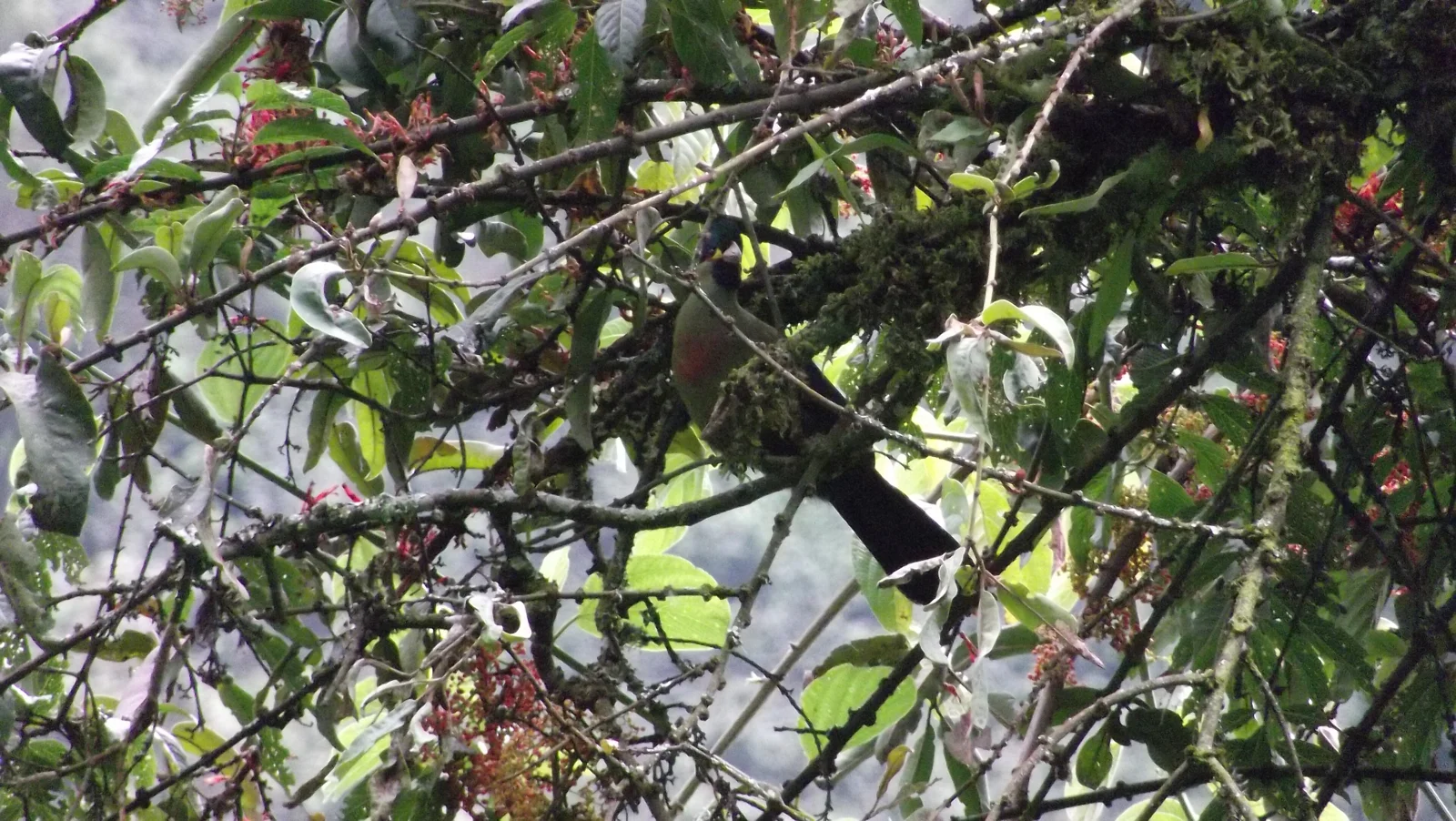
Murchison Falls National Park is savanna and river. Birding Ecotours found White-crested Turaco, Pennant-winged Nightjar and Piapiacs riding on buffalo like small black passengers who never bought a ticket. The Murchison delta is also a Shoebill back-up: see our guide to where to see a Shoebill for Mabamba, the delta and Toro-Semliki.
Semliki: for the second visit
Semliki National Park has a checklist of about 435 species, and Briggs counts 35 Guinea-Congo specials recorded nowhere else in East Africa, including 6 forest hornbills rarely seen elsewhere in Uganda. It is the advanced class: wasted on a first-timer who has not seen the commoner forest birds at Kibale and Bwindi, and the best forest in the country for anyone who has.
Hire Ugandan guides
Uganda has a strong local guiding scene. Field Guides’ November 2025 tour was co-led by Herbert Byaruhanga, who founded Uganda Women Birders in 2013. The club has more than 100 members, and about 30 women earn a living as bird guides, according to a 2024 report by The World. Birding Ecotours relied on site guides at Mgahinga and Ruhija, and its driver-guide found the Kibale pitta.
The catch
The distances are real, and the map makes them look shorter than they drive. Trip reports describe long days on the road between almost every pair of sites. In November 2025, rain made the roads through Buhoma impassable for Field Guides’ bus, and the group finished the journey in 4x4s. Budget for a 4×4, spare days and a driver who knows the routes. Add US$80 a day in forest-park fees and a gorilla permit, and Uganda is not cheap. Our Kenya and Tanzania guides cover the alternatives.
When to go
Uganda can be birded all year, because the targets are resident. Briggs puts the wet seasons at March to May and September to November in the south, and March to November in the north, when roads and trails can be poor. The best birding is from late May through September, with less rain and plenty of food. The main nesting season in Bwindi and Mgahinga is May and June, though rain can still be heavy from mid-April to mid-May. The dry seasons, June to August and December to February, are best for primate trekking and the savanna parks. Palearctic migrants are present from November to April, escaping a European winter for the same reasons most visitors do.
The verdict
For its size, no country in East Africa matches Uganda for birds. Give it 18 days, put 5 nights into Bwindi, take the Mubwindi Swamp walk in May to July if you can, and go into Kibale before dawn for the pitta. Book the gorilla permit, because you will be in the forest anyway. Save Semliki for a second trip, which is a fine excuse to plan one.
Where to stay
The places in this guide, with what each offers a birder:
| Place to stay | Where | For birders | From |
|---|---|---|---|
| Mabamba Lodge | Mabamba, Uganda | Shoebill boat trips, wetland guides, feeders, Mabamba Swamp IBA | US$215 per room, DB&B |
| Karibu Guesthouse | Entebbe, Uganda | 50 species, Ross’s Turaco, Black-headed Gonolek | US$195 per single room B&B |
| Ruhija Gorilla Lodge | Ruhija, Bwindi, Uganda | African Green Broadbill, Grauer’s Swamp Warbler | US$180 per cottage FB |
| Buhoma Lodge | Buhoma, Bwindi, Uganda | Forest walks with local guides, more than 350 species | US$380 pp sharing FB |
| Huduma Lodge | Nkuringo, Bwindi, Uganda | Birding outings arranged, own trails, bamboo and forest | US$250 pp sharing FB |
| Kyambura Gorge Lodge | Queen Elizabeth NP, Uganda | Guided wetland birding, Kazinga Channel cruise, about 600 species | US$950 pp sharing, all-inclusive |
| Isunga Lodge | Kibale, Uganda | Guided birding walks, Bigodi Wetland, about 375 species | US$110 per single cottage B&B |
| Kibale Lodge | Fort Portal, Uganda | 100 species, Ross’s Turaco, guided birding walks | US$990 pp sharing all-inclusive |
| Nile Safari Lodge | Murchison Falls, Uganda | Shoebill, Grey Crowned Crane, Abyssinian Ground Hornbill | US$998 per banda FB |
| Semliki Safari Lodge | Toro-Semliki, Uganda | Lake Albert boat trips for Shoebill, nearly 500 species | Ask the lodge |
Fees, permit rules and bird reports change. Facts were checked on 9 November 2026 with the Uganda Wildlife Authority conservation tariff for July 2024 to June 2026, reporting on UWA’s February 2026 tariff update by Diary of a Muzungu and Prime Uganda Safaris, Philip Briggs’s SafariBookings birding pages, BirdLife International’s Grauer’s Broadbill factsheet, and trip reports from Birding Ecotours (July 2023) and Field Guides (November 2025). Confirm current fees with UWA or a licensed tour operator before you book.
More from the Journal
 Namib-Naukluft and Sossusvlei for Birders: Dune Lark, Desert Raptors and the Naukluft SpecialsA lark that lives on the dunes and nowhere else, Lappet-faced Vultures nesting in the desert, coursers on the gravel plains and the northern specials around the Naukluft cliffs, in one of Africa's largest parks.
 Lake Baringo and Lake Bogoria Birding: The Owl Walks, the Cliffs and the FlamingosA local guide who knows where every nightjar and eagle-owl slept last night, thorn scrub full of hornbills, a Goliath Heron colony on a rock, and the flamingo lake next door that keeps rising.
 Akagera Birding: Rwanda’s Savanna, Lakes and Papyrus, and the Shoebill ChancesRed-faced Barbet in the southern woodland, Papyrus Gonolek and Carruthers's Cisticola in the swamps, a lake of hippos and lapwings, and a Shoebill that hides in the wetlands more than it shows.
The Pigeon Post
Every Thursday: 1 bird, 1 place to go and 1 place to stay, by email. Sign up and get our printable checklist of the 163 endemics of southern Africa.