
Nyungwe Forest Birding: Albertine Rift Endemics, the Trails and Where to Stay
Red-collared Babbler on the Kindura trail, Rwenzori Turaco at Uwinka, a Red-throated Alethe in the fog, and the 2 park-run stays in the directory, at Gisovu and Munazi.
The most wanted bird in Nyungwe turned up while everyone was looking for a different one. On 26 January 2021, the last full birding day of an East African Trails tour, the group was tracing the call of a Many-coloured Bushshrike near the Kindura trail when a Red-collared Babbler called from the other side of the road. It crossed fast, the photographer got a single record shot, and the birds would not wait for a better one. In the guide’s trip report it is the “famous, rare” bird of the forest, and it behaved like one.
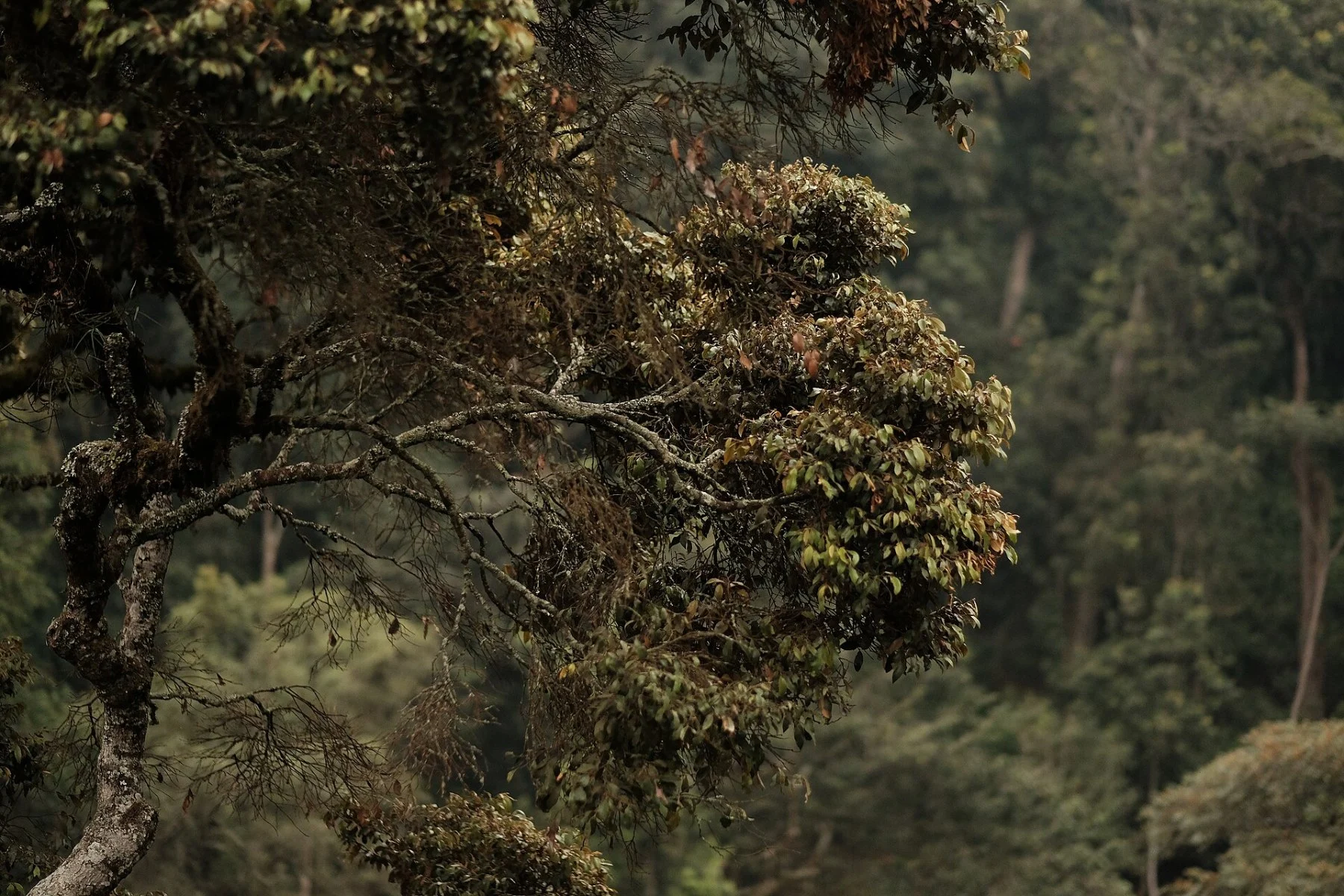
Nyungwe National Park, in south-western Rwanda, is the country’s big montane forest. Its own site gives 322 bird species, 30 of them endemic to the Albertine Rift, the chain of mountains along Rwanda’s western border with the Democratic Republic of Congo. Ariadne van Zandbergen, co-author of the Bradt guide to Rwanda, writes on SafariBookings that 3 of its birds are recorded nowhere else on the eastern side of the rift: Albertine Owlet, Red-collared Babbler and Rockefeller’s Sunbird. For park fees, the Akagera half of a Rwanda trip and the rest of the country, see the Rwanda birding guide.
The endemics
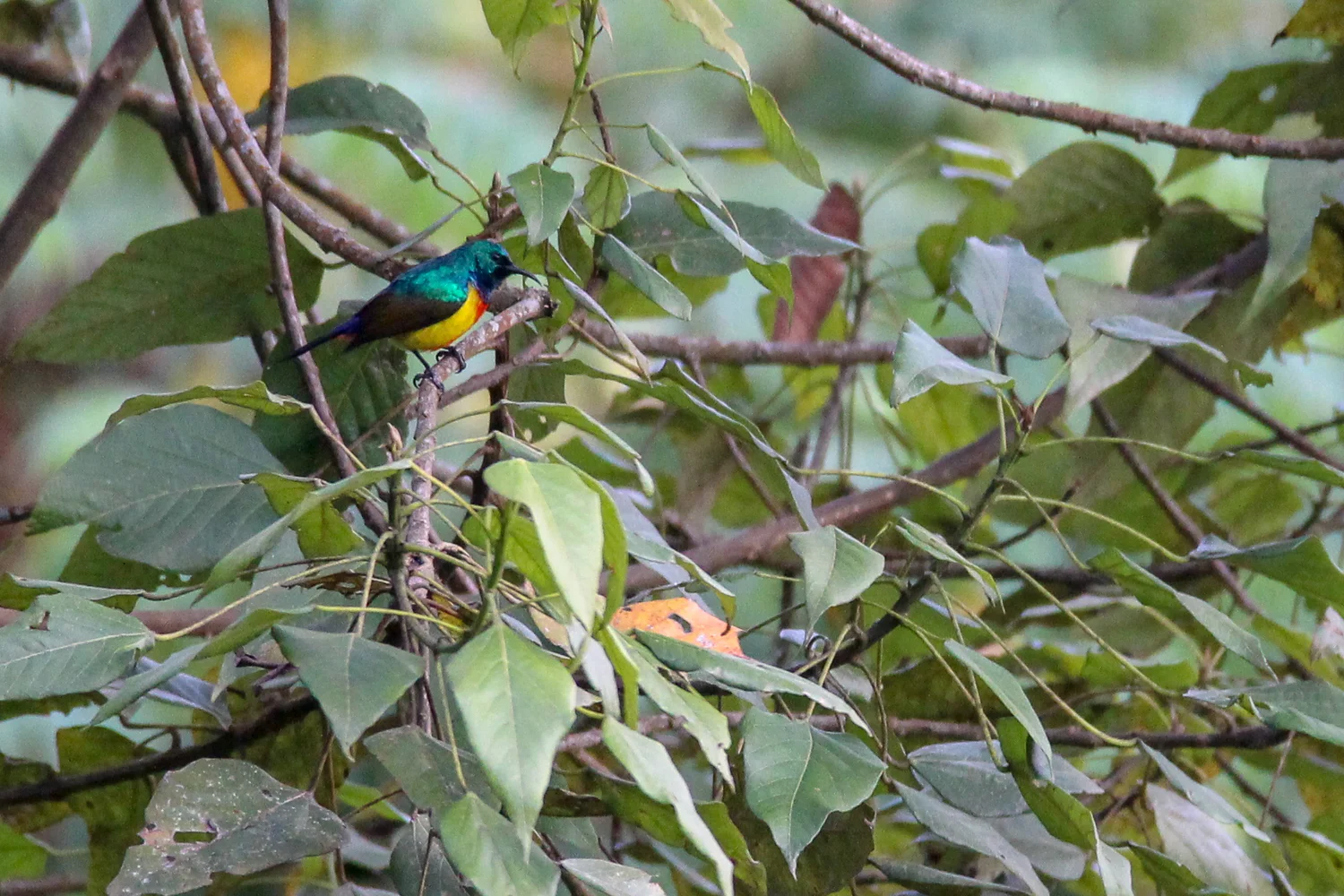
Van Zandbergen’s list of Nyungwe specials reads like the index of an Albertine Rift field guide, which is roughly what it is. The endemics include Rwenzori Turaco, Handsome Spurfowl, Rwenzori Nightjar, Regal, Blue-headed and Purple-breasted Sunbirds, Rwenzori Batis, Rwenzori Apalis, Mountain Masked Apalis, Kungwe Apalis, Strange Weaver, Stripe-breasted Tit, Red-faced Woodland Warbler, Neumann’s Warbler, Grauer’s Swamp Warbler, Red-throated Alethe, Kivu Ground Thrush, Yellow-eyed Black Flycatcher, and Dusky and Shelley’s Crimsonwings. Beside them sit wider forest birds such as Great Blue Turaco, Bar-tailed Trogon, Dwarf Honeyguide and African Hill Babbler.
She lists Great Blue Turaco, Regal Sunbird and Rwenzori Turaco as common, and Red-throated Alethe as rare. Her advice is to ask at the park headquarters for a specialist birding guide, because the good ones identify many species by call, and in a forest this tall the call is usually all a birder gets at first.
Four days on the trails
The East African Trails report, from 23 to 26 January 2021, is a useful guide to how the forest gives up its birds: slowly, then in a rush, then not at all when the fog comes in.
The group reached the park at midday, met its site guide at Uwinka, the park headquarters, and started there. Chestnut-throated Apalis showed first. A Rwenzori Turaco called close by but stayed in poor light, then reappeared far away; Northern Double-collared and Rwenzori Double-collared Sunbirds were added, and a Handsome Spurfowl stood on the roadside on the drive back, then walked into the bush before anyone could photograph it. At dusk the guide tried the Karamba trail for Rwenzori Nightjar without success, and an African Wood Owl called from close range at the last stop.
The next morning the group walked the last kilometre to Uwinka and photographed Rwenzori Batis, Northern Puffback, Chestnut-throated Apalis, Red-faced Woodland Warbler, Rwenzori Hill Babbler, Strange Weaver and Blue-headed and Regal Sunbirds. Then the guide recommended the campsite trail for the turaco, and on the first try a Rwenzori Turaco showed in perfect light. A White-starred Robin came after lunch.
Day 3 was foggy, and the fog produced the rarity: a Red-throated Alethe feeding on the ground beside the road. Yellow-eyed Black Flycatcher, Grey Cuckooshrike, Black-tailed Oriole and Mountain Illadopsis followed. The group tried the Rangiro road for a better view of the Handsome Spurfowl, but the fog there was too thick, and settled for a pair of Mountain Wagtails feeding on the road. The afternoon added Cassin’s Hawk-Eagle, Great Blue Turaco and Purple-breasted Sunbird.
On the last morning the Kindura trail was cold and quiet, so the group walked out to the main road, where a Doherty’s Bushshrike answered from the roadside and gave good photographs. Great Blue Turacos hung in a big tree close by, and Albertine Boubou, White-headed Wood Hoopoe and Black-throated Apalis were found before the babbler made its brief appearance. A Dusky Crimsonwing seen the day before did not return, and Neumann’s Warbler stayed a voice in the undergrowth. Four days, and still a dip or two, birders’ slang for a bird you went for and missed. Nyungwe keeps a few back for the next visit.
Guides, recordings and the canopy
Birding here is done with guides. Nyungwe’s site says all hiking in the park is led by community freelance guides from the Gisakura and Uwinka reception centres, and it runs its own specialised birding experience with the park’s bird guides. Richard Primack of Boston University wrote in September 2023 that his group hired the bird guide Claver Ntoyinkima for 3 days, travelled the roads and trails and the canopy walkway, and saw most of its targets, including the babbler. Primack’s photographs show the guide calling in a target bird with a recording and using a laser to help others find a bird. Before you agree to playback on a sensitive species, read birding etiquette and playback.
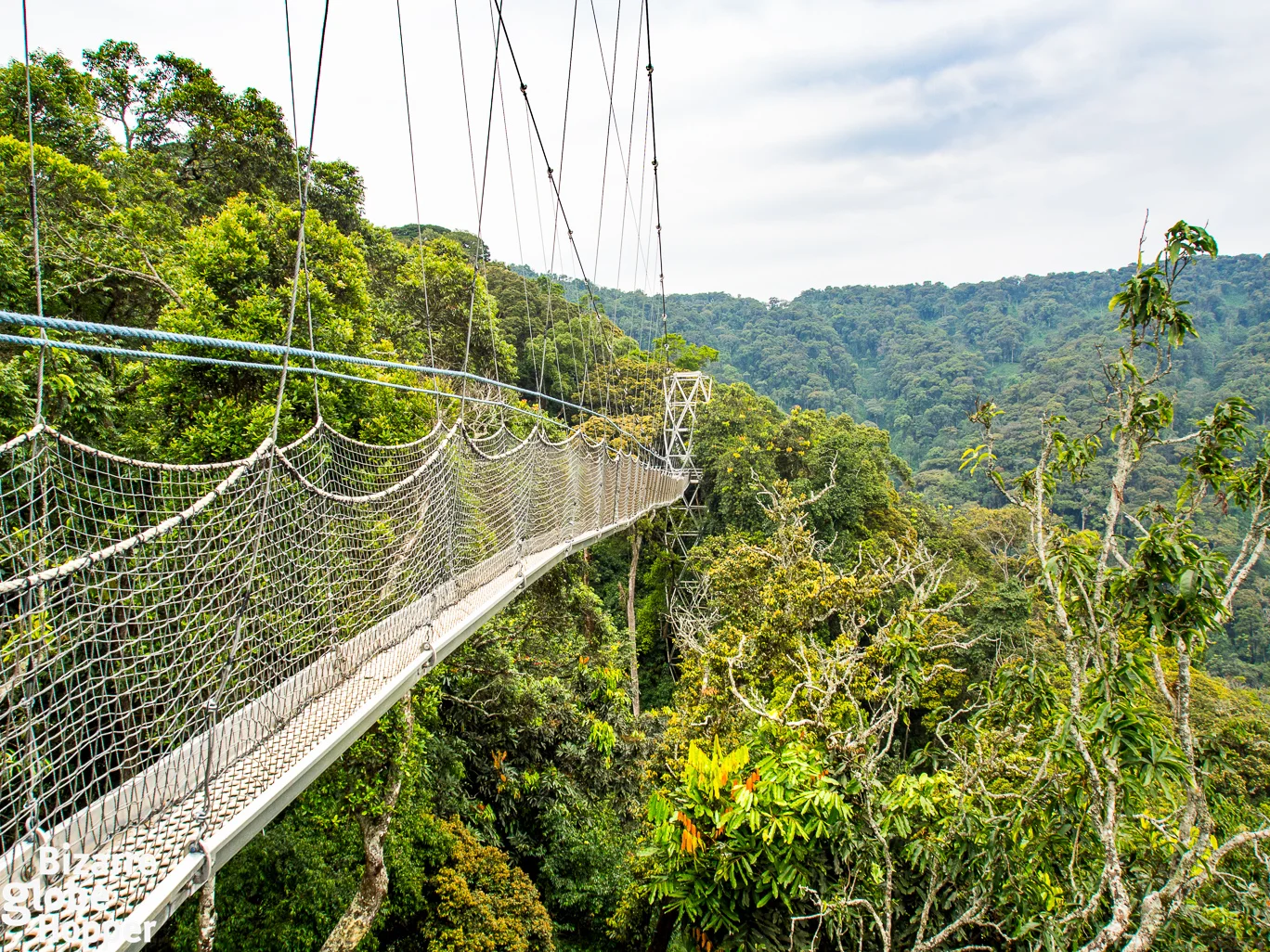
The canopy walkway leaves from Uwinka Visitor Centre and gives 360-degree views over the forest canopy. Uwinka is also the start of 10 of the park’s trails and of the colobus tracking, which follows a troop of more than 400 Angolan Black-and-white Colobus. Gisakura has 3 more trails.
Gisovu, Munazi and the Kamiranzovu swamp
The 2 park-run stays in the directory sit at the 2 ends of the forest. Gisovu Guesthouse is 2 guesthouses in a clearing on a hill in the north of the park, looking over Lake Kivu and Nyungwe’s forested mountains, among them Muzimu, the park’s second-highest mountain. The park sells it as a base for birding and nature walks in northern Nyungwe and for the chimpanzee habituation experience. Its staff canteen sells food from 7am to 8pm, and breakfast can be packed for an early start. The road in is 205 km from Kigali: 87 km from Karongi town to Hanika, then 19 km on a murram road.
Munazi Lodge is a set of raised A-frame cabins built from exotic timber cleared from the park, 1.2 km off the Kigali to Rusizi highway near Pindura, with a north-facing valley view and, on clear days, a glimpse of Lake Kivu. The park calls it a birdwatcher’s paradise, with turacos and Albertine Rift endemics appearing around the cabins, so the first birding walk of the day may not need a walk.
For birders with time and legs, the park’s 3-day Cyinzobe hike crosses the heart of the forest, past streams, waterfalls and the extensive Kamiranzovu swamp, overnighting in wooden cottages on the trail. Grauer’s Swamp Warbler is on van Zandbergen’s list of Nyungwe endemics; the East African Trails group found its bird at Rugezi Marsh in the north of the country instead. For the forest across the border with many of the same birds, see Bwindi for birders.
When to go
Van Zandbergen calls Nyungwe excellent all year, but because so much forest birding depends on calls, she puts the best time at March to May, when birds are most vocal. From June to September many birds are feeding fledglings and keep quiet, and they only become vocally active again in January or February: parents everywhere will understand. April is the wettest month, and the trails get very slippery. Palaearctic migrants are present from November to April. The East African Trails group birded in late January, between the rains, and still met fog on 2 of its 4 days.
Where to stay
The places to stay inside Nyungwe National Park, in the order they appear above:
| Place to stay | Where | For birders | From |
|---|---|---|---|
| Gisovu Guesthouse | Northern Nyungwe, above Lake Kivu, Rwanda | Park bird guides bookable, packed breakfast for early starts | Ask the lodge |
| Munazi Lodge | Near Pindura, Nyungwe National Park, Rwanda | Turacos and endemics around the cabins, park bird guides | Ask the lodge |
Park fees, trail access and guide arrangements in Nyungwe change. Facts were checked on 15 November 2026 with the park’s own website, Ariadne van Zandbergen’s SafariBookings page on Nyungwe’s birds, East African Trails’ January 2021 trip report, Richard Primack’s September 2023 blog post and each listing on Birding Dispatch. Confirm current fees and guides with the park before you travel.
More from the Journal
 Namib-Naukluft and Sossusvlei for Birders: Dune Lark, Desert Raptors and the Naukluft SpecialsA lark that lives on the dunes and nowhere else, Lappet-faced Vultures nesting in the desert, coursers on the gravel plains and the northern specials around the Naukluft cliffs, in one of Africa's largest parks.
 Lake Baringo and Lake Bogoria Birding: The Owl Walks, the Cliffs and the FlamingosA local guide who knows where every nightjar and eagle-owl slept last night, thorn scrub full of hornbills, a Goliath Heron colony on a rock, and the flamingo lake next door that keeps rising.
 Akagera Birding: Rwanda’s Savanna, Lakes and Papyrus, and the Shoebill ChancesRed-faced Barbet in the southern woodland, Papyrus Gonolek and Carruthers's Cisticola in the swamps, a lake of hippos and lapwings, and a Shoebill that hides in the wetlands more than it shows.
The Pigeon Post
Every Thursday: 1 bird, 1 place to go and 1 place to stay, by email. Sign up and get our printable checklist of the 163 endemics of southern Africa.