
Kakamega Forest Birding: Kenya’s Slice of the Guineo-Congolian Rainforest
Great Blue Turacos over the cottages, Turner's Eremomela in the canopy, a babbler with the forest for a surname, and how to bird Kenya's only tropical rainforest on foot with a local guide.
The bird most closely tied to Kakamega Forest is one most visitors barely see. Grey-chested Babbler is so much a bird of this patch of western Kenya that its genus, and sometimes its common name, is Kakamega, and Birding Ecotours’ group on its September 2024 Kenya tour got only a brief view of a vocal one. A bird with a whole forest for a surname, and it still preferred to stay out of sight.
The headliners are easier. On the same tour, a couple of Great Blue Turacos, the largest turaco species, showed on the first afternoon, along with an immature African Crowned Eagle and Black-and-white-casqued Hornbills that the report calls huge and noisy. That is the Kakamega pattern: a long list of central and west African forest birds at the eastern edge of their range, a few local specials, and a forest dense enough that hearing a bird and seeing it are 2 separate achievements.
The forest
Kakamega Forest is Kenya’s only tropical rainforest and is described as the country’s last remnant of the Guineo-Congolian rainforest, according to its Wikipedia entry. It lies northwest of Nairobi near the Uganda border, mostly between 1,500 and 1,600 m, in the watershed of the Isiukhu and Yala rivers, which rise on the Nandi Escarpment and flow west to Lake Victoria. The forest and its reserves cover about 238 square kilometres, a little less than half of it still indigenous forest, broken up by grassy glades of uncertain origin.
The forest is split between 2 managers. The Kakamega Forest Reserve dates from 1933. In the north, the Kakamega National Reserve of 4,468 ha was gazetted in 1985 with the Kisere Forest Reserve beside it. In the south, the Isecheno Forest Station, run by the Kenya Forest Service, is the most accessible part for visitors. Some 367 bird species have been recorded in the forest. Birding Ecotours links it to BirdLife’s list of Important Bird and Biodiversity Areas in Danger, and the area around it is one of the most densely populated rural areas in the world, so the pressure on firewood and building poles is constant.
The specials
Turner’s Eremomela is the bird a Kakamega visit is usually built around. Birding Ecotours’ report says that Kakamega and the nearby South and North Nandi Forests are the only realistic places for birders to see it, apart from some isolated sites in the Democratic Republic of the Congo. Its group found the eremomelas early on its first full morning and saw them well. Field Guides’ March 2024 group, led by Terry Stevenson, also recorded it, which suggests a bird that is findable rather than lucky, as long as you are in the right forest.
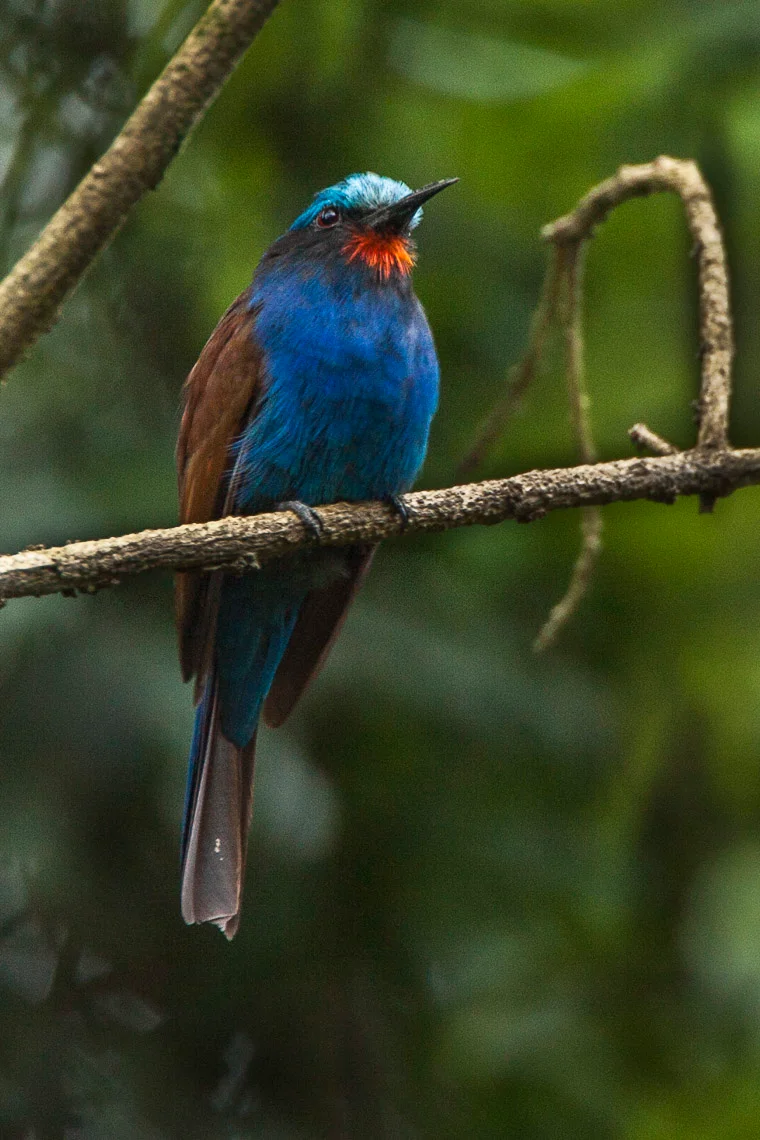
Blue-headed Bee-eater is the other target, and it tends to sit high. Birding Ecotours scoped it, with White-throated Bee-eater, high in the trees at the park headquarters in the afternoon; Field Guides had brief looks at 2 single birds. Chapin’s Flycatcher, Red-headed Bluebill, Dark-backed Weaver, Purple-throated Cuckooshrike and Jameson’s Wattle-eye were all on Birding Ecotours’ first full day, and the report names Red-headed Malimbe as the most popular bird of that day.
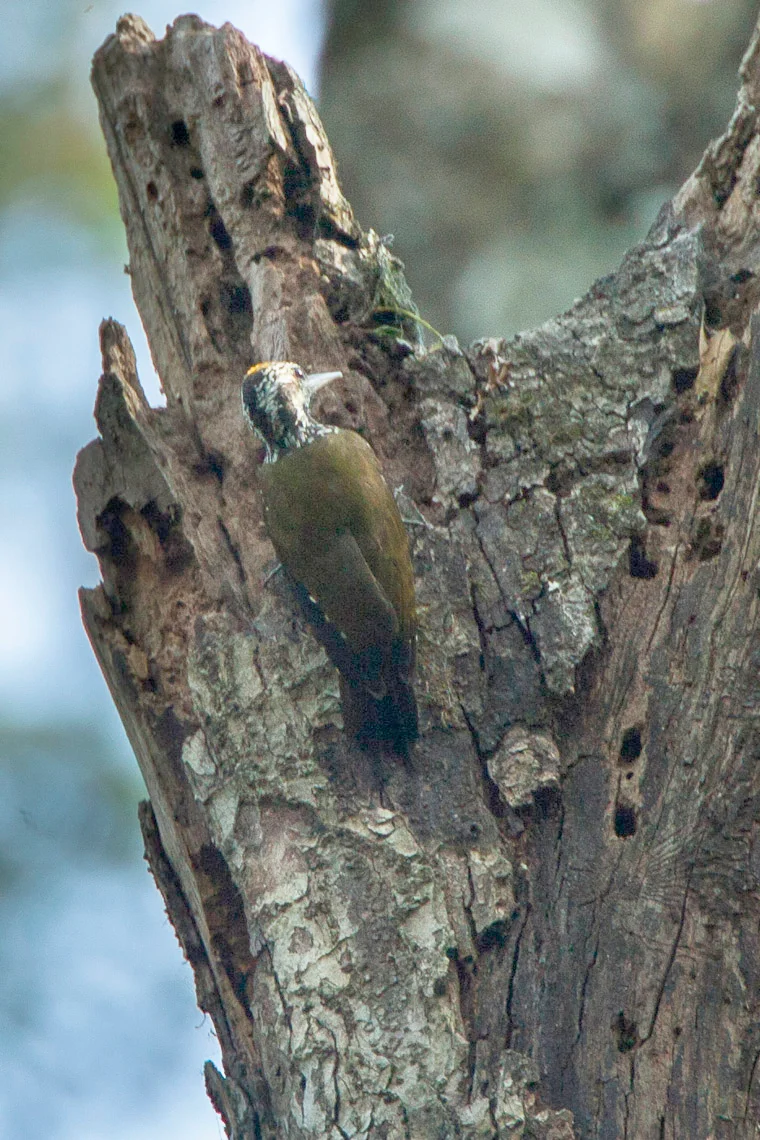
The barbets are a show of their own. Birding Ecotours added Yellow-billed and Yellow-spotted Barbets, and Field Guides found Hairy-breasted Barbet and about 20 Grey-throated Barbets, which the report describes as the one with the “rhino horns”. Field Guides also had 4 Great Blue Turacos in the forest near Rondo Retreat, a Ross’s Turaco flying over its heads more than once, a displaying African Broadbill, Petit’s Cuckooshrike, Luehder’s Bushshrike and Black-faced Rufous Warbler. For the rest of the family across Africa, see Africa’s turacos and where to find each one.
How to bird it
Kakamega is a walking forest, which comes as a relief after a vehicle safari. Field Guides’ group came straight from northern Tanzania, where large mammals had kept it mostly in the vehicles, and found it a pleasure to walk the forest trails at will. There are no lions here to make you stay in your seat, only the occasional fallen branch.
Work the mixed flocks. On its last morning, Birding Ecotours found a pair of Yellow-bellied Wattle-eyes, which the report calls the most dazzling of the wattle-eyes, travelling with Pale-breasted Illadopsis, Red-tailed Bristlebill and Kakamega Greenbul. A stop at a river inside the forest added Ansorge’s and Cabanis’s Greenbuls and an African Pygmy Kingfisher. Expect greenbuls in quantity: Field Guides listed Joyful, Shelley’s, Yellow-whiskered, Ansorge’s and Cabanis’s, a group that does for forest birding what the larks do for grassland, and in a similar shade of uncertainty.
Hire a guide. The Kakamega Rainforest Tour Guides arrange walks, and the forest’s Wikipedia entry gives 06:30 to 08:30 and 16:30 to 18:30 as the best birding hours. That is 2 short windows a day, so a 3-night stay, as both tour groups made, gives 4 or 5 good sessions rather than 1 rushed morning. Many of the targets live in the canopy, so a telescope, or a guide with one, earns its place in the luggage. The park fees and the court case over the 2025 Kenya Wildlife Service fee schedule are covered in the Kenya birding guide.
A day at Lake Victoria
Lake Victoria is close enough for a day trip, and its papyrus holds a different set of birds. During its 3-night stay, Birding Ecotours drove to Yala Swamp near the lake, stopping on the way for Rock Pratincoles and a close Lizard Buzzard. The best bird in the swamp was Papyrus Gonolek, which showed very well after testing the group’s patience for a while; Swamp Flycatcher and Blue-cheeked Bee-eater were there too. The group finished at Port Bunyala to look out over the lake itself.
Field Guides took the other approach and birded the shore on the way in. Its group walked the lakeshore near Kisumu, an hour south of Kakamega, and found Eastern Plantain-eater, Black-headed Gonolek, Swamp Flycatcher, Red-chested Sunbird and Papyrus Canary. On the way out, east towards the Rift Valley, a stop in woodland near the Kerio River produced White-crested Turaco, so the turaco count can still climb after the forest.
When to go
Kakamega is wet in every month, so the question is how wet. The forest’s Wikipedia entry gives 1,200 to 1,700 mm of rain a year, heaviest in April and May, with a slightly drier June, a second peak in August and September, and January and February the driest months. Temperatures stay between about 20 °C and 30 °C all year.
The 2 tours used here went at opposite ends of that calendar, Field Guides in March 2024 and Birding Ecotours in September 2024, and both found the main specials. Birding Ecotours waited out rain on its first afternoon before birding, which is the local version of a delayed start. Pack a rain jacket whatever the month, and a dry bag for the binoculars.
Rondo Retreat
Rondo Retreat is the base both tour groups used, and Field Guides described it as right in the middle of the forest. It is a Christian retreat centre of 6 cottages set in gardens inside Kakamega Forest, with birdwatching among its listed activities and guided walks offered. The retreat says guests have watched African Crowned Eagle and Black-and-white-casqued Hornbill nests from the lawn, and its habitats run from rainforest to gardens and a fish pond. Field Guides counted about 20 of those hornbills during its stay; for the family as a whole, see Africa’s hornbills and where to see them. The retreat gives no rate on its website, so ask when you book, and plan for a malaria area.
Where to stay
The place to stay inside Kakamega Forest:
| Place to stay | Where | For birders | From |
|---|---|---|---|
| Rondo Retreat | Inside Kakamega Forest, Kenya | 6 cottages in forest gardens, guided walks offered | Ask the lodge |
Forest access, guiding arrangements and Kenya Wildlife Service fees change. Facts were checked on 15 November 2026 with the Birding Ecotours Kenya tour report of September 2024, the Field Guides East Africa Highlights report of March 2024, the Kakamega Forest Wikipedia entry and the Rondo Retreat listing on Birding Dispatch. Confirm fees and guides before you travel.
More from the Journal
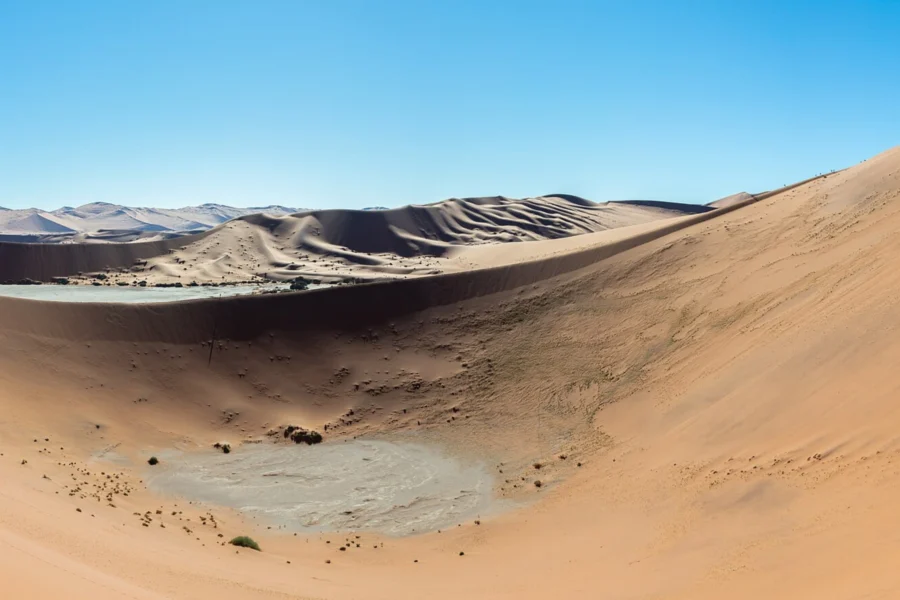 Namib-Naukluft and Sossusvlei for Birders: Dune Lark, Desert Raptors and the Naukluft SpecialsA lark that lives on the dunes and nowhere else, Lappet-faced Vultures nesting in the desert, coursers on the gravel plains and the northern specials around the Naukluft cliffs, in one of Africa's largest parks.
 Lake Baringo and Lake Bogoria Birding: The Owl Walks, the Cliffs and the FlamingosA local guide who knows where every nightjar and eagle-owl slept last night, thorn scrub full of hornbills, a Goliath Heron colony on a rock, and the flamingo lake next door that keeps rising.
 Akagera Birding: Rwanda’s Savanna, Lakes and Papyrus, and the Shoebill ChancesRed-faced Barbet in the southern woodland, Papyrus Gonolek and Carruthers's Cisticola in the swamps, a lake of hippos and lapwings, and a Shoebill that hides in the wetlands more than it shows.
The Pigeon Post
Every Thursday: 1 bird, 1 place to go and 1 place to stay, by email. Sign up and get our printable checklist of the 163 endemics of southern Africa.