
Hwange Birding: the Pans, the Raptors and Where to Stay
Bradfield's Hornbill on the Kalahari sand, waders and crakes on the rain-filled pans, vultures and eagles over the kills: how to bird Hwange, when to go, and the 2 camps with hides.
Hwange probably holds the largest protected population of Bradfield’s Hornbill in the world, the kind of superlative only a birder gets excited about. BirdLife Zimbabwe says so in its Important Bird Area account for the park, and lists the hornbill as common there, along with Meves’s Starling and Stierling’s Wren-Warbler, while Arnot’s Chat and Dickinson’s Kestrel are fairly common. These are birds of the Kalahari sand that covers most of the park, and they are what set Hwange apart from the Zambezi Valley parks to the north.
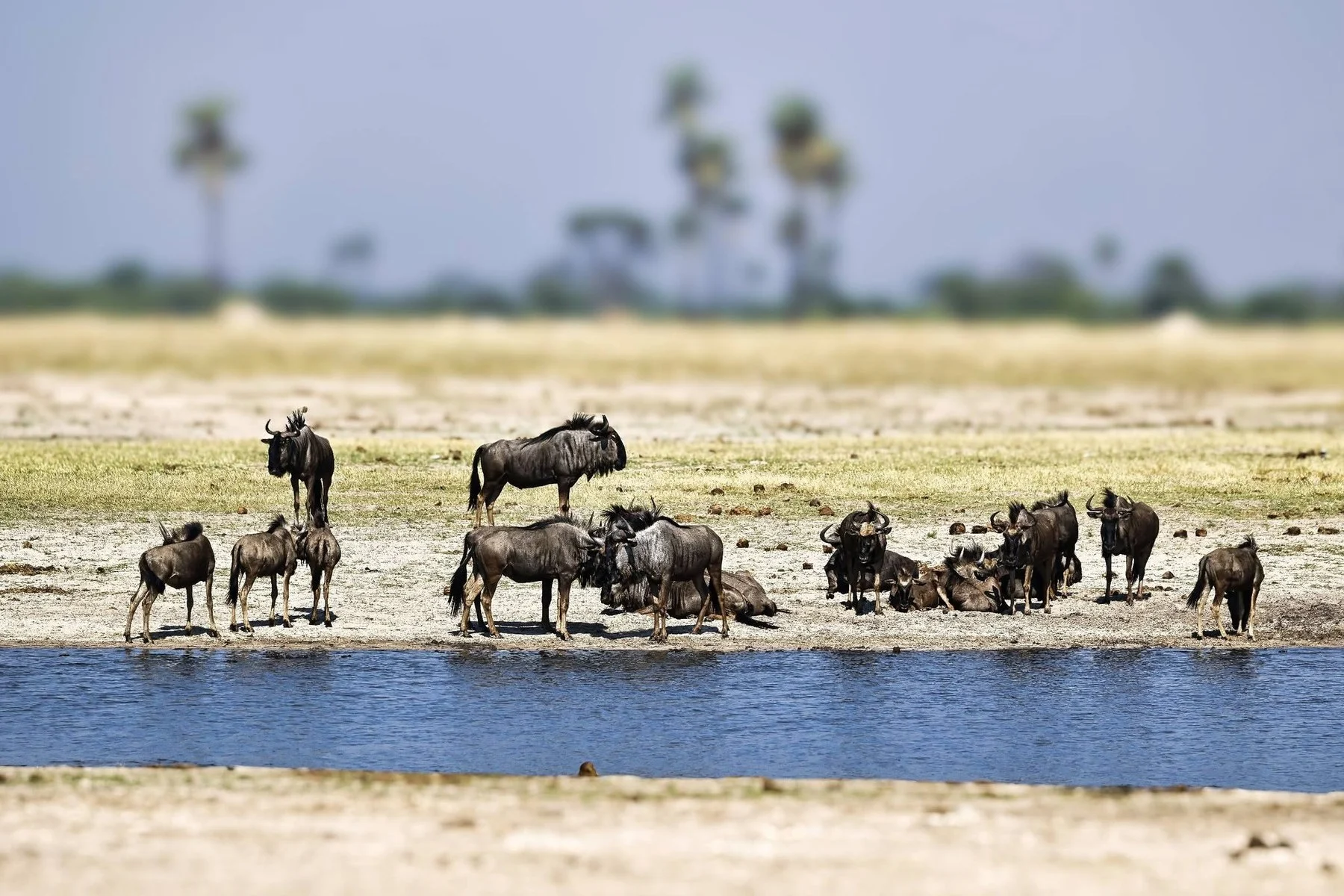
Hwange is Zimbabwe’s oldest national park and one of the largest protected areas in Africa, 14,600 km² on the Botswana border. BirdLife Zimbabwe’s checklist has risen to 449 species. There is no perennial river. The birds, like the elephants, depend on shallow pans in the troughs between old dunes, some filled by rain and others topped up from boreholes, and on a handful of dams in the hillier north, so every pan is a meeting place and the water sets the agenda.
Hwange at a glance
| Habitat | Where | Birds to look for |
|---|---|---|
| Pans and their edges | Throughout; the road network is in the north and east | Burchell’s Sandgrouse, Kori Bustard, Secretarybird, pratincoles, waders |
| Vegetated pans after rain | Wet season | Corn, Spotted, Striped and Baillon’s Crakes, Lesser Moorhen |
| Kalahari-sand woodland | West and centre, and along the roads | Bradfield’s Hornbill, Arnot’s Chat, Kalahari Scrub Robin |
| Dams and rivers | North: Mandavu, Masuma, Deteema | Herons, storks, ducks, Osprey |
| Kills and thermals | Anywhere | White-headed, Hooded and Lappet-faced Vultures, Bateleur, Martial Eagle |
The pans
BirdLife Zimbabwe describes a park of flat Kalahari sand laid down in parallel dunes, with calcrete pans in the dips between them. After heavy rain some pans hold water right through the dry season; others are kept going with water pumped from deep boreholes. Its birding page puts the total at something like 40,000 pans, which is a great many edges to check, and it is around them that most Hwange birding happens.
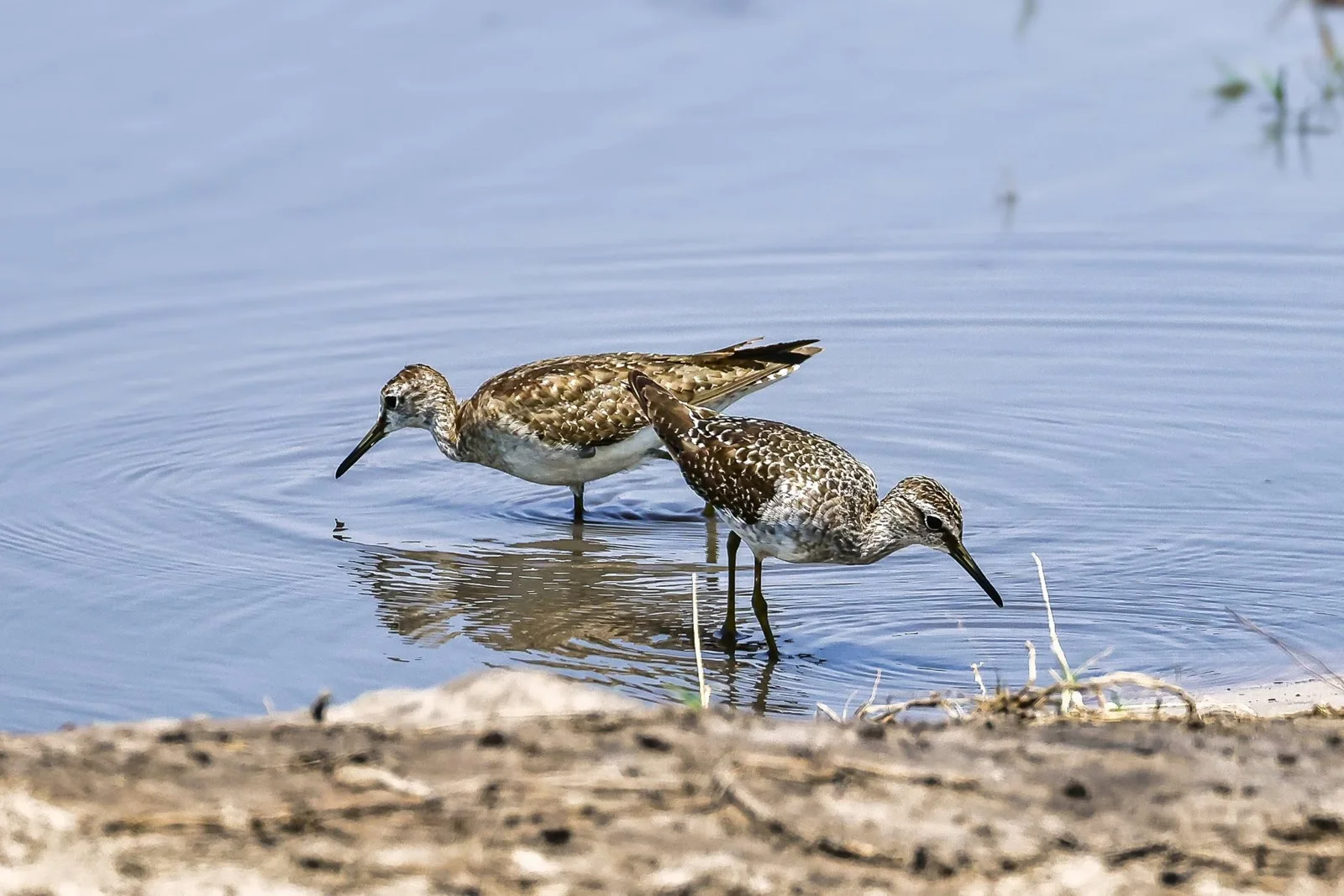
The list at the water changes with the season. BirdLife counts 11 migrant waterbird species that use the ephemeral pans, among them Woolly-necked Stork, Maccoa Duck, Lesser Moorhen and Whiskered Tern. Its birding page adds herons and egrets, Dwarf Bittern, flamingos, terns and African Skimmer, and suggests checking the more vegetated pans in the rains for Corn, Spotted, Striped and Baillon’s Crakes. On the open edges it lists Burchell’s and Yellow-throated Sandgrouse, Kori Bustard, Red-crested Korhaan, Southern Ground Hornbill, Secretarybird, Three-banded Courser and both Collared and Black-winged Pratincoles. Wilderness, which runs 3 camps in private concessions in the park, picks out Grey Crowned Crane, spoonbills, sandpipers, Greater Painted-snipe and White-faced Whistling Duck around its pans.
The north: Sinamatella, Mandavu and Salt Pan
The north and east are different country: basalt, granite and shale ridges up to 1,000 m, the Deka, Sinamatella and Lukosi rivers shrinking to pools in the dry season, and several man-made dams, of which Mandavu is the largest. BirdLife Zimbabwe calls the dams and pans together a vital network for migrant and resident birds.
A report from the January 2013 African Waterbird Count, written by John and Judy Brebner for the Victoria Falls Guide, shows what a wet year looks like. The team counted pans from Guvelala and Shapi to the water around Shumba, found the water almost up to the pillars of the Nyamandhlovu platform, and noted that grass round the full pans made the small waders hard to see: a good year for waders is not always a good year for seeing them. Mandavu Dam was close to spilling, with an Osprey, Glossy Ibises, Yellow-billed Storks and a pair of Goliath Herons building a nest. Masuma produced Saddle-billed Storks, a Grey Crowned Crane and Water Thick-knees, and the Mike Edwards picnic site near Robins a Black-crowned Night Heron. At Salt Pan they found a young Greater Flamingo, 3 Long-toed Lapwings, which they called a rarity, both pratincoles, and Hottentot, Red-billed and Cape Teal. The count is 13 years old, but the sites are the same, and they are the ones to work after good rains.
ZimParks still ran chalets at Main Camp and Sinamatella in April 2026, according to Tracks4Africa users, so Sinamatella is a base for the dams without a private lodge.
The raptors
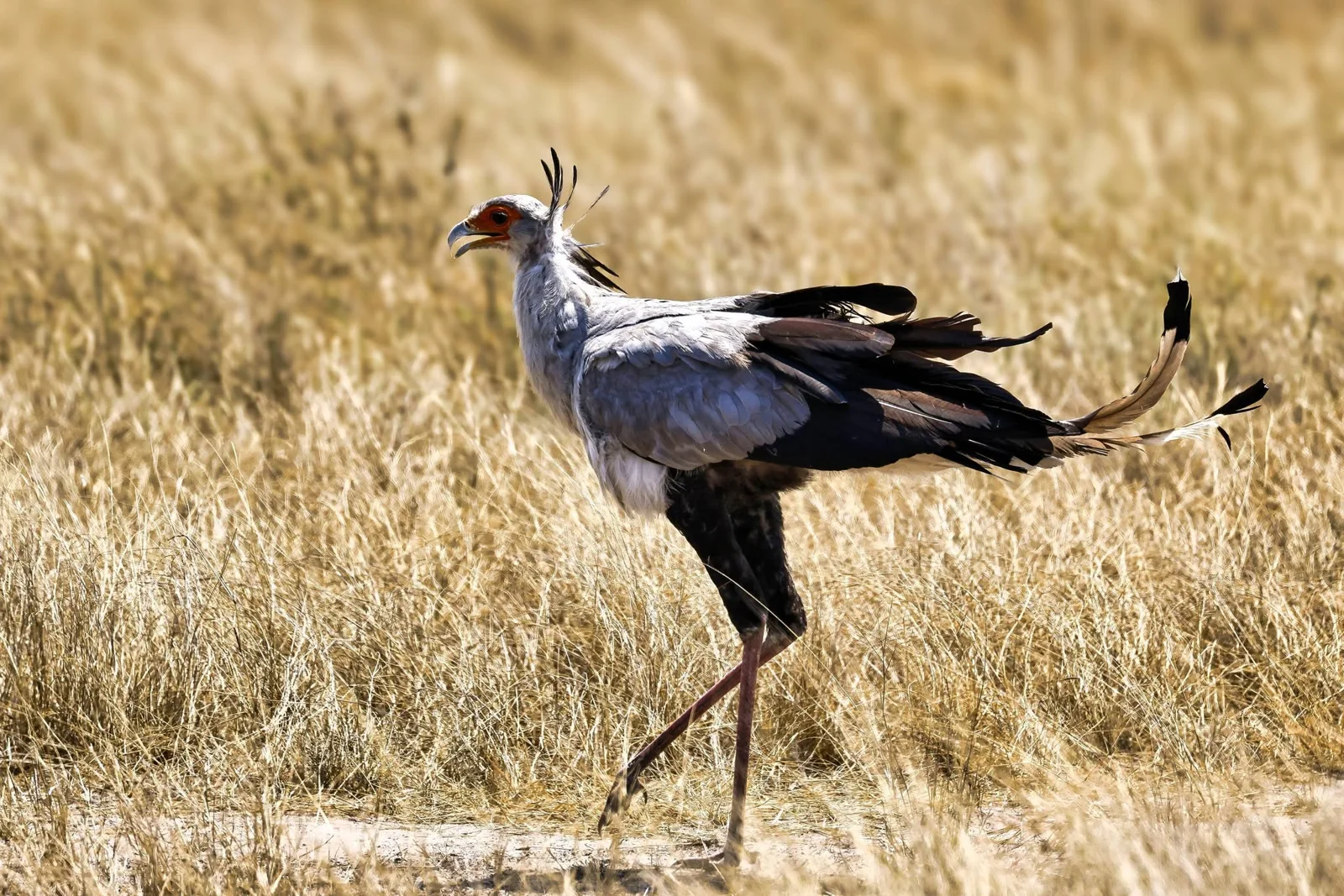
BirdLife Zimbabwe calls Hwange an important refuge for 7 raptors: White-headed, Hooded and Lappet-faced Vultures, Bateleur, Tawny Eagle, Martial Eagle and African Hawk-Eagle. Its birding page says lion kills bring in the vultures and Marabou Storks, and adds Southern Pale Chanting Goshawk, Dickinson’s Kestrel, African and Eurasian Hobbies, Red-necked Falcon and, in the wet season, harriers. Cape Vulture and Pallid Harrier turn up as occasional visitors.
The open pans and the plains around them are where the soaring birds are easiest to follow. A gathering of vultures in a dead tree, or circling low over one spot, usually means a carcass below, and the birds on and around it are worth an hour with a telescope. Follow the vultures; they have done the searching already.
The Kalahari-sand specials
Away from the water, the dry woodland is where Hwange’s restricted-range birds live. BirdLife’s status list has Bradfield’s Hornbill, Meves’s Starling, Stierling’s Wren-Warbler, Kurrichane Thrush and White-bellied Sunbird as common, Arnot’s Chat and Dickinson’s Kestrel as fairly common, Burchell’s Sandgrouse and Black-eared Seedeater as uncommon, and Racket-tailed Roller, Kalahari Scrub Robin, Barred Wren-Warbler and Miombo Rock Thrush as rare. The park probably holds the largest protected population of Yellow-billed Oxpecker in the subregion, and Saddle-billed Stork, Kori Bustard and Southern Ground Hornbill all breed. For the hornbills in particular, our guide to Africa’s hornbills sets Bradfield’s against its look-alikes.
The woodland and acacia list on BirdLife Zimbabwe’s birding page reads like a dry-country primer: Southern Pied Babbler, African Red-eyed Bulbul, Crimson-breasted Shrike, Magpie Shrike, Southern White-crowned Shrike, Red-billed Buffalo Weaver, Orange-winged Pytilia, Shaft-tailed Whydah, Broad-tailed Paradise Whydah and Black-faced Waxbill. BirdLife notes that the drier west of Zimbabwe shares many species with Botswana that are found nowhere else in the country, so a Zimbabwe list needs a trip west.
When to go
Wilderness recommends the green season, roughly November to March, when migrants arrive from Europe and Asia, resident birds are in breeding colour and the bush is green. It falls outside the June to October peak, so the camps are quieter and rates are lower: the birds dress up and the bill goes down. Nantwich Lodge gives November to March as its birding season, and The Hide’s green-season rate runs from 1 November to 31 March.
The trade-off is weather and water. BirdLife Zimbabwe records 33°C in October and frosts of -5°C or lower in June and July, and the average 620 mm of rain falls less in the west than in the east. In a wet year there is water everywhere, and the 2013 counters found far fewer birds on Salt Pan than in their 2012 count. Spread the water out and the birds spread out with it.
Getting there and fees
The tourist roads are in the north and east; BirdLife describes the flatter centre and west as wilderness with few roads. The Hide is about 3 hours by road from Victoria Falls Airport to Main Camp, then just over an hour through the park, with a 4×4 needed for self-drive; the alternative is a flight to Umtshibi Airfield and a 40-minute transfer. Nantwich Lodge, in the north-west, is about an hour and a half from Victoria Falls Airport, the last 60 km on gravel to Nantwich Gate, and Robins Airstrip is 30 minutes away.
ZimParks’ 2026 tariff, as summarised by SafariFind in July 2026, charges a foreign-registered private vehicle US$10 a day for a day visitor and US$3 for a visitor staying in the park. The per-person conservation fee for Hwange was not in the extract, so ask ZimParks or your operator for the full figure. Hwange is an easy add-on to a Victoria Falls trip; our Victoria Falls birding guide covers that end, and the Zimbabwe birding guide the rest of the country.
Where to stay
Both Hwange listings have their own hide:
| Place to stay | Where | For birders | From |
|---|---|---|---|
| The Hide | Inside Hwange National Park | Waterhole hide, Bradfield’s Hornbill, Racket-tailed Roller, Arnot’s Chat | US$467 pp a night fully inclusive (green season 2026/27) |
| Nantwich Lodge | North-western Hwange, near Robins | Underground hide on the dam, guided birding, feeders | US$463 pp sharing fully inclusive (green season) |
Park fees, water levels and rates change every season. Facts were checked on 14 November 2026 with BirdLife Zimbabwe’s Important Bird Area account and birding page for Hwange National Park, the Brebners’ January 2013 waterbird count report, Wilderness, SafariFind’s summary of the 2026 ZimParks tariff and each place’s listing on Birding Dispatch. Confirm fees and road conditions with ZimParks before you travel.
More from the Journal
 Namib-Naukluft and Sossusvlei for Birders: Dune Lark, Desert Raptors and the Naukluft SpecialsA lark that lives on the dunes and nowhere else, Lappet-faced Vultures nesting in the desert, coursers on the gravel plains and the northern specials around the Naukluft cliffs, in one of Africa's largest parks.
 Lake Baringo and Lake Bogoria Birding: The Owl Walks, the Cliffs and the FlamingosA local guide who knows where every nightjar and eagle-owl slept last night, thorn scrub full of hornbills, a Goliath Heron colony on a rock, and the flamingo lake next door that keeps rising.
 Akagera Birding: Rwanda’s Savanna, Lakes and Papyrus, and the Shoebill ChancesRed-faced Barbet in the southern woodland, Papyrus Gonolek and Carruthers's Cisticola in the swamps, a lake of hippos and lapwings, and a Shoebill that hides in the wetlands more than it shows.
The Pigeon Post
Every Thursday: 1 bird, 1 place to go and 1 place to stay, by email. Sign up and get our printable checklist of the 163 endemics of southern Africa.