
How to Hire a Bird Guide in Africa: Where to Find One, What It Costs and What to Ask
BirdLife South Africa's community guides, lodges with birders on staff and private day tours: where to find a bird guide in Africa, what a day costs in 2026, and what to ask first.
At the Strydom Tunnel on the Abel Erasmus Pass in Limpopo, one of BirdLife South Africa’s community bird guides is based at the site of the Taita Falcon, a bird BirdLife’s own guide list calls extremely rare. In the grasslands around Wakkerstroom, another, David Nkosi, has worked as an assistant researcher on BirdLife’s Yellow-breasted Pipit project and knows where to look for Rudd’s and Botha’s Larks. None of these birds is easy to find from a map, and none of them reads maps anyway. All of them are easier with the person who checked the spot last week.
That is the case for a bird guide in a paragraph, and the best insurance against a dip, birders’ slang for the bird you travelled for and missed. This guide covers where to find one in South Africa and further north, what a day costs in 2026, and what to settle before the day starts.
Where to find a guide
BirdLife South Africa’s community bird guides. BirdLife began training community bird guides in 2001. It has trained more than 200 people from rural communities, and nearly 50 of them are still active guides. They are trained by BirdLife and supported through its partnership with Swarovski Optik, and their details are on BirdLife’s GoBirding site, where they appear as about 50 rusted-orange pins in the north-east of the country, each one a person who knows where the birds are hiding.
The contact list on BirdLife’s website runs by region. North of Pretoria there is a guide for Hammanskraal, Zaagkuilsdrift and Dinokeng. In the Free State, guides cover Memel and Seekoeivlei, Golden Gate and the northern Berg. The Kruger to Canyons group works the Blyde River Canyon, Phalaborwa and Kruger itself; Limpopo adds Magoebaskloof, Venda, the Soutpansberg and the Waterberg; Mpumalanga has Wakkerstroom and Kaapsehoop; inland KwaZulu-Natal has Ingula. The longest list is in Zululand, from Mkhuze and Muzi Pan to Dlinza Forest, Ongoye, Amatigulu, St Lucia and Hluhluwe-iMfolozi. The Zululand birding guide covers those sites.
Lodges with a birder on staff. Some places to stay employ their own bird guides, which removes the arranging and leaves only the getting up early. At Makakatana Bay Lodge on Lake St Lucia, the resident birder, Andrew Morrison, leads an early-morning wetlands outing with a bush breakfast. Sabi Sabi runs birding safaris on foot or by vehicle from Sabi Sabi Little Bush Camp with specialised birding guides and trackers. Royal Malewane, in the Thornybush reserve in Greater Kruger, matches guests with birding specialists from its guiding team and invites a bird wish list before arrival. Chitwa Chitwa, also in the Sabi Sand, describes its guides as expert birders. On the Garden Route, Kwendalo’s guide is Dr Matthew Zylstra, a registered BirdLife Avitourism Guide, and at Reflections Eco-Reserve the owner, Tim Carr, is a specialist birding guide.
The same arrangement works further north. KaingU Safari Lodge on the Kafue River in Zambia says its own guides are experienced birders. At Gibb’s Farm in Tanzania’s Ngorongoro Highlands, naturalists lead walks into the bordering bush and forest. Bisate Lodge, on the edge of Rwanda’s Volcanoes National Park, includes guided birding walks on its trails among its activities.
Private day tours. Birding tour companies run day trips with a professional guide, which suits a single free day in a city. They cost more, and the price covers the vehicle and the planning, so all that is left to bring is the binoculars.
What it costs
Community guides are self-employed and set their own rates, which BirdLife describes as affordable and competitive within the guiding industry. GoBirding is clear that you negotiate the price with the guide directly. The cost depends on the length of the outing (half a day, a full day or several days), the size of your party, and the guide’s own costs, such as fuel, meals and accommodation. Unless something else is agreed, the guide meets you at a pick-up point and joins you in your vehicle, so your car and your fuel are part of the arrangement. Expect the guide to know some roads your car has never seen.
A fully arranged private day costs more. Birding Ecotours prices its 1-day Cape Mountains and Fynbos tour from Cape Town at R7,000 for one person, plus R500 for each extra person sharing (November 2026). That covers guiding fees, vehicle rental and fuel, entrance fees and a light lunch. Gratuities are extra, and the company allocates the guide only after you have booked, because every day trip runs as a private trip.
At a lodge, check whether guided birding is in the rate or an extra, before the bill does the explaining. Makakatana Bay Lodge lists guided birding among the activities to pre-book; the Sabi Sabi Little Bush Camp rate includes day and night drives and walking safaris.
What a local guide knows
BirdLife lists 3 things its community guides bring: better security, knowledge of where elusive and special species can be found, and in some cases access to places that are otherwise closed to visitors. The guide profiles show what the second point means in practice, and it is impressive.
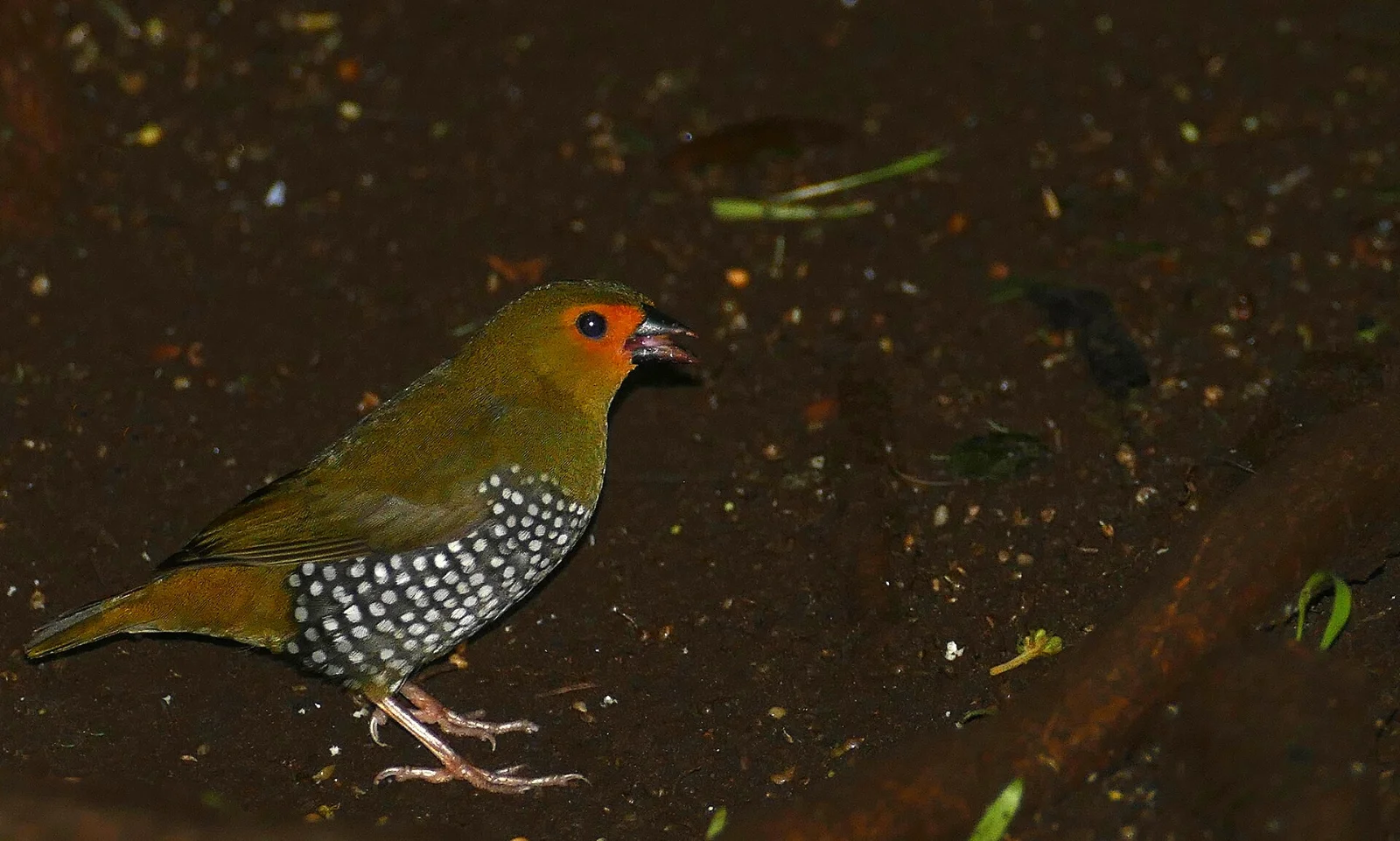
In Venda, Christopher, who manages the Golwe campsite, has monitored each pair of African Broadbill along his stretch of river for several years and knows where they nest. In the Soutpansberg, Samson Mulaudzi has stake-outs for African Broadbill, Gorgeous Bushshrike, Eastern Nicator and Green Twinspot, and his profile names Muirhead Dam as the only reliable place in South Africa for Blue-spotted Wood Dove. At Magoebaskloof, David Letsoalo, who won BirdLife South Africa’s Eagle Award in 2007 as the best local guide in the country, leads walks at Kurisa Moya and outings along the Woodbush Forest Drive; the Magoebaskloof birding guide lists the forest specials. At Wakkerstroom, Lucky Ngwenya is BirdLife’s bird-guide-in-residence at its Wakkerstroom Tourism and Education Centre and is booked through the centre; the Wakkerstroom larks guide explains why the larks there are hard work without local help.
Questions to ask before you book
Which birds, and where. Send a target list ahead of time and ask which birds on it are realistic in that season. Royal Malewane invites a wish list before arrival. A guide who says a bird is unlikely this month is saving you a morning, and possibly a sulk.
The arrangements. Agree the meeting point, the start time, whose vehicle and how long the outing runs. Ask what the price includes: fuel, entrance fees, meals, and any access fee for private land.
Group size. BirdLife South Africa’s Birding Code of Ethics asks for groups small enough not to threaten the environment or the peace of others. A small group also sees more of a skulking bird, which has fewer people to hide from.
Private land. The same code asks birders to get permission before entering private property. Part of what a local guide offers is knowing which landowners allow birders and on what terms.
Playback. Agree before you start how calls will be used. BirdLife recommends avoiding playback to attract any species, particularly threatened ones in the breeding season, and the African Bird Club’s code says local guides should not be pressed to keep playing a recording once the bird has been seen.
Payment. Ask about a deposit, cash or transfer, and what happens if weather or a closed road cancels the day. The birds do not issue refunds.
Credentials. For a BirdLife community guide, BirdLife’s training is the credential to ask about. For a lodge or tour guide, ask about FGASA, the Field Guides Association of South Africa, a professional body whose certification goes beyond the legal minimum and which represents guides in 12 countries from South Africa to Uganda. FGASA and BirdLife are developing a formal career pathway for specialist bird guides, and FGASA is coming on board as a donor to BirdLife’s Avitourism Project in 2026.
Where to stay
The places in this guide with a bird guide on staff:
| Place to stay | Where | For birders | From |
|---|---|---|---|
| Makakatana Bay Lodge | Lake St Lucia, KwaZulu-Natal | Resident birder leads an early wetlands outing | R10,880 pp sharing, fully inclusive |
| Sabi Sabi Little Bush Camp | Sabi Sand, Mpumalanga | Birding guides and trackers, on foot or by vehicle | R32,900 pp sharing, fully inclusive |
| Royal Malewane | Thornybush, Greater Kruger | Birding specialists matched to guests; send a wish list | R33,200 pp sharing, fully inclusive |
| Chitwa Chitwa | Sabi Sand, Mpumalanga | Guides described as expert birders; summer migrants | R28,447 pp sharing, full board |
| Kwendalo | Plettenberg Bay, Western Cape | Registered BirdLife Avitourism Guide, 2 hides | Ask the lodge |
| Reflections Eco-Reserve | Wilderness, Garden Route | Owner Tim Carr is a specialist birding guide | R1,275 pp, eco-chalet |
| KaingU Safari Lodge | Kafue National Park, Zambia | Birder guides, small hides, African Finfoot from the deck | Ask the lodge |
| Gibb’s Farm | Karatu, Tanzania | Naturalist-led walks, more than 200 species a season | US$518 pp sharing, full board |
| Bisate Lodge | Volcanoes National Park, Rwanda | Guided birding walks in Albertine Rift forest | US$2,723 pp, fully inclusive |
Guide lists, rates and lodge details change. Guide information is from BirdLife South Africa’s community bird guide pages and the tour price from Birding Ecotours, both checked on 14 November 2026; confirm rates and what they include with the guide or lodge before you book.
More from the Journal
 Do You Need a Spotting Scope? When a Scope Helps, What to Look For and Where It MattersA scope turns grey dots on a mudflat into Curlew Sandpipers and Red Knots. When it earns its place in the car, the features that matter, and why 60x fails at noon.
 Your First Birding Safari: What to Expect, From the 05:30 Gate to the Evening ListHow a birding safari day runs, what the guide does, why the vehicle stops for a brown bird when there is an elephant over there, and the other things first-timers find odd.
 How to Log Your Bird Sightings: eBird, BirdLasser or SABAP2?eBird wants short checklists with counts, BirdLasser wants the same bird logged again and again, and SABAP2 wants 2 hours in one square. What each is for, and how to feed all 3.
The Pigeon Post
Every Thursday: 1 bird, 1 place to go and 1 place to stay, by email. Sign up and get our printable checklist of the 163 endemics of southern Africa.