
Ducks and Geese of Southern Africa: Pygmy Goose, the Whistling Ducks and the Best Dams
A goose that can weigh more than 7 kg, a pygmy goose that lives among the water lilies, and a duck that will only live on rivers. Southern Africa's waterfowl and where to find them.
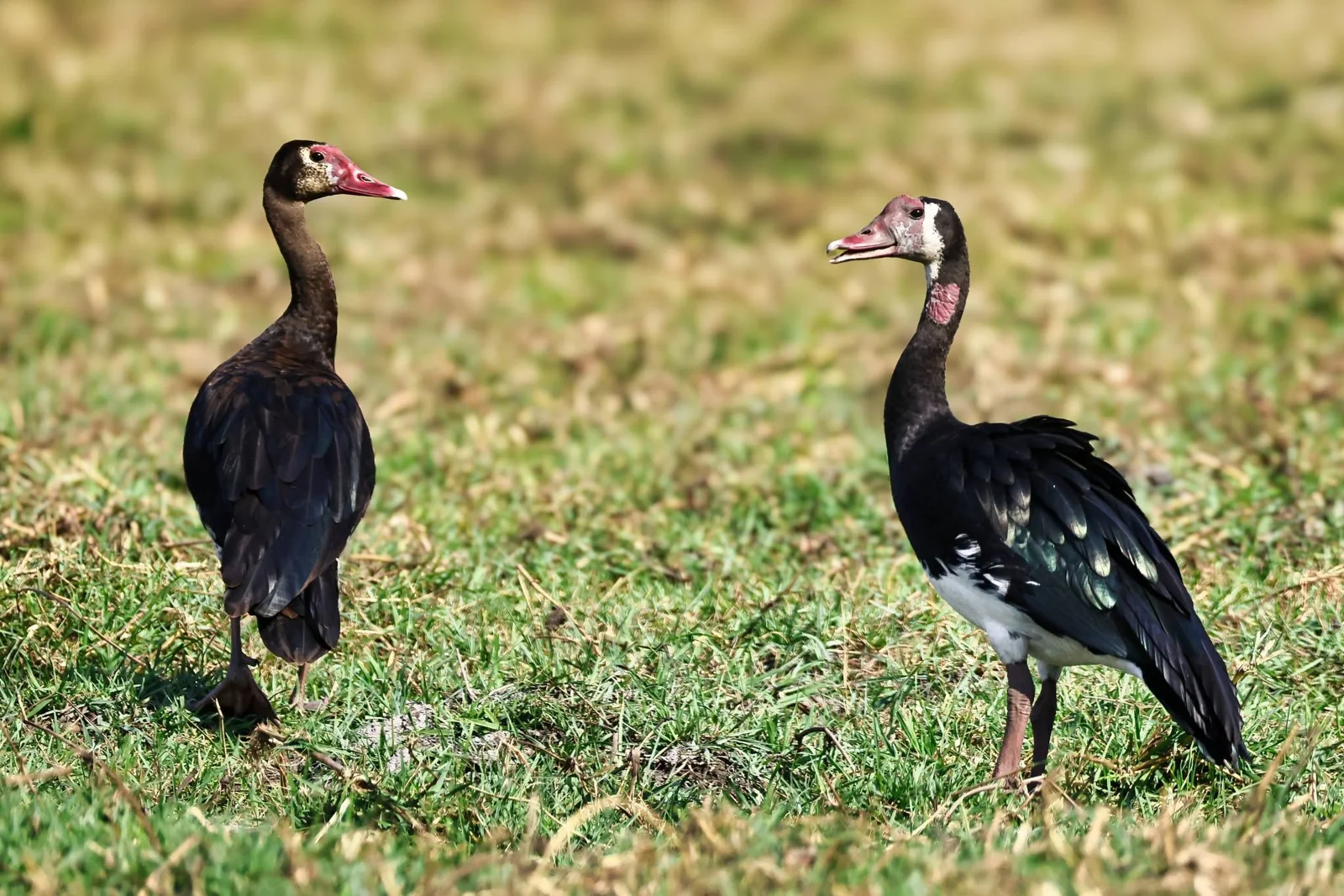
The Spur-winged Goose is the largest duck or goose in Africa, and Iziko Museums’ Biodiversity Explorer gives its top weight as 7.45 kg. That is roughly a Christmas turkey with wing spurs. It eats mainly plants, from in and around water or on dry land, and seedlings and grain from croplands are a favourite, which makes it about as popular with farmers as you would expect.
At the other end of the scale is the African Pygmy Goose, a small, neat bird that lives among water lilies and is one of the most sought-after waterbirds in the region. Between the two sit the teals, the whistling ducks, the river-loving African Black Duck and the stiff-tailed Maccoa. This guide covers who’s who and the waters that hold them.
The ducks and geese at a glance
| Bird | Where to look | Notes |
|---|---|---|
| Spur-winged Goose | Almost any inland water, grassland, croplands | Largest in Africa, up to 7.45 kg |
| Egyptian Goose | Widespread | Most commonly seen waterfowl in the region |
| South African Shelduck | Shallow water in semi-arid and grassland regions | Endemic to southern Africa |
| African Pygmy Goose | Wetlands with water lilies | Zimbabwe, Botswana, Mozambique, Limpopo, KwaZulu-Natal |
| White-faced Whistling Duck | Inland waters in savanna and grassland | Long neck, white face |
| Fulvous Whistling Duck | Large shallow waters with fringing plants | Male often incubates at night |
| White-backed Duck | Clear water with floating plants | Ducklings dive within 20 hours |
| Red-billed Teal | Temporary pans and dams | South Africa’s most abundant duck |
| Blue-billed Teal | Shallow permanent wetlands with tall plants | Mostly sedentary |
| Cape Shoveler | Shallow plankton-rich wetlands, saltpans | Mostly South Africa |
| African Black Duck | Rivers and streams | Rarely on dams |
| Maccoa Duck | Scattered across the region | The only stiff-tailed duck here |
The geese
Biodiversity Explorer says the Spur-winged Goose is found through most of sub-Saharan Africa, widespread in southern Africa except in semi-arid and arid regions, on virtually any inland water body and in grassland, Karoo and croplands. The Egyptian Goose, a large brown-and-buff bird with a dark eye patch and a brown spot in the middle of the breast, is the most commonly encountered waterfowl in southern Africa, and has been introduced to England and the Netherlands, where it is increasingly common. One ringed bird travelled more than 1,000 km.
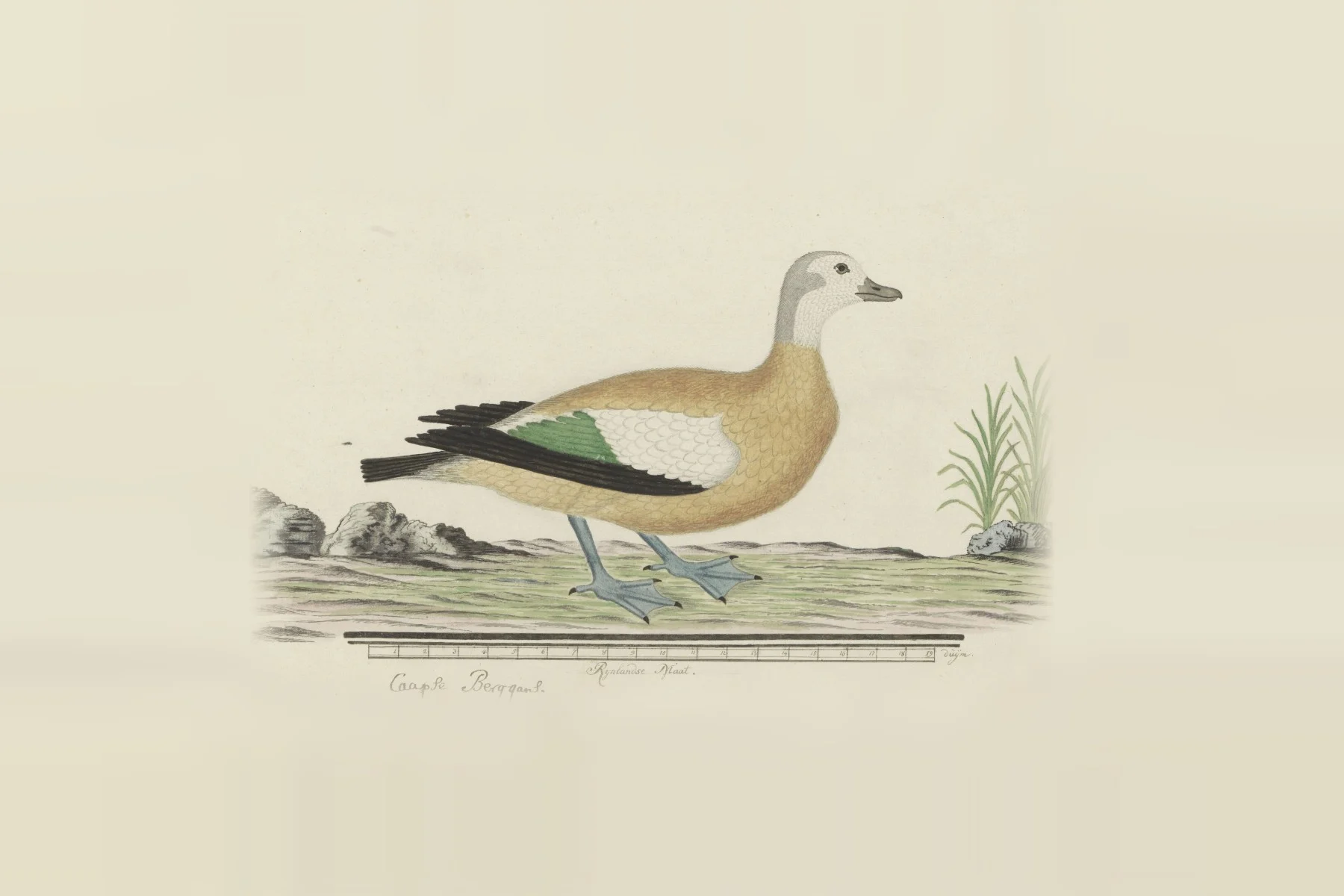
The South African Shelduck, on the plate at the top of this page, is endemic to southern Africa: mainly the Western and Northern Cape, Free State, North West, Gauteng, Namibia, south-eastern Botswana and southern KwaZulu-Natal, on water bodies in semi-arid and grassland regions. The male is light chestnut with a grey head; the female has a grey head with variable amounts of white.
The African Pygmy Goose
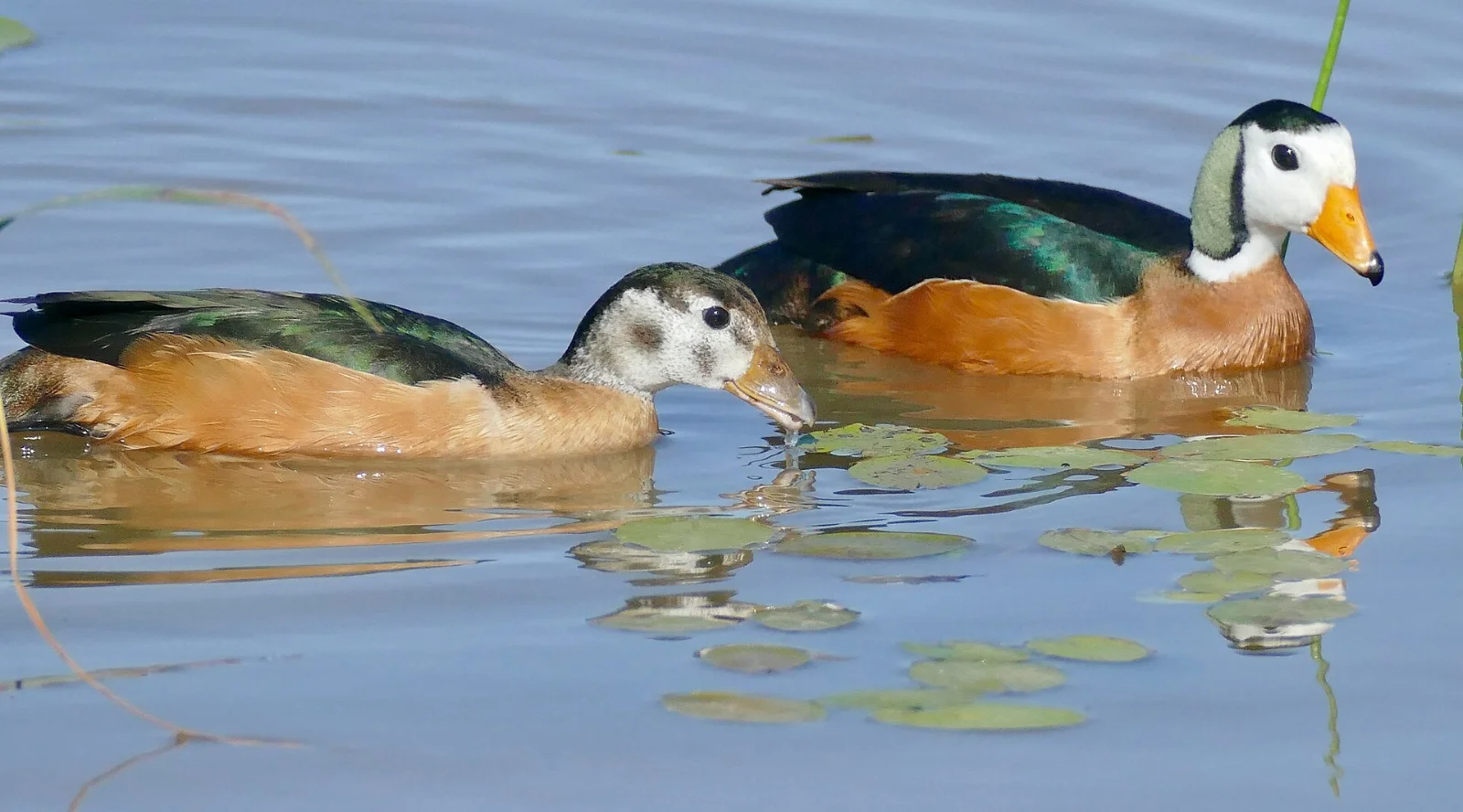
The African Pygmy Goose is quite particular about where it lives. Biodiversity Explorer says it is locally common in parts of Zimbabwe, northern Botswana, Mozambique, Limpopo and KwaZulu-Natal, and prefers inland wetlands with emergent plants, especially water lilies, occasionally using open swamps, farm dams, river pools and estuaries. Find the lilies and you are halfway there. In northern Botswana, Xaro Lodge on the Okavango Panhandle names it among its birds, and the island manager at Victoria Falls River Lodge lists it among the area’s rare sightings. The Okavango Delta birding guide covers the lily lagoons where it is most at home.
The whistling ducks and the White-backed Duck
The White-faced Whistling Duck is long-necked and dark brown with a white face and a grey-black bill. It ranges from tropical America to Africa, Madagascar and the Comoros, and in sub-Saharan Africa lives mainly on inland waters in savanna and grassland. The Fulvous Whistling Duck, golden-brown with a long neck and legs, lives on large, shallow inland waters with plants around the edge, and Biodiversity Explorer notes that the male usually incubates at night.
The White-backed Duck prefers clear water with emergent and floating plants. The pair share the incubation, the female mostly at night and around midday and the male for the rest of the day, and a bird usually approaches the nest underwater. The ducklings can swim, dive and feed within 20 hours of hatching, which is more than most people manage on their first day.
The dabbling ducks and teals
The Red-billed Teal is the most abundant duck in South Africa, with a population Biodiversity Explorer puts at 500,000 to 1,000,000. It is nomadic, quickly finding new temporary pans and vleis, but rarely moves more than 250 km. The Blue-billed Teal, which Biodiversity Explorer still lists under its old name Hottentot Teal, is uncommon to locally common on permanent shallow wetlands with tall plants and is thought to be sedentary.
The Cape Shoveler is found mostly in South Africa, particularly in the Western Cape and Kruger, on shallow, plankton-rich wetlands, estuaries, saline lagoons and saltpans. One bird ringed in the Western Cape turned up 2,011 km away in Namibia. The Yellow-billed Duck is very common in South Africa and harder to find in Botswana, Namibia and Zimbabwe, on still water of streams, lakes, swamps and pans.
The African Black Duck is the river specialist. It is fairly common in South Africa and Zimbabwe, with a very small population in Namibia, and keeps to rivers and streams, rarely moving onto wetlands, sewage ponds or dams. A trout stream in the mountains is a better bet than a dam.
The diving ducks
The Southern Pochard prefers wetlands with deep, clear water and emergent plants, and feeds mainly on the seeds and leaves of aquatic plants, water lilies among them. Its chicks are led straight to the water after hatching and can dive and swim by instinct. The Maccoa Duck is a diving duck with a stiff tail held flat on the water or cocked in the air, and the only stiff-tailed duck in the region. The breeding male has a blue bill, a chestnut body and a dark head.
The best dams and pans
Waterfowl follow water, so the best sites change with the rains. A few places in the directory sit on water that holds a good mix. Heritage View Birding Retreat is at Barberspan, near Delareyville, and names White-backed Duck and Common Pochard. Benguela Cove Lagoon Wine Estate, on the Bot River Lagoon near Hermanus, names Cape Shoveler and Yellow-billed Duck. In the KwaZulu-Natal Midlands, Copperleigh Trout Cottages overlooks Mavela Dam, with Spur-winged Goose and Yellow-billed Duck on and around the water. Royal Jozini, on Lake Jozini in Eswatini, names Blue-billed Teal. Along the Chobe, the Chobe River birding guide covers the floodplain where the geese graze.
Where to stay
Places in the directory that name ducks and geese, with what each offers a birder:
| Place to stay | Where | For birders | From |
|---|---|---|---|
| Heritage View Birding Retreat | Barberspan, North West | BirdLife Recommended; White-backed Duck, Common Pochard | Ask the lodge |
| Benguela Cove Lagoon Wine Estate | Bot River Lagoon, near Hermanus | BirdLife Recommended; Cape Shoveler, Yellow-billed Duck | Ask the lodge |
| Copperleigh Trout Cottages | Dargle, KwaZulu-Natal | Mavela Dam; Spur-winged Goose, Yellow-billed Duck | Ask the lodge |
| Royal Jozini Private Game Reserve | Lake Jozini, Eswatini | BirdLife Recommended; Blue-billed Teal | Ask the lodge |
| Matroosberg Private Nature Reserve | Near Ceres, Western Cape | South African Shelduck and Cape Shoveler on its list | R135 pp camping, 2+ nights (2026) |
| Xaro Lodge | Okavango Panhandle, Botswana | African Pygmy Goose named | USD 450 per room, dinner, bed and breakfast (2026) |
| Victoria Falls River Lodge | Upper Zambezi, Zimbabwe | African Pygmy Goose among rare sightings | Ask the lodge |
| Bitou River Lodge | Plettenberg Bay, Western Cape | African Black Duck and African Finfoot named | Ask the lodge |
| The Cavern Drakensberg Resort & Spa | Near Bergville, KwaZulu-Natal | African Black Duck; dams and mountain stream | R2,140 pp sharing, full board (2026) |
| Stonecutters Lodge | Near Dullstroom, Mpumalanga | Dam and wetland hide; Egyptian Goose | R1,850 per studio, single, midweek (2026) |
| Chinaka Game Lodge | Vivo, Limpopo | Knob-billed Duck on its 42-species list | Ask the lodge |
Pans and dams fill and dry with the rains, and waterfowl move with them, so a site that is full one year can be empty the next. Facts were checked on 15 November 2026 with Iziko Museums’ Biodiversity Explorer and the Birding Dispatch listings. Rates change each season; check with the place before you book.
More from the Journal
 Woodpeckers of Southern Africa, Including the One That Doesn’t Need TreesSouthern Africa's woodpeckers, from the Cardinal in every bushveld tree to the Ground Woodpecker that lives on treeless mountain slopes and eats almost nothing but ants.
 Where to See a Taita Falcon: the Strijdom Tunnel, the Blyde Cliffs and the Batoka GorgeA stocky falcon smaller than a pigeon, a handful of cliffs and surveys that keep coming back empty. Where it still nests, how to look, and the 2 roosts beside its cliffs.
 Where to See a Southern Bald Ibis: the Breeding Cliffs, Dullstroom, Wakkerstroom and LesothoA red-capped grassland ibis that nests on cliffs over waterfalls and feeds on burnt veld and maize stubble. The colonies you can watch, the fields to scan, and where to stay.
The Pigeon Post
Every Thursday: 1 bird, 1 place to go and 1 place to stay, by email. Sign up and get our printable checklist of the 163 endemics of southern Africa.