
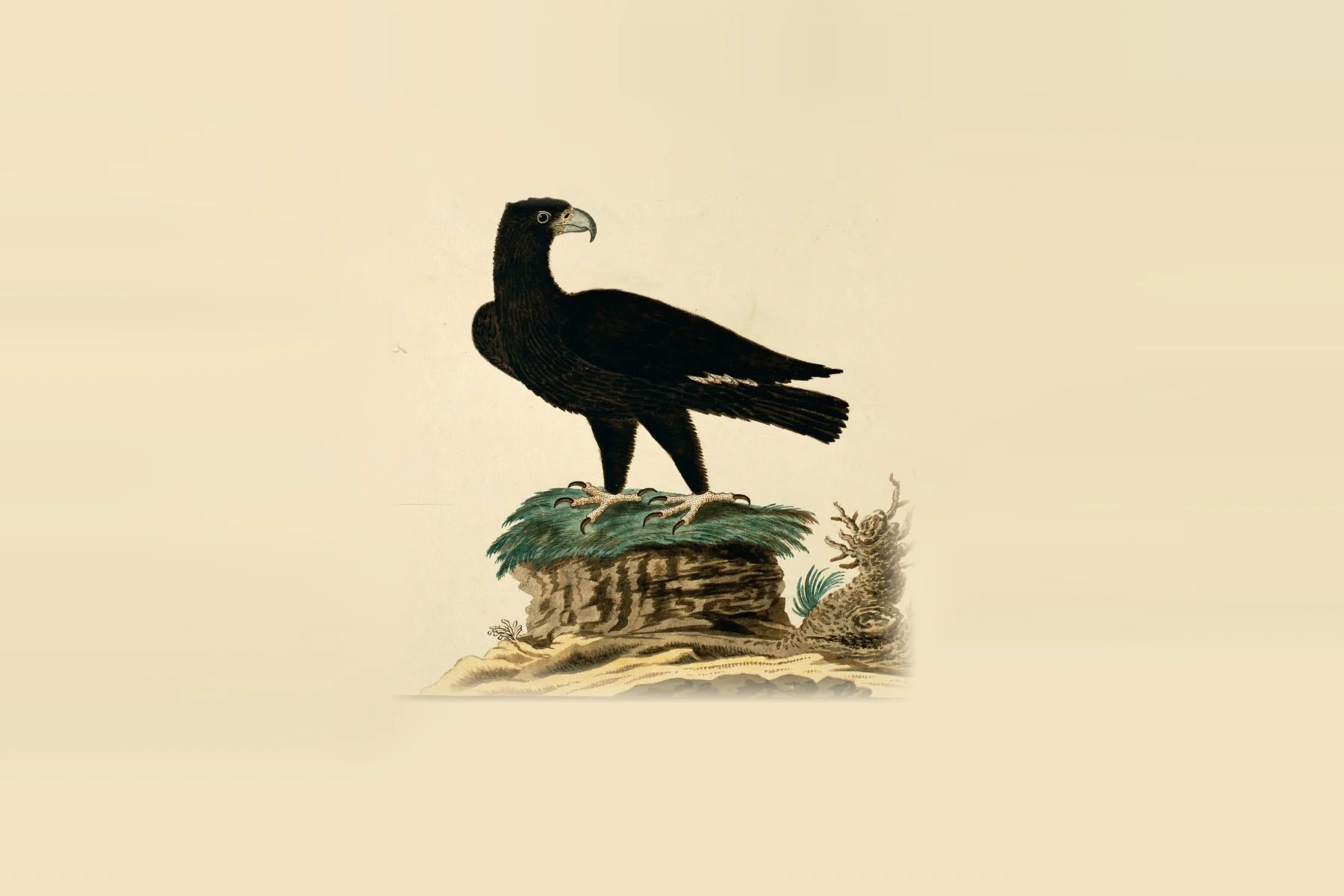
Africa’s Big Eagles and Where to See Them: Verreaux’s, Martial, Crowned and African Fish Eagle
Cliffs for Verreaux's, big parks for Martial, forest for Crowned and any good water for the Fish Eagle. Where each is reliable in South Africa and beyond, how to tell them apart, and the places to stay near them.
Each of Africa’s 4 big eagles is tied to one kind of country, so finding one is mostly a matter of choosing the right scenery. Verreaux’s Eagle lives where there are cliffs and rock hyraxes. The Martial Eagle needs huge open savanna and now survives best in the big parks. The Crowned Eagle hunts monkeys and antelope inside forest, a bold menu for a bird. The African Fish Eagle sits over water almost anywhere south of the Sahara. Pick the habitat and you have picked the eagle.
Their fortunes differ just as much. BirdLife South Africa’s 2025 Red Data Book lists the Martial Eagle as Endangered and the Crowned Eagle as Vulnerable in the region, while the Fish Eagle, the easy one of the 4, is classed as Least Concern.
How to tell them apart
| Eagle | Where to look | Key features | Status (South Africa, 2025) |
|---|---|---|---|
| Verreaux’s Eagle | Cliffs, gorges, rocky hills | All black with a white V on the back; white rump in flight | Vulnerable (regional), Least Concern (global) |
| Martial Eagle | Open savanna, big parks, Karoo pylons | Dark brown head and chest, white belly with light spots | Endangered (regional and global) |
| Crowned Eagle | Indigenous forest, wooded gorges | Crest, short rounded wings, long barred tail, rufous underwing | Vulnerable (regional), Near Threatened (global) |
| African Fish Eagle | Rivers, lakes, dams, estuaries | White head and tail, brown back, loud ringing call | Least Concern |
Verreaux’s Eagle. SANBI describes a perched adult as entirely black apart from a white V above the wings, with yellow feet and cere. In flight it shows a white rump and pale panels on the outer wing, and the wings are broad in the middle and narrow at the tips. Juveniles are yellow-brown with a reddish-brown head and nape, and take 4 years to reach adult plumage. Pairs are usually seen together, perched on a lookout or gliding along a ridge, like a couple out on their usual walk.
Martial Eagle. BirdLife South Africa gives it a wingspan of up to 227 cm and a weight of up to 6.2 kg, which is a great deal of eagle. The adult has dark brown upperparts, head, throat and chest, and a white belly with light spots. In flight the underwing looks dark. The head is large with a small crest, and the eyes are yellow to orange.
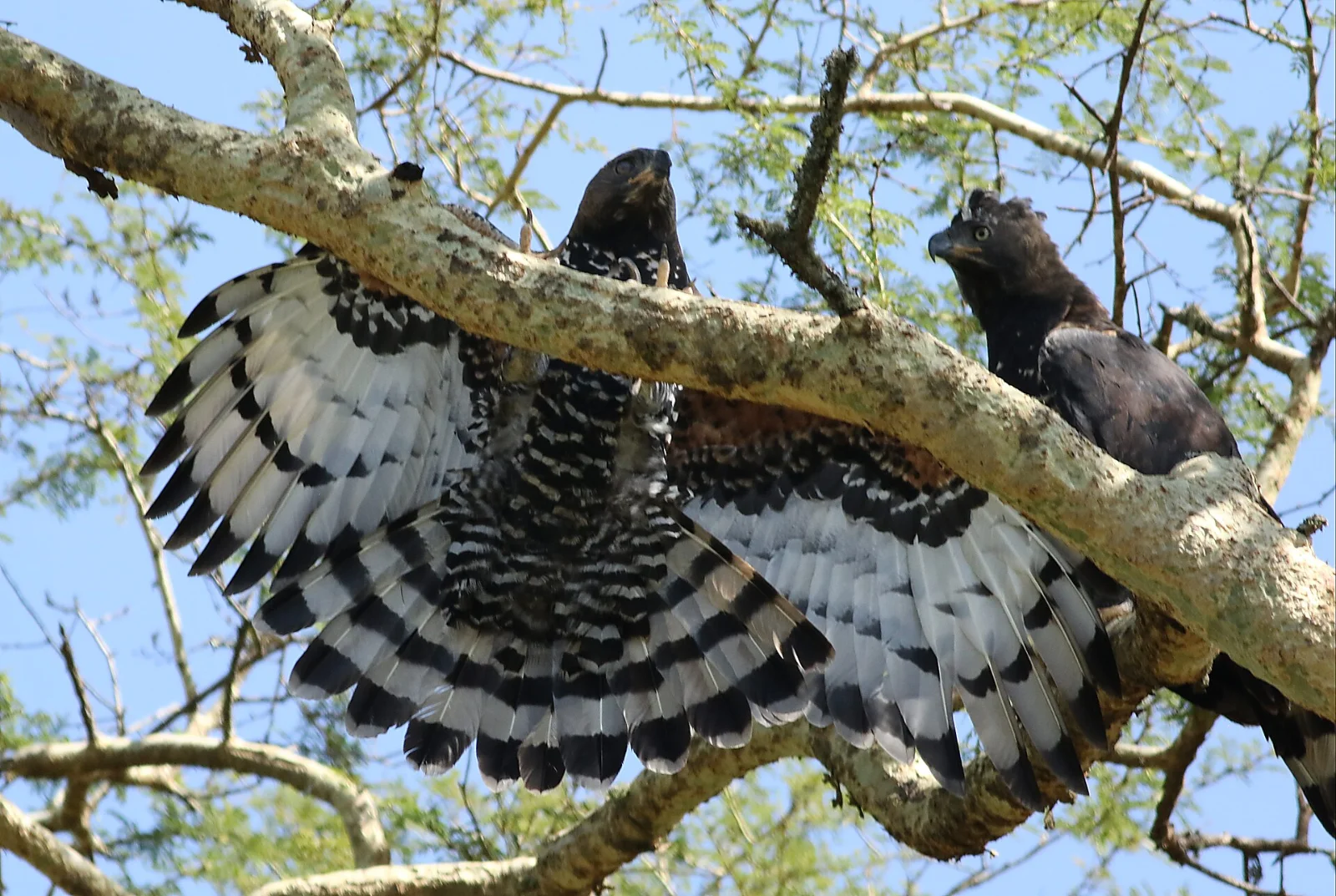
Crowned Eagle. BirdLife South Africa compares its shape to a giant goshawk: a crested head, short rounded wings and a long barred tail, built for weaving between trees rather than cruising over them. The adult has a mottled chest and legs and, in flight, rufous underwing coverts. Wingspan is 1.5 to 1.8 m.
The 2 juveniles that cause trouble. Young Martial and Crowned Eagles are both grey above and white below. BirdLife’s Red Data Book gives the differences: the juvenile Martial Eagle has a shorter tail, longer wings and pure white underparts, while the juvenile Crowned Eagle has a buffy wash on the upper breast and more bars on a longer tail. The habitat usually settles it, which saves a great deal of squinting. A pale young eagle soaring over open bushveld is far more likely to be a Martial; one flying out of forest is likely a Crowned.
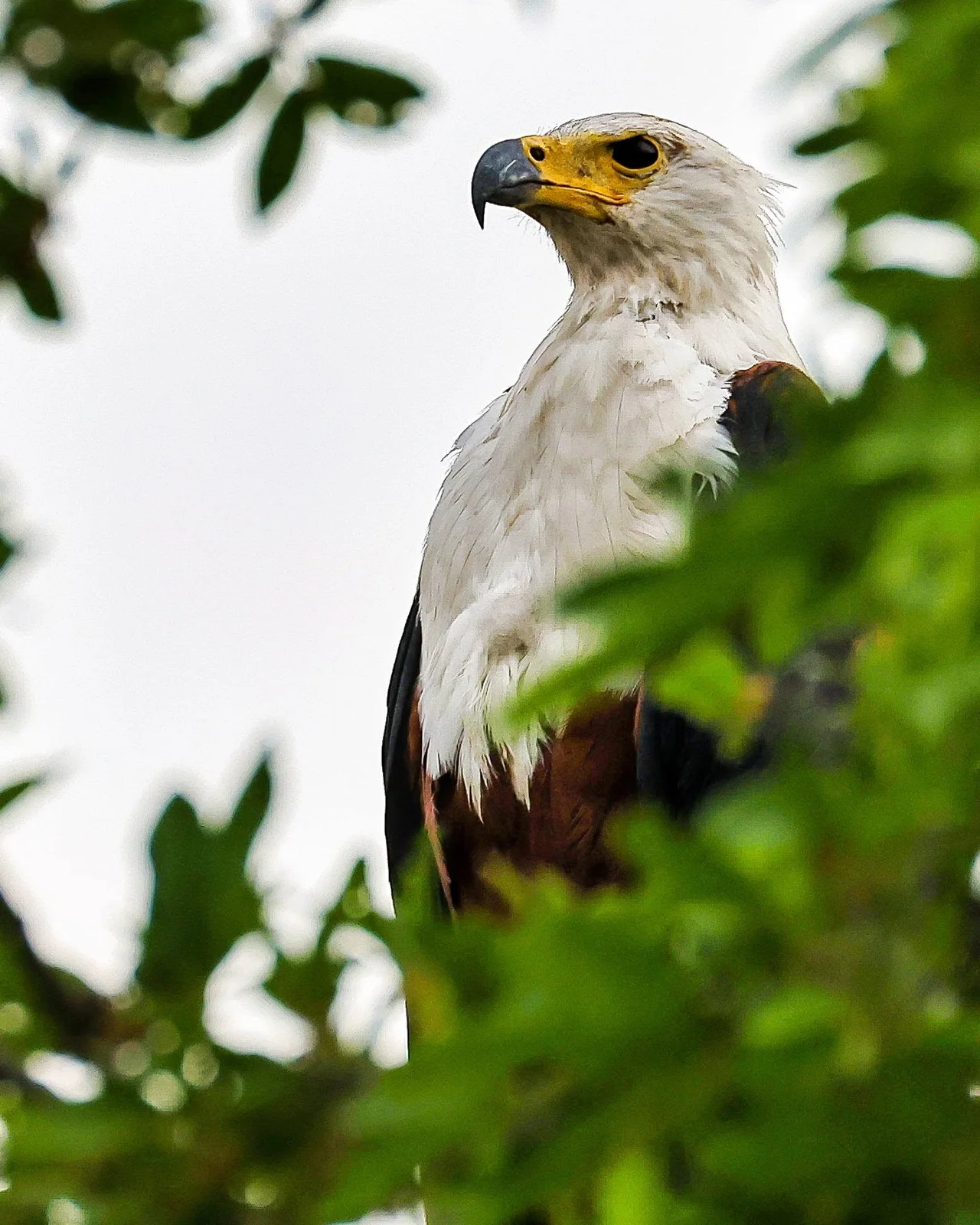
African Fish Eagle. The Peregrine Fund describes the milk-white head and tail, dark eyes, yellow cere and chocolate-brown back. Its loud call is the usual first clue, so this is one eagle that tends to introduce itself, and it is generally perched on a tree or other high point beside water.
Verreaux’s Eagle: find the cliffs
SANBI calls Verreaux’s Eagle a specialist whose life revolves around rock hyraxes and hilly, mountainous ground. Hyraxes are its main and often only prey, so the eagle’s address is wherever the hyraxes live. It occurs throughout South Africa wherever there are cliffs, gorges or rocky outcrops, from desert to high-rainfall country. Pairs stay together for life and build their nests on rock faces, and egg-laying runs from April to July.
The most reliable pair to watch has a Johannesburg address. SANBI says a breeding pair nests on the cliffs near the waterfall in Walter Sisulu National Botanical Garden, where about 240 bird species have been recorded. The garden runs a dedicated Black Eagle and waterfall viewing walk. 58 on Hume, a BirdLife Recommended guesthouse in Dunkeld, names the garden and its eagles on its birding page and offers to arrange guided outings.
In the Western Cape, Bartholomeus Klip in the Elandsberg Nature Reserve near Hermon names Verreaux’s Eagle among the 150 species on its list. Full board at the farmhouse is from R4,650 per person sharing for South African residents from April to October 2027. In the Karoo, Aasvogelkrans Farm Cottages and Camping near Nieu-Bethesda describes birding along its cliffs, with Verreaux’s Eagle first on its list of 116 species. Hoopoe Cottage costs R1,760 a night for 2, self-catering.
For background on the Johannesburg sites, see the guide to birding near Johannesburg.
Martial Eagle: the big parks
The Martial Eagle is the eagle in most trouble. BirdLife South Africa estimates 950 to 1,100 mature birds in the region and reports declines of up to 60% over 20 years, including a 54% drop in reporting rate in Kruger National Park, 54% in Hluhluwe-iMfolozi and 44% in the Kgalagadi. Power lines are a major cause: 84 Martial Eagle deaths were reported on Eskom lines between 1996 and 2021, 74 of them electrocutions.
Kruger is still the best place to look. The FitzPatrick Institute’s work there found about 100 active breeding pairs, with adult home ranges averaging about 108 km². BirdLife notes that adults and juveniles are seen regularly in Kruger but immatures are uncommon, because they disperse out of the park. The Kgalagadi Transfrontier Park is thought to hold about 30 pairs, with territories tied to the big nesting trees along the Auob and Nossob rivers. Outside the parks, a surprising share of the population now breeds on Karoo transmission pylons: the Endangered Wildlife Trust’s aerial surveys from 2018 to 2022 found 149 nests along 1,400 km of line.
Martial Eagles hunt by soaring high for long periods and then stooping in a long, shallow dive. Scan the sky from mid-morning, once the air has warmed, which makes this one eagle that does not demand a 04:30 alarm, and check the tops of tall dead trees.
In the Sabi Sand on Kruger’s western edge, Inyati Game Lodge names Martial Eagle among the 5 big birds to look for along the Sand River and publishes its own bird checklist. Rates are from R16,500 per person sharing in 2026, fully inclusive. Closer to Gauteng, the owners of iKhaya LamaDube Game Lodge, inside the malaria-free Dinokeng Game Reserve, report a breeding pair of Martial Eagles on the property. Its self-catering log cabins start at R1,990 a unit a night, and guests self-drive 140 km of reserve roads with bird hides along the way.
In Zululand, Bushwillow Collection in Kuleni Game Park near Hluhluwe names Martial Eagle with Crested Guineafowl and Crowned Hornbill and can arrange a specialist bird guide. Hluhluwe-iMfolozi itself could support only about 9 pairs, according to the Red Data Book.
Crowned Eagle: forest, and some suburbs
BirdLife South Africa estimates 900 to 1,000 mature Crowned Eagles in the region. They are tied to indigenous forest and dense woodland, including wooded gorges and even alien plantations, and their range runs from Limpopo through Mpumalanga and KwaZulu-Natal to the Eastern Cape, reaching its southern limit in the Garden Route. KwaZulu-Natal and the Eastern Cape are the strongholds. They eat mostly mammals, chiefly hyraxes, monkeys and small antelope, an ambitious shopping list for something that has to carry it.
BirdLife notes a higher breeding density in KwaZulu-Natal’s urban population. Researchers have found up to 120 breeding territories in southern KwaZulu-Natal, including the metropolitan areas of Durban and Pietermaritzburg, with nests on average 2 to 3 km apart around greater Durban. Some urban pairs now breed every year rather than every 2 years, keeping a busier schedule than the old one. Up to 80 mature birds are thought to live within 70 km of Mbombela (Nelspruit).
Crowned Eagles are easiest to find when they display, which is to say when they are showing off. Look and listen over forested valleys on clear mornings, when the birds soar above the canopy and call.
In the Western Cape, BirdLife’s Red Data Book notes an isolated population at Grootvadersbosch. Grootvadersbosch Cabins, run by CapeNature in the reserve near Heidelberg, have 2 hides in the indigenous forest, one looking over the canopy. CapeNature lists Crowned, Verreaux’s and Booted Eagle with Narina Trogon among more than 196 species seen there. Cabins start at R1,375 a night off-peak for 1 or 2 guests, self-catering.
In Limpopo, Leshiba Wilderness on the Soutpansberg escarpment covers 2 of the 4 eagles in one stay, naming both Black (Verreaux’s) and Crowned Eagles on its list of 214 species, and guided walks include birding. In the forests above Haenertsburg, Magoebaskloof Getaway names Crowned, Martial and Long-crested Eagle in its area list and hands guests a birding logbook. Log cabins start at R800 a night.
African Fish Eagle: any good water
The Fish Eagle is the easy one. The Peregrine Fund describes it as relatively common and widespread south of the Sahara, living beside ponds, estuaries, lakes, rivers and wetlands. It is the national bird of Zambia, Zimbabwe and South Sudan. It takes fish from the surface rather than diving in, and it often steals from herons and other fishing birds, a less dignified habit for a national bird.
For a sure sighting, sit by a big river or lake in the early morning, when the pairs call. In Kenya, the Peregrine Fund has monitored Fish Eagles at Lake Naivasha since 1994. On Crescent Island in the lake, Fisheagle Cottage sits inside a sanctuary whose January 2026 survey recorded more than 135 species, with African Fish Eagle and African Skimmer among the highlights. Guides can be booked through the sanctuary, and the cottage costs from US$125 a night in the 2027 low season.
In South Africa, Arendsig Wine Farm, a BirdLife Recommended farm on the Breede River between Robertson and Bonnievale, names Fish Eagles as its bird.
When to go
All 4 eagles are resident, so any month works and none of them will have left town. Winter, from May to August, has short grass, bare trees and clear air, which makes soaring eagles easier to spot in the bushveld. It is also the season when Verreaux’s Eagles lay, from April to July according to SANBI, and when Martial Eagles in South Africa often breed, mostly in May and June according to BirdLife. Keep a respectful distance from any nest, and report Martial Eagle sightings to the bird atlas, SABAP2, because the species’ decline is measured from those records.
Where to stay
The places in this guide, with what each offers a birder:
| Place to stay | Where | For birders | From |
|---|---|---|---|
| 58 on Hume | Dunkeld, Johannesburg | BirdLife Recommended, guided outings arranged, Verreaux’s Eagle | Ask the lodge |
| Bartholomeus Klip | Hermon, Western Cape | BirdLife Recommended, 150 species, Verreaux’s Eagle | R4,650 pp sharing, full board (SA residents) |
| Aasvogelkrans Farm Cottages & Camping | Near Nieu-Bethesda, Eastern Cape | BirdLife Recommended, cliffs, 116 species, Verreaux’s Eagle | R1,760 a cottage for 2, self-catering |
| Inyati Game Lodge | Sand River, Sabi Sand | Martial Eagle among 5 big birds, own checklist | R16,500 pp sharing, fully inclusive |
| iKhaya LamaDube Game Lodge | Dinokeng, Gauteng | Breeding Martial Eagles, hides on 140 km of roads | R1,990 per log cabin, self-catering |
| Bushwillow Collection | Kuleni Game Park, near Hluhluwe | Specialist bird guide arranged, Martial Eagle, Crested Guineafowl | R6,000 for 2 for 3 nights (Digital Detox package) |
| Grootvadersbosch Cabins | Near Heidelberg, Western Cape | 2 forest hides, Crowned Eagle, 196+ species | R1,375 per cabin for 2, self-catering (off peak) |
| Leshiba Wilderness | Soutpansberg, Limpopo | 214 species, Verreaux’s and Crowned Eagles, guided walks | Ask the lodge |
| Magoebaskloof Getaway | Near Haenertsburg, Limpopo | Birding logbook, Crowned, Martial and Long-crested Eagles | R800 per log cabin |
| Fisheagle Cottage | Crescent Island, Lake Naivasha, Kenya | African Fish Eagle, 135+ species, guides bookable | US$125 per cottage (2027 low season) |
| Arendsig Wine Farm | Breede River, Robertson to Bonnievale | BirdLife Recommended, Fish Eagles, walking trail | Ask the lodge |
Status figures and rates change. Facts were checked on 13 November 2026 with BirdLife South Africa’s 2025 Red Data Book species pages, SANBI and the Peregrine Fund. Prices are from each place’s own website as summarised on its Birding Dispatch listing. Check current rates and access directly before you go.
More from the Journal
 Woodpeckers of Southern Africa, Including the One That Doesn’t Need TreesSouthern Africa's woodpeckers, from the Cardinal in every bushveld tree to the Ground Woodpecker that lives on treeless mountain slopes and eats almost nothing but ants.
 Where to See a Taita Falcon: the Strijdom Tunnel, the Blyde Cliffs and the Batoka GorgeA stocky falcon smaller than a pigeon, a handful of cliffs and surveys that keep coming back empty. Where it still nests, how to look, and the 2 roosts beside its cliffs.
 Where to See a Southern Bald Ibis: the Breeding Cliffs, Dullstroom, Wakkerstroom and LesothoA red-capped grassland ibis that nests on cliffs over waterfalls and feeds on burnt veld and maize stubble. The colonies you can watch, the fields to scan, and where to stay.
The Pigeon Post
Every Thursday: 1 bird, 1 place to go and 1 place to stay, by email. Sign up and get our printable checklist of the 163 endemics of southern Africa.