
How to Find a Pel’s Fishing Owl
Where Pel's Fishing Owls live in southern Africa, how to spot a sleeping ginger giant at its daytime roost, and why a local guide and a boat on the Okavango give you the best chance.
Pel’s Fishing Owl is the bird southern African birders talk about most and see least. It is a big, ginger owl that hunts fish at night along wooded rivers and spends the day sitting still high in a dense riverside tree. Most birders who have seen one were shown it by someone who knew exactly which tree to look in, then which branch, then where on the branch.
So do not search a river at random. You go where the owls are known to roost, you go with a local guide or boatman who checked the roosts recently, and you scan every big shady tree along the water, including the one you are sure you already checked.
The short answer
The best place in the region is the Okavango Panhandle in north-western Botswana, around Shakawe, where birding operators describe the density of Pel’s Fishing Owls as unusually high. Stay at a lodge on the river, book a morning boat trip with a guide who knows the current roosts, and scan the dense riverside trees. In South Africa, Kruger’s Luvuvhu River at Pafuri and the Olifants River near Balule are the places SANParks names, and Kruger’s Nyalaland and Olifants wilderness trails walk through the owl’s habitat. Expect to need a guide, patience and more than one attempt. The owl has all day; it is, after all, asleep.
At a glance
| Where | Country | How to look | Notes |
|---|---|---|---|
| Okavango Panhandle, around Shakawe | Botswana | Morning boat trips with a local guide | The region’s best-known site |
| Luvuvhu River at Pafuri | South Africa (Kruger) | Scan riverine trees on the S63 and S64 | Pafuri picnic site and the Luvuvhu bridge |
| Olifants River near Balule | South Africa (Kruger) | Night drives from Olifants camp | Often on the same sandbank by the same pool |
| Nyalaland and Olifants trails | South Africa (Kruger) | Walking with an armed guide | SANParks names these as the best way |
Know what you are looking for
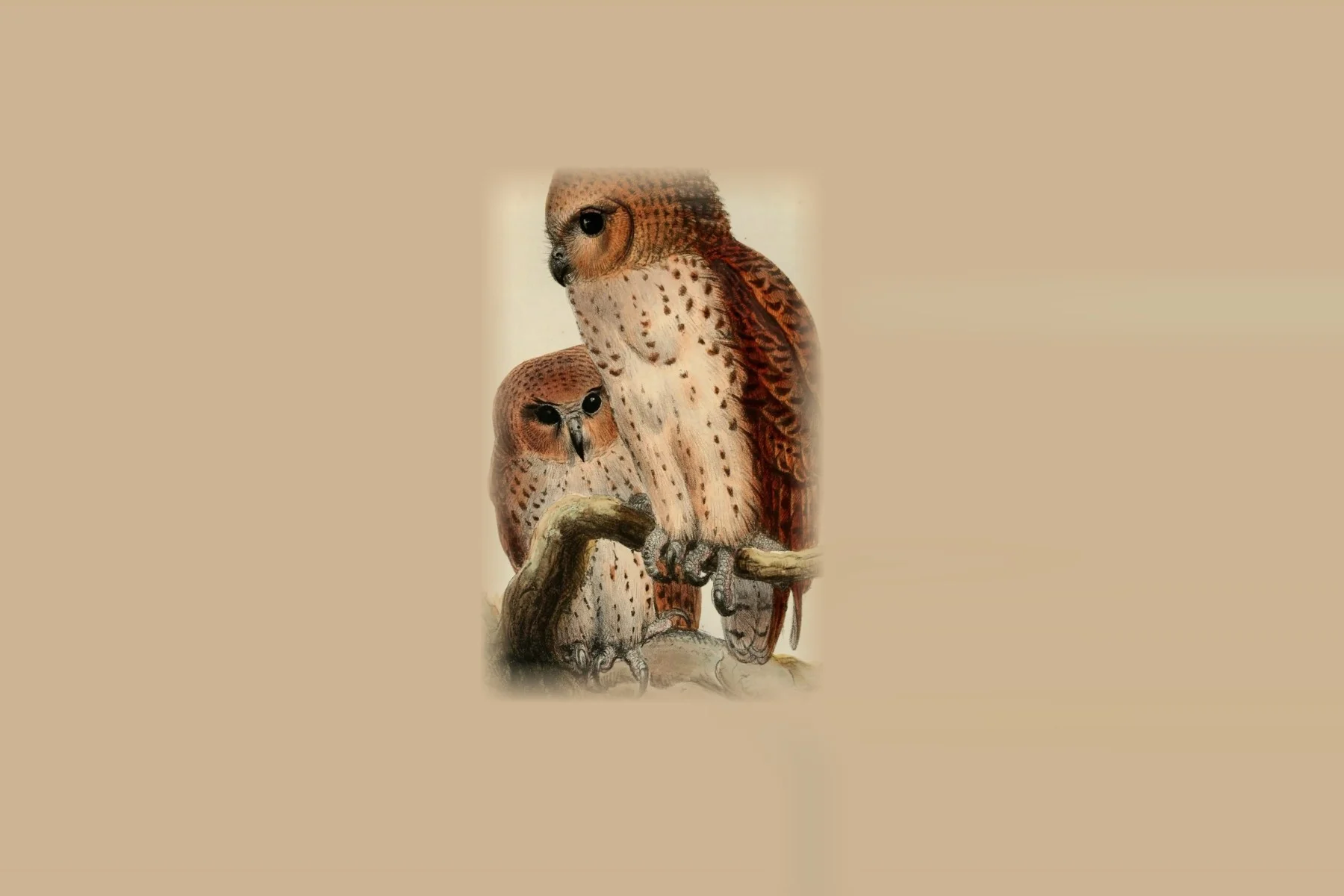
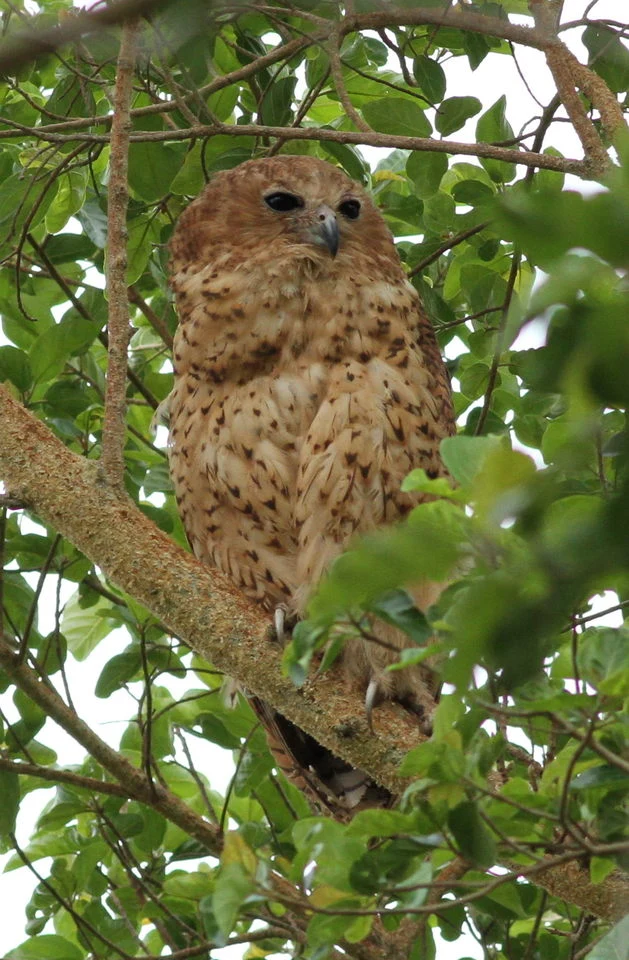
The Pel’s is one of the largest owls in Africa. The Owl Pages gives a weight of about 2 kg and an average wingspan of about 1.5 m. It is rich ginger-brown above with fine dark barring, paler and spotted below, with a large round head, no ear tufts and big dark eyes. The lower legs and toes are bare, and the soles carry rough spicules that help it grip slippery fish, a feature it shares with the Osprey.
Its prey is mostly fish of 100 to 200 g, taken from the surface of slow water at night. It hunts from a low perch over a pool and snatches fish from the surface with its feet: no rod, no licence.
Where it lives
The owl needs 3 things: a large river or lagoon with fish, slow or still water where it can see them, and tall, dense riverside trees for roosting by day. Without the big riverside trees, the owl has nowhere to roost, which is serious for a bird that spends the whole day doing it.
In South Africa it is regionally Endangered, with an estimated 70 to 100 mature birds (SANBI Red List). SANParks names the Limpopo, Luvuvhu and Olifants rivers as its Kruger strongholds and says it is recorded less often on the Letaba, Shingwedzi and Sabie. A survey of the Olifants River in Kruger found 9 owls, fewer than in the 1990s. North of the border it is more widespread, and the permanent channels of the Okavango, lined with tall riverine forest, suit it well.
The Okavango Panhandle
The Panhandle is the narrow upper stretch of the Okavango, where the river runs between banks of papyrus and tall riverine forest before it fans out into the Delta. One southern African birding tour operator calls it the best place in the world to see Pel’s Fishing Owl and says the species occurs there at unusually high density.
Birders usually stay at lodges near Shakawe, such as Drotsky’s Cabins, Xaro Lodge or Shakawe Lodge, and go out by boat with a local guide. Trip reports from the area describe owls found asleep deep in riverside trees, often pointed out by a boatman who knew the roost, which is how most Pel’s are found: by someone else. A night boat trip with a spotlight is another option where the lodge offers it, because the owls are active after dark.
Kruger: Pafuri and the Olifants
In Kruger, SANParks points birders to 2 areas.
- Pafuri. Drive the Nyalaland Drive (S64) and the picnic site and Crook’s Corner loop (S63) along the Luvuvhu, and scan every large riverine tree for a roosting owl. Give the Pafuri picnic site and the Luvuvhu bridge on the tar road plenty of time. To stay on the river, Pafuri Camp and The Outpost are both in the Makuleke concession at Pafuri. Our guide to Crook’s Corner on Safari Dispatch covers the area.
- The Olifants near Balule. SANParks says to search the riverside trees here. The owl is occasionally seen on night drives from Olifants rest camp at the low-level bridge beside Balule, usually on the same sandbank by the same pool, a creature of fixed habits, and less often from the high-level bridge on the main tar road.
On foot, the Nyalaland and Olifants wilderness trails walk through the owl’s habitat with an armed guide, and SANParks names them as the best way to see one in the park. For the other large birds you can look for on the same trip, see our guide to the Big Six birds of Kruger.
How to find the roost
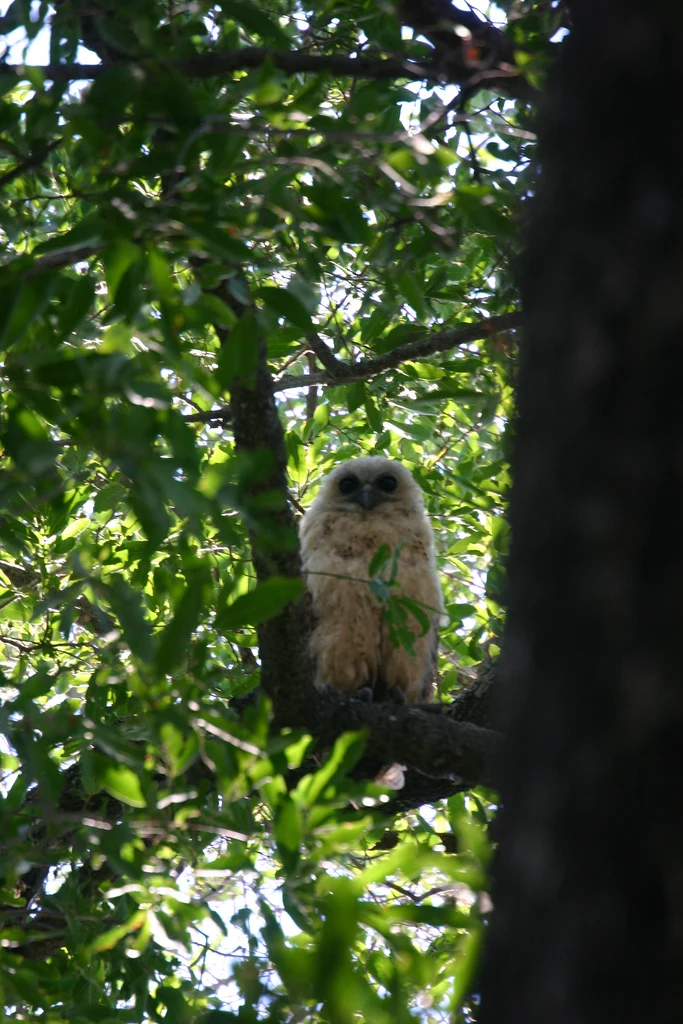
A roosting Pel’s is hard to see even when you are under the right tree. The bird sits close to the trunk in deep shade, and its ginger plumage blends into the bark and dead leaves. It is a very large owl doing a very good impression of a branch.
- Go with someone who knows. A guide or boatman who checked the roost that week is worth more than any other advice here. Roosts change, but owls often use the same stretch of river for years.
- Look up, slowly. Scan the densest, tallest trees overhanging the water, branch by branch, from the trunk outwards. Look for a large rounded shape in the shade.
- Check below. White droppings on the ground and lower leaves, and fish bones or pellets, show that an owl roosts above.
- Keep your distance. A flushed owl may fly off and leave the roost. Watch in silence, do not use playback, and leave after a few minutes.
Listen at night
You often hear a Pel’s before you see one. The Owl Pages describes the male’s call as a deep, horn-like boom that starts with a hoot and ends with a softer grunt, audible up to about 3 km away, and says the female’s call is similar but higher. If you are staying on a big river, step outside after dark, listen for it, and note the direction. Your guide can use that to find the roost the next morning, and you go back to bed with a clue.
When to go
You can find Pel’s Fishing Owls all year. In the dry months, roughly May to October in southern Africa, many riverside trees carry fewer leaves, which makes a roosting bird easier to see: the owl loses its curtains. In Kruger, cooler winter mornings also suit long, slow drives along the rivers.
The verdict
If you want the best chance at a Pel’s Fishing Owl, go to the Okavango Panhandle, stay on the river near Shakawe and book a boat with a local guide. In South Africa, give Pafuri and the Olifants several days, take a guide or a wilderness trail, and listen for the call at night. Whatever you do, scan slowly, check under the trees for droppings, and leave the owl undisturbed once you have found it. It was there first, and it was sleeping.
Where to stay
The places in this guide, with what each offers a birder:
| Place to stay | Where | For birders | From |
|---|---|---|---|
| Drotsky’s Cabins | Near Shakawe, Okavango Panhandle, Botswana | 400+ species for the area, African Skimmer | Ask the lodge |
| Xaro Lodge | Island near Shakawe, Okavango Panhandle, Botswana | Boat birding, Pel’s Fishing Owl, African Skimmer | US$450 per room DB&B |
| Pafuri Camp | Makuleke, northern Kruger | BirdLife Recommended, on the Luvuvhu River, Pel’s Fishing Owl | R8,450 pp sharing all-inclusive |
Owl numbers, roost sites and lodge activities change. Facts were checked on 9 November 2026 with SANParks, the SANBI Red List of South African Species and The Owl Pages. Confirm boat trips, night drives and trail bookings directly with the lodge or with SANParks.
More from the Journal
 Woodpeckers of Southern Africa, Including the One That Doesn’t Need TreesSouthern Africa's woodpeckers, from the Cardinal in every bushveld tree to the Ground Woodpecker that lives on treeless mountain slopes and eats almost nothing but ants.
 Where to See a Taita Falcon: the Strijdom Tunnel, the Blyde Cliffs and the Batoka GorgeA stocky falcon smaller than a pigeon, a handful of cliffs and surveys that keep coming back empty. Where it still nests, how to look, and the 2 roosts beside its cliffs.
 Where to See a Southern Bald Ibis: the Breeding Cliffs, Dullstroom, Wakkerstroom and LesothoA red-capped grassland ibis that nests on cliffs over waterfalls and feeds on burnt veld and maize stubble. The colonies you can watch, the fields to scan, and where to stay.
The Pigeon Post
Every Thursday: 1 bird, 1 place to go and 1 place to stay, by email. Sign up and get our printable checklist of the 163 endemics of southern Africa.