
Namib-Naukluft and Sossusvlei for Birders: Dune Lark, Desert Raptors and the Naukluft Specials
A lark that lives on the dunes and nowhere else, Lappet-faced Vultures nesting in the desert, coursers on the gravel plains and the northern specials around the Naukluft cliffs, in one of Africa's largest parks.
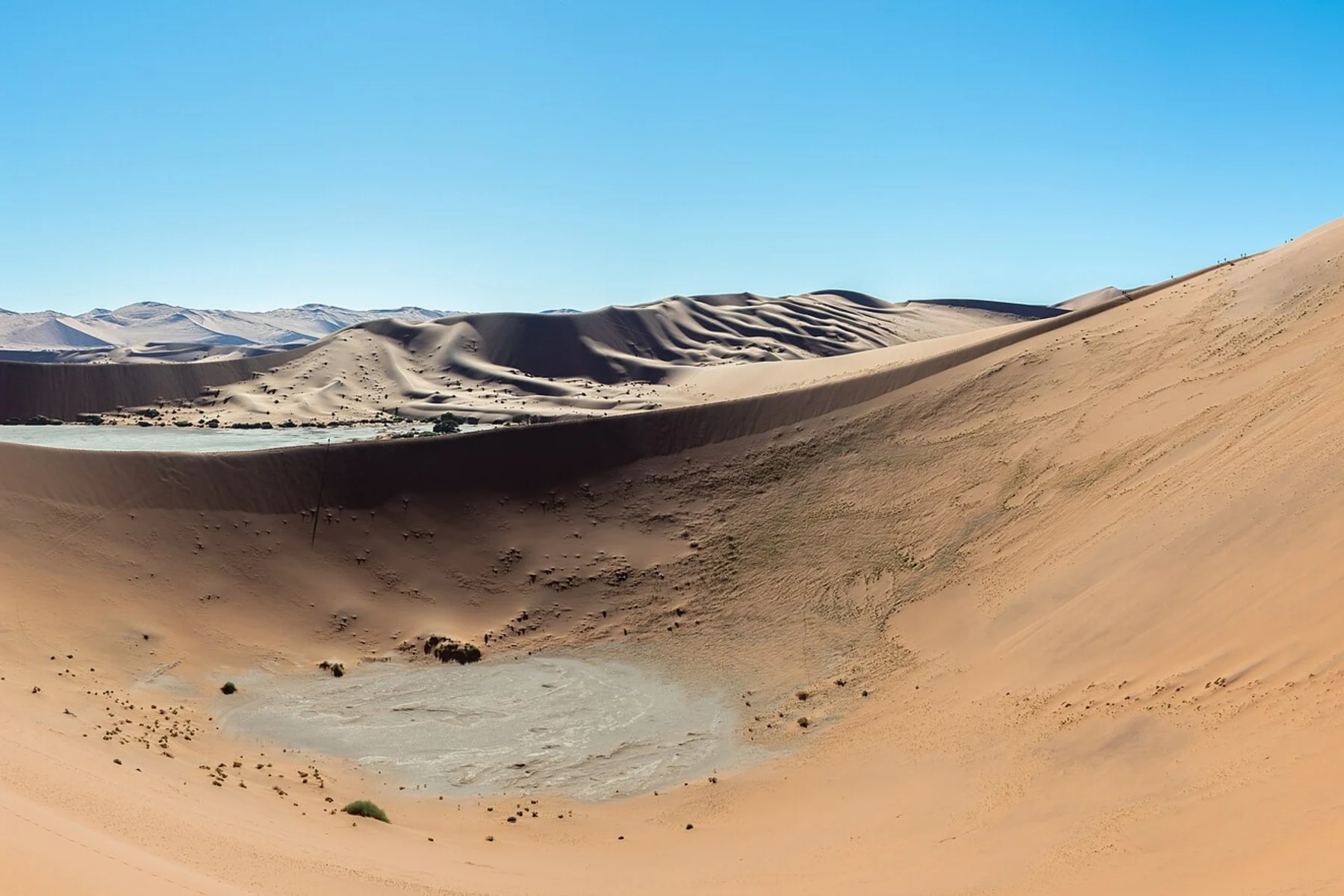
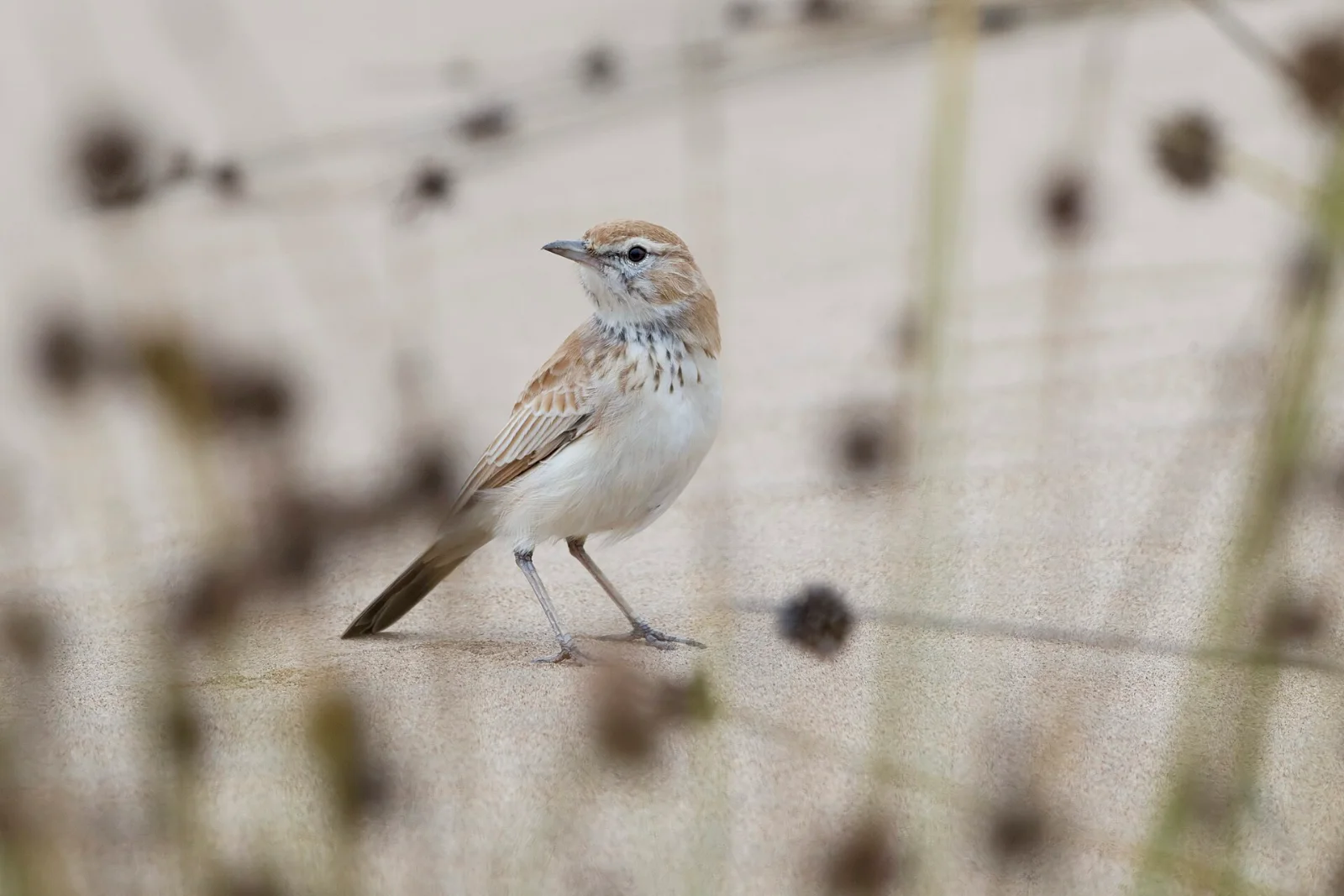
The Dune Lark has chosen the hardest address in southern Africa and refuses to move. Gondwana’s species account says it lives on thinly vegetated dunes in the Namib dune sea, from the Kuiseb River at Walvis Bay south to the Koichab River, and that it can be seen on Elim Dune near Sesriem, on the way to Sossusvlei. It builds its nest from dune grass, pairs stay close together, and it is there all year. Most visitors come to Sossusvlei for the photographs; the lark came for the sand.
The Namib-Naukluft National Park around it is enormous. The Key Biodiversity Area account, based on BirdLife’s Important Bird Area work, calls it one of the largest conservation areas in Africa and maps it at over 50,000 km², and Wikipedia gives 49,768 km². It takes in the dune sea, gravel plains, the Naukluft Mountains on the escarpment and a stretch of Atlantic coast, so its bird list runs from desert larks to cliff-nesting eagles and coastal terns.
The short answer
Look for Dune Lark on the vegetated dune slopes around Elim Dune and the road to Sossusvlei. Scan the gravel plains for coursers, bustards and Gray’s Lark, and the sky for the large raptors that the park is known for. Spend at least a day in the Naukluft Mountains for the northern Namibian specials and the cliff-nesting Verreaux’s Eagles. If the rains have been good, check Sossusvlei itself for water and waterbirds.
The habitats at a glance
| Habitat | Where | Specials to look for |
|---|---|---|
| Vegetated dunes | Elim Dune, the Sossusvlei road | Dune Lark |
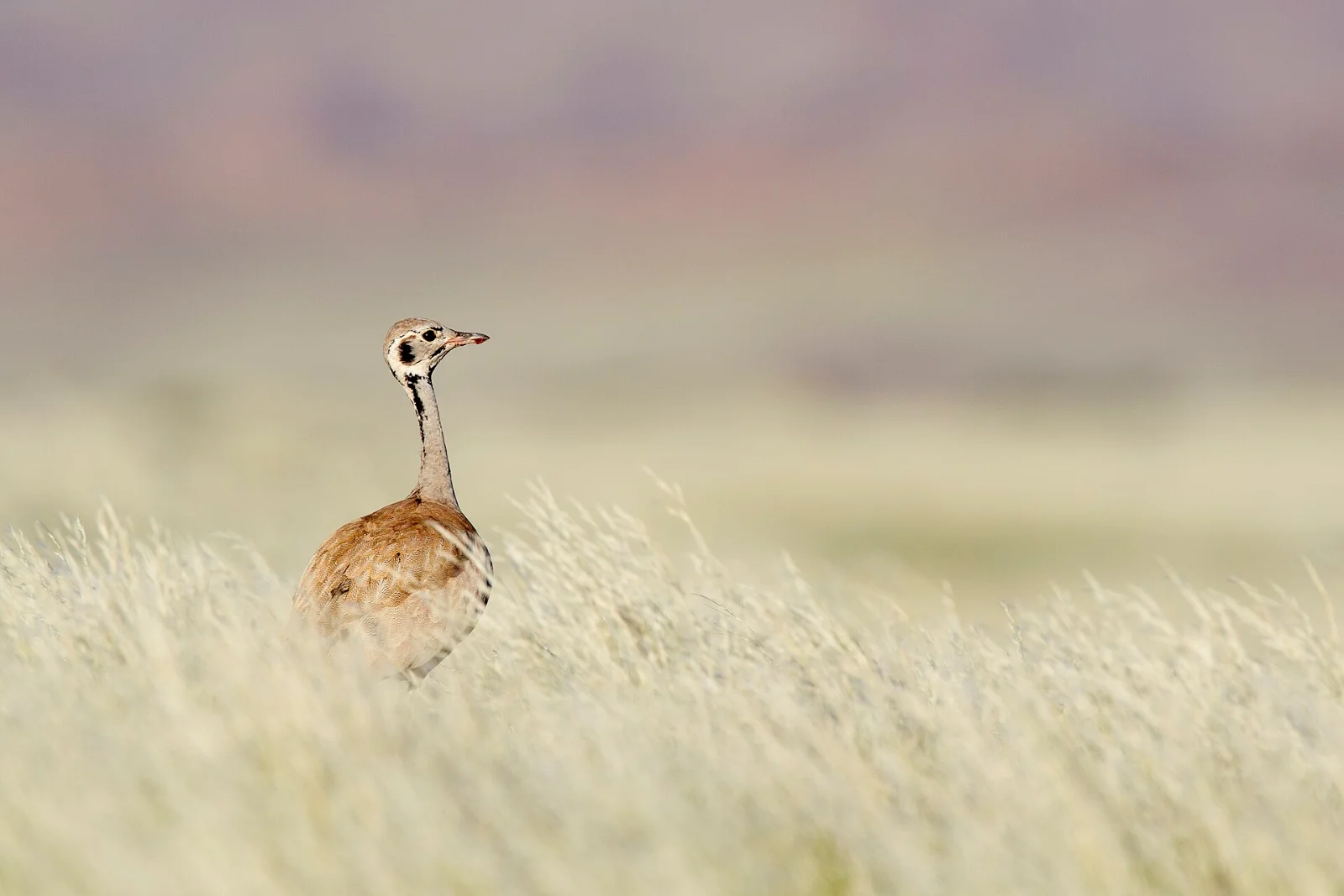
| Gravel plains | Between the dunes and the escarpment | Ludwig’s Bustard, Rüppell’s Korhaan, Burchell’s and Double-banded Coursers, Gray’s Lark, Tractrac Chat |
| Naukluft Mountains | Escarpment, kloofs, springs | Verreaux’s Eagle, Black Stork, Herero Chat, Rockrunner, Hartlaub’s Spurfowl |
| Sossusvlei after rain | Clay pan at the end of the Tsauchab | Waterbirds, including flamingos |
| The coast | Sandwich Harbour and the shore | Damara Tern, Bank and Crowned Cormorants, African Penguin |
Sossusvlei, Sesriem and the dune sea
The KBA account tells the story of the place in geology. The dune sea runs parallel to the coast for up to 120 km inland, starting from sand carried out of the Orange River mouth and stopped abruptly 400 km to the north by the Kuiseb River. At Sesriem, the Tsauchab River has carved a canyon into gravels laid down 15 to 18 million years ago. The account says the river is thought to have once reached the Atlantic, until the dunes blocked it around 60,000 years ago; it still keeps parts of its course open, ending at Sossusvlei, a clay pan 65 km south-west of Sesriem. A river that has been losing an argument with the dunes for 60,000 years and still turns up is fair company for a lark with the same attitude.
The desert-dune and gravel-plain birds in the KBA list are Kori Bustard, Ludwig’s Bustard, Rüppell’s Korhaan, Burchell’s, Temminck’s and Double-banded Coursers, Dune Lark, Gray’s Lark, Stark’s Lark, Karoo Chat, Tractrac Chat and Rufous-eared Warbler. When Sossusvlei holds water, the account says, several waterbird species turn up, flamingos among them.
The rain is the variable. Wikipedia gives the park an average of 106 mm a year, concentrated between February and April, so a wet Sossusvlei is an event rather than a season.
The Dune Lark and its name
Gondwana’s account calls the Dune Lark endemic to Namibia. Wikipedia notes that the IOC world list has since merged Barlow’s Lark into it, and Barlow’s Lark reaches north-western South Africa, so whether Namibia still has the species to itself depends on whose list you keep. For birders in the dunes it changes nothing: the bird on Elim Dune is the one everyone comes for. For the rest of the country’s specials and the route that strings them together, see the Namibia birding guide.
Raptors of the open desert
The KBA account says the park is rich in raptors, and that Secretarybird, White-backed Vulture, Lappet-faced Vulture, Tawny Eagle, Martial Eagle and Greater Kestrel are very common. White-headed Vulture, Pallid Harrier, Black Harrier and Lesser Kestrel are less common.
The vultures have the best numbers. Travel News Namibia reported in January 2015 that Lappet-faced Vultures breeding across most of Namibia have their stronghold in the Namib-Naukluft, and that in the 2014 season the park’s Lappets raised 100 chicks, against a previous record of 89 in 2007. The monitoring began in 1991, and the 100th chick was ringed in the Tsauchab River on the way to Sossusvlei. A vulture nest in a desert riverbed, on the road everyone drives to see the dunes, is one more reason to look up.
The Naukluft Mountains
The Naukluft is a different world. The KBA account describes a plateau of dolomite and limestone, cut off from the highland plateau by cliffs, with peaks almost 1,000 m above the Namib plains. Water dissolving the rock has made an underground drainage system that surfaces as clear springs and streams in the deep kloofs.
The account says Verreaux’s Eagle and Black Stork breed in the Naukluft, probably along with a few pairs of Cape Eagle-Owl. More important for listers, several birds more typical of northern Namibia reach the northern part of the park around the mountains: Hartlaub’s Spurfowl, Rüppell’s Parrot, Monteiro’s Hornbill, Herero Chat, Rockrunner, Short-toed Rock Thrush and White-tailed Shrike. In the opposite direction, Karoo birds reach their northern limit in the south of the park, including Karoo Korhaan, Layard’s Warbler, Karoo Eremomela, Cinnamon-breasted Warbler, Black-headed Canary and Black-eared Sparrow-Lark. For the main Herero Chat and Rockrunner sites further north, see Erongo and Spitzkoppe birding.
The coast
The park also has a coastline, and the KBA account lists African Oystercatcher, Damara Tern, Bank and Crowned Cormorants and large numbers of Common Terns there. It adds that the coast holds Namibia’s only mainland breeding colony of African Penguin. For the coastal end of the park, see Walvis Bay and Sandwich Harbour.
History and planning
The KBA account says the area was first protected as a game reserve in 1907, grew in stages, absorbed the Naukluft Mountain Zebra Park in 1979, and was proclaimed a national park in 1986. The desert research station at Gobabeb, on the Kuiseb River, dates from 1963.
Sesriem is the gateway to Sossusvlei and Elim Dune. Check the current gate times and fees with the Namibian park authorities before travelling, because they change, and plan on 2 separate days if the Naukluft is on the list, since its birds have little in common with the dune birds.
There is no place to stay in the Namib-Naukluft in the Birding Dispatch directory yet.
Park fees, gate times and access in the Namib-Naukluft change. Facts were checked on 15 November 2026 with the Key Biodiversity Areas account, Gondwana’s species account, Travel News Namibia and Wikipedia. Confirm with the Namibian park authorities before you travel.
More from the Journal
 Lake Baringo and Lake Bogoria Birding: The Owl Walks, the Cliffs and the FlamingosA local guide who knows where every nightjar and eagle-owl slept last night, thorn scrub full of hornbills, a Goliath Heron colony on a rock, and the flamingo lake next door that keeps rising.
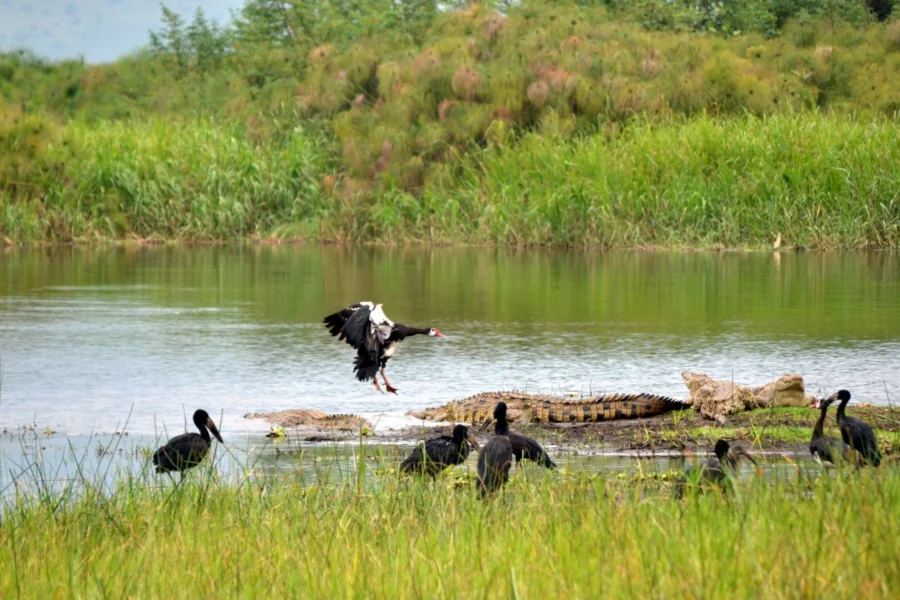 Akagera Birding: Rwanda’s Savanna, Lakes and Papyrus, and the Shoebill ChancesRed-faced Barbet in the southern woodland, Papyrus Gonolek and Carruthers's Cisticola in the swamps, a lake of hippos and lapwings, and a Shoebill that hides in the wetlands more than it shows.
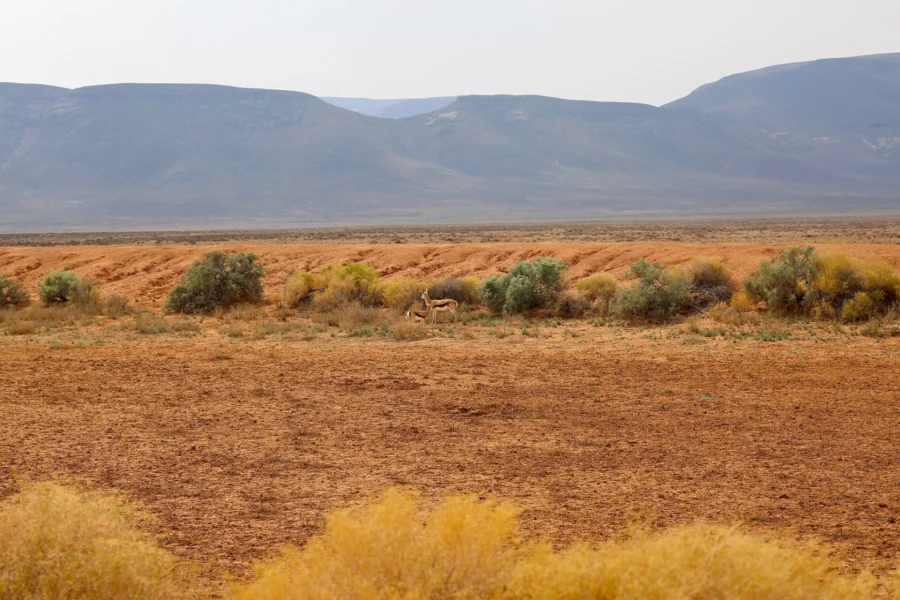 Tankwa Karoo Birding: Cinnamon-breasted Warbler, the R355 and the Karoo LarksCinnamon-breasted Warbler at Skitterykloof, Karoo Eremomela on the P2250, Burchell's Courser in the national park, flamingos in a desert dam, and where to stay on the Ceres side of the Tankwa.
The Pigeon Post
Every Thursday: 1 bird, 1 place to go and 1 place to stay, by email. Sign up and get our printable checklist of the 163 endemics of southern Africa.