
Lake Baringo and Lake Bogoria Birding: The Owl Walks, the Cliffs and the Flamingos
A local guide who knows where every nightjar and eagle-owl slept last night, thorn scrub full of hornbills, a Goliath Heron colony on a rock, and the flamingo lake next door that keeps rising.
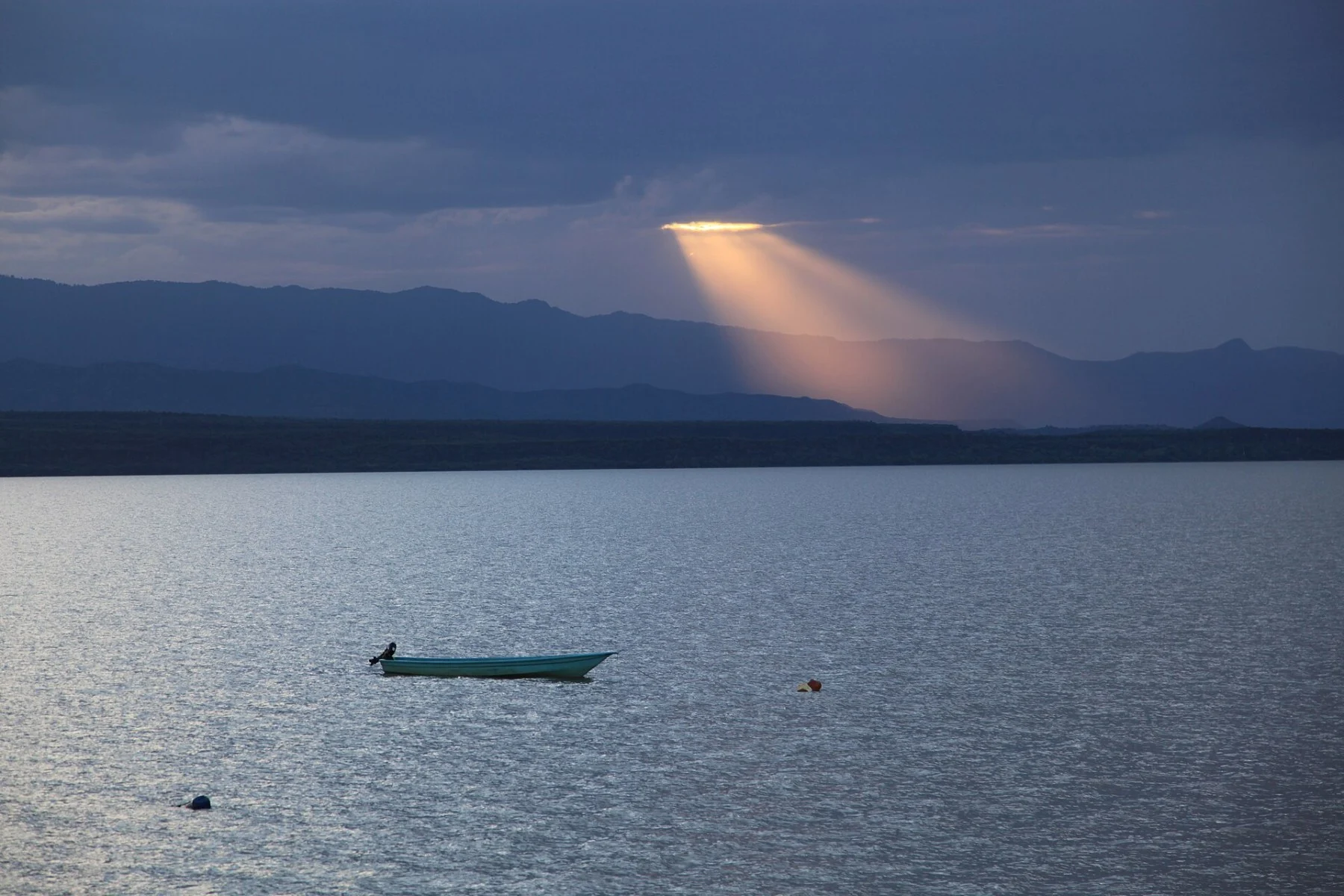
When Birdquest’s Kenya group reached Lake Baringo in late April 2025, it was nearly dark, and the hotel was partly under water. The leader’s report describes a once-grand hotel that is now a perfectly usable upper-floor-only hotel, with Grey Crowned Cranes and Bristle-crowned Starlings waiting to greet the group. The next day, a local guide walked them to a roosting Slender-tailed Nightjar and to both Spotted and Greyish Eagle-Owls. Baringo has always been about the guides who know where the night birds sleep. These days it is also about the water.
Lake Baringo and Lake Bogoria sit side by side in the Kenyan Rift Valley, north of Nakuru, and they could hardly be more different. Baringo is fresh, muddy and fringed with thorn scrub and cliffs, with a bird list that Wikipedia puts at over 470 species. Bogoria, a little to the south, is saline and alkaline, ringed with hot springs and geysers, and at times hosts some of the largest gatherings of flamingos on earth.
Lake Baringo: the guided walks
Baringo is one of only 2 freshwater lakes in Kenya’s Rift Valley, the other being Naivasha, according to Wikipedia, and it was designated a Ramsar wetland in 2002. The Tugen Hills rise to the west and the Laikipia Escarpment to the east, and the habitats that matter to birders are the escarpment cliffs, the thorn forest and the vegetated edge of the lake.
Birdquest’s full day there in 2025 covered all three. Early on came Jackson’s Hornbill, a roosting Northern White-faced Owl and the localised Abyssinian Sunbird. The thorn scrub held Great Spotted Cuckoo, Buff-bellied Warbler, Mouse-coloured Penduline Tits, Pale Batis, Brown Babblers, Beautiful Sunbirds, Little Weaver and White-bellied Canaries, with Grey-headed Silverbills and a male Steel-blue Whydah after careful searching. Mocking Cliff Chats worked the escarpment, and the lake edge gave Northern Masked and Golden-backed Weavers, a Northern Red Bishop and a Senegal Thick-knee.
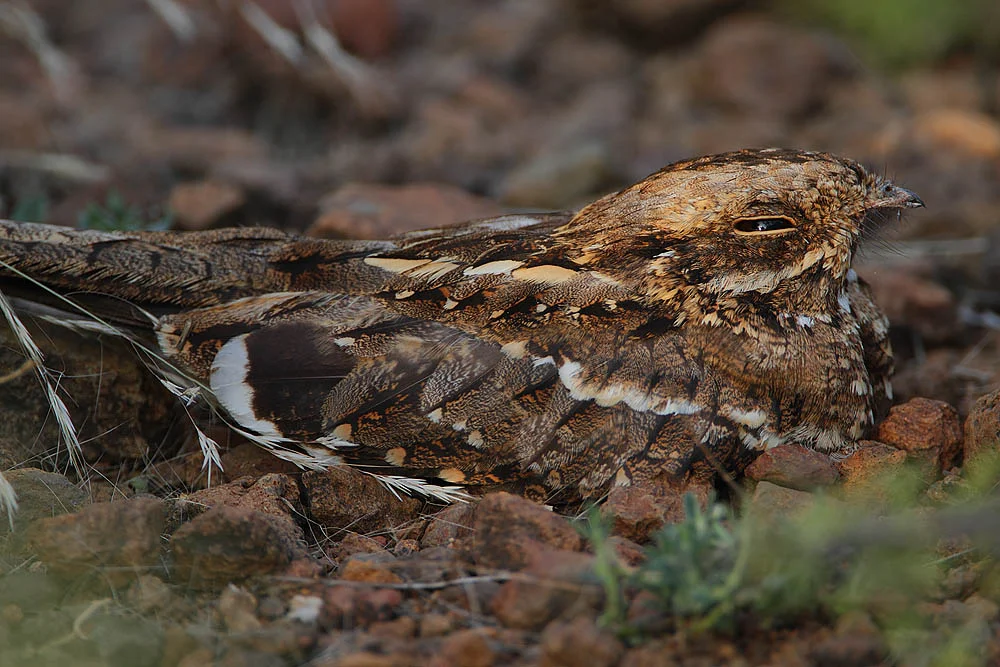
Then the local guide produced the night shift. The roosting Slender-tailed Nightjar was the first, and the 2 eagle-owls were the most interesting: the report notes that Baringo is where Spotted and Greyish Eagle-Owls meet and occasionally hybridise, which means the owls themselves are not always sure who is who. Finding a sleeping nightjar alone means checking every patch of ground; the guide has already checked them, which is the whole case for paying one.
On the water
A boat trip the next morning gave a modest list of waterbirds, Birdquest says, including Goliath Heron, Giant Kingfisher and Lesser Swamp Warbler, and a chance to compare Little, White-rumped and Horus Swifts over the lake. Wikipedia notes a Goliath Heron breeding colony on a rocky islet called Gibraltar. On the way out of the area the group stopped at a colony of White-billed Buffalo Weavers.
Samatian Island, a lodge on one of the lake’s islands, runs boat rides to see the lake’s birdlife and throws fish for the African Fish Eagles, a show the eagles appear to have agreed to in advance. It also offers bird walks over the top of the island and early-morning walks to the mainland cliffs with a professional bird guide, and it gives a count of more than 470 species for Lake Baringo.
Rising water
The flooded hotel was not a one-off. Wikipedia cites a 2021 Kenyan government report that estimated Baringo’s surface area had more than doubled, to 268 km², between 2010 and 2020, flooding lakeside villages. In September 2026, The Standard reported that a government team was mapping what would happen if the water kept rising, and that a rise of just 2 m in Lake Bogoria would breach the narrow divide between the 2 lakes and spill Bogoria’s saline water into Baringo. A University of Nairobi expert told the paper that the gap between the lakes, once more than 21 km, had narrowed in places to 7 to 12 km.
The same report said rising water at Bogoria had already submerged the Lake Bogoria National Reserve gate at Loboi, along with a hospital, schools, an airstrip and the market. For birders, the practical point is simple: check access roads, gates and your accommodation shortly before you travel, because the map here is changing faster than the field guides.
Lake Bogoria: geysers and flamingos
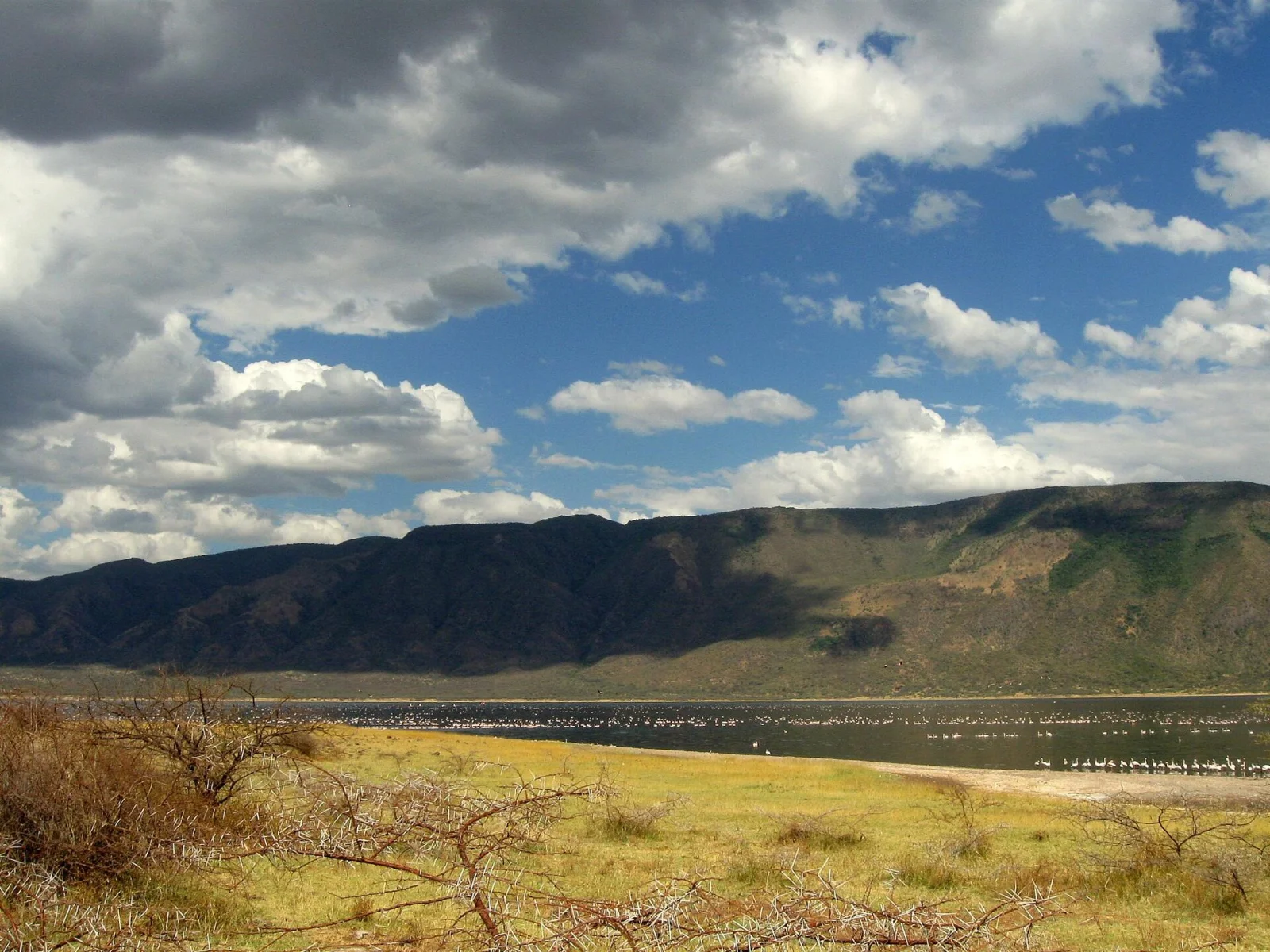
Lake Bogoria, once called Lake Hannington, is a long, narrow, saline and alkaline lake about 120 km north of Nakuru, Wikipedia says, about 17.6 km long and up to 3.6 km wide. It has about 200 hot springs, mostly along the shore, and at least 10 geysers in 4 places that erupt up to 5 m high. The lake was designated a Ramsar site in 2001, covering the whole national reserve.
The water supports dense blooms of spirulina-type cyanobacteria, and those support the flamingos. Wikipedia describes Bogoria as an important stopover for a population of up to 1.5 million migratory birds, notably Lesser Flamingo, and as a refuge when shallower lakes dry out, because its level has historically fluctuated less than the others. That stability is now the problem. The Standard reported that if Bogoria’s water were diluted, the algae that sustain the flamingos would die off, and the same rising water that is flooding the shore is already diluting the lake. For where the flamingos are going instead, and the other lakes in the system, see where to see flamingos.
Bogoria is also mammal country in a small way: Wikipedia lists greater kudu among its important species, and notes kudu on the flanks of the Laikipia Escarpment above Baringo too. The Standard’s reporter recorded 35 degrees on the Bogoria shore in September, a dry-season month, so plan the walking for the early morning.
Planning
Birdquest reached Baringo after a long, rough drive from Marsabit and gave it a full day plus a morning boat trip before heading west through the Kerio Valley to Kakamega, which is the classic shape: Baringo between the northern dry country and the western forests. For Kakamega and the rest of the route, see the Kenya birding guide, and for the lakes further south, Lake Naivasha birding.
Hire a local guide at Baringo for the roosting nightbirds. Bogoria works as a half day from Baringo for the geysers and flamingos, if the road and the reserve gate are open when you go.
Where to stay
The directory has 1 place to stay at Lake Baringo, an island lodge taken on an exclusive-use basis.
| Place to stay | Where | For birders | From |
|---|---|---|---|
| Samatian Island | Island in Lake Baringo, Kenya | Guided cliff walks, island bird walks, boat trips | US$1,600 a night for up to 4, full board (2026) |
Lake levels, roads and reserve gates around Baringo and Bogoria are changing quickly. Facts were checked on 15 November 2026 with Birdquest’s 2025 Kenya Specialities tour report, The Standard’s September 2026 report on the rising lakes, Wikipedia’s accounts of both lakes and the Birding Dispatch listing. Confirm access and your accommodation’s condition shortly before you travel.
More from the Journal
 Namib-Naukluft and Sossusvlei for Birders: Dune Lark, Desert Raptors and the Naukluft SpecialsA lark that lives on the dunes and nowhere else, Lappet-faced Vultures nesting in the desert, coursers on the gravel plains and the northern specials around the Naukluft cliffs, in one of Africa's largest parks.
 Akagera Birding: Rwanda’s Savanna, Lakes and Papyrus, and the Shoebill ChancesRed-faced Barbet in the southern woodland, Papyrus Gonolek and Carruthers's Cisticola in the swamps, a lake of hippos and lapwings, and a Shoebill that hides in the wetlands more than it shows.
 Tankwa Karoo Birding: Cinnamon-breasted Warbler, the R355 and the Karoo LarksCinnamon-breasted Warbler at Skitterykloof, Karoo Eremomela on the P2250, Burchell's Courser in the national park, flamingos in a desert dam, and where to stay on the Ceres side of the Tankwa.
The Pigeon Post
Every Thursday: 1 bird, 1 place to go and 1 place to stay, by email. Sign up and get our printable checklist of the 163 endemics of southern Africa.