
Tankwa Karoo Birding: Cinnamon-breasted Warbler, the R355 and the Karoo Larks
Cinnamon-breasted Warbler at Skitterykloof, Karoo Eremomela on the P2250, Burchell's Courser in the national park, flamingos in a desert dam, and where to stay on the Ceres side of the Tankwa.
On 13 October 2024, a Birding Ecotours group made a last attempt at Skitterykloof for the bird that had been dodging them all week. They found it: a pair of Cinnamon-breasted Warblers preening each other, low on the roadside slope. That is the Tankwa Karoo in one scene. The specials are small, brown-ish and clever with rocks, and they tend to appear on the final morning, once the car is packed.
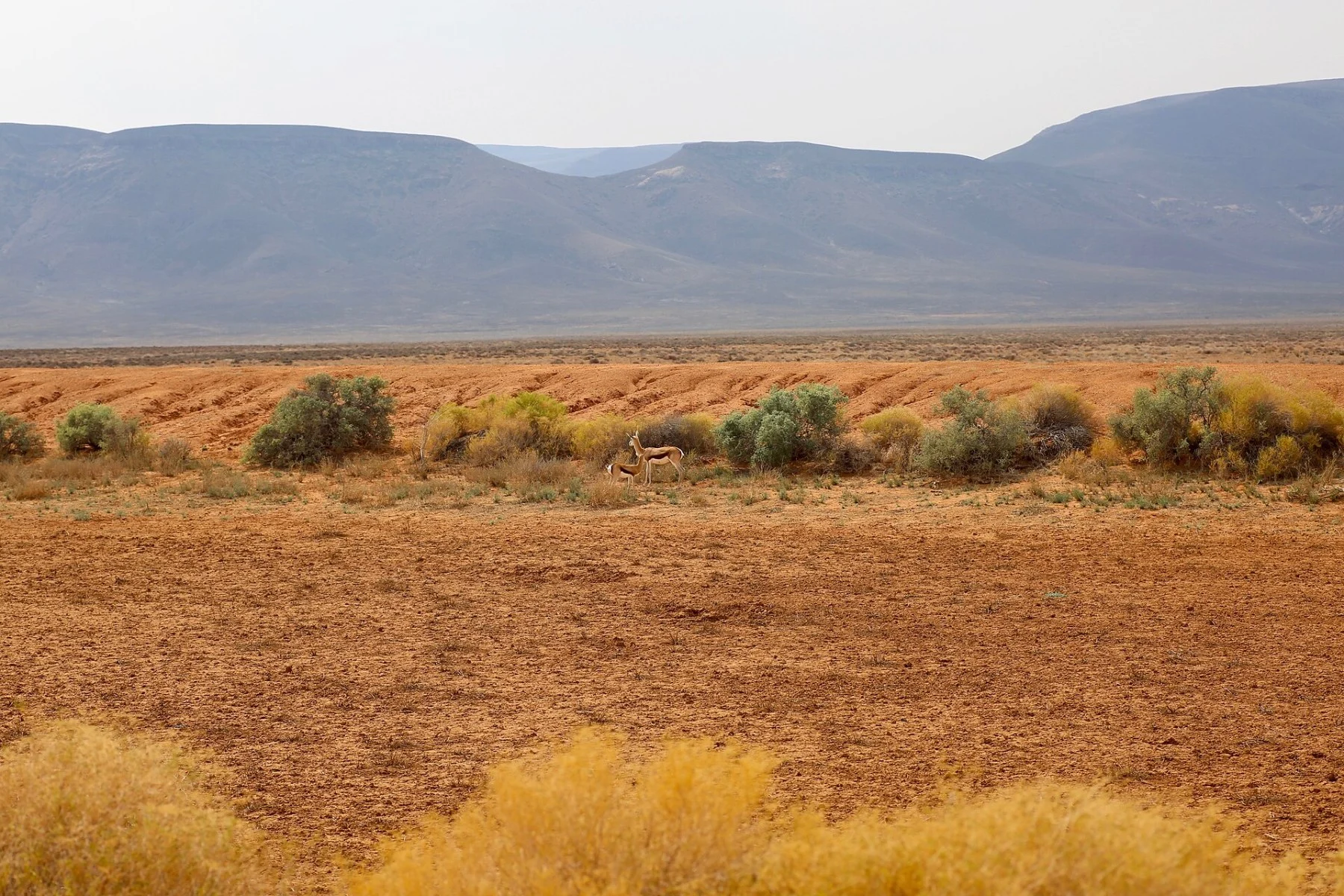
The Tankwa, or Tanqua, is the low-lying, mountain-bound south-western corner of the Succulent Karoo, named after the river that runs through it. Callan Cohen and Claire Spottiswoode, in a 2002 account that SANParks reproduces on its Tankwa bird page, put it 2.5 hours’ drive from Cape Town and wrote that most of the Karoo specials could be found there in a day trip from the city. Tankwa Karoo National Park itself is further in: SANParks calls it a 4-hour drive from Cape Town and lists 183 bird species.
The R355 from Karoopoort
The road in is the R355, a white, dusty gravel road that leaves the Ceres side at Karoopoort, the Tankwa’s south-western corner, and runs north past Eierkop and the Skitterykloof turn-off towards Calvinia. Cohen and Spottiswoode add a footnote that every visitor enjoys: the pass birders call Katbakkies is in fact Skitterykloof, and the real Katbakkies Pass lies 15 km to the west. The name stuck anyway, as wrong names in birding tend to.
Start at Karoopoort. On a 3-day tour in January 2022, Birding Ecotours found Namaqua Warbler, Namaqua Dove, White-backed Mousebird, Pied Starling and White-throated Canary in the scrub and acacias there. On the plains beyond came Pale Chanting Goshawk, Karoo Korhaan, Spike-heeled Lark, Karoo and Tractrac Chats, Karoo Scrub Robin, Rufous-eared Warbler and 3 Namaqua Sandgrouse walking across the road, which is one way to make sure the birders stop.
Skitterykloof and the Cinnamon-breasted Warbler
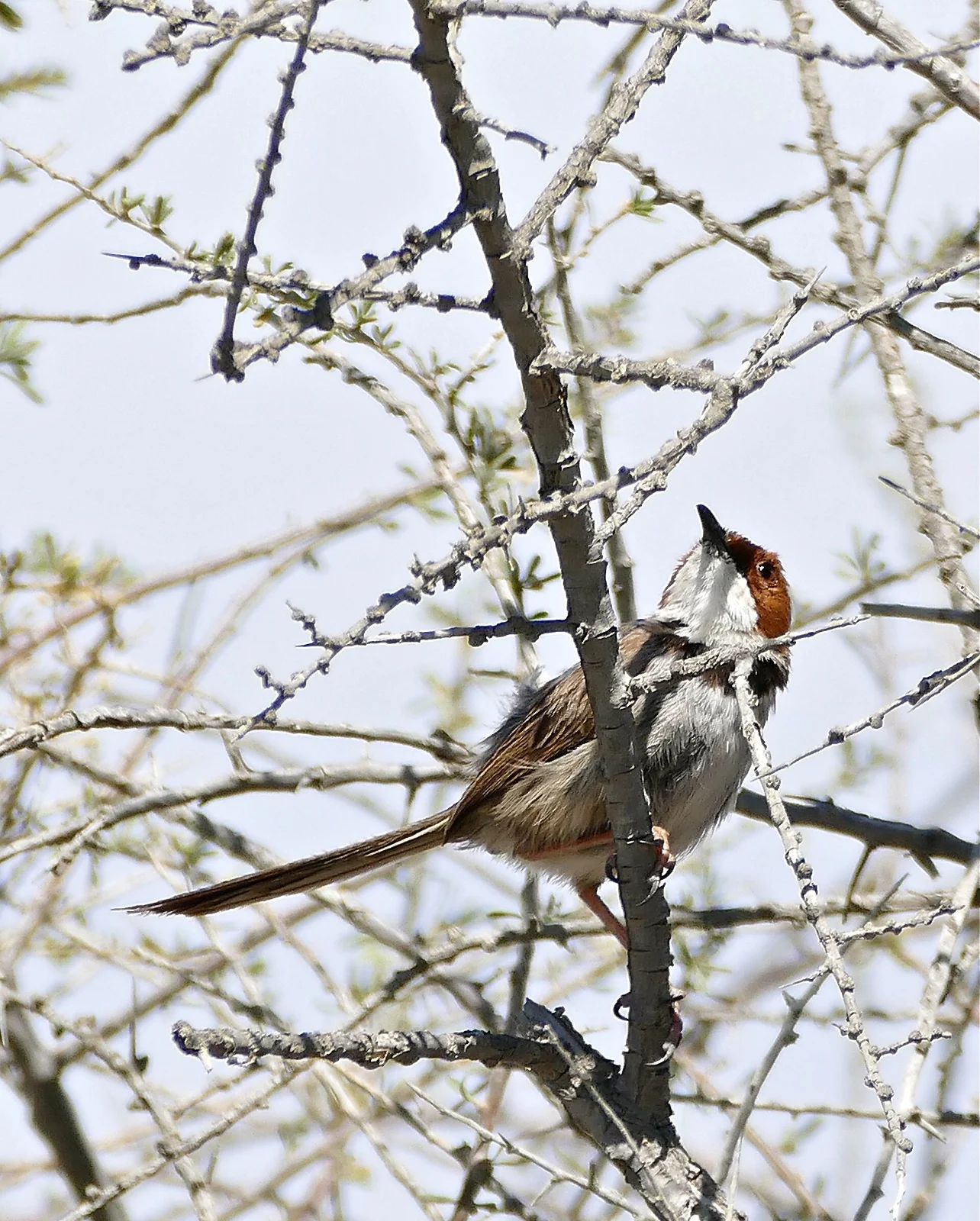
Skitterykloof is a dry, rocky gorge off the R355, and it is the site most Tankwa trips build the day around. The January 2022 group had lunch there in the shade of acacias and found Fairy Flycatcher, Mountain Wheatear, Long-billed Crombec, Dusky Sunbird and White-throated Canary. Only some of the group managed brief views of Cinnamon-breasted Warbler that afternoon; the next morning, in a dry rocky gorge, everyone saw it, along with Grey-backed Cisticola, Layard’s Warbler and a Pale-winged Starling.
The October 2024 group, based nearby, birded Skitterykloof morning and evening: Karoo Lark, Rufous-eared Warbler, Pririt Batis, Fairy Flycatcher, Karoo Chat, Lark-like Bunting and Black-headed Canary, then the warbler pair on the last day, then the best Black Harrier views of the trip in the same place. They also drove further west along the Skitterykloof road, where the Karoo scrub turns into karroid fynbos, and added Southern Black Korhaan, Cape Clapper Lark, Cape Sugarbird and a Protea Canary in the protea bushes. For the fynbos end of that road, see the Cederberg birding guide.
The warbler is a skulker of rocky slopes. Both reports found it by working the slopes slowly, and both needed more than one visit.
The P2250: larks, eremomelas and the odd sparrow-lark
Cohen and Spottiswoode rated the P2250, the minor road that leaves the R355 about 25 km north of the Skitterykloof turn-off and heads north-east towards the park, Middelpos and Sutherland, as perhaps one of the finest birding roads in the south-western Karoo, especially in spring. As the road runs on, the bushes thin out and stretches of bare gravel appear. Their list for it:
- Tractrac Chat, the gravel-plains specialist, often the most obvious bird.
- Rufous-eared Warbler, usually the commonest bird in the scrub.
- Spike-heeled, Karoo, Red-capped and Large-billed Larks, with Karoo Lark easiest in spring, when its rattling call is everywhere.
- Karoo Eremomela, a localised endemic that is common along the shallow drainage lines 4 to 7 km from the R355. Listen for its call, which they compare to the tightening of a rusty bolt.
- Ludwig’s Bustard in winter and spring, best spotted in flight, and Karoo Korhaan all year, whose frog-like duets carry across the scrub at dawn.
- Greater Kestrel, scarce further south, plus Pale Chanting Goshawk and Rock Kestrel.
Black-eared Sparrow-Lark is the wild card. It is nomadic, it bred in the national park in 1996 and invaded the Tankwa again in spring 2001, and displaying males look, in Cohen and Spottiswoode’s words, more like giant floppy black butterflies than birds. The October 2024 group had many sightings on the plains north of the Tankwa Padstal; the January 2022 group had none. The bird does not keep a diary.
The acacia-lined watercourse that crosses the P2250 27.6 km from the R355 holds the thicket birds: Pririt Batis, Cape Penduline Tit, Chestnut-vented Warbler and White-backed Mousebird.
Tankwa Karoo National Park and Burchell’s Courser
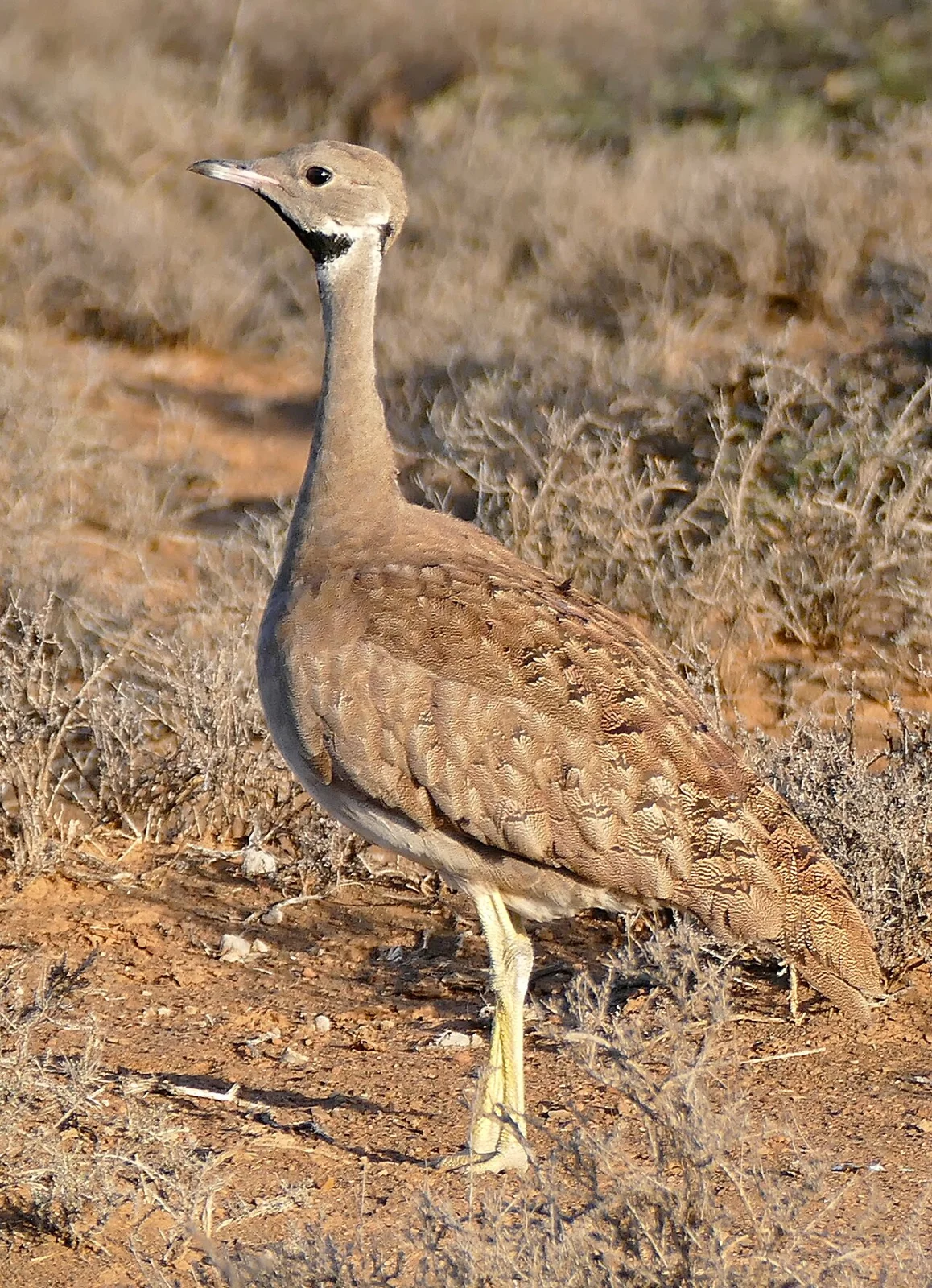
Cohen and Spottiswoode called the park overlooked, and recommended the track on its southern boundary for Burchell’s Courser, a poorly known nomad that may be absent in some years. Their method: drive slowly, stop to scan patches of bare, burnished gravel, and watch for odd-shaped birds flying over, which is how they found most of theirs. Double-banded Courser occurs too, and Karoo Long-billed Lark becomes commoner as you go north.
The January 2022 group searched the plains for the courser and did not find one, but in the park they added Grey-backed Sparrow-Lark, Lark-like Bunting, Greater Kestrel, Chestnut-vented Warbler, Pririt Batis, Karoo Long-billed Lark and a flyover Booted Eagle, plus a leucistic Common Ostrich, which is an ostrich that has turned up in the wrong colours and still looks like it is in charge. SANParks notes that Oudebaaskraal Dam, now inside the park, brings in waterfowl as well.
SANParks’ conservation fees from 1 November 2026 to 31 October 2027 are R63 for South African adults, R130 for SADC nationals and R295 for other visitors. SANParks’ own campsites in the park start at R199 a night.
Flamingos in the desert
The Tankwa has water in unexpected places. In October 2024, the Birding Ecotours group stopped at a large dam just south of Eierkop and found thousands of Greater Flamingos, Red-knobbed Coots and Black-necked Grebes, with Glossy Ibis, White-faced Whistling Ducks, South African Shelduck, a pair of Sickle-winged Chats and flocks of Whiskered Terns. Their report calls the terns quite strange in the middle of a desert, which is fair. Cohen and Spottiswoode also note South African Shelduck and Pied Avocet on the dam on the Tanqua River.
Ouberg Pass and the Roggeveld
East of the park, the Ouberg Pass climbs about 600 m up the Roggeveld escarpment towards Sutherland in a run of switchbacks. Cohen and Spottiswoode called it possibly the most reliable site within reach of Cape Town for African Rock Pipit, and advised knowing its call first. Sickle-winged Chat and Pale-winged Starling live there too, and from dusk Cape Eagle-Owl can be found by scanning the roadside telephone poles on the pass and the plateau beyond. The owls use the poles; the birders use the owls as an excuse to stay out late.
When to go and what to take
August to October is the peak. Cohen and Spottiswoode put spring at the top for birding, when the Succulent Karoo may also burst into flower, and say most specials can be found all year with some effort, apart from the nomads such as Black-headed Canary, Ludwig’s Bustard and Black-eared Sparrow-Lark. Midday is hot even in spring: the October 2024 group went back to its lodge to sit out the heat of the day and went out again in the late afternoon. Fill up in Ceres, which is where that group refuelled on the way home, and carry water. For the wider region, the Karoo birding guide covers Karoo National Park and the Camdeboo, and the LBJs guide helps with the larks.
Bases on the Ceres side
The directory has no roost on the R355 itself, so the Birding Dispatch listings for the Tankwa sit on the Ceres side. Inverdoorn Private Game Reserve, on the R356 on the edge of the Tankwa, gives at least 180 species for the Tankwa Karoo. Guests can book a birdwatching drive with a ranger at reception, best early in the morning or late in the afternoon, and it names Karoo Korhaan, Kori Bustard, Sclater’s, Karoo and Stark’s Larks, Namaqua Sandgrouse, Tractrac Chat and Rufous-eared Warbler. Matroosberg Private Nature Reserve, about 35 km from Ceres on the R46 with a final 4 km of dirt road, publishes its own checklist in English and Afrikaans, so a lark can be ticked in either language, and includes birding for guests around its mountains and lake.
Where to stay
The places to stay on the Ceres side of the Tankwa:
| Place to stay | Where | For birders | From |
|---|---|---|---|
| Inverdoorn Private Game Reserve | R356 near Ceres, edge of the Tankwa | Ranger-led birding drives, 180+ Tankwa species | R4,425 pp sharing, full board (1 May to 31 October 2026) |
| Matroosberg Private Nature Reserve | Bo-Swaarmoed, about 35 km from Ceres | Own bilingual checklist, Verreaux’s and Booted Eagles | R135 pp camping, 2 nights or more (2026) |
Gravel roads in the Tankwa change with the weather, and the nomadic birds move with the rain. Facts were checked on 15 November 2026 with SANParks, the trip reports named above and each listing on Birding Dispatch. Confirm park fees, road conditions and rates before you travel.
More from the Journal
 Namib-Naukluft and Sossusvlei for Birders: Dune Lark, Desert Raptors and the Naukluft SpecialsA lark that lives on the dunes and nowhere else, Lappet-faced Vultures nesting in the desert, coursers on the gravel plains and the northern specials around the Naukluft cliffs, in one of Africa's largest parks.
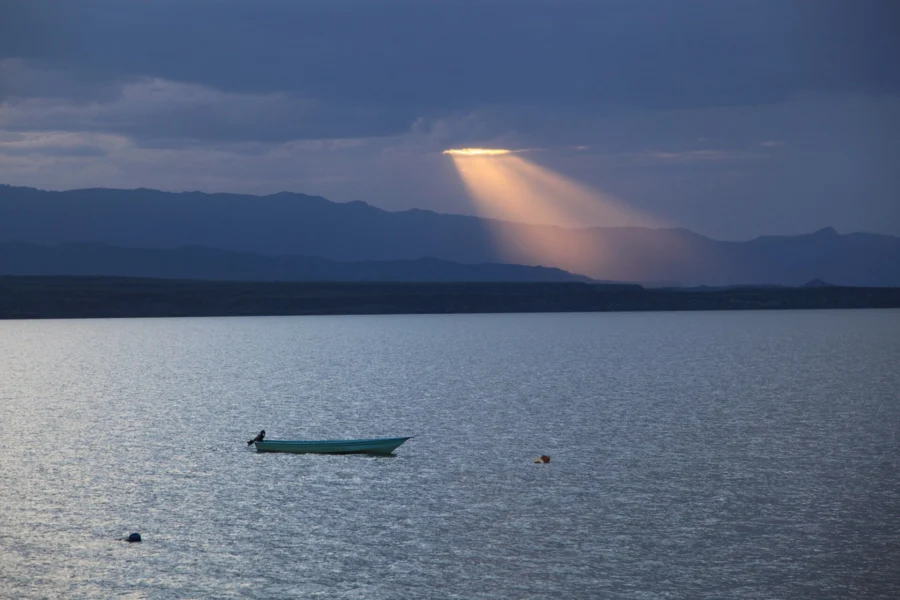 Lake Baringo and Lake Bogoria Birding: The Owl Walks, the Cliffs and the FlamingosA local guide who knows where every nightjar and eagle-owl slept last night, thorn scrub full of hornbills, a Goliath Heron colony on a rock, and the flamingo lake next door that keeps rising.
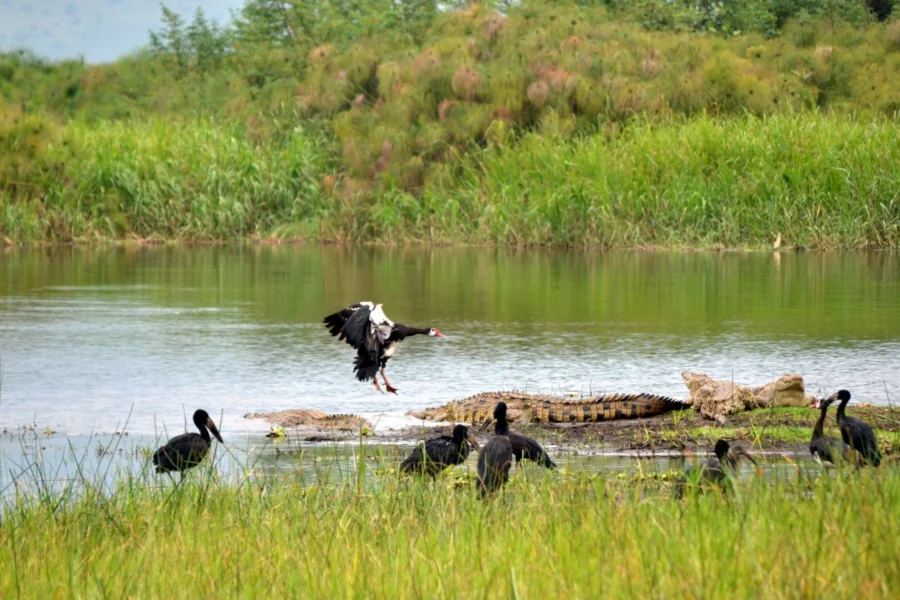 Akagera Birding: Rwanda’s Savanna, Lakes and Papyrus, and the Shoebill ChancesRed-faced Barbet in the southern woodland, Papyrus Gonolek and Carruthers's Cisticola in the swamps, a lake of hippos and lapwings, and a Shoebill that hides in the wetlands more than it shows.
The Pigeon Post
Every Thursday: 1 bird, 1 place to go and 1 place to stay, by email. Sign up and get our printable checklist of the 163 endemics of southern Africa.