
Swallows, Martins and Swifts of Southern Africa: the Summer Arrivals and How to Tell Them Apart
A reedbed near Durban that takes in about 3 million Barn Swallows a night, a swift that sleeps on the wing, and the rare Blue Swallow. How to tell the aerial feeders apart.
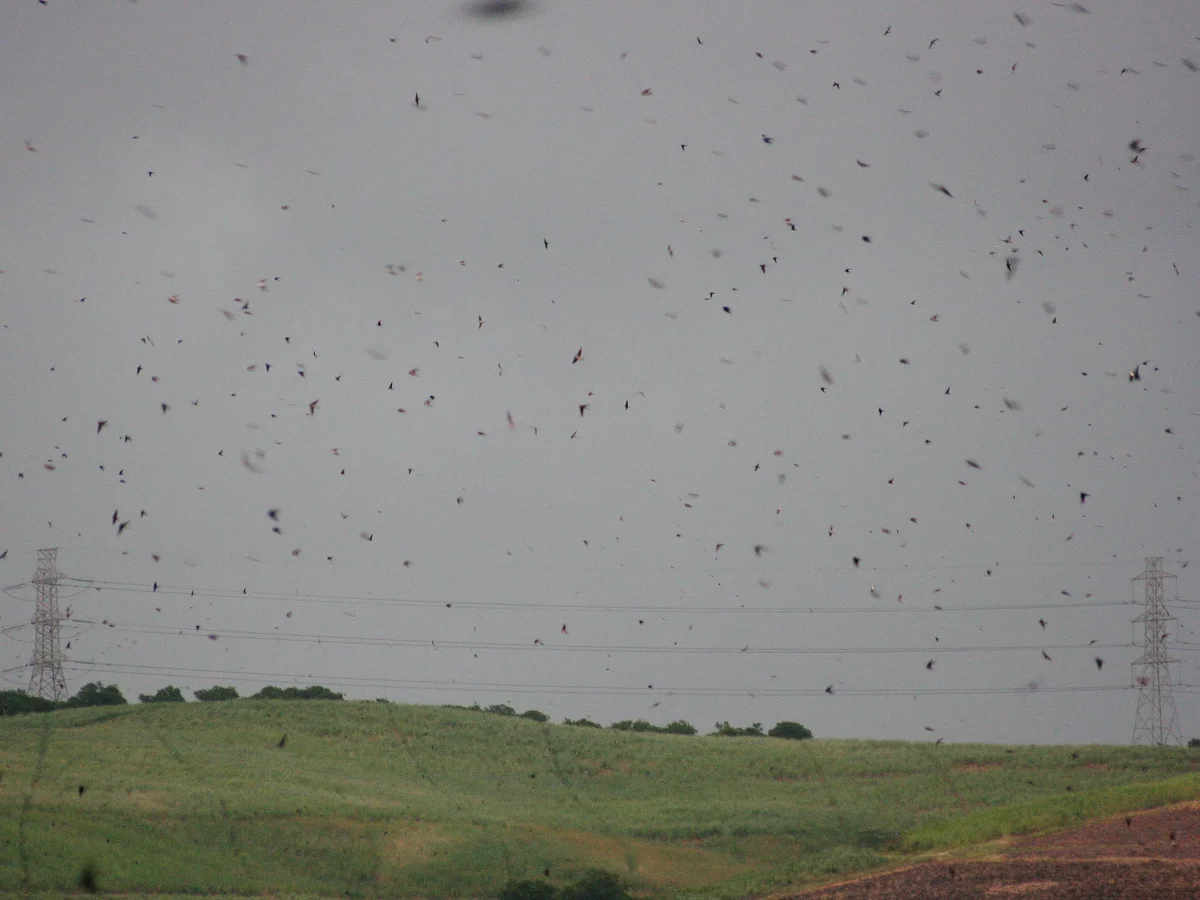
Every summer evening, roughly 3 million Barn Swallows pour into a wetland near Mount Moreland, north of Durban, to roost. That figure comes from Iziko Museums’ Biodiversity Explorer, which also gives the timetable: most Barn Swallows reach southern Africa in October and November and leave in huge flocks around March and April, heading back to breeding grounds that stretch across North America and Eurasia.
The swallows and swifts are the birds most people see without trying: on telephone wires, over dams, under bridges and above every farmhouse. They are also the birds most people get wrong, because they rarely stop moving long enough to be looked at. This guide covers the main species, when they arrive and the quickest ways to tell them apart.
Swallow or swift?
The 2 groups look alike in the air but are not related. Swallows and martins perch freely on wires and branches and build mud nests or dig tunnels. Swifts hardly ever perch at all: Biodiversity Explorer says the Common Swift is permanently airborne on its non-breeding grounds and roosts on the wing, and the swifts that do nest glue feathers and grass together with their own saliva. A bird sitting on a wire is not a swift.
The main species at a glance
| Bird | Group | When it is here | Nest |
|---|---|---|---|
| Barn Swallow | Swallow | Mostly October to April | Breeds in the north |
| White-throated Swallow | Swallow | About July to May | Open mud cup |
| Greater Striped Swallow | Swallow | Arrives July to August | Mud nest |
| Pearl-breasted Swallow | Swallow | Summer visitor to the Cape, August to April | Mud cup |
| Blue Swallow | Swallow | Breeds October to March | Half-bowl lined with white feathers |
| Banded Martin | Martin | Arrives September to October | Tunnel in a bank |
| Brown-throated Martin | Martin | All year, near water | Tunnel 30 to 80 cm long |
| Little Swift | Swift | All year | Closed bowl, glued with saliva |
| White-rumped Swift | Swift | About August to May | Usually stolen |
| Alpine Swift | Swift | Resident in Namibia, migrant elsewhere | Stacked nests on cliffs |
The swallows
The Barn Swallow can turn up in any habitat in southern Africa, and its evening roosts in reedbeds are one of the region’s great bird spectacles. The summer migrants guide covers it and the other long-distance arrivals.
The White-throated Swallow is an intra-African migrant: Biodiversity Explorer says it arrives from July to September and leaves around April and May in flocks of 20 to 1,000 birds. The bulk of its population is in South Africa, Eswatini and Lesotho. Its nest is a small open cup of mud pellets, and the chicks keep roosting in it for at least 2 weeks after they fledge.
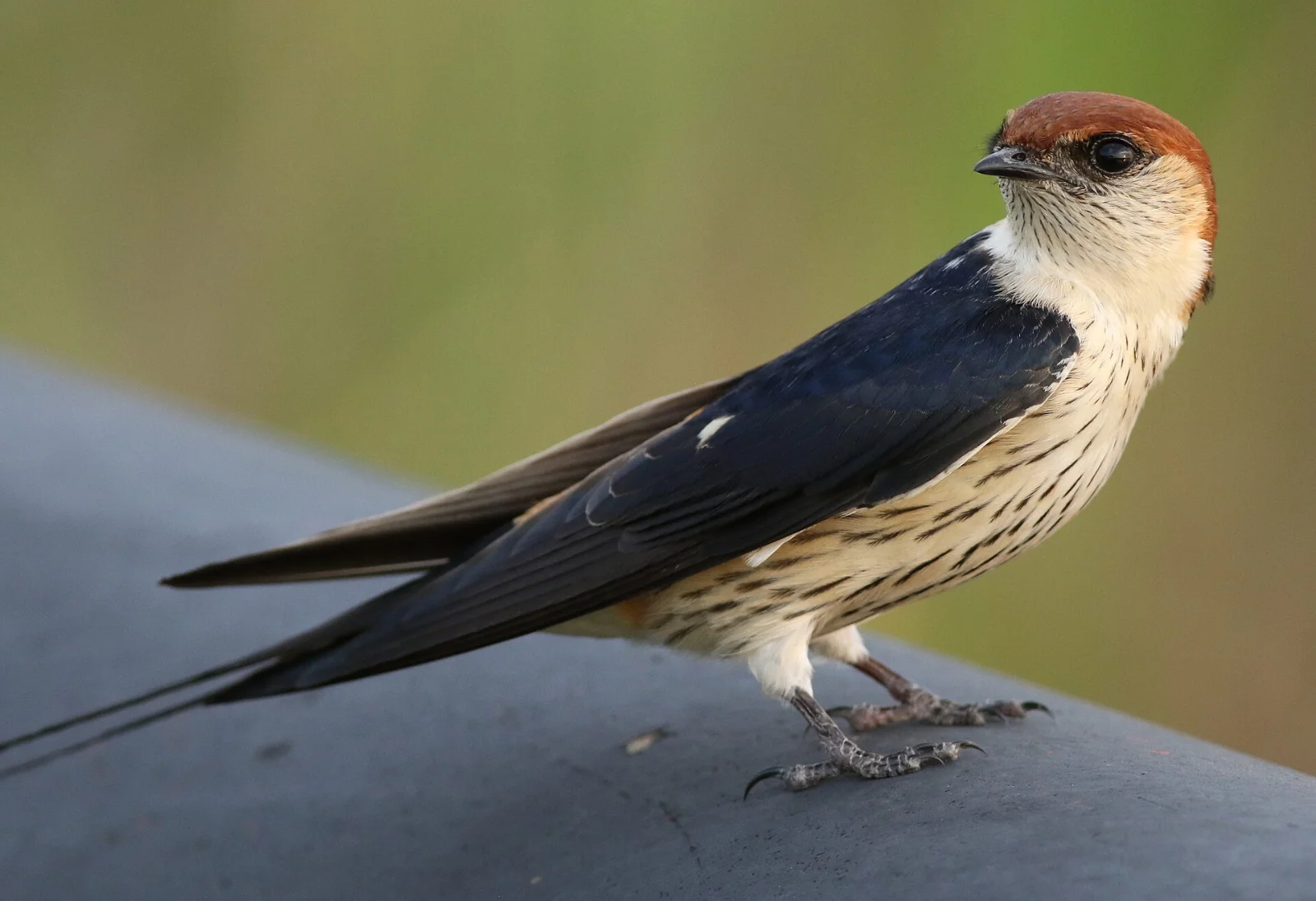
The Greater Striped Swallow is endemic to Africa south of the equator, found across most of South Africa except the arid north-western Karoo and the far edges of Limpopo. It arrives from its central African non-breeding grounds around July and August, and a pair usually raises 2 or 3 broods a season, so it is busy. Egg-laying runs from August to April. The Lesser Striped Swallow is common in the eastern half of the region, including Zimbabwe, Mozambique, northern and eastern Botswana and Kruger.
The Pearl-breasted Swallow is a summer breeding visitor to the Western and Eastern Cape, arriving in August and leaving in April, and builds a cup of mud or clay pellets lined with grass and hair. The Red-breasted Swallow arrives around August and September and mostly leaves in April and May for equatorial Africa; Biodiversity Explorer records one nest near Bloemfontein in which 2 females laid 4 eggs, which counts as unusual even by swallow standards.
The Blue Swallow
The Blue Swallow is the special. Biodiversity Explorer calls it rare and localised, with scattered populations in Uganda and the north-east of the DRC, southern Tanzania, southern Malawi and southern Africa, where it has small breeding populations in Zimbabwe’s Eastern Highlands and on the eastern escarpment. It builds a half-bowl of mud mixed with grass, starting around October, and lines it with dry grass, fine roots and white feathers, possibly to help the birds find the nest in the dark. In South Africa, egg-laying peaks in December and January.
Several places to stay in the directory name it. In the KwaZulu-Natal Midlands, Thula iNyoni says Blue Swallow can be seen at Roselands Farm from December to March, and Duma Manzi Eco Lodges adds it from its GoBirding page. Walkersons Hotel & Spa names it among the 250 species of the Dullstroom area, and Heaven Lodge names it in Chimanimani in Zimbabwe. The KZN Midlands birding guide covers the mistbelt grasslands where it breeds.
The martins
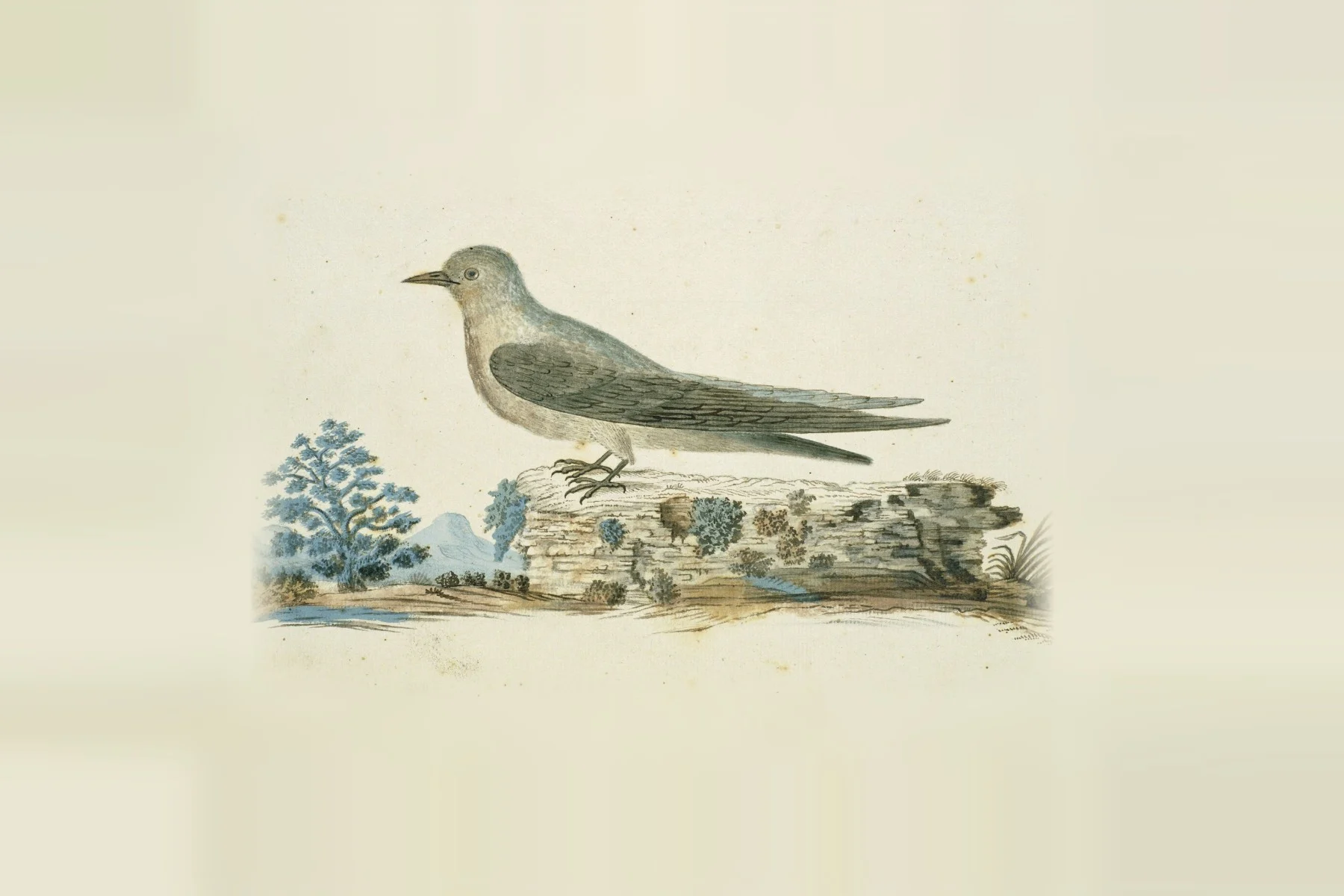
The Rock Martin, the bird in the plate at the top of this page, is common in most of South Africa and Namibia. The Brown-throated Martin is locally common across much of South Africa, Lesotho and Eswatini, but depends on wetlands and other water for roosting and breeding; it digs a tunnel 30 to 80 cm long ending in a chamber and may breed in any month. The Banded Martin is an intra-African breeding migrant that reaches South Africa and Zimbabwe around September and October, later in central Namibia, and nests in a feather-and-grass chamber at the end of an upward-sloping tunnel.
The swifts
The Little Swift is found almost everywhere in sub-Saharan Africa, often around buildings and cliffs, where it nests in colonies in untidy closed bowls of grass and feathers glued with saliva. The White-rumped Swift is a breeding migrant, arriving around August to October and leaving in April and May, and it rarely builds its own nest: Biodiversity Explorer says it usually steals the nest of another swift or swallow, chasing off the owners and evicting any eggs or chicks. Squatters’ rights, swift style.
The Alpine Swift can travel about 1,000 km in a day and nests in colonies of about 20 to 35 pairs, with bowl-shaped nests bridging vertical rock cracks, often stacked on top of each other like apartment blocks. It is resident in Namibia and migratory elsewhere in southern Africa. The African Black Swift also covers around 1,000 km a day. The Common Swift, a non-breeding visitor from the north, usually arrives in October and November and leaves between January and March, and has been recorded at 216 km per hour.
At Golden Gate Highlands National Park, BirdLife South Africa’s GoBirding guide says the sandstone cliffs and overhangs suit African Black, Little and Alpine Swifts and Rock Martin, with Greater Striped and White-throated Swallows in summer.
Telling them apart
Start with behaviour: a bird that perches is a swallow or martin, and a bird that never lands is almost certainly a swift. Then the season: from about November to March the Barn Swallow outnumbers everything, while the White-throated and Greater Striped Swallows arrive in the late dry season. Then habitat: martins and Brown-throated Martins over water, Rock Martins and Alpine Swifts at cliffs, Little Swifts around buildings and bridges. Finally, look at the nest if there is one; the swallows’ mud cups and the swifts’ feather-and-saliva bowls are easier to see than the birds.
Where to stay
Places in the directory that name a swallow or swift:
| Place to stay | Where | For birders | From |
|---|---|---|---|
| Thula iNyoni | Richmond, KwaZulu-Natal | BirdLife Recommended; Blue Swallow at Roselands Farm, December to March | Ask the lodge |
| Duma Manzi Eco Lodges | Richmond, KwaZulu-Natal | BirdLife Recommended; Blue Swallow on its GoBirding page | Ask the lodge |
| King’s Grant Country Retreat | Ixopo, KwaZulu-Natal | Blue Swallow and Cape Parrot named | Ask the lodge |
| Walkersons Hotel & Spa | Dullstroom, Mpumalanga | BirdLife Recommended; 250 area species incl. Blue Swallow | R3,710 pp sharing, dinner, bed and breakfast (2026) |
| Heaven Lodge | Chimanimani, Zimbabwe | Blue Swallow and Gurney’s Sugarbird named | USD 12 pp camping |
| Magoebaskloof Getaway | Magoebaskloof, Limpopo | Wire-tailed Swallow among its forest and dam birds | R800 per self-catering log cabin |
| Barry House on Riverton | Robertson, Western Cape | BirdLife Recommended; African Palm Swift named | R5,200 for the house, self-catering (from September 2026) |
Swallows and swifts follow the insects, and their arrival dates shift a little from year to year. Facts were checked on 15 November 2026 with Iziko Museums’ Biodiversity Explorer, BirdLife South Africa’s GoBirding guide to Golden Gate and the Birding Dispatch listings. Rates change each season; check with the place before you book.
More from the Journal
 Woodpeckers of Southern Africa, Including the One That Doesn’t Need TreesSouthern Africa's woodpeckers, from the Cardinal in every bushveld tree to the Ground Woodpecker that lives on treeless mountain slopes and eats almost nothing but ants.
 Where to See a Taita Falcon: the Strijdom Tunnel, the Blyde Cliffs and the Batoka GorgeA stocky falcon smaller than a pigeon, a handful of cliffs and surveys that keep coming back empty. Where it still nests, how to look, and the 2 roosts beside its cliffs.
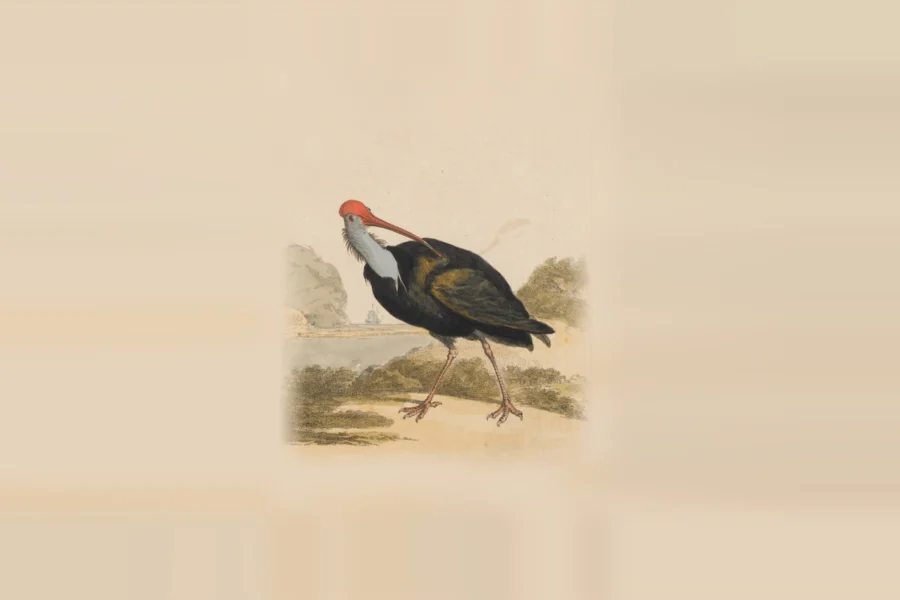 Where to See a Southern Bald Ibis: the Breeding Cliffs, Dullstroom, Wakkerstroom and LesothoA red-capped grassland ibis that nests on cliffs over waterfalls and feeds on burnt veld and maize stubble. The colonies you can watch, the fields to scan, and where to stay.
The Pigeon Post
Every Thursday: 1 bird, 1 place to go and 1 place to stay, by email. Sign up and get our printable checklist of the 163 endemics of southern Africa.