
Ngorongoro, Tarangire and Lake Manyara for Birders: The Northern Circuit Beyond the Serengeti
Ashy Starlings at the Tarangire River, bishops raiding the Manyara rice fields, sunbirds on the crater rim and a flamingo-lined lake on the crater floor: the northern circuit parks before the Serengeti.
On the rim of the Ngorongoro Crater, in low cloud, lives a small brown warbler named after an admiral. Lynes’s Cisticola commemorates Rear-Admiral Hubert Lynes, who sorted out the taxonomy of that famously confusing group in a supplement to The Ibis in 1930, and BirdQuest’s group found a rather damp one in the gloom on the rim on its April 2025 Northern Tanzania tour. An admiral seems the right rank for a man who took on the cisticolas; anything less would have been sent home.
Most itineraries treat Tarangire, Lake Manyara and Ngorongoro as the drive to the Serengeti. For a birder they are the most varied days of the trip: baobab country with 2 endemics at the gate, a Rift Valley lake that has swallowed its own shoreline, montane forest on the crater highlands, and a caldera floor full of flamingos and rails. The Serengeti itself has its own page, Serengeti birding; this one covers the parks before it.
Tarangire: baobabs, swamps and 2 endemics
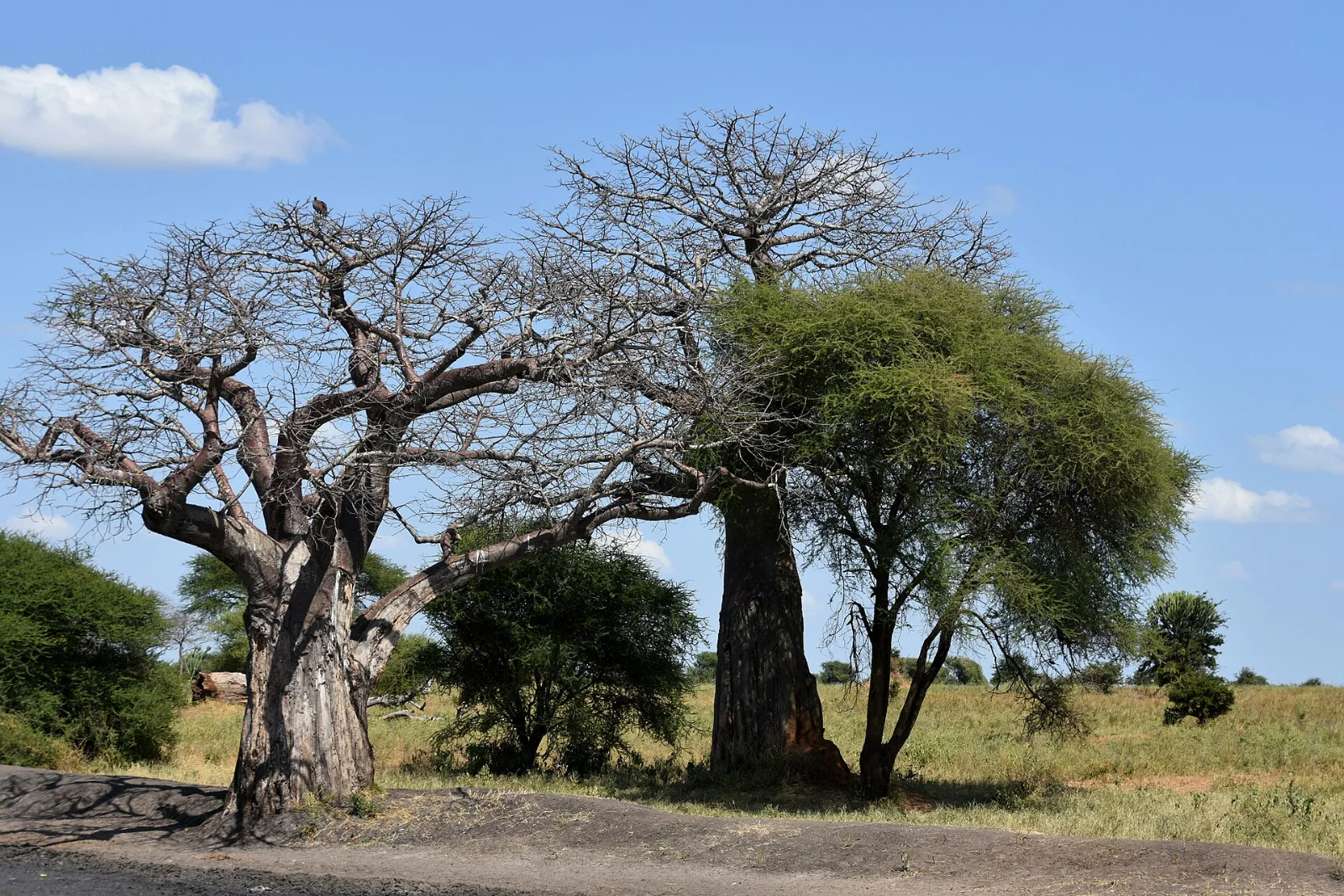
Tarangire is where the endemics start, sometimes before the paperwork is done. BirdQuest’s group, led by Nik Borrow, spotted its first Yellow-collared Lovebirds at the entrance gate, although recent construction work had disturbed what the report calls a normally birdy spot. At its lodge overlooking the Tarangire River, a roosting African Scops Owl and the endemic Ashy Starlings kept the group company at sundowners. Field Guides’ March 2024 group, led by Terry Stevenson, had both endemics too, plus Pygmy Falcon and at least 120 Black-faced Sandgrouse along the tracks.
BirdQuest’s report describes the Tarangire ecosystem as about 20,000 square kilometres of baobab and acacia woodland, Commiphora bushland and open grassland dotted with Real Fan Palms, with swamps dominating the south. Its full-day drive followed the Tarangire River south to Silale Swamp for a picnic lunch overlooking the water. Long-toed Lapwings, Black Coucals and Blue-cheeked Bee-eaters were plentiful there, and 2 African Crakes were flushed. On the way, the group saw Secretarybirds, Southern Ground Hornbills, Meyer’s and Red-bellied Parrots and the regional endemic Red-throated Tit. The local form of D’Arnaud’s Barbet, sometimes split as Emin’s or Black-capped Barbet, showed incredibly well, so it is one to note in the margin in case it gets promoted.
The night drive is the Tarangire extra. BirdQuest’s lodge was still running night game drives in April, and the group had repeated views of Slender-tailed Nightjar and Three-banded Courser and no fewer than 10 Bronze-winged Coursers, with a Serval thrown in. After heavy rain, the report notes, the vegetation was high and the river less of a draw than in the dry season.
Lake Manyara and the rice fields
Lake Manyara is the stop that has changed most. BirdQuest’s report says the park stretches for 50 km along the Rift Valley escarpment and that the lake was once a famous haunt of flamingos, but rising water over several years has covered and killed much of the low-lying woodland around it. The hot springs and the hippo pools are both under water, and the group found hardly any waterbirds along the shore. In April 2025 it could not drive right through the park because of the high water and a river that had burst its banks, and it was limited to the southern section.
The rice fields outside the park made up for it. BirdQuest scoped a Dwarf Bittern there, with breeding-plumaged Golden-backed Weaver, Southern Red and Yellow-crowned Bishops, Fan-tailed and White-winged Widowbirds and a displaying Highland Rush Warbler, while the rice growers yelled at the birds to keep them out of the crop. It is the one place on the circuit where the farmers are as keen on the bishops as the birders are, for different reasons.
Inside the park, the acacia woodland at the foot of the Rift wall produced Purple-crested Turaco after some effort, which included waiting for an elephant to finish eating a tree it had pushed across the road. White-bellied Tit and Usambiro Barbets followed, and the next morning a pair of Verreaux’s Eagles and an Ayres’s Hawk-Eagle sailed over the escarpment. Ask your operator before you go which parts of the park are open; the 2025 road closure is a reminder that the map and the lake are not currently in agreement.
The crater highlands
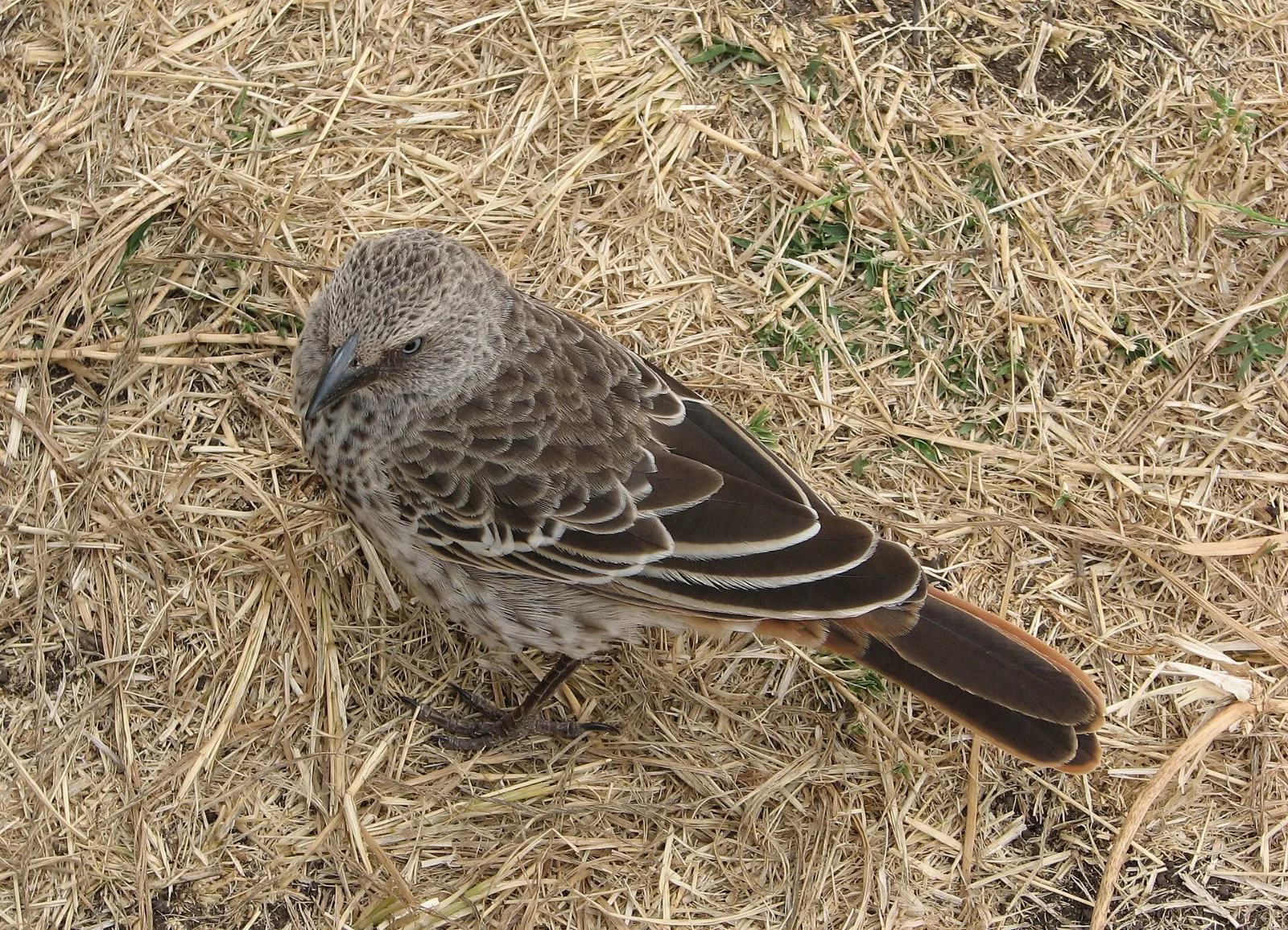
The forest and grassland around the crater rim hold the highland birds. BirdQuest entered the Ngorongoro Conservation Area at the Lodoare Gate and found Brown Parisoma, Grey-capped Warbler and Brown-headed Apalis in the montane forest on the climb. On the grasslands around the crater, which looked a little overgrazed, it added Hunter’s Cisticola, Red-cowled Widowbirds and Jackson’s Widowbird in breeding plumage. Then it went looking for flowering Leonotis, the lion’s paw plant: Malachite Sunbird was holding territory, and one stand of flowers had small numbers of the much-wanted Golden-winged Sunbird. Montane Nightjar showed at dusk from the lodge on the rim.
The lodge grounds were the best forest birding. After a night of heavy rain, a swarm of winged termites brought out Rufous-breasted Sparrowhawk, the near-endemic Mbulu White-eye, Cinnamon-chested Bee-eaters, Bar-throated Apalis, Tacazze and Eastern Double-collared Sunbirds, Thick-billed Seedeater and a pair of Abyssinian Crimsonwings. Field Guides walked the forest on the outer slopes from Gibb’s Farm, near Karatu, and found Verreaux’s Eagle-Owl, Purple-throated Cuckooshrike, White-tailed Blue Flycatcher and Red-throated Twinspot, before a lunch of almost all home-grown produce.
The crater floor
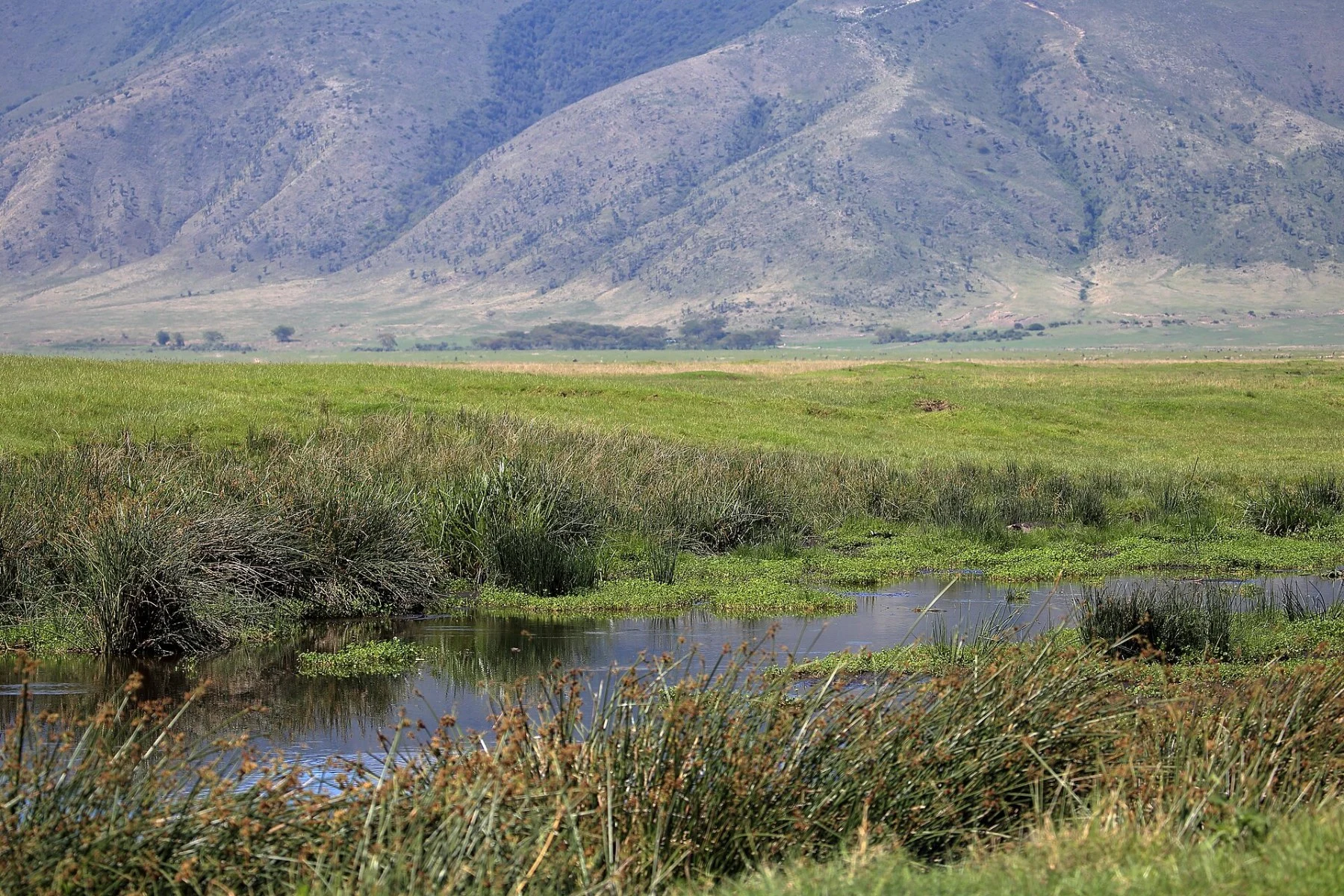
The crater is over 16 km across, according to BirdQuest, and the descent road is steep and narrow. On the floor, Pectoral-patch Cisticolas buzzed overhead in display flight, and the group found Rosy-throated Longclaws and Anteater Chats. Lake Magadi, the shallow lake on the crater floor, held plenty of water in 2025 and was edged with Lesser Flamingos, many Greater Flamingos, Blue-billed Teal and Cape Teal. Field Guides, in March 2024, estimated more than 100,000 Lesser Flamingos and at least 300 Greater Flamingos on the crater lake. For where else the 2 species gather, see where to see flamingos.
Both groups had Grey Crowned Cranes and Kori Bustards, and Field Guides added Hildebrandt’s Spurfowl, Lappet-faced Vulture and Hildebrandt’s Starling. In the wet year of 2025, a large part of the crater floor was marsh, and BirdQuest found Little Rush and Lesser Swamp Warblers and several noisy African Rails. Both groups counted 5 Black Rhinos, which is a useful fact to have ready for the companions who are not here for the warblers.
Order and timing
Both tours ran in the wetter months, BirdQuest from 1 to 15 April 2025 and Field Guides in March 2024, and both found the endemics and the crater specials. The wet season has costs: BirdQuest lost the through route at Manyara, got stuck behind a truck in a gully and met low cloud on the rim. It also brought breeding plumage to the bishops and widowbirds and a crater full of water and rails. The fees for Tarangire, Manyara and the Ngorongoro Conservation Area, including the crater service fee per vehicle, are set out in the Tanzania birding guide.
BirdQuest ran it from Arusha in this order: Tarangire, Manyara, the crater highlands, then the Serengeti. Give Tarangire 2 nights for the Silale Swamp day and a night drive, treat Manyara as a day with the rice fields first, and spend 2 nights on the highlands: one for the rim grasslands and forest, one for a full day on the crater floor.
Choosing a base
The directory has a place to stay for each stage. Serian Tarangire Camp has safari tents in baobab woodland inside Tarangire, with night drives, and its operator runs a birdwatching safari with a specialist ornithologist guide. Nsya Lodge & Camp, at Mto wa Mbu about 10 minutes from Lake Manyara National Park, can arrange a specialist birding guide.
On the highlands, Gibb’s Farm, a working farm near Karatu, reports more than 200 bird species each season and gives November to April as the best time for birds. Naserian Safari Camp has 12 tents about 20 minutes from the crater rim and offers the same operator’s birdwatching safari as Serian. The Conservation Area also takes in Lake Ndutu, on the edge of the southern Serengeti, where Ndutu Safari Lodge, a family lodge of stone cottages that has been running for more than 57 years, puts the area’s count at well over 300 species and keeps a bird list guests can download.
Where to stay
The places to stay along the northern circuit before the Serengeti, in the order they appear above:
| Place to stay | Where | For birders | From |
|---|---|---|---|
| Serian Tarangire Camp | Tarangire National Park, Tanzania | Birding safari with specialist ornithologist guide, night drives | US$367 pp sharing, full board (2026) |
| Nsya Lodge & Camp | Mto wa Mbu, near Lake Manyara, Tanzania | Can arrange a specialist birding guide | Ask the lodge |
| Gibb’s Farm | Near Karatu, Ngorongoro highlands, Tanzania | Naturalist-led walks, 200+ species a season | US$518 pp sharing, full board (green season 2026) |
| Naserian Safari Camp | Ngorongoro Conservation Area, near the crater rim | Birding safari with specialist ornithologist guide | Ask the lodge |
| Ndutu Safari Lodge | Lake Ndutu, Ngorongoro Conservation Area, Tanzania | Downloadable bird list, 300+ species for the area | Ask the lodge |
Water levels at Lake Manyara, road access and park fees change. Facts were checked on 15 November 2026 with BirdQuest’s April 2025 Northern Tanzania tour report, Field Guides’ March 2024 East Africa Highlights report and each listing on Birding Dispatch. Confirm which parts of each park are open, and current TANAPA and NCAA fees, with your operator before you travel.
More from the Journal
 Namib-Naukluft and Sossusvlei for Birders: Dune Lark, Desert Raptors and the Naukluft SpecialsA lark that lives on the dunes and nowhere else, Lappet-faced Vultures nesting in the desert, coursers on the gravel plains and the northern specials around the Naukluft cliffs, in one of Africa's largest parks.
 Lake Baringo and Lake Bogoria Birding: The Owl Walks, the Cliffs and the FlamingosA local guide who knows where every nightjar and eagle-owl slept last night, thorn scrub full of hornbills, a Goliath Heron colony on a rock, and the flamingo lake next door that keeps rising.
 Akagera Birding: Rwanda’s Savanna, Lakes and Papyrus, and the Shoebill ChancesRed-faced Barbet in the southern woodland, Papyrus Gonolek and Carruthers's Cisticola in the swamps, a lake of hippos and lapwings, and a Shoebill that hides in the wetlands more than it shows.
The Pigeon Post
Every Thursday: 1 bird, 1 place to go and 1 place to stay, by email. Sign up and get our printable checklist of the 163 endemics of southern Africa.