
Marievale and the Gauteng Wetlands: Hides, Herons and Flamingos Near Johannesburg
Little Bittern from the Otter Hide, 4 big herons on 1 marsh, flamingos on an urban pan in Benoni and Marsh Owls over the winter grass, all within 90 minutes of OR Tambo.
Little Bittern is a small heron that spends much of its life pretending to be a reed. At Marievale Bird Sanctuary, on the East Rand, BirdLife South Africa’s GoBirding guide says it is regularly seen from the Otter and Flamingo hides, which is a fine thing to be able to say about a bird built to vanish. The same marsh is, in GoBirding’s words, perhaps the best place in Gauteng to see Goliath, Black, Squacco and Purple Herons together, and it is 1 to 1.5 hours from OR Tambo International Airport.
Marievale is the centrepiece of a short list of wetlands on the south-eastern side of Johannesburg that GoBirding groups as the South-eastern Wetlands and Grasslands. Add Korsman Bird Sanctuary in Benoni, 20 to 30 minutes from the airport, and Klipkraal Protected Area north of the Vaal Dam, and a birder with a car has reedbeds, pans, mudflats and grassland within an easy morning of the city.
Marievale: the marsh and its birds
The sanctuary covers about 1,000 ha at the southern end of the Blesbokspruit, a Ramsar site and Important Bird and Biodiversity Area. GoBirding describes large stretches of marsh and reedbed broken by open water, with mudflats exposed in drier periods and in winter, and natural grassland and farmland around the edges. The commonest birds are the ones that come in crowds: Reed Cormorant, Red-knobbed Coot and Yellow-billed Duck.
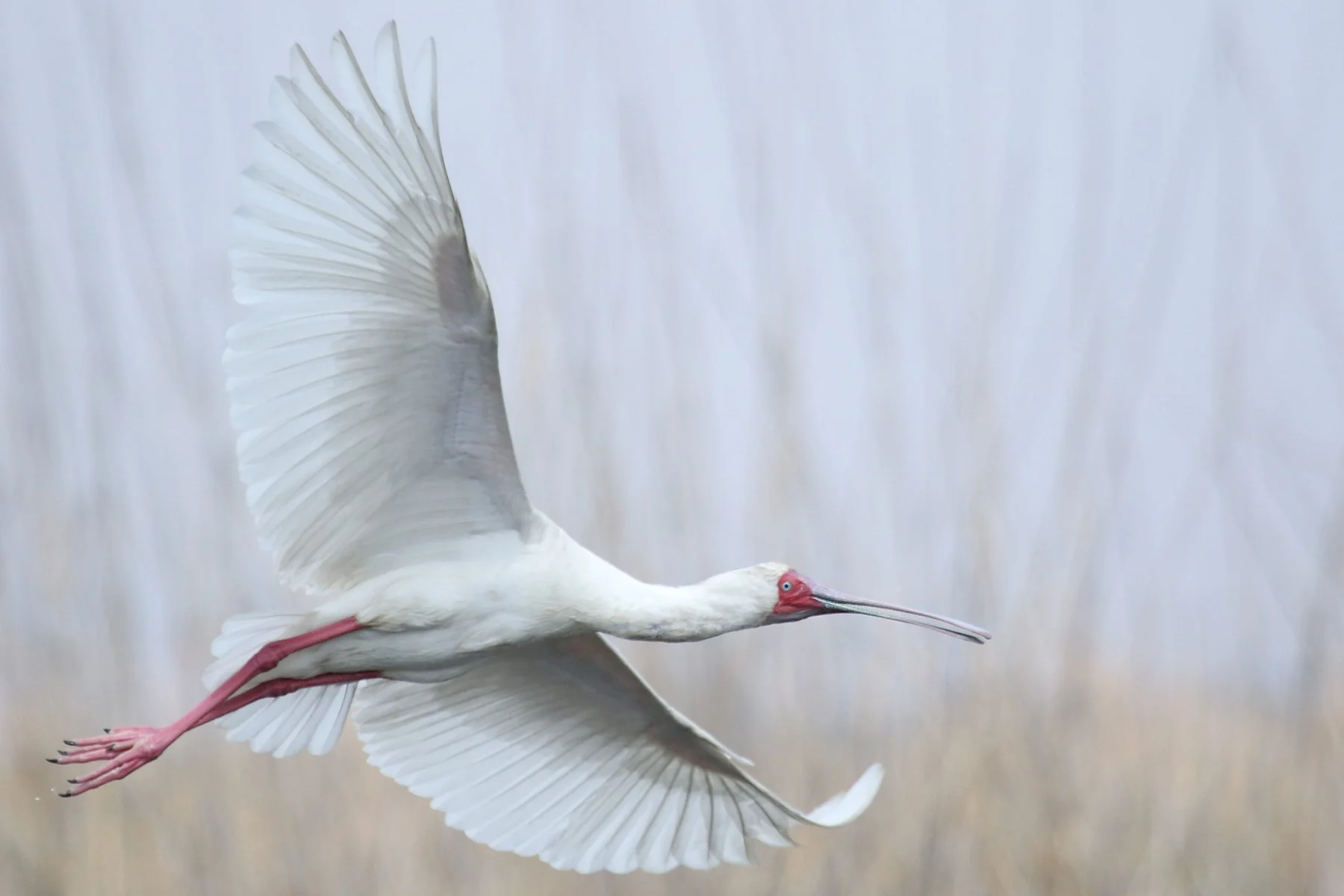
Behind the crowds are the reasons to come. Alongside the 4 headline herons, Grey and Black-headed Herons are common, as are African Spoonbill and African Darter, and Greater and Lesser Flamingos turn up from time to time. The ducks include Cape Shoveler, White-faced Whistling Duck, Red-billed and Blue-billed Teal and Southern Pochard, with the occasional Cape Teal, Fulvous Whistling Duck, South African Shelduck and White-backed Duck. Marievale is very much a place where the duck list rewards a second look.
When water levels drop and the migrants are in, the mud fills with Ruff, Curlew Sandpiper, African Snipe, Pied Avocet, Black-winged Stilt and Little Stint, with Wood and Marsh Sandpipers regular. For help with the confusing ones, see waders of southern Africa.
The reedbeds: warblers, rails and harriers
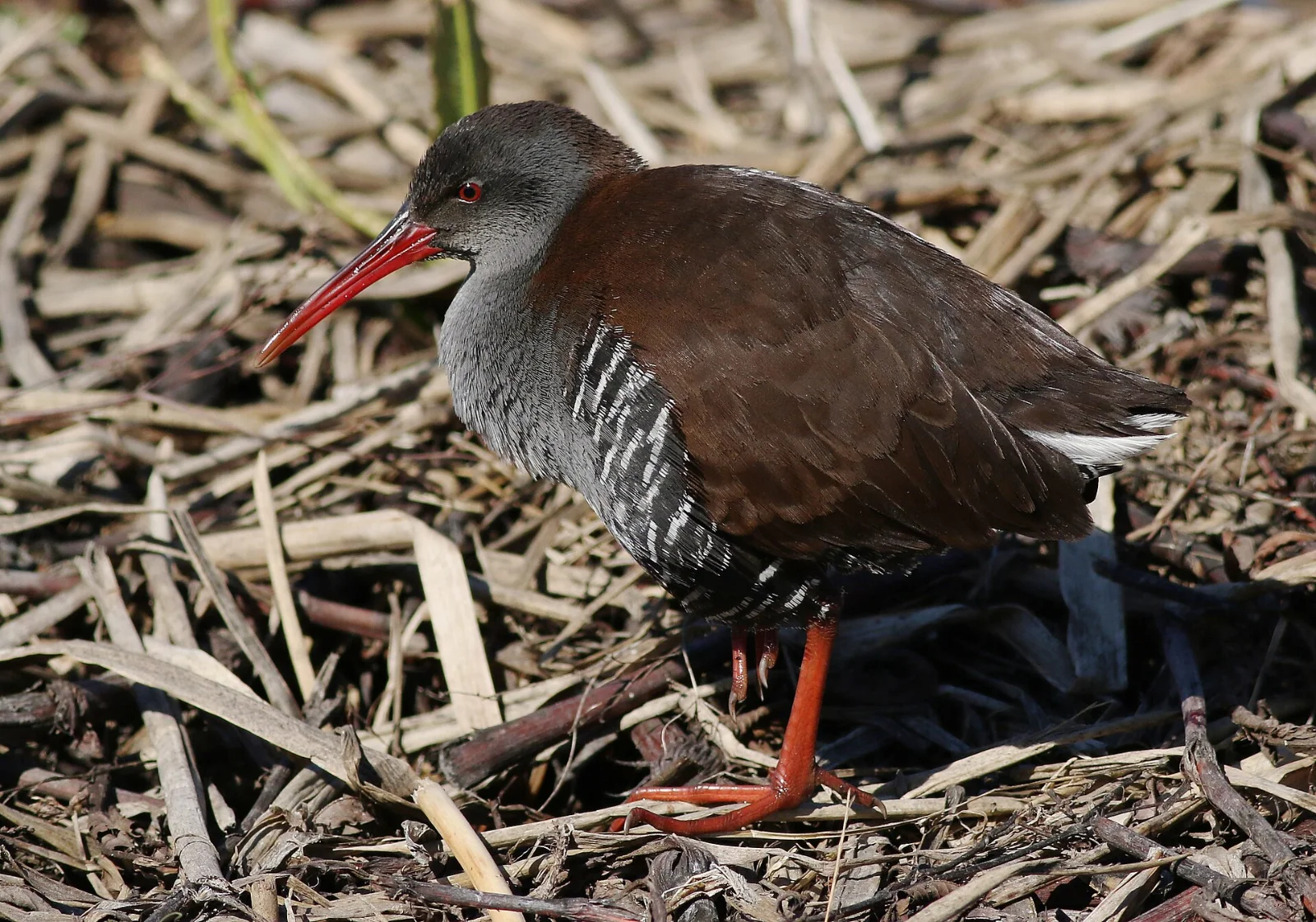
In summer the reeds are loud with Lesser Swamp, Little Rush and African Reed Warblers, and GoBirding says Great Reed and Sedge Warblers appear from time to time. African Swamphen and Black Crake are often seen. African Rail is harder, and Red-chested Flufftail is on GoBirding’s list of key species too, so learn both calls before you sit down. African Marsh Harrier hunts low over the marsh, and Western Marsh Harrier turns up now and then. In winter, Marsh Owls quarter the farmland and grassland around the sanctuary.
GoBirding’s key species list also names Orange-breasted Waxbill and Red-throated Wryneck, a reminder to check the grassland on the way in. For the herons in more detail, including how to tell Black Heron from Slaty Egret by which end of the leg is yellow, see herons and egrets of southern Africa.
The 5 hides
Marievale’s hides are why many birders come, and GoBirding gives a candid account of each, including access for wheelchair users:
- Hadeda Hide is the first reached from the main gate, with a wide view over open water where waterbirds, weavers, warblers and sometimes flamingos and crakes are seen. A cement path leads from grass parking, and there is space for a wheelchair between the fixed benches, though little leg room.
- Flamingo Hide, at the picnic site, overlooks a vlei with waterbirds, weavers, waders and swallows, and Little Bittern is regular here. Reed growth and high water have taken much of the wader habitat. The benches are fixed and too close for a wheelchair, but slots without benches on one side can be used from one.
- Otter Hide is a small hide on the main causeway, over water with waterbirds and shorebirds, and the second Little Bittern hide. There is no parking area: cars stop on the causeway, which trucks also use, and GoBirding calls this not ideal at all and possibly dangerous.
- Duiker Hide, in the northern part of the reserve, once looked over mud banks for waders, but high water has turned the area into more of a dam and few birds are seen. Its floor is smooth and the benches can be moved for a wheelchair.
- Shelduck Hide, the last on the road, also faces a dam with few birds, and GoBirding says it has become so run down that it is no longer recommended.
Visiting Marievale
The sanctuary is reached on about 12 km of rough dirt road. GoBirding says it suits any vehicle for most of the year but can become impassable after long spells of wet weather. From the airport, take the R24 and then the N3 south towards Heidelberg, leave at the R550 (R554) Nigel and Lenasia exit, continue through Nigel onto the R42 towards Delmas, and look for the signposted entrance on the left after crossing the Blesbokspruit. Visitors sign in with the guards at the gate. There are toilets and a picnic site.
Gates are open every day of the year, from 05:30 to 19:30 between October and March and 06:30 to 18:00 from April to September. GoBirding’s page still carries an older line saying entry is free, but its dated fee table, effective 1 April 2025, gives R41 for an adult, R37 for a child or pensioner and R28 for a vehicle. For a birding day of hides at that price, the coot alone almost covers it.
Korsman: flamingos in the suburbs
Korsman Conservancy and Bird Sanctuary in Benoni is a 45 ha pan with grassland margins, reedbeds and reed islands, and GoBirding says the birdlife is prolific despite the houses around it. Grey, Black-headed and Goliath Herons, African Sacred Ibis and Glossy Ibis breed in the reeds. Greater and Lesser Flamingos and Great Crested Grebe are regular visitors, and Goliath Heron, Little Bittern and African Swamphen are resident. Low water exposes mud for Wood and Marsh Sandpipers, Ruff and Black-winged Stilt, and a small rocky islet on the western side usually holds African Darter and White-breasted and Reed Cormorants. Grey-headed Gull and Maccoa Duck are on the key species list, and Swainson’s Spurfowl and African Wattled Lapwing live in the grassland.
The sanctuary is fenced but can be watched from the 2.5 km of road around it and from 5 raised viewing berms, 3 of them with wheelchair paths, and a paved walkway runs around two-thirds of the pan. Ekurhuleni Metropolitan Municipality and the Korsman Conservancy look after it. There is no fee and no toilet, and although the road is open around the clock, GoBirding advises visiting in daylight. It is a flamingo stop that needs no more than an hour between flights, assuming the flamingos are in.
Klipkraal and the grassland edge
For a change from reedbeds, Klipkraal Protected Area covers 2,140 ha of grassland, bush clumps, ridges, wetlands and farmland on the ridges north of the Vaal Dam, reached from the N3 through Heidelberg. It is a biodiversity stewardship site declared under the Protected Areas Act. Hiking trails of 5 to 13 km are open seasonally to overnight guests, who can also drive the farm roads for birding after asking the owner which ones are open. GoBirding says public gravel roads beyond the farm, one along the Grootspruit, pass farm dams and wetlands with flamingos and Yellow-billed Storks, streams with African Snipe and Marsh Owl, and grassland where Secretarybirds nest locally. Its key species include Double-banded Courser, Orange River Francolin, Red-throated Wryneck and Spike-heeled Lark.
Suikerbosrand Nature Reserve, the highveld grassland reserve near Heidelberg, pairs well with Marievale. Birding Ecotours’ 1-day Highveld and Wetlands tour does Suikerbosrand in the morning and Marievale in the afternoon, half an hour apart, and its 2024 tour sheet priced it at R7,000 for 1 person and R500 for each extra person. For Suikerbosrand and the other sites around the city, see birding near Johannesburg.
When to go
Summer, from October to March, is the season for the reedbed warblers and the Palearctic waders, and Marievale’s gates open at 05:30, which the birds will consider a late start. Winter brings the Marsh Owls over the grassland and, with lower water, more exposed mud. Flamingos come and go with the water at both Marievale and Korsman, so check recent sightings before you make a special trip.
Where to stay
None of the directory’s places to stay is on the East Rand itself. These BirdLife Recommended Johannesburg bases put Marievale and Korsman within a day trip:
| Place to stay | Where | For birders | From |
|---|---|---|---|
| Thaba Eco Hotel | Klipriviersberg, Johannesburg South | BirdLife Recommended, guided birdwatching drives, Klipriviersberg Nature Reserve | Ask the lodge |
| 58 on Hume | Dunkeld, Johannesburg | BirdLife Recommended, arranges guided outings, airport transfers | Ask the lodge |
| Liz at Lancaster | Craighall Park, Johannesburg | BirdLife Recommended, local guide, early outings, picnic breakfasts | R600 pp sharing, room only |
Fees, gate times, water levels and the state of the hides at Marievale change. Facts were checked on 15 November 2026 with BirdLife South Africa’s GoBirding guides to Marievale, Korsman and Klipkraal and each listing on Birding Dispatch. Confirm fees and road conditions before you go, and park safely at the Otter Hide.
More from the Journal
 Namib-Naukluft and Sossusvlei for Birders: Dune Lark, Desert Raptors and the Naukluft SpecialsA lark that lives on the dunes and nowhere else, Lappet-faced Vultures nesting in the desert, coursers on the gravel plains and the northern specials around the Naukluft cliffs, in one of Africa's largest parks.
 Lake Baringo and Lake Bogoria Birding: The Owl Walks, the Cliffs and the FlamingosA local guide who knows where every nightjar and eagle-owl slept last night, thorn scrub full of hornbills, a Goliath Heron colony on a rock, and the flamingo lake next door that keeps rising.
 Akagera Birding: Rwanda’s Savanna, Lakes and Papyrus, and the Shoebill ChancesRed-faced Barbet in the southern woodland, Papyrus Gonolek and Carruthers's Cisticola in the swamps, a lake of hippos and lapwings, and a Shoebill that hides in the wetlands more than it shows.
The Pigeon Post
Every Thursday: 1 bird, 1 place to go and 1 place to stay, by email. Sign up and get our printable checklist of the 163 endemics of southern Africa.