
Eswatini Birding Guide: Malolotja, Mlawula, Hlane and the Lubombo Specials
Blue Swallows by the Malolotja gate, Southern Bald Ibis at the falls, breeding vultures in Hlane, twinspots in the Lubombo thickets, and 6 places to stay, from beehive huts to a 1928 hilltop house.
Eswatini’s Blue Swallows do not make birders hike for them. The Key Biodiversity Area account for Malolotja Nature Reserve says Malolotja is the only reserve in the country where Blue Swallow occurs regularly, and that its pairs breed along the eastern boundary near the entrance gate. For a bird on the conservation lists, that is a very convenient address: about as far from the car park as the ticket office.
The African Bird Club puts the country at 17,364 km² and about 490 recorded species, and in a short drive the habitat runs from highland grassland and mistbelt forest in the north-west to lowveld bushveld and the Lubombo range on the Mozambique border. The Eswatini National Trust Commission (ENTC) runs Malolotja and Mlawula; Big Game Parks runs Hlane, Mlilwane and Mkhaya, and all 6 places to stay in the Birding Dispatch directory are on its parks or near the Lubombo.
The sites at a glance
| Site | Habitat | Specials to look for |
|---|---|---|
| Malolotja Nature Reserve | Highland grassland, mistbelt forest, cliffs | Blue Swallow, Southern Bald Ibis, Denham’s Bustard, Striped Flufftail |
| Mlawula Nature Reserve | Lowveld, Lubombo ravines and plateau | African Finfoot, African Broadbill, Pink-throated Twinspot |
| Hlane Royal National Park | Lowveld savanna, old hardwood woodland | Breeding vultures, Martial Eagle, Bateleur |
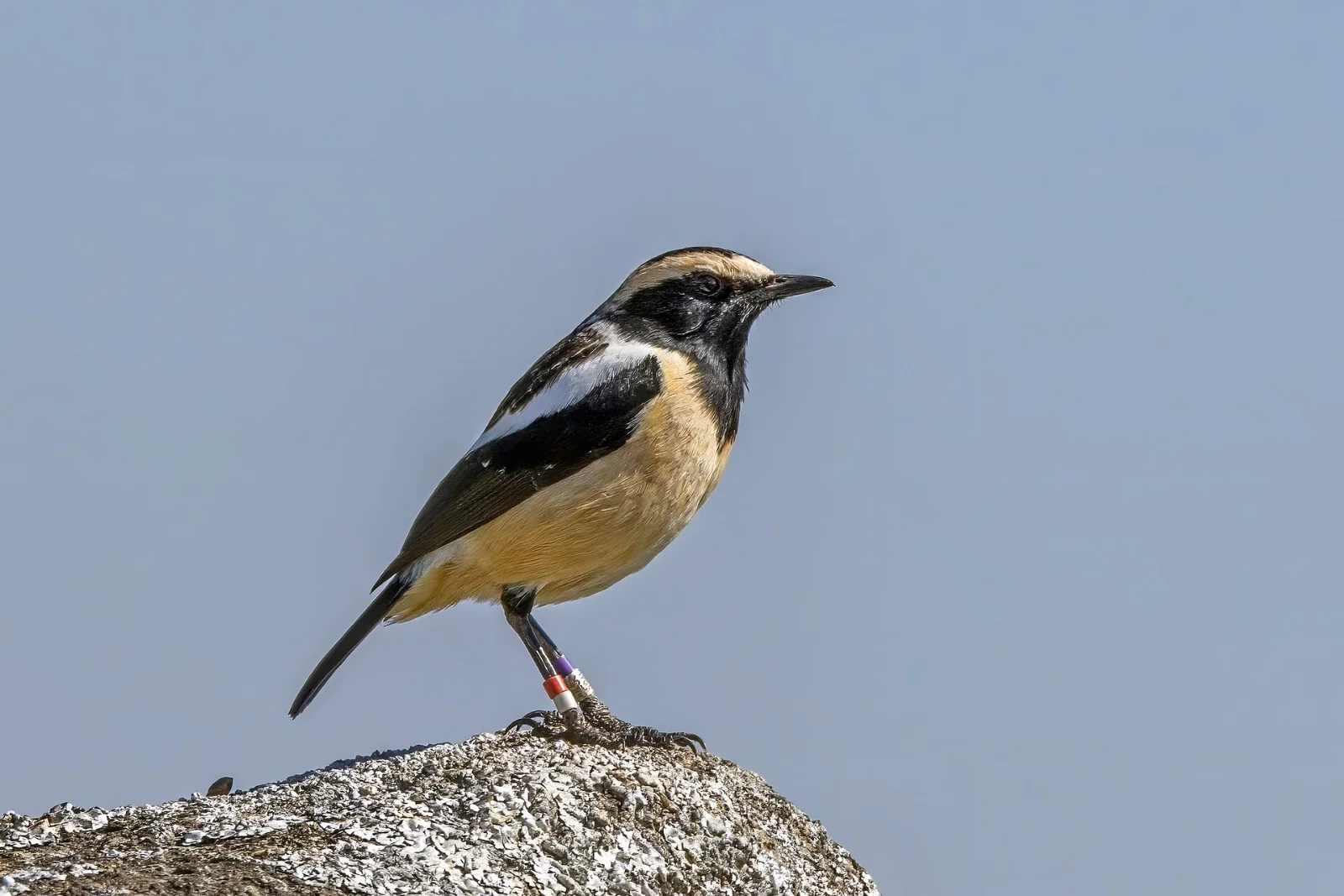
| Mlilwane Wildlife Sanctuary | Grassland, forested ravines, dams | Boulder Chat, Narina Trogon, Purple-crested Turaco |
| Mkhaya Game Reserve | Riverine forest, lowveld woodland | Green and Pink-throated Twinspots, Eastern Nicator |
| Royal Jozini and KaMsholo | Lake shore, Lubombo foothills | Rudd’s Apalis, Gorgeous Bushshrike, Bronze-winged Courser |
Malolotja: the highland specials
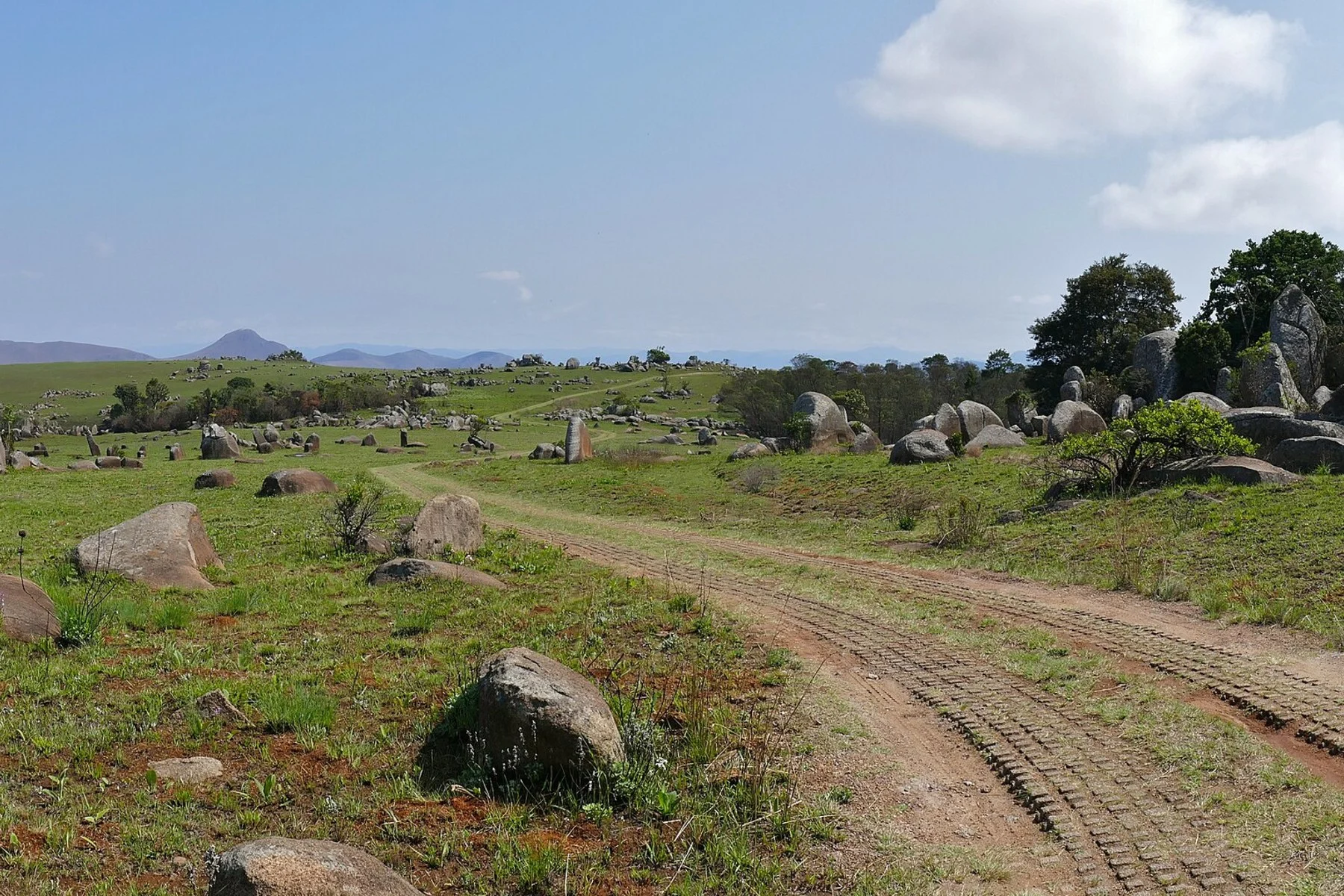
Malolotja covers more than 18,000 ha of mountain wilderness in the north-west, on the border with South Africa, and the ENTC calls it the last unspoilt mountain wilderness left in Eswatini. It is an Important Bird Area for its threatened species, and the ENTC says more than 280 species have been recorded there, over half the national total. It singles out breeding groups of Blue Swallow, Blue Crane, Southern Bald Ibis and Denham’s Bustard (Stanley’s Bustard in its text).
The KBA account adds the detail. Southern Bald Ibis breeds regularly at Malolotja Falls, the country’s highest waterfall, and often forages on burnt grassland, which makes a freshly burnt slope the place to scan. Orange River Francolin, Denham’s Bustard and Striped Flufftail are breeding residents virtually restricted, within Eswatini, to Malolotja. Black-winged Lapwing, Hottentot Buttonquail and Fan-tailed Grassbird are the other grassland birds of concern, and Wattled Crane, which once bred in the vleis, has not been seen in Eswatini since 1994.
The forests are a different list. Knysna Turaco, Bush Blackcap, Chorister Robin-Chat, Olive Bushshrike and Forest Canary live in the riverine and Afromontane patches, and in 1998 Orange Ground Thrush, a first for the country, and Brown Scrub Robin were found in the isolated Mgwayiza mistbelt forest. On the rocky grassland slopes look for Ground Woodpecker and Buff-streaked Chat, with Sentinel Rock Thrush in winter, and on the proteas of Ngwenya Mountain for a few Gurney’s Sugarbirds.
Malolotja is a walker’s reserve, with around 200 km of hiking trails and backpacking camps for trails of 2 to 7 days. The gate is open from 06:00 to 18:00 every day, and the ENTC lists international entry at E70 for an adult and E50 for a child.
Mlawula and the Lubombo
On the other side of the country, Mlawula Nature Reserve covers about 16,500 ha with the Lubombo Mountains along its boundary. The ENTC gives about 350 species for the reserve, out of just under 500 for Eswatini, and names African Finfoot, African Broadbill and Bateleur among them. There are 54 km of roads and 10 walking trails, and because the reserve has no elephant or lion, visitors may explore on foot without a guide, a rare freedom in lowveld this good. A bird hide stands at one end of the Siphiso campsite, near the start of a short woodland trail. International entry is E70 for an adult and E40 for a child.
Mlawula and Hlane together form one KBA. The ravines in the Lubombo range hold dense moist forest, and the sand forests and riverine fringes hold Pink-throated Twinspot, Black-bellied Starling and Grey Sunbird. The bushveld around them holds Brown-headed Parrot, White-throated Robin-Chat, Burnt-necked Eremomela and Gorgeous Bushshrike, a list that reads like a page of colour plates. For the same sand-forest set across the border, see Zululand birding: Mkhuze, Ndumo and St Lucia.
Hlane: the raptor park
Next door, Hlane Royal National Park was set aside by King Sobhuza as a royal hunting area and proclaimed a reserve in 1967. Big Game Parks gives it 22,000 ha and says it has the densest population of birds of prey in Eswatini, Bateleur and Martial Eagle among them, along with vultures and Marabou Storks, and that Red-billed Oxpeckers are back in healthy numbers.
The vulture figures in the KBA account are the reason to come. Hlane and Mlawula are the only reserve complex in Eswatini with breeding Lappet-faced and White-headed Vultures, Cape Vultures are seen regularly, and White-backed Vultures breed in important numbers: 26 pairs at Mlawula and at least 3 times that at Hlane. Tawny Eagle, Martial Eagle and Bateleur breed here too. For telling the species apart, see vultures of southern Africa.
Ndlovu Camp, the park’s rest camp, has cottages, rondavels and camping around a busy waterhole, and guests can book a guided birding walk in place of a game walk.
Mlilwane, Mkhaya and the Big Game Parks Birding Week
Mlilwane Wildlife Sanctuary, in the Ezulwini Valley, sorts its birding by habitat: Boulder Chats on Nyonyane mountain, waterbirds on the dams, pipits, bustards and longclaws in the grassland, and forest birds such as Narina Trogon and Purple-crested Turaco, which also visit the rest camp. The turaco is the national bird, Ligwalagwala in siSwati, so the emblem visits the campers. The rest camp has 43 beehive huts, rondavels, a family cottage and camping.
Higher up, Reilly’s Rock Hilltop Lodge is a 1928 stone house with 4 rooms and a garden cottage on Mlilwane Hill. Its garden is run for birds: grain on rock tables for the seed-eaters, fruit spiked on branches for the barbets, and aloes that draw at least 5 sunbird species.
Mkhaya Game Reserve is the country’s refuge for endangered species, and Stone Camp is a set of open-sided stone cottages without electricity in riverine forest. Along the forested rivers Big Game Parks lists 7 robin-chat and scrub robin species, Purple-crested Turaco, Crested Guineafowl, Narina Trogon, Green and Pink-throated Twinspots and Eastern Nicator, and vultures nest on the reserve. Big Game Parks publishes a bird list for its parks and sells a 5-night Birding Week across Hlane, Mlilwane and Mkhaya.
The south-east: Lake Jozini and the Lubombo foothills
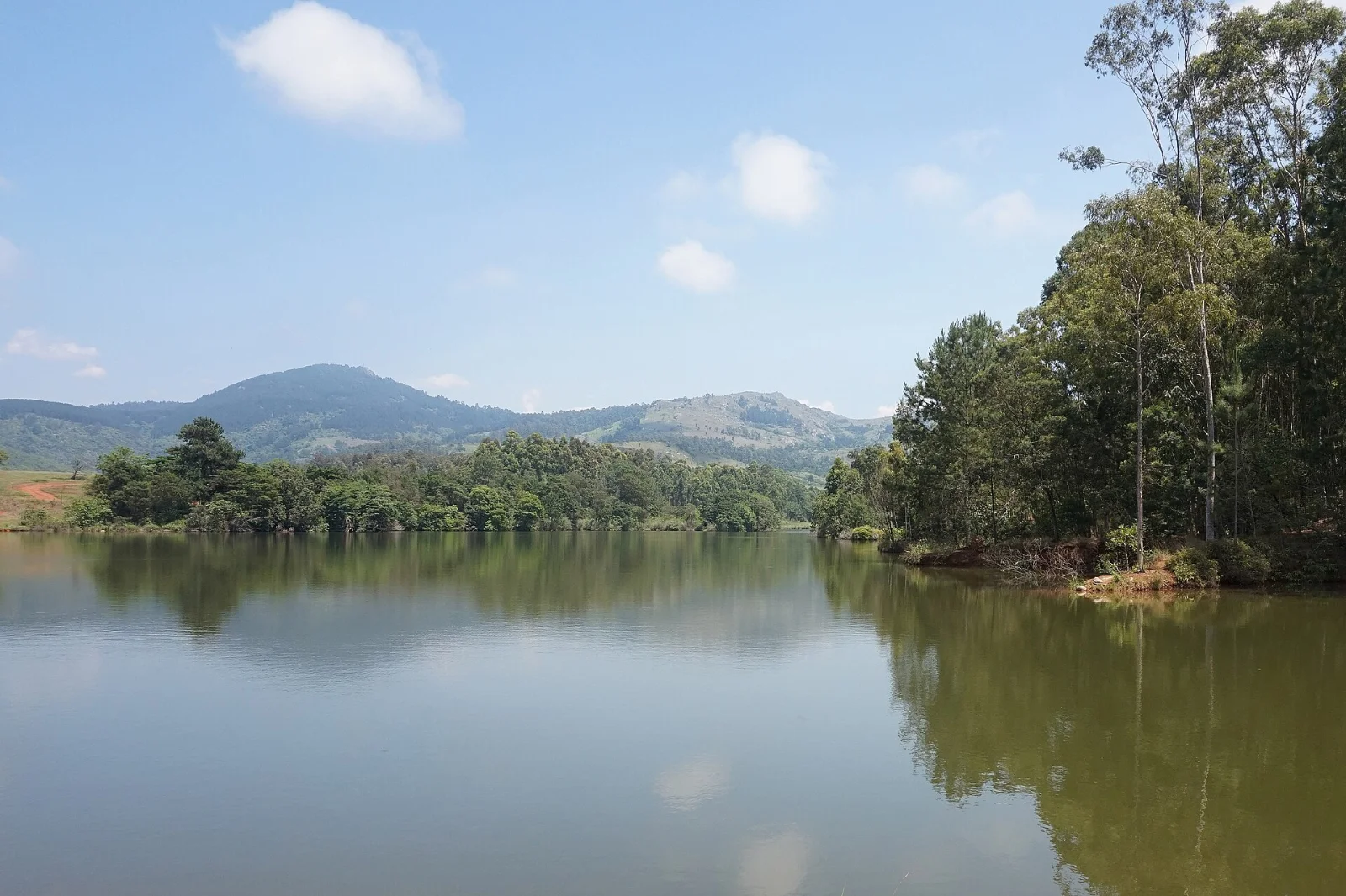
Royal Jozini Private Game Reserve, on Lake Jozini about 10 minutes from the Golela and Lavumisa border post, is BirdLife South Africa Recommended. It publishes its own birding site guide to its lake shores, woodland pan, grasslands and tracks, and says more than 100 species are possible in a day in spring and early summer. Guests can walk more than 20 km of tracks in the elephant exclusion zone and use its viewing hides. The birds it names include Rudd’s Apalis, Pink-throated Twinspot, Gorgeous Bushshrike, Eastern Nicator, African Crowned Eagle and Bronze-winged Courser.
Nearby, KaMsholo is a 700 ha bushveld reserve at the foot of the Lubombo near Lavumisa. Its Tinsele Rest Camp has 8 thatched huts, a family cottage and camping, guided walks can be birding walks, and a hide is being built over the fever-tree dam beside the camp.
When to go
The African Bird Club says Eswatini is best from November to January, at the start of the rains, when most birds breed, and that the highland areas are unproductive in winter, from May to August. Malolotja’s rain falls mainly in summer thunderstorms, and frost is common in June and July, so a winter visit to the grasslands is mostly a visit to the scenery. Many of the specials are shared with South Africa and Lesotho; see South Africa’s endemic birds for which ones.
Where to stay
The 6 places to stay in Eswatini in the directory, from the highlands to the south-east:
| Place to stay | Where | For birders | From |
|---|---|---|---|
| Mlilwane Wildlife Sanctuary Rest Camp | Ezulwini Valley | Boulder Chat, Narina Trogon, turacos in camp | R705 a beehive hut, R180 camping (2026) |
| Reilly’s Rock Hilltop Lodge | Mlilwane Hill, Mlilwane | Garden feeders, at least 5 sunbird species | R1,600, dinner, bed and breakfast (2026) |
| Mkhaya Game Reserve (Stone Camp) | Mkhaya Game Reserve | Twinspots, Eastern Nicator, nesting vultures | R3,410, dinner, bed and breakfast (2026) |
| Hlane Royal National Park (Ndlovu Camp) | Hlane Royal National Park | Raptors, waterhole, guided birding walks | R705 a rondavel, R180 camping (2026) |
| Royal Jozini Private Game Reserve | Lake Jozini, near Lavumisa | BirdLife Recommended, own site guide, hides | Ask the lodge |
| KaMsholo Bushveld Safaris (Tinsele Rest Camp) | Lubombo foothills, near Lavumisa | Birding walks, hide being built at the dam | R770 a family cottage for 4, R155 camping (2026) |
Gate fees, rates and opening times in Eswatini change. Facts were checked on 15 November 2026 with the ENTC, the KBA accounts, the African Bird Club and each listing on Birding Dispatch; the 2026 rates come from Big Game Parks without a stated basis. Confirm with the ENTC, Big Game Parks and each place to stay before you travel.
More from the Journal
 Namib-Naukluft and Sossusvlei for Birders: Dune Lark, Desert Raptors and the Naukluft SpecialsA lark that lives on the dunes and nowhere else, Lappet-faced Vultures nesting in the desert, coursers on the gravel plains and the northern specials around the Naukluft cliffs, in one of Africa's largest parks.
 Lake Baringo and Lake Bogoria Birding: The Owl Walks, the Cliffs and the FlamingosA local guide who knows where every nightjar and eagle-owl slept last night, thorn scrub full of hornbills, a Goliath Heron colony on a rock, and the flamingo lake next door that keeps rising.
 Akagera Birding: Rwanda’s Savanna, Lakes and Papyrus, and the Shoebill ChancesRed-faced Barbet in the southern woodland, Papyrus Gonolek and Carruthers's Cisticola in the swamps, a lake of hippos and lapwings, and a Shoebill that hides in the wetlands more than it shows.
The Pigeon Post
Every Thursday: 1 bird, 1 place to go and 1 place to stay, by email. Sign up and get our printable checklist of the 163 endemics of southern Africa.