
Birding Slang: A Glossary of Lifers, Dips, LBJs and Other Bird Words
Why a twitcher is more than a nervous birder, what it means to be gripped off, and how to avoid stringing an LBJ. The words birders use, with the South African ones added.
The word “twitcher” goes back to the 1950s and to one man, Howard Medhurst, a British birdwatcher whose nervous behaviour gave the hobby one of its best-known words. It has since come to mean someone who travels long distances to see a rare bird and add it to a list, which is a lot of meaning to hang on a single fidget.
Birders have a vocabulary for almost everything that can happen on a birding trip, and most of it involves something going wrong. This glossary covers the words you are most likely to hear at a hide, on a pelagic or in a WhatsApp group, defined from birding dictionaries and the people who coin them. Some words are British, some American, and a few are South African, and where a word belongs to one place, that is noted.
The list words
Lifer. The first sighting ever of a species by a particular birder: an addition to their life list. A lifer can be a rarity or a garden bird; what makes it a lifer is the birder, never the bird.
Tick. An addition to a personal list, often qualified as a year tick or a county tick; “life tick” means the same as lifer. As a verb, to tick a bird is to add it. A tart’s tick is a fairly common species that someone adds to their list later than you might expect, and is best not mentioned in front of them.
Armchair tick. A species added to your list without leaving home, usually because the taxonomists split one species into 2 and you had already seen both. Our guide to why bird names change explains how splits happen, which is to say how armchair ticks are made.
List, lister. A list is every species a birder has seen, often qualified as a life list, a year list or a county list. A lister is someone intensely focused on growing their lists, and the word can be used with a slight edge. In South Africa, BirdLife South Africa runs a Listers’ Club for anyone with at least 200 species in the country. Birds may be ticked on sight or on call, and the club runs on the honour system: in its own words, it is not the “birding police”.
Spuh. A bird identified only to genus, written on a list as “sp.”, short for species. A spuh is the polite way to admit that the cisticola was a cisticola.
Slash. A pair of species so alike that a bird is recorded as one or the other, with a slash between them on a day list.
The chase
Twitch. As a noun, a journey to see a rare bird someone else has found; as a verb, to make that journey. In North America the same thing is more often called chasing. A twitcher, strictly, is someone who twitches, and the word is sometimes misapplied to any keen birder.
Mega. A very rare bird. Also megatick. The sort of bird that empties offices.
Crippler. A British term for a rare and spectacular bird that shows brilliantly, perhaps because it stops people from moving on.
Vagrant. A bird that has strayed far outside its normal range.
Patagonia Picnic Table Effect. An American term for what happens when one rare bird draws many birders to a spot and they find more rarities there. It is named after a real roadside rest area just west of Patagonia, Arizona, which was presumably only trying to be a picnic table.
Suppression. Keeping news of a rare bird from other twitchers.
m.ob. Short for “many observers”, used for a bird seen by a crowd.
When it goes wrong
Dip, dip out. To miss a bird you went looking for. Audubon’s dictionary defines it as missing out on a high-priority bird, and gives the example of a birder who dipped the same species for the 14th time, which is where the next entry comes in.
Nemesis bird. A species that has eluded a birder despite repeated attempts. Every birder has one, and most will tell you which, at length.
Grip off, gripped off. A British term. To grip someone off is to see a bird they missed and make sure they know about it. If other birders see the bird you dipped, you have been gripped off.
BVD. “Better view desired”: a lifer seen well enough to identify but not well enough to enjoy. It counts, but it does not feel like it.
String, stringer. A dubious record is a string, and claiming one is stringing; the record may be described as stringy. The term stringer is mostly kept for people who deliberately mislead, as opposed to well-meant beginners’ mistakes. The SABAP2 atlas protocol has a 6-word defence against stringing: “When in doubt, leave it out.”
Plastic. A British word for a bird that has escaped from captivity, as opposed to a wild one.
Identification words
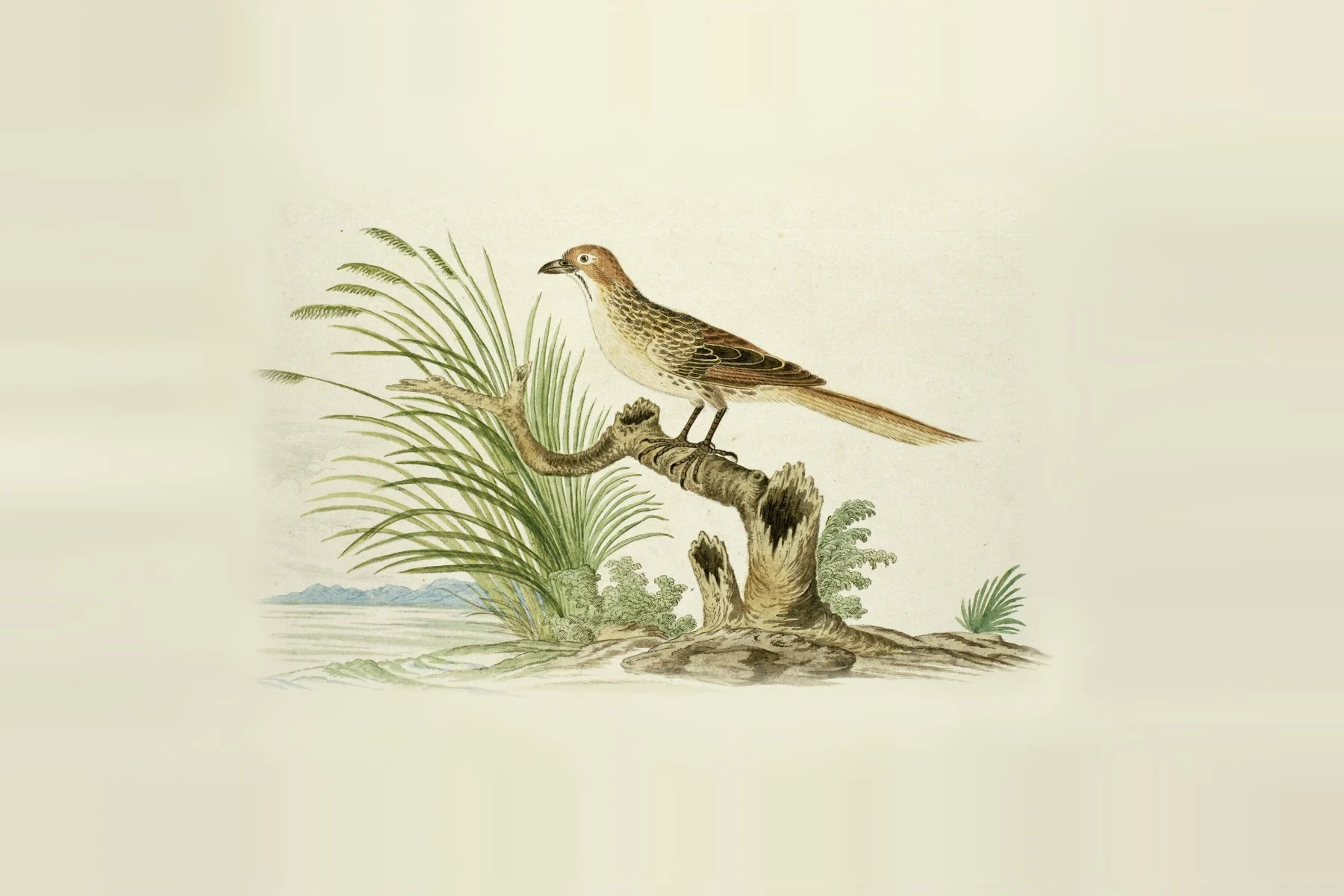
LBJ. Little brown job: any of the drab songbirds that are hard to tell apart. In southern Africa that usually means larks, pipits and cisticolas, and our LBJs guide has the field marks. The Cape Grassbird on this page’s header is a fair candidate on a dull day.
Jizz, or GISS. The overall impression of a bird from its shape, movement and behaviour, rather than any single field mark. Experienced birders can identify many species on jizz alone from a fleeting or distant view. Built from years of looking, it can seem like guessing to anyone watching.
Spark bird. The species that started a lifelong obsession with birds. Ask a birder for theirs and settle in.
Pish. A shushing or hissing sound birders make to draw small songbirds into view; American birders base it on the alarm calls of chickadees and titmice. Birding etiquette asks that pishing and playback be limited, to avoid stressing birds.
Pelagic. As an adjective, living on the open ocean. As a noun, a boat trip to find such birds, such as albatrosses.
Endemic, near-endemic. An endemic occurs in only one area. BirdLife South Africa’s Listers’ Club counts 18 true endemics in South Africa, depending on the taxonomy followed, and a further 31 near-endemics whose range falls mostly, but not entirely, inside the country.
Events and habits
Big Day. An event in which a birder or team tries to see as many species as possible in a single day. Our Birding Big Day guide covers South Africa’s own version.
Big Year. The same idea stretched over a calendar year in a defined area. It originated with the American Birding Association and gave its name to a 2011 film.
Patch, local patch. A birding spot, or set of spots, near home that a birder visits often. Patch birders tend to know which bush the bulbul sleeps in.
Siesta time. The middle of the afternoon, when birds, and therefore birders, are least active.
SOB. “Spouse of birder”: a non-birding partner. Audubon’s definition, a person who has had the misfortune of pledging their life to a birder, is offered here without comment.
The South African extras
Pentad. The unit of the Southern African Bird Atlas Project: a square of 5 minutes of latitude by 5 minutes of longitude, about 9 km north to south and 7 km east to west in South Africa.
Full protocol card. An atlas card that follows every SABAP2 rule, including at least 2 hours of dedicated atlasing in 1 pentad, every species recorded once in the order it was found. An ad hoc card is any list that breaks a rule. Our atlasing guide explains both.
Specials. The birds a place is known for, and the reason birders go there. On Birding Dispatch, it is the word on every listing.
Roost. For birds, where they sleep. On this site, a place for birders to stay, chosen because the owners do something real for birders.
Definitions come from the sources listed below, checked on 15 November 2026. Slang moves faster than birds do, and meanings vary between countries and groups.
More from the Journal
 Do You Need a Spotting Scope? When a Scope Helps, What to Look For and Where It MattersA scope turns grey dots on a mudflat into Curlew Sandpipers and Red Knots. When it earns its place in the car, the features that matter, and why 60x fails at noon.
 Your First Birding Safari: What to Expect, From the 05:30 Gate to the Evening ListHow a birding safari day runs, what the guide does, why the vehicle stops for a brown bird when there is an elephant over there, and the other things first-timers find odd.
 How to Log Your Bird Sightings: eBird, BirdLasser or SABAP2?eBird wants short checklists with counts, BirdLasser wants the same bird logged again and again, and SABAP2 wants 2 hours in one square. What each is for, and how to feed all 3.
The Pigeon Post
Every Thursday: 1 bird, 1 place to go and 1 place to stay, by email. Sign up and get our printable checklist of the 163 endemics of southern Africa.