
KZN Midlands Birding: Mistbelt Forest and Cranes
Cape Parrots in the yellowwoods, all 3 cranes at the Karkloof hides at bedtime and Blue Swallows in summer: where to bird the KwaZulu-Natal Midlands and the farm stays beside it.
From April to September, as the light fades over the Karkloof valley north of Howick, Wattled and Grey Crowned Cranes fly in to roost on the wetland below the Karkloof Conservancy’s Wattled Crane Hide. In 2020 the conservancy said up to 34 Wattled Cranes and more than 50 Grey Crowned Cranes came in each evening, with Blue Cranes among them, and called it one of the few places in South Africa where all 3 can be seen together. It is the Midlands’ evening rush hour, and it runs on time.
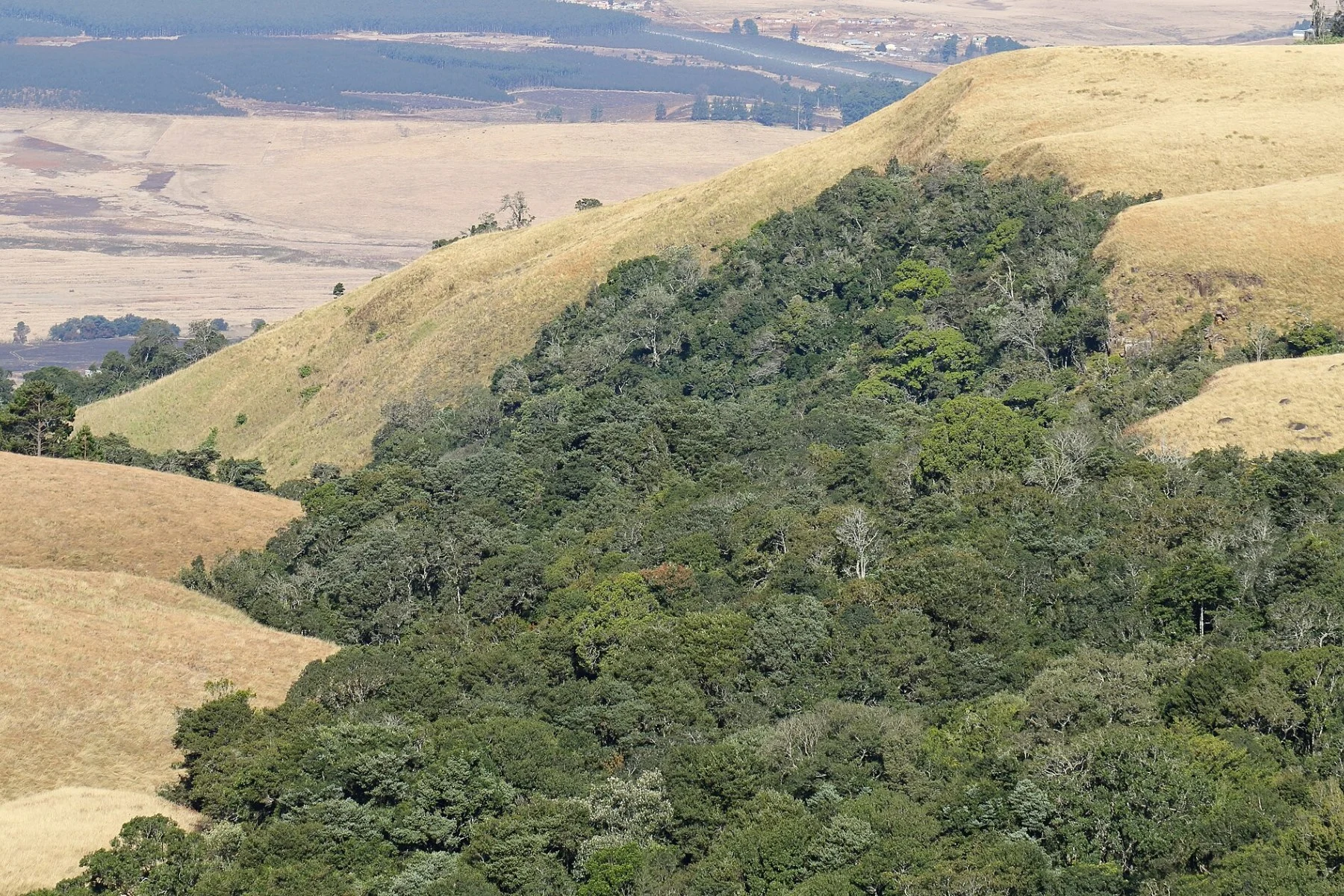
The cranes are half of the KwaZulu-Natal Midlands. The other half is the mistbelt forest. BirdLife International describes the mistbelt as an irregular band through the Midlands, from Weza in the south-west to Ngome in the north-east, with most of its forest between 1,200 and 1,400 m and the oldest stands dominated by yellowwoods. These scattered patches hold the largest remaining population of the Cape Parrot. The Birding Dispatch directory has 7 places to stay across the Karkloof, the Dargle, Balgowan and Richmond, most of them self-catering cottages on working farms where the neighbours have feathers.
The places at a glance
| Place to stay | Where | For birders | From |
|---|---|---|---|
| Gartmore Guest Farm | Karkloof, near Howick | BirdLife Recommended, conservancy crane hides on the farm | R1,250 per cottage, self-catering |
| Rockwood Forest Lodge | Karkloof, 17 km from Howick | BirdLife Recommended, Karkloof reserve list of 185+ species | Ask the lodge |
| Midlands Forest Lodge | Balgowan | BirdLife Recommended, mistbelt forest, forest walks | R1,200 per room (to 30 Nov 2026) |
| Crab Apple Cottages | Dargle Valley | Oatley Hide with overnight stays, 252-species Dargle checklist | R650 per cottage, Sunday to Thursday |
| Tillietudlem Nature Reserve | Upper Dargle | Hide and viewing platform, 250 species, all 3 cranes | Ask the lodge |
| Copperleigh Trout Cottages | Dargle | Farm dam, all 3 cranes named, 250+ Dargle species | Ask the lodge |
| Thula iNyoni | Near Richmond | BirdLife Recommended, photographic hide at a birdbath, feeders | Ask the lodge |
The Karkloof: cranes on the farm wetlands
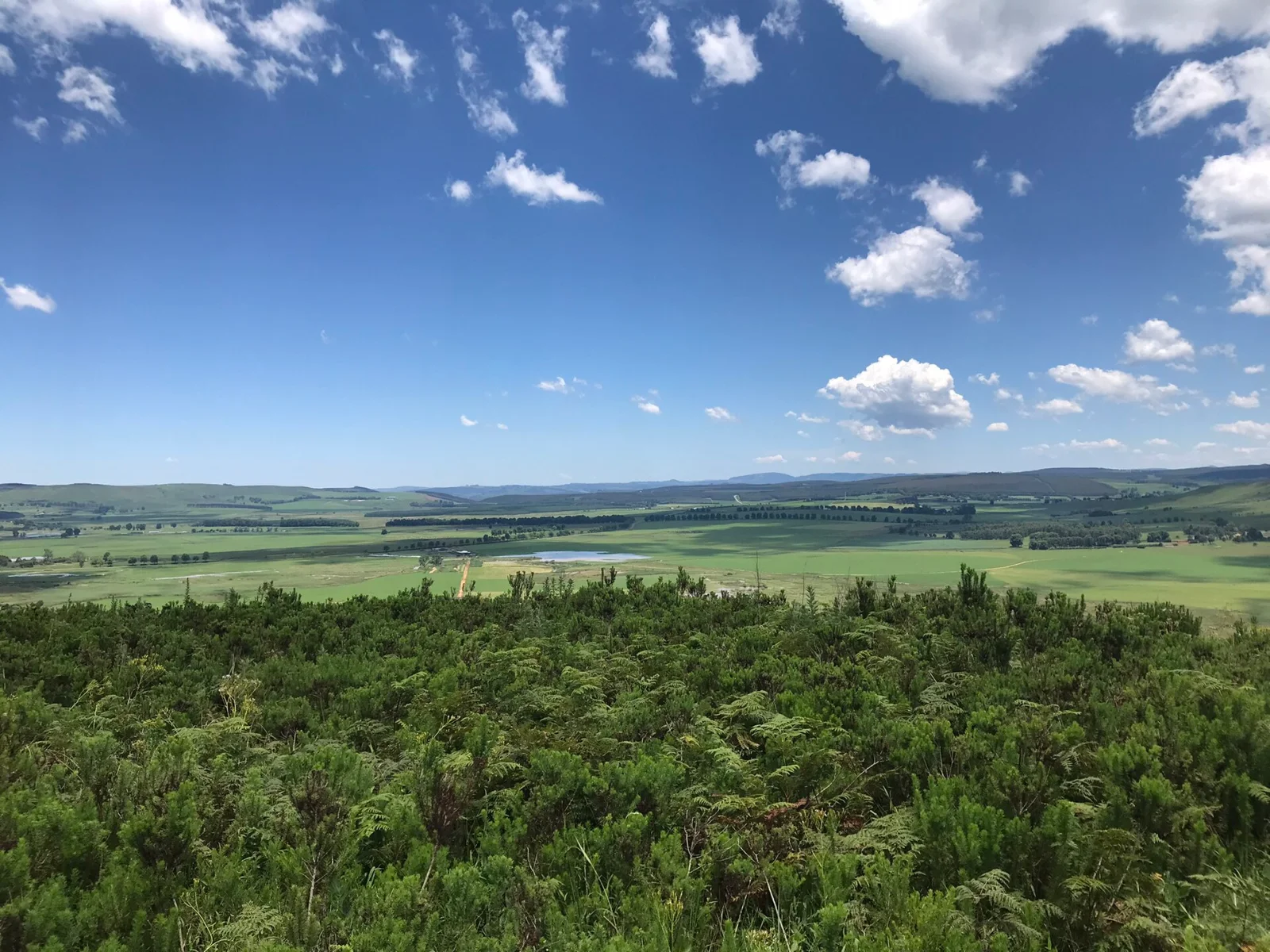
The Karkloof Conservancy was formed in 1998 by local farmers, foresters and landowners and covers about 40,000 ha. Its conservation centre is at the entrance to Gartmore farm, where the floodplains of the Karkloof and Yarrow rivers leave oxbow lakes and wet grassland. There are 2 hides. The Crowned Crane Hide draws more waders; the Wattled Crane Hide is where the 3 cranes roost. In 2020 the conservancy said the hides were open from 05:00 to 18:00 every day, that day visits needed no booking but evening roost visits did, and that a small fee was charged. Those details are 6 years old, so check them with the conservancy before you go.
The cranes are not the whole list, just the tallest part of it. The conservancy also names Southern Bald Ibis, African Spoonbill, Buff-spotted and Red-chested Flufftails, Black-winged Lapwing, Denham’s Bustard, Secretarybird, Lesser Moorhen and Baillon’s Crake, with Lesser Jacana in wetter years. A BirdLife eThekwini KZN club outing on 12 April 2025 logged 25 species at the hides in a morning, including a Wattled Crane flying past, a pair of Grey Crowned Cranes at what looked like a nest site, Blue-billed Teal and a Martial Eagle overhead.
Gartmore Guest Farm is the stay on the same farm. Its 4 self-catering cottages are a walk from the hides, an easy commute to the evening roost, it is BirdLife Recommended, and it names all 3 cranes. Cottages start at R1,250 a night, and Crane Cottage takes up to 6 adults.
Karkloof Nature Reserve, 19 km north of Howick, is an Important Bird Area in its own right. BirdLife International’s factsheet describes forest in the west and 2 large vleis in the east, Melmoth (104 ha) and Nyumbhakazi (35 ha), and calls the vlei one of the few conserved places in South Africa where the Wattled Crane breeds. African Grass Owl is resident there too, and the surrounding grassland holds Striped Flufftail, Denham’s Bustard and breeding Blue Cranes. Rockwood Forest Lodge, on the Karkloof Reserve West Road 17 km from Howick, publishes the reserve’s bird list of more than 185 species and names the 3 cranes and Cape Parrot. It is BirdLife Recommended and self-catering, and its Forest Lodge needs a high-clearance or 4×4 vehicle.
The mistbelt forest
The forest birding is slower and harder, and involves a great deal of looking at leaves. The KwaZulu-Natal Mistbelt Forests Important Bird Area is a blanket site of 23 forest patches of 50 ha or more, each chosen because it holds Cape Parrots. BirdLife International explains why the parrot needs all of them: it moves between patches following the fruit, and nests mostly in the larger dead branches of old yellowwoods, so a forest it has left for now matters as much as one it is using. Mixed bird parties are frequent, and the factsheet lists Trumpeter Hornbill, Narina Trogon, Orange Ground Thrush, Bush Blackcap, Knysna Turaco, Grey Cuckooshrike, Chorister Robin-Chat, White-starred Robin, Yellow-throated Woodland Warbler, Blue-mantled Crested Flycatcher, Olive Bushshrike, Swee Waxbill and Forest Canary, with Half-collared Kingfisher and Mountain Wagtail on the forest streams.
In the Karkloof forest itself, the reserve’s factsheet adds small numbers of Eastern Bronze-naped Pigeon and an isolated subspecies of Crested Guineafowl found only there and in a couple of small forests nearby. It also notes that Gurney’s Sugarbird turns up where protea woodland grows in the grassland, and that Cape Vultures visit regularly. The mistbelt is a winter refuge as well: some montane forest birds spend the cold months in it, or use it as a corridor on their way down to the coast.
The Midlands Meander route lists Cape Parrot, Bush Blackcap and Orange Ground Thrush among the area’s specialities, with African Crowned Eagle, Forest Buzzard and Long-crested Eagle overhead. A practical rule follows from BirdLife’s description: in the forest, find a mixed party moving through the canopy and stay with it for as long as it will have you.
The Dargle
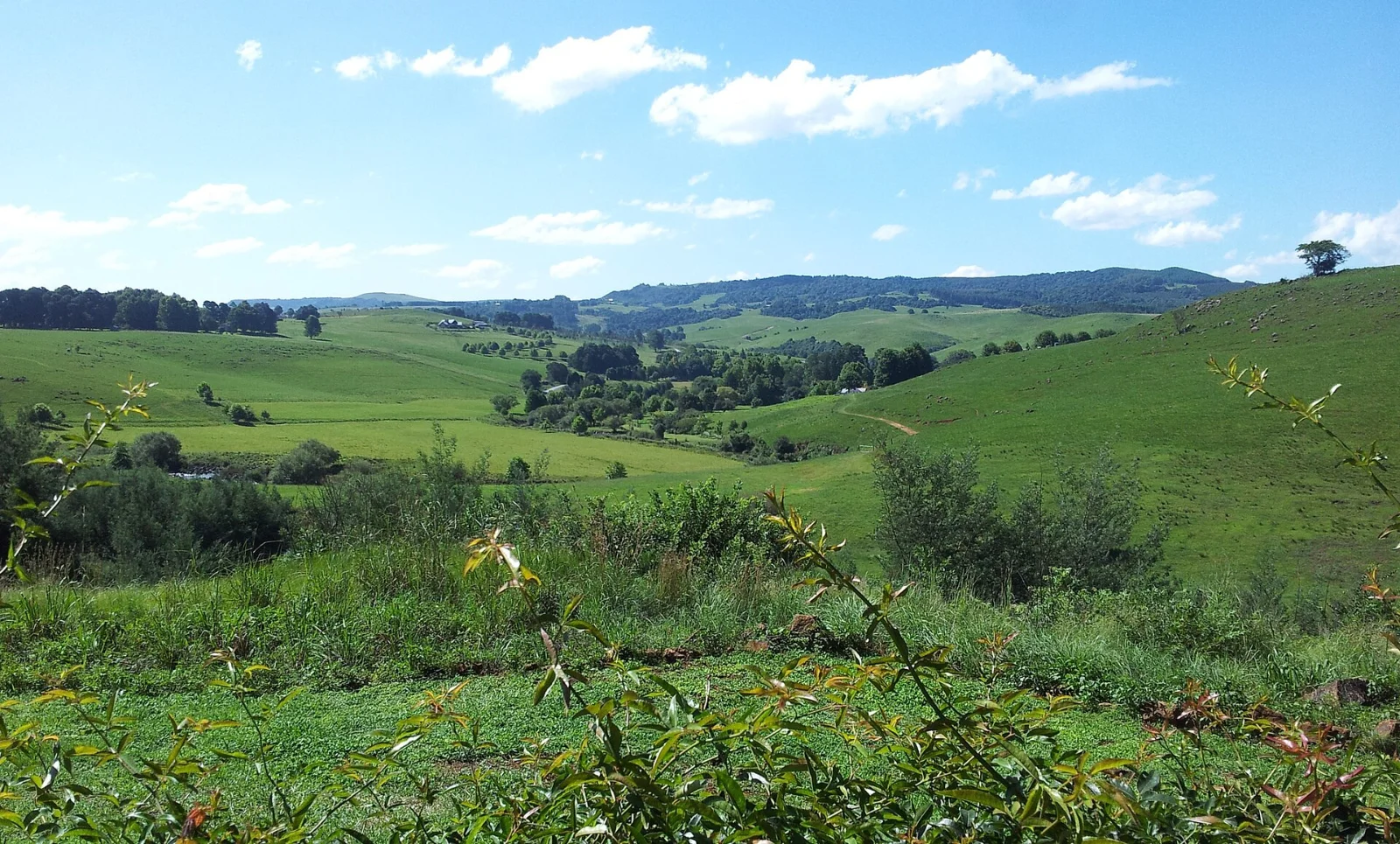
West of Howick, the Dargle valley mixes forest, farm dams and grassland, and its 3 listings each do something different.
Crab Apple Cottages, on the D707, has thatched self-catering cottages and access to the Oatley Hide in Kilgobbin Forest, where guests can spend the night, for anyone who finds the dawn drive to a hide too long: the hide and its tent take 4. It publishes a Dargle checklist of 252 species, names Bush Blackcap, Olive Bushshrike, Cape Batis, Yellow-breasted Apalis and Terrestrial Brownbul, and notes that Yellow-billed Kites return each summer. Cottages start at R650 a night from Sunday to Thursday.
Tillietudlem Nature Reserve, on the D522 in the Upper Dargle, covers mistbelt grassland, wetland, rivers, forest and mountain. It reports 250 species, and guests at Ogram’s Country House have a hide and a viewing platform over the water. Its list of named birds is long for a single property: all 3 cranes, Southern Ground Hornbill, Blue Swallow, Cape Parrot, Martial Eagle and Forest Buzzard. Hleka Manzi, its second house, is self-catering.
Copperleigh Trout Cottages, about 30 km from Howick and 22 km from Boston, has 2 self-catering units on a working farm above Mavela Dam, which is kept for fly fishing. The farm names Wattled, Grey Crowned and Blue Cranes, with African Fish Eagle, Spur-winged Goose and Hamerkop on the dam, none of them holding a fly-fishing licence, and gives more than 250 species for the Dargle. Trout Lodge sleeps 9 and Trout Cabin 2.
Balgowan and Richmond
Midlands Forest Lodge sits in mistbelt forest at Balgowan, reached by about 5 km of dirt road from the N3’s Balgowan and Curry’s Post exit. It is BirdLife Recommended, offers walks through the forest, and its rooms start at R1,200 a night until 30 November 2026.
South of Pietermaritzburg, near Richmond, Thula iNyoni is a single off-grid cabin in mistbelt forest. It is BirdLife Recommended, has a screened photographic hide facing a birdbath and feeders, so the birds come to the camera rather than the other way round, and names White-starred Robin, Lemon Dove, Forest Canary and Yellow-throated Woodland Warbler. It points guests to Blue Swallows at nearby Roselands Farm from December to March, a species the Midlands Meander route lists as Critically Endangered.
Planning a Midlands trip
The target sets the season. For the crane roost, go between April and September and book an evening at the Karkloof hides; the Wattled Crane guide covers the species and the other sites. For Blue Swallow, December to March is the window Thula iNyoni gives, and summer also brings the Yellow-billed Kites back to the Dargle. Winter adds the forest birds that come down from the mountains, sensibly, for the cold months.
A stay of 2 or 3 nights split between the Karkloof and the Dargle covers the hides, the wetlands and the forest. After rain, plan for the roads: the BirdLife eThekwini KZN group turned back from muddy tracks at Thurlow Nature Reserve in April 2025, and Rockwood’s Forest Lodge needs a high-clearance vehicle. The Midlands Meander puts the Drakensberg about an hour and a half away, so the Midlands pair well with the Sani Pass and Drakensberg. The KwaZulu-Natal places to stay guide covers the rest of the province.
Hide hours, fees and rates change. Facts were checked on 14 November 2026 against each place’s listing on Birding Dispatch, BirdLife International’s Important Bird Area factsheets, the Karkloof Conservancy’s own descriptions and the Midlands Meander route. Book the Karkloof evening hides with the conservancy before you go.
More from the Journal
 Namib-Naukluft and Sossusvlei for Birders: Dune Lark, Desert Raptors and the Naukluft SpecialsA lark that lives on the dunes and nowhere else, Lappet-faced Vultures nesting in the desert, coursers on the gravel plains and the northern specials around the Naukluft cliffs, in one of Africa's largest parks.
 Lake Baringo and Lake Bogoria Birding: The Owl Walks, the Cliffs and the FlamingosA local guide who knows where every nightjar and eagle-owl slept last night, thorn scrub full of hornbills, a Goliath Heron colony on a rock, and the flamingo lake next door that keeps rising.
 Akagera Birding: Rwanda’s Savanna, Lakes and Papyrus, and the Shoebill ChancesRed-faced Barbet in the southern woodland, Papyrus Gonolek and Carruthers's Cisticola in the swamps, a lake of hippos and lapwings, and a Shoebill that hides in the wetlands more than it shows.
The Pigeon Post
Every Thursday: 1 bird, 1 place to go and 1 place to stay, by email. Sign up and get our printable checklist of the 163 endemics of southern Africa.