
Hluhluwe-iMfolozi and Manyoni for Birders
More than 400 species, the province's most important vulture breeding grounds and the sand-forest specials next door at Manyoni: how to bird Hluhluwe-iMfolozi and its neighbours, and where to stay.
A lion kill in the iMfolozi section of Hluhluwe-iMfolozi Park can bring in 4 species of vulture: White-backed, Lappet-faced, White-headed and Cape. The lions do the hunting, and the birders get the better show. BirdLife South Africa’s GoBirding guide lists all 4 at kills, and counts more than 45 raptor species in that section alone. BirdLife South Africa’s Important Bird Area account calls the park the most important site in KwaZulu-Natal for its big birds of prey, with 300 to 340 breeding pairs of White-backed Vultures and up to 1,000 birds, 11 to 15 pairs of Lappet-faced Vultures and 3 to 5 pairs of White-headed Vultures. Those figures are from an account last updated in 2015, and the park’s raptors and vultures are counted from the air every year, which seems only fair to birds that spend most of their time up there.
The park’s list runs past 400 species, about 46% of all those found in southern Africa. Next door, Manyoni Private Game Reserve adds the sand-forest birds of Zululand: Pink-throated Twinspot, Rudd’s Apalis, Neergaard’s Sunbird and African Broadbill. The Birding Dispatch directory has 12 places to stay between the 2, from a lodge inside the park to campsites outside Hluhluwe town, so nobody has to sleep far from a twinspot.
The places at a glance
| Place to stay | Where | For birders | From |
|---|---|---|---|
| Rhino Ridge Safari Lodge | Inside Hluhluwe-iMfolozi Park | BirdLife Recommended, only private lodge inside the park | R4,650 pp sharing, full board (May to June 2027) |
| Mavela Game Lodge | Manyoni | BirdLife Recommended, birdwatching and guided walks listed | R8,250 pp sharing, fully inclusive (Aug to Dec 2026) |
| Rhino Sands Safari Camp | Manyoni | 400+ species, Pink-throated Twinspot, Narina Trogon | R11,340 pp sharing, full board (to 18 Dec 2026) |
| Zebra Hills Safari Lodge | Manyoni | BirdLife Recommended, lodges overlook a waterhole | R13,000 for Jack’s Cottage, sleeps 4 (2026) |
| Leopard Mountain Safari Lodge | Manyoni | Clifftop lodge, guided safaris on the reserve | Ask the lodge |
| Ghost Mountain Inn | Mkuze | BirdLife Recommended, guided birding safaris in Manyoni | R7,250 pp sharing for 3 nights, DB&B (Dec 2026 to Jan 2027) |
| Zimanga Private Game Reserve Main Lodge | N2, 8 km north of Mkuze | 9 photographic hides, including bird-bath and lagoon hides | Ask the lodge |
| Bonamanzi Game Lodge | 5 km from Hluhluwe | BirdLife Recommended, hides at the waterholes | R200 pp camping (low season) |
| Emdoneni Lodge | Bushlands, Hluhluwe | Narina Trogon, African Broadbill, Pink-throated Twinspot | R1,215 pp sharing, B&B |
| Bushwillow Collection | Kuleni Game Park, near Hluhluwe | Specialist bird guide arranged, sand-forest walks | R6,000 for 2 sharing, 3 nights (package) |
| Ihlozi Lodge | Kuleni Game Park, near Hluhluwe | Hide at the conservancy dam, 20 km of trails | Ask the lodge |
| Hluhluwe River Lodge | Outside Hluhluwe | Self-guided Red Duiker Trail through sand forest | Ask the lodge |
The park: raptors, rivers and grassland
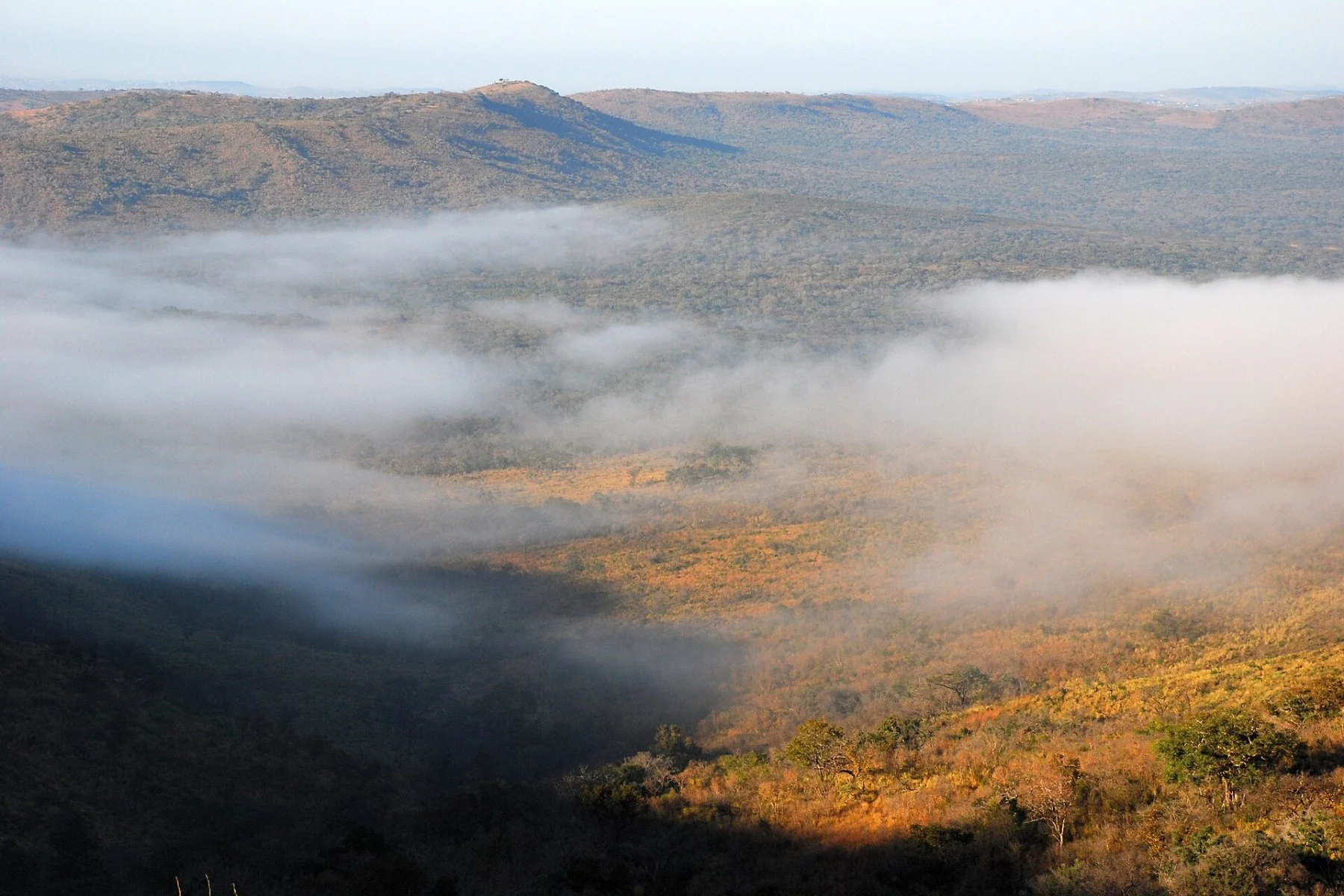
Hluhluwe-iMfolozi lies 20 km north-west of Mtubatuba, where the coastal plain meets the hills. The 2 old reserves are joined by a corridor added in 1982, and GoBirding puts the whole complex at over 100,000 ha. Hluhluwe, in the north, is the wetter half: rain reaches 1,250 mm a year at Hilltop, and closed evergreen forest grows in the wetter north. iMfolozi, in the south, gets as little as 600 mm and is the section for open grassland and the 2 uMfolozi rivers, the Black and the White, which meet in its south-eastern corner.
The raptors are the reason to come, and they are not hard to spot: they are the ones the smaller birds are watching. GoBirding notes that Martial and African Crowned Eagles nest in iMfolozi, and that Tawny and Wahlberg’s Eagles, Brown Snake Eagle, African and Gabar Goshawks, Little and Black Sparrowhawks and Shikra are resident. The Important Bird Area account adds Bateleur, 4 to 6 pairs of Martial Eagle and 3 groups of Southern Ground Hornbill; the Southern Ground Hornbill guide has more on that species.
The rivers hold the shy birds. GoBirding lists Half-collared Kingfisher, African Finfoot and White-backed Night Heron on the iMfolozi, and the BirdLife account says tall riverine trees give Bat Hawks their nest sites. Most of the riverine forest was swept away by Cyclone Demoina in 1984 and is still recovering, at a tree’s pace. In winter, the riverside thickets fill with forest birds that come down from the Drakensberg escarpment to escape the cold, the forest birds’ version of a winter holiday on the coast. In spring and summer, the flowering Weeping Boer-bean trees draw Amethyst, Scarlet-chested, Collared, White-bellied and Marico Sunbirds.
The open grassland of iMfolozi is where GoBirding sends birders for Flappet and Sabota Larks, Yellow-throated Longclaw, Secretarybird, Croaking Cisticola, Red-crested Korhaan and Black-bellied Bustard. Harlequin Quail is common in wet summers and flushes from the roadside, usually in a hurry.
The park has waterhole hides, where the birds come to the birder for a change. On a 5-night stay at Mpila Camp in December 2018, the de Wet family’s trip report records more than 100 species, a waterhole at Mphafa Hide, Water Thick-knees at Bhejane Hide, and White-backed Vultures near Mpila. Visitors enter by Nyalazi Gate on the R618, about 30 km from Mtubatuba, or by Memorial Gate, 28 km from Hluhluwe town.
Rhino Ridge Safari Lodge is the only private lodge inside the park, on a ridge in the Nkwakwa hills. It is BirdLife Recommended, sits inside the park’s Important Bird Area and runs 2 game drives a day plus guided walks, from R4,650 per person sharing, full board, for May and June 2027. The last 10 km of road from route marker 7 is gravel.
Manyoni: the sand-forest specials next door
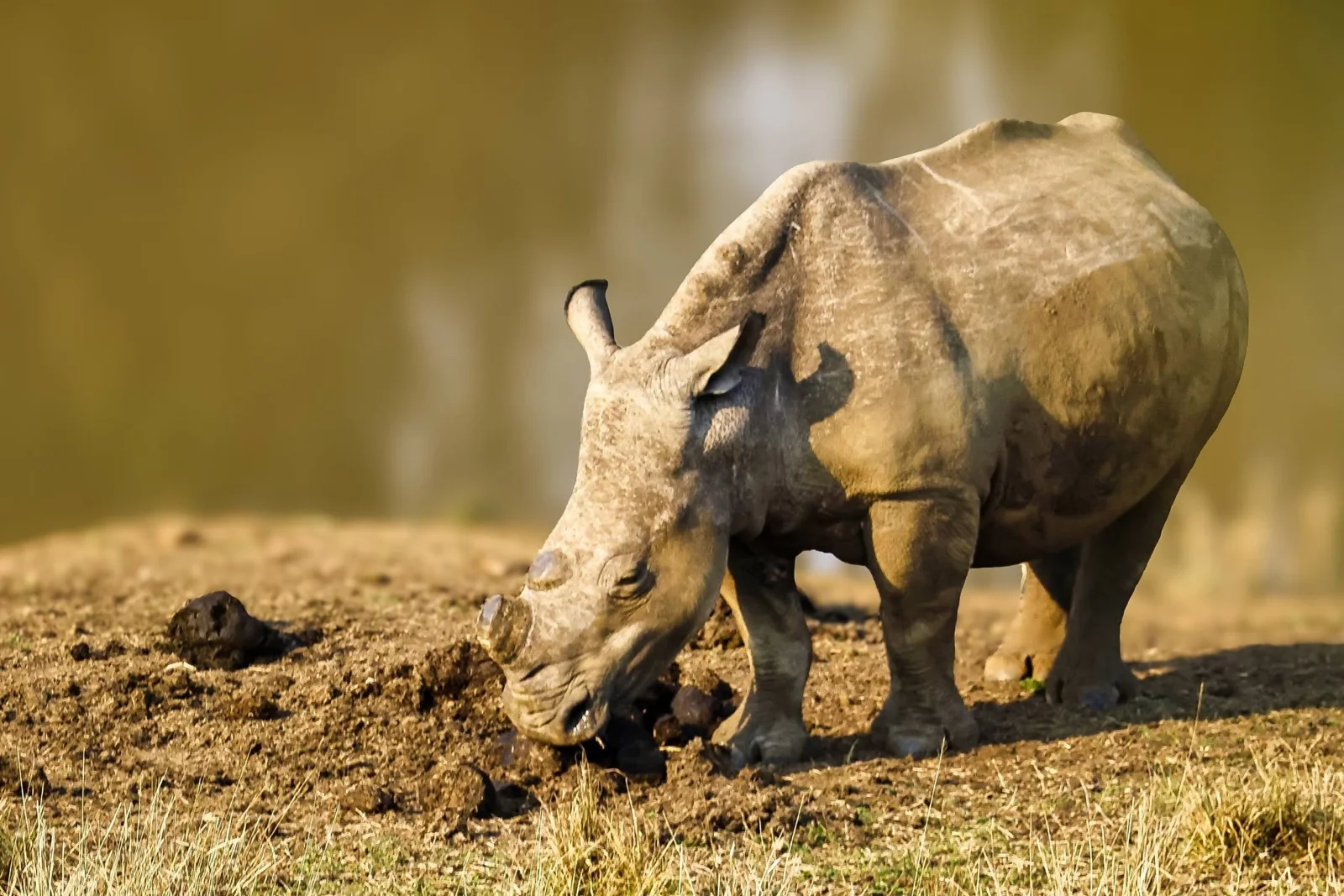
Manyoni Private Game Reserve was formed in 2004, when 17 landowners dropped their fences to create 23,000 ha between Mkhuze and Hluhluwe, and the birds lost a lot of fence posts to perch on. It became a release site for the WWF Black Rhino Range Expansion Project in 2005 and was proclaimed a nature reserve in 2009. GoBirding gives a reserve list of over 430 species and says it turns up vagrants: Red-tailed Shrike and Arnot’s Chat have been seen, and Golden Pipit on numerous occasions in summer. The reserve is open only to guests of its lodges, and GoBirding says most of them have birding guides.
The specials are the Zululand set, and the names alone are a good reason to get up early. GoBirding names Pink-throated Twinspot, Rudd’s Apalis, Neergaard’s Sunbird, African Broadbill, Bushveld Pipit, Shelley’s Francolin, Eastern Nicator and Gorgeous Bushshrike, with Black Coucal in summer. It suggests following the mixed flocks in the bushveld, which often carry White-crested Helmetshrike, Grey Penduline Tit, Stierling’s Wren-Warbler and Bushveld Pipit, especially in winter. Along the Msunduze River, sycamore figs and riverine forest hold Narina Trogon, Green Twinspot, African Crowned Eagle and Broad-billed Roller.
Rhino Sands Safari Camp gives a count of over 400 species and names Pink-throated Twinspot, Narina Trogon, Grey-headed Bushshrike, Orange-breasted Bushshrike and Black Cuckooshrike, from R11,340 per person sharing, full board, until 18 December 2026. Mavela Game Lodge is BirdLife Recommended and lists birdwatching and guided walks among its activities, from R8,250 per person sharing, fully inclusive. Zebra Hills Safari Lodge is also BirdLife Recommended; its main lodge and Homestead both look out over a waterhole, and its self-catering Jack’s Cottage takes 4 from R13,000 a night with 2 private drives. Leopard Mountain Safari Lodge has 9 suites on a cliff above the reserve, and GoBirding notes that its lawns attract Striped Pipit, Natal Spurfowl and Crested Francolin. The lodge itself picks the rainy season, when the migrants arrive and the lawns get busier.
Outside the reserve, Ghost Mountain Inn in Mkuze is BirdLife Recommended and runs guided birding safaris into Manyoni, with a festive package from R7,250 per person sharing for 3 nights. Zimanga Private Game Reserve, on the N2 about 8 km north of Mkuze, is built for photographers, with 9 hides, including 2 at bird baths, a lagoon hide and a mobile hide for White-fronted Bee-eaters.
Hluhluwe town and Kuleni
Hluhluwe town is 28 km from Memorial Gate. Bonamanzi Game Lodge, about 5 km out, is BirdLife Recommended, has hides at its waterholes and a fever tree forest, and lets guests drive designated tracks themselves; camping starts at R200 per person in low season. Emdoneni Lodge, in Bushlands, suggests birding from its verandas or on a walk through the farm’s bush, names Narina Trogon, African Broadbill, Pink-throated Twinspot and Mangrove Kingfisher, and offers game drives into Hluhluwe-iMfolozi, from R1,215 per person sharing with breakfast.
In Kuleni Game Park, 16 km from Hluhluwe, Bushwillow Collection arranges a specialist bird guide for the sand forest and lakes, gives almost 600 species for northern Zululand and names Crested Guineafowl, Crowned Hornbill and Red-capped Robin-Chat. Its 3 chalets are self-catering. Neighbouring Ihlozi Lodge has a hide at the conservancy dam and about 20 km of marked trails. Hluhluwe River Lodge, with chalets looking towards Lake St Lucia, has its own 2 km Red Duiker Trail through sand forest and grassland, short enough to walk before the coffee gets cold.
When to go
GoBirding calls the warmer months, September to April, the best time, when migrants join the residents, and most rain falls from October to March. That is the season for Sedge Warbler, European Bee-eater, Black Coucal and the chance of a Golden Pipit at Manyoni, and Hluhluwe River Lodge also recommends October to March. Winter has its own draw, for birders who prefer a jersey to a sweat: the forest birds that come down from the escarpment, and Bushveld Pipits in the Manyoni flocks.
The Zululand guide covers uMkhuze, Ndumo and St Lucia, and the KwaZulu-Natal places to stay guide lists the rest of the province.
Gate times, fees and rates change. Facts were checked on 14 November 2026 against each place’s listing on Birding Dispatch, BirdLife South Africa’s Important Bird Area account and GoBirding guides, and a dated trip report. Confirm access and rates with Ezemvelo KZN Wildlife and the lodges before you go.
More from the Journal
 Namib-Naukluft and Sossusvlei for Birders: Dune Lark, Desert Raptors and the Naukluft SpecialsA lark that lives on the dunes and nowhere else, Lappet-faced Vultures nesting in the desert, coursers on the gravel plains and the northern specials around the Naukluft cliffs, in one of Africa's largest parks.
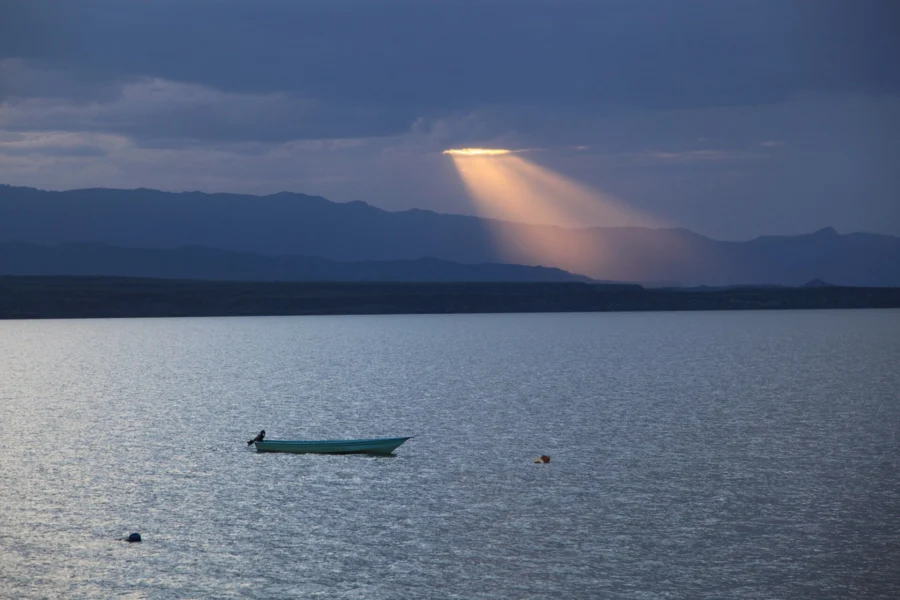 Lake Baringo and Lake Bogoria Birding: The Owl Walks, the Cliffs and the FlamingosA local guide who knows where every nightjar and eagle-owl slept last night, thorn scrub full of hornbills, a Goliath Heron colony on a rock, and the flamingo lake next door that keeps rising.
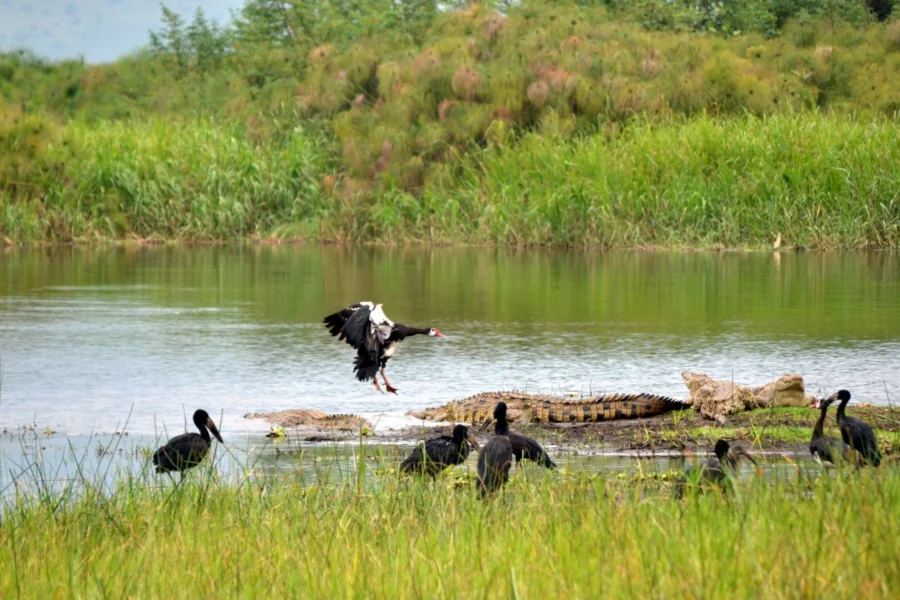 Akagera Birding: Rwanda’s Savanna, Lakes and Papyrus, and the Shoebill ChancesRed-faced Barbet in the southern woodland, Papyrus Gonolek and Carruthers's Cisticola in the swamps, a lake of hippos and lapwings, and a Shoebill that hides in the wetlands more than it shows.
The Pigeon Post
Every Thursday: 1 bird, 1 place to go and 1 place to stay, by email. Sign up and get our printable checklist of the 163 endemics of southern Africa.