
Gonarezhou Birding: The Runde, the Save and the Lowveld Specials
Pel's Fishing Owl and Bat Hawk in the riverine trees, Lemon-breasted Canary in the palm savanna, Mottled Spinetails at the baobabs, and the 6 self-catering camps and campsites in Zimbabwe's south-east.
Where the Save and Runde rivers meet, in the far south-east of Zimbabwe, the country drops to its lowest point. BirdLife Zimbabwe says that confluence is where a bird new to the national list may turn up in the rains: Mangrove Kingfisher, a bird South African birders know from the estuary mangroves of Kosi Bay and the Wild Coast. It is a fair summary of Gonarezhou, a park far enough east and low enough that coastal and lowveld birds turn up in it, apparently without checking the field guide maps first.
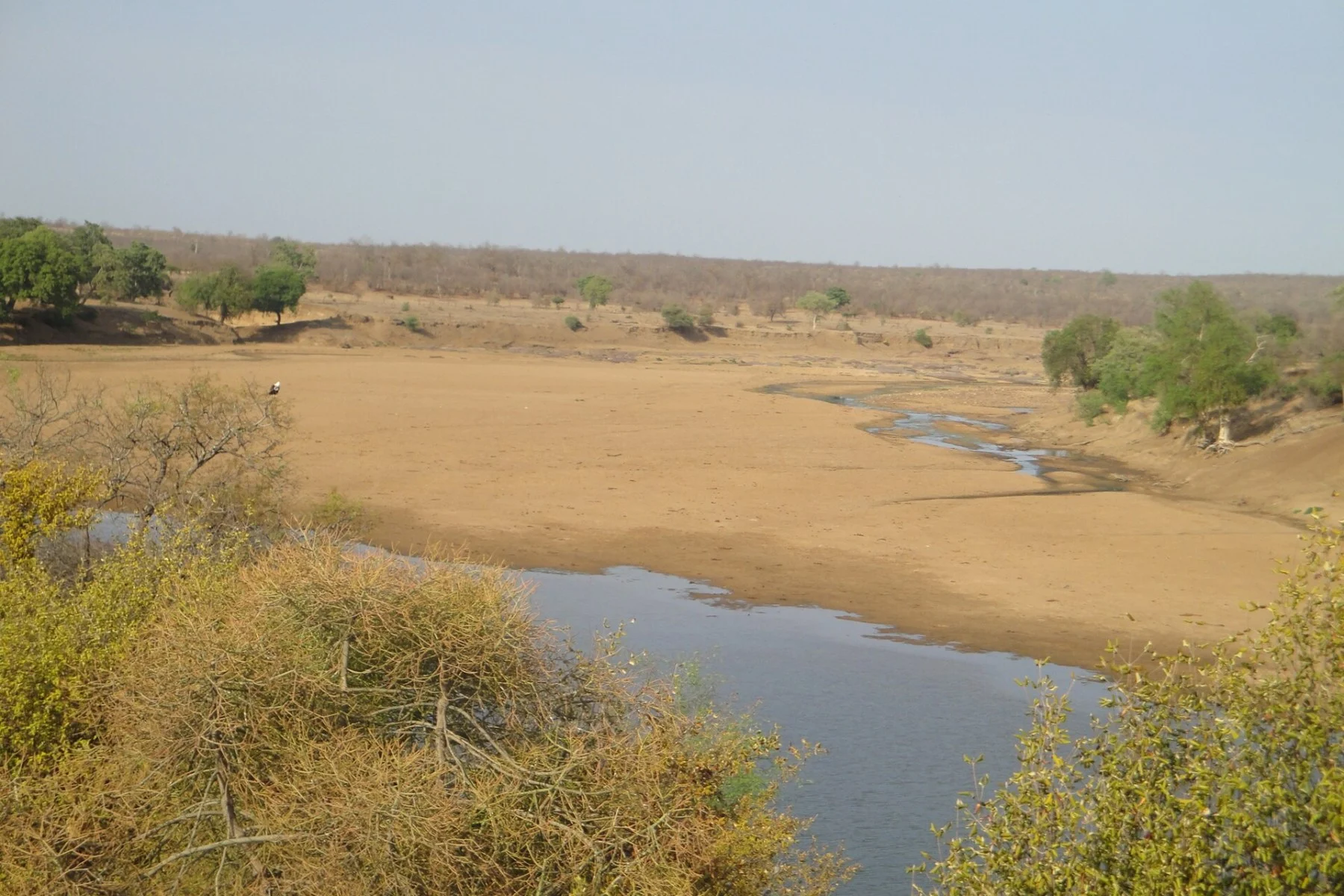
Gonarezhou National Park covers some 5,000 square kilometres of the south-east lowveld, and its long south-eastern edge is Zimbabwe’s border with Mozambique. The park’s own website, as its campsite listings quote it, gives more than 450 bird species. BirdLife Zimbabwe describes an arid park whose camps cluster along the rivers: the Mwenezi in the south, the Save and Runde in the north, all shaded by big riverine trees that draw the wildlife to their banks.
The Runde and the Save
The rivers are the place to start. BirdLife Zimbabwe lists herons, storks, egrets and waders, African Skimmers and nesting Southern Carmine Bee-eaters along them. Purple-crested Turacos flash through the denser riverine growth, and 3 parrots, Grey-headed, Brown-headed and Meyer’s, squawk overhead, none of them shy about it. In the thick trees sit 2 birds that are easy to miss and much talked about afterwards: Bat Hawk and Pel’s Fishing Owl. For how to find the owl by day, see how to find Pel’s Fishing Owl.
The Save adds more forest and thicket birds. BirdLife Zimbabwe says Eastern Nicator and African Emerald Cuckoo call there in summer, Green Malkoha and Gorgeous Bushshrike have been seen, and Barred Long-tailed Cuckoo is likely. In the drier thickets near the Runde, look for the small savensis race of the Southern Boubou, which BirdLife Zimbabwe suggests may one day be split as a species of its own. Seeing it now banks a possible lifer, a bird new to your life list, for the day the split comes. For the Mangrove Kingfisher in its usual range, see kingfishers of southern Africa.
The Chilojo Cliffs
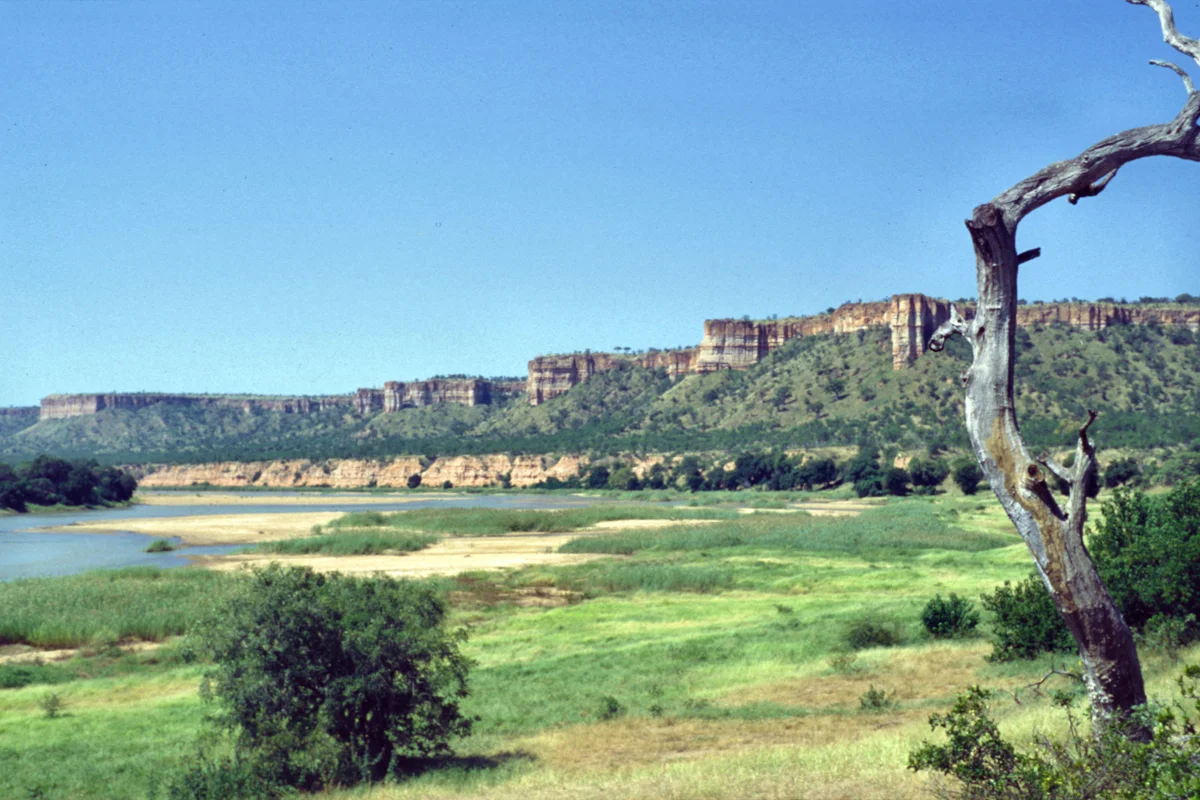
The Chilojo Cliffs rise above the Runde near Chipale Tented Camp, and BirdLife Zimbabwe tells birders to check it for Verreaux’s Eagles, Peregrine Falcons, Black Storks and swifts. Raptors are a strength across the park. Southern Banded Snake Eagle is the one BirdLife Zimbabwe singles out, sometimes perched in the open on a treetop. All the common vultures breed in the park, with Cape Vulture as a visitor, and the alarm calls of small birds are often the first sign of a smaller raptor hunting. The little birds see it first, and they say so.
The specials, site by site
BirdLife Zimbabwe’s page is unusually specific about where to look, which is a gift in a park this size:
- Green Twinspot in the thickets around Chipinda Pools.
- Orange-winged Pytilia in the Pombadzi Wilderness Area.
- Pink-throated Twinspot, a recent addition to the Zimbabwe list, at Swimuwini camp.
- Senegal Lapwing at Tamboharta Pan, which is often good for many birds.
- Plain-backed Sunbird, seen at Tamboharta and in several other places, including the Mwenezi section.
- Mottled Spinetail, which nests in the baobabs, so check every big baobab. There are worse instructions to follow.
The special BirdLife Zimbabwe names for the area as a whole is Lemon-breasted Canary. Look in the Ilala palm savanna and over-grazed areas; large flocks have been recorded around Chikwarakwara in the south. For the country’s other birding regions, from the Eastern Highlands to Mana Pools and Hwange, see the Zimbabwe birding guide.
The woodland and the pans
Away from the rivers, the park changes with the soil. BirdLife Zimbabwe describes the central, southern and western areas as sandy, with deciduous woodland, miombo and pans, and the north as broken basalt country with mopane, and acacia elsewhere. That spread of habitats is why the specials are scattered: the twinspots in thicket, the canary in palm savanna, the lapwings at the pans. Each bird has picked its own corner and stays there.
The park runs birdwatching drives and plans each one around the species a guest wants to find, according to its campsite listings, which makes a guided drive the quickest way to the site specials on a short visit. The Starbed Platforms, overnight decks placed to look over pans and other water, are the park’s answer to a hide, with the added option of sleeping in it.
The camps
All 6 places to stay in the directory are self-catering, and they split between the north and the south of the park.
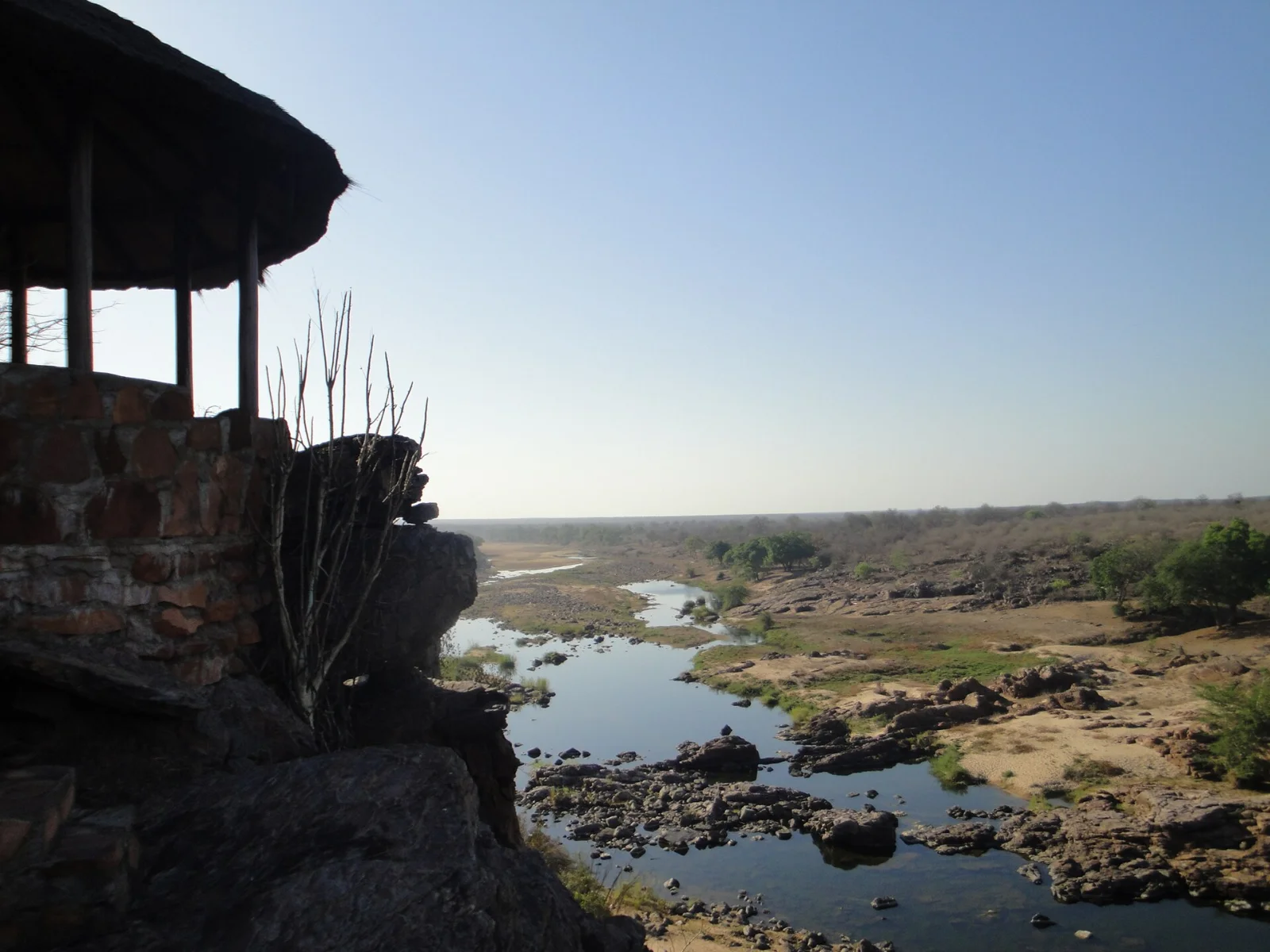
In the north, on the Runde, Chipale Tented Camp has tents looking over the river near the Chilojo Cliffs, among habitats the park lists as river and riverbed, cliffs, alluvial woodland, mopane and grassland. Chinguli Campsite and Chipinda Pools Campsite are on the Runde too, the latter about 10 minutes by road from the Chipinda Pools reception, with riverbank, alluvial woodland, mopane and grassland around them, and Fiery-necked Nightjar among the birds the park names.
For more isolation, the park’s exclusive and wilderness campsites are scattered through remote areas of mopane, mixed and alluvial woodland and grassland, reached on park tracks, and the Starbed Platforms sit at remote pans.
In the south, Bosman’s Community Camp stands high on the bank of the Mwenezi River with the park on 3 sides. It is a community partnership with the Malipati Development Trust, so income supports local people, and it has 6 Meru-style tents for up to 12 guests between Bosman’s Main Camp and Little Bosman’s. The birdlife of Manjinji Pan is about 7 km away in a straight line. The water is untreated, so bring drinking water as well as food. Access is through Malipati Gate, from Beitbridge via Chikwarakwara, which is canary country, or up the Sengwe corridor from the Limpopo, or via Mabalauta, and a 4×4 is recommended.
Planning a visit
Gonarezhou is remote and self-sufficient birding: bring everything except the birds. Bosman’s listing recommends a 4×4, the wilderness sites and starbeds are reached on park tracks, and everything in the directory is self-catering. Summer is the time for the calling Eastern Nicators and African Emerald Cuckoos on the Save and for the Mangrove Kingfisher chance at the confluence, but it is also the rainy season, so check road conditions and camp availability with the park before you commit.
Where to stay
The places to stay in Gonarezhou, in the order they appear above:
| Place to stay | Where | For birders | From |
|---|---|---|---|
| Gonarezhou Starbed Platforms | Remote pans, Gonarezhou, Zimbabwe | Overnight decks over pans, Lappet-faced Vulture | US$120 a platform, international (US$60 local) |
| Chipale Tented Camp | Runde River near the Chilojo Cliffs, Zimbabwe | Self-catering tents, birding drives, cliff and river birds | US$175 a tent, international (US$150 local) |
| Chinguli Campsite | Runde River, Gonarezhou, Zimbabwe | Riverbank camping, Fiery-necked Nightjar, birding drives | US$104 a site, international (US$55 local) |
| Chipinda Pools Campsite | Runde River, Gonarezhou, Zimbabwe | Near Green Twinspot thickets, birding drives | US$104 a site, international (US$55 local) |
| Gonarezhou Exclusive and Wilderness Campsites | Remote sites across the park, Zimbabwe | Isolated self-catering camping, birding drives | US$120 a site, international (US$63 local) |
| Bosman’s Community Camp | Mwenezi River near Malipati, Zimbabwe | Community camp, Manjinji Pan nearby | US$160 a night, Little Bosman’s, international |
Tariffs, roads and camp details in Gonarezhou change, especially in the rains. Facts were checked on 14 November 2026 with BirdLife Zimbabwe’s Gonarezhou page and each listing on Birding Dispatch. Confirm conservation fees and road conditions with the park before you travel.
More from the Journal
 Namib-Naukluft and Sossusvlei for Birders: Dune Lark, Desert Raptors and the Naukluft SpecialsA lark that lives on the dunes and nowhere else, Lappet-faced Vultures nesting in the desert, coursers on the gravel plains and the northern specials around the Naukluft cliffs, in one of Africa's largest parks.
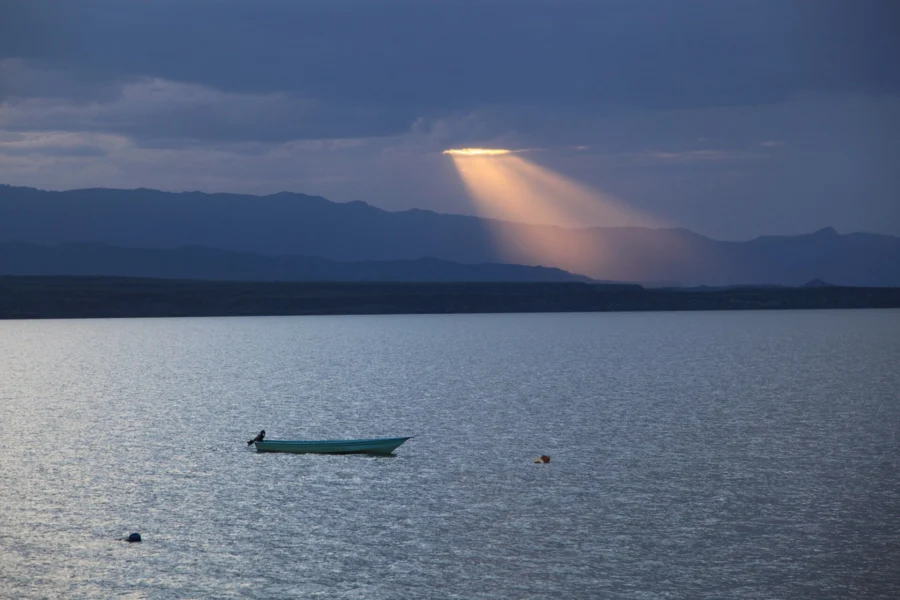 Lake Baringo and Lake Bogoria Birding: The Owl Walks, the Cliffs and the FlamingosA local guide who knows where every nightjar and eagle-owl slept last night, thorn scrub full of hornbills, a Goliath Heron colony on a rock, and the flamingo lake next door that keeps rising.
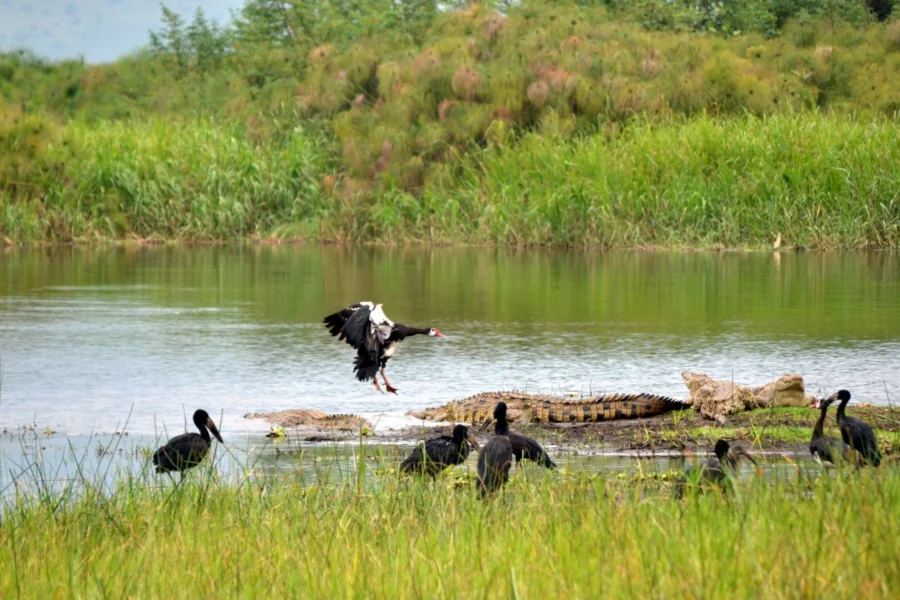 Akagera Birding: Rwanda’s Savanna, Lakes and Papyrus, and the Shoebill ChancesRed-faced Barbet in the southern woodland, Papyrus Gonolek and Carruthers's Cisticola in the swamps, a lake of hippos and lapwings, and a Shoebill that hides in the wetlands more than it shows.
The Pigeon Post
Every Thursday: 1 bird, 1 place to go and 1 place to stay, by email. Sign up and get our printable checklist of the 163 endemics of southern Africa.