
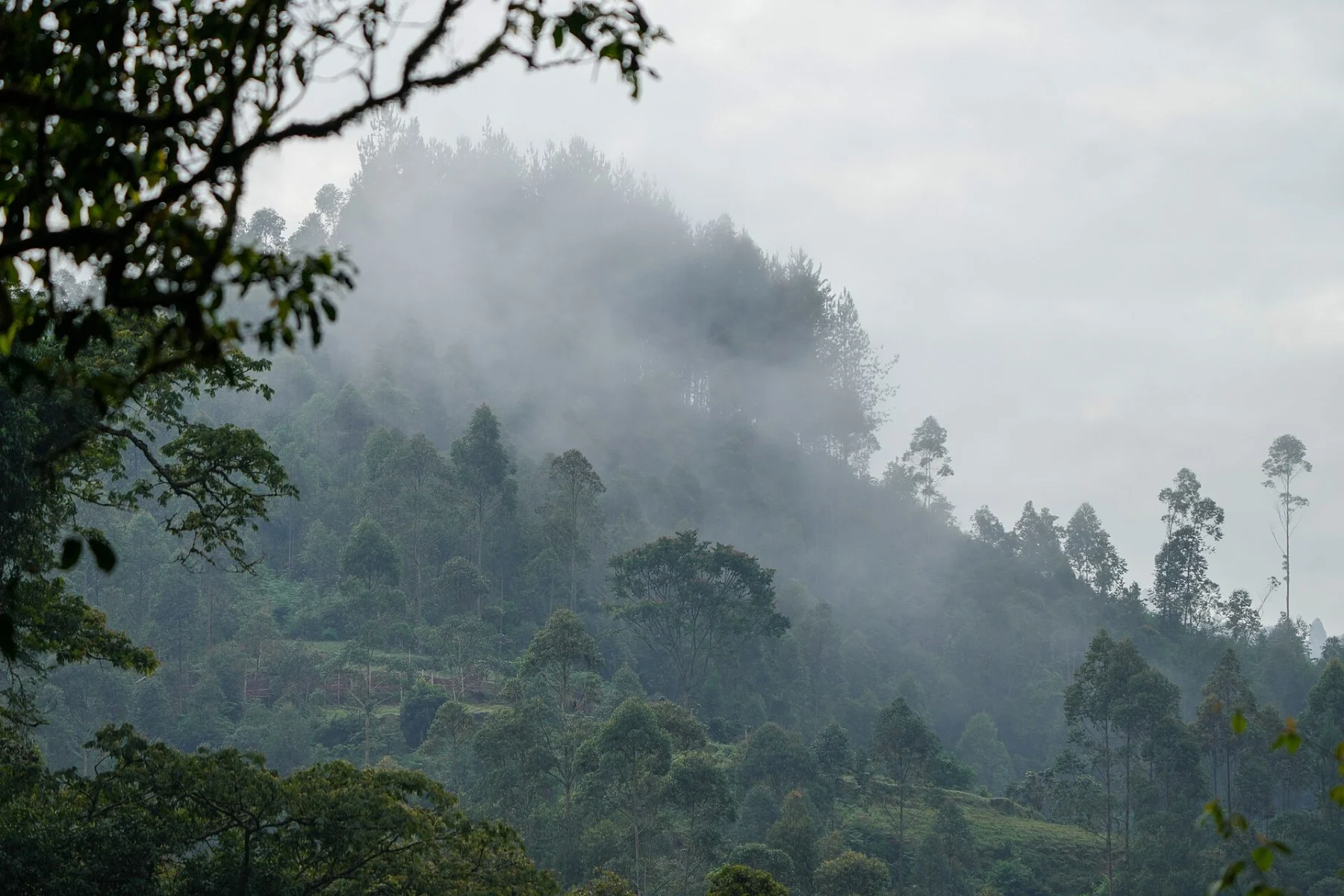
Bwindi for Birders: Ruhija, Mubwindi Swamp, the Neck and Buhoma
Grauer's Broadbill below Ruhija, a Handsome Spurfowl that is hard to see in the bamboo, mixed flocks on the Neck and Buhoma's forest trail, plus the walks, fees and where to stay.
Grauer’s Broadbill is a small green bird of a few mountain forests in eastern Congo, and outside the Democratic Republic of Congo the only place it is known is Bwindi Impenetrable National Park in south-west Uganda. BirdLife International lists it as Vulnerable, with an estimated 2,500 to 9,999 mature birds. In Bwindi the place to look is the forest around Mubwindi Swamp, a long walk down from the village of Ruhija, and so a long walk back up.
The broadbill is the hardest bird in the park, and it is only 1 of many. Philip Briggs, author of the Bradt guide to Uganda, counts about 350 species in Bwindi, including 23 Albertine Rift endemics. Birders work 3 places. Ruhija, on the high eastern side, is for the montane endemics. Buhoma, lower and warmer in the north, has the forest birds of the Congo basin. The Neck, the stretch of forest road between them, is where many tour groups spend the middle of a travel day, which turns the commute into part of the birding.
Ruhija: the high forest
In July 2023 a Birding Ecotours group spent parts of 3 days around Ruhija with a local guide, Gordon. The farmland outside the village gave Dusky Twinspot on the second attempt, and a patch of forest nearby produced Doherty’s Bushshrike preening in the sun. The forest along the main road was better still: Mountain Masked and Black-throated Apalises, Red-faced Woodland Warbler, Mountain Yellow Warbler, and Blue-headed and Regal Sunbirds.
The Ruhija school track was even more productive. The same group found Stripe-breasted Tit, an Albertine Rift endemic, then Equatorial Akalat, Black-billed Turaco, Rwenzori Batis, Rwenzori and Mountain Masked Apalises and Mountain Illadopsis. Grauer’s Warbler called for a whole afternoon and only showed the next morning, on its own schedule. Dusky Crimsonwing gave only brief looks, on the last morning.
Handsome Spurfowl lives in the bamboo zone above Ruhija, and it is hard to see, which rather wastes the name. The 2023 group tried 3 times and only heard birds calling in the valleys below. At dusk on the bamboo road they flushed a Montane Nightjar and had a pair of African Wood Owls. Ornis Birding’s itinerary for June 2027 lists Strange Weaver, Purple-breasted Sunbird and Rwenzori Hill Babbler among the birds of its roadside stops on the drive up to Ruhija.
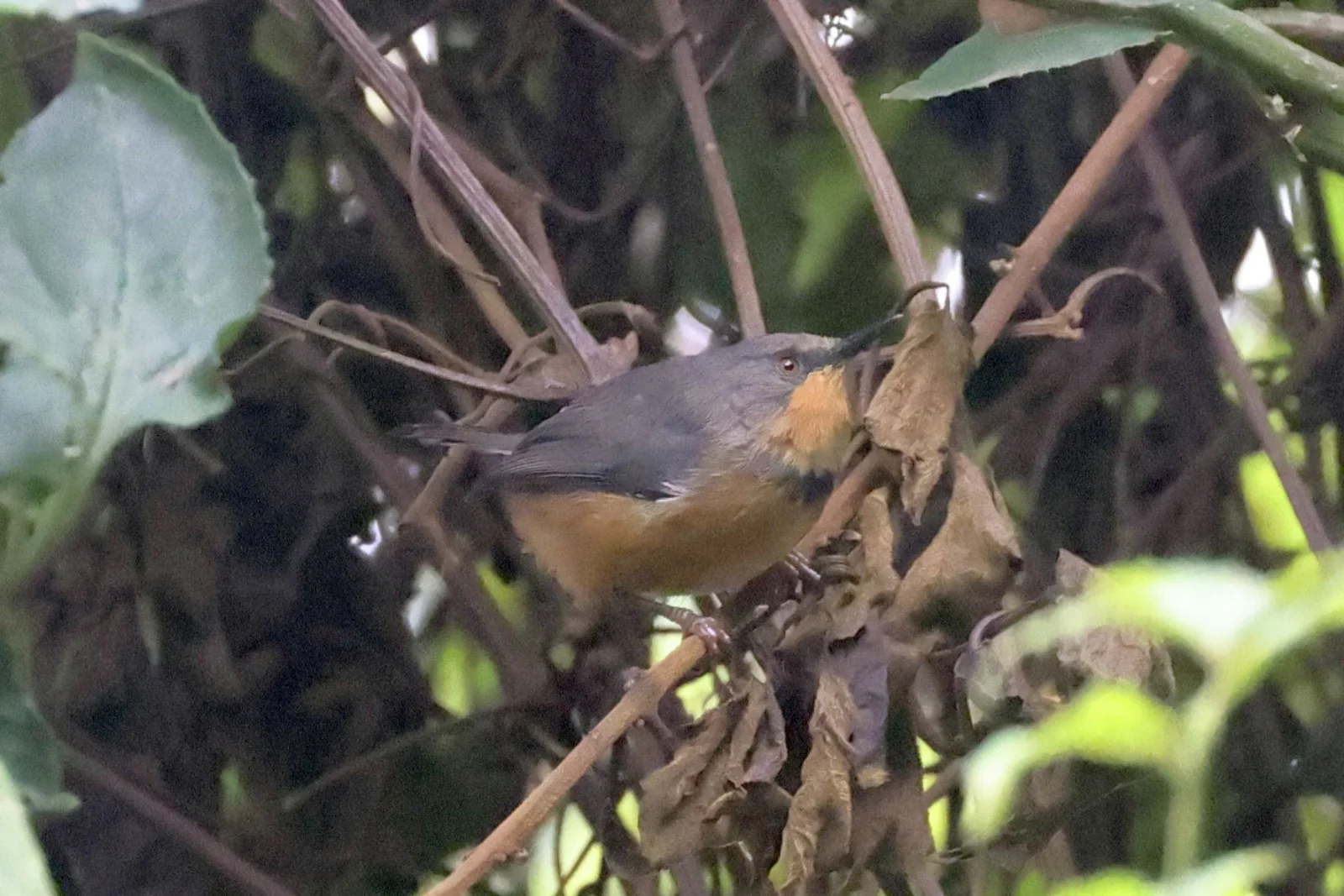
Mubwindi Swamp and Grauer’s Broadbill
Briggs says the broadbill is most likely along the Mubwindi Swamp trail between May and July. Ornis Birding, which runs a 14-day Uganda tour, describes the hike for it as moderately difficult and several hours long, and lists Grauer’s Swamp Warbler, Grauer’s Warbler, Archer’s Ground Robin, Rwenzori Batis and Mountain Masked Apalis as the other birds of the swamp walk.
Birding Ecotours calls it a long trek down to the swamp, and its 2023 group, a party of 2 clients, skipped it because of the difficulty and birded the roadside instead. They still recorded 534 species on the trip, a fine consolation prize, and missed the broadbill. If Grauer’s Broadbill is the reason for your trip, plan the walk for May to July, book a Ruhija site guide and be fit for a full day on steep ground.
Ruhija Gorilla Lodge runs a birding walk to Mubwindi Swamp that leaves at 6 am with a packed breakfast. It names African Green Broadbill, the other name for Grauer’s (a bird hard to find under either name), and Grauer’s Swamp Warbler among its birds.
The Neck
On the road between Ruhija and Buhoma is a stretch of forest known as the Neck. The 2023 Birding Ecotours group spent a few hours here on the transfer day and called it some of the best birding of the trip, high praise for a stretch of road. A bird party gave Ansorge’s, Plain, Red-tailed, Yellow-whiskered and Honeyguide Greenbuls, Bar-tailed Trogon, Yellow-spotted Barbet and Black-billed Weaver. After lunch in the forest, more flocks brought Blue Malkoha, Bocage’s Bushshrike, Grey-headed Sunbird and Brown-capped Weaver, and a pair of African Black Ducks sat on the edge of a small wetland. A stop at a stream for Mountain Wagtail and Cassin’s Flycatcher drew a blank.
Build the Neck into the drive between the 2 sectors and take a packed lunch. It needs no extra night, only the hours.
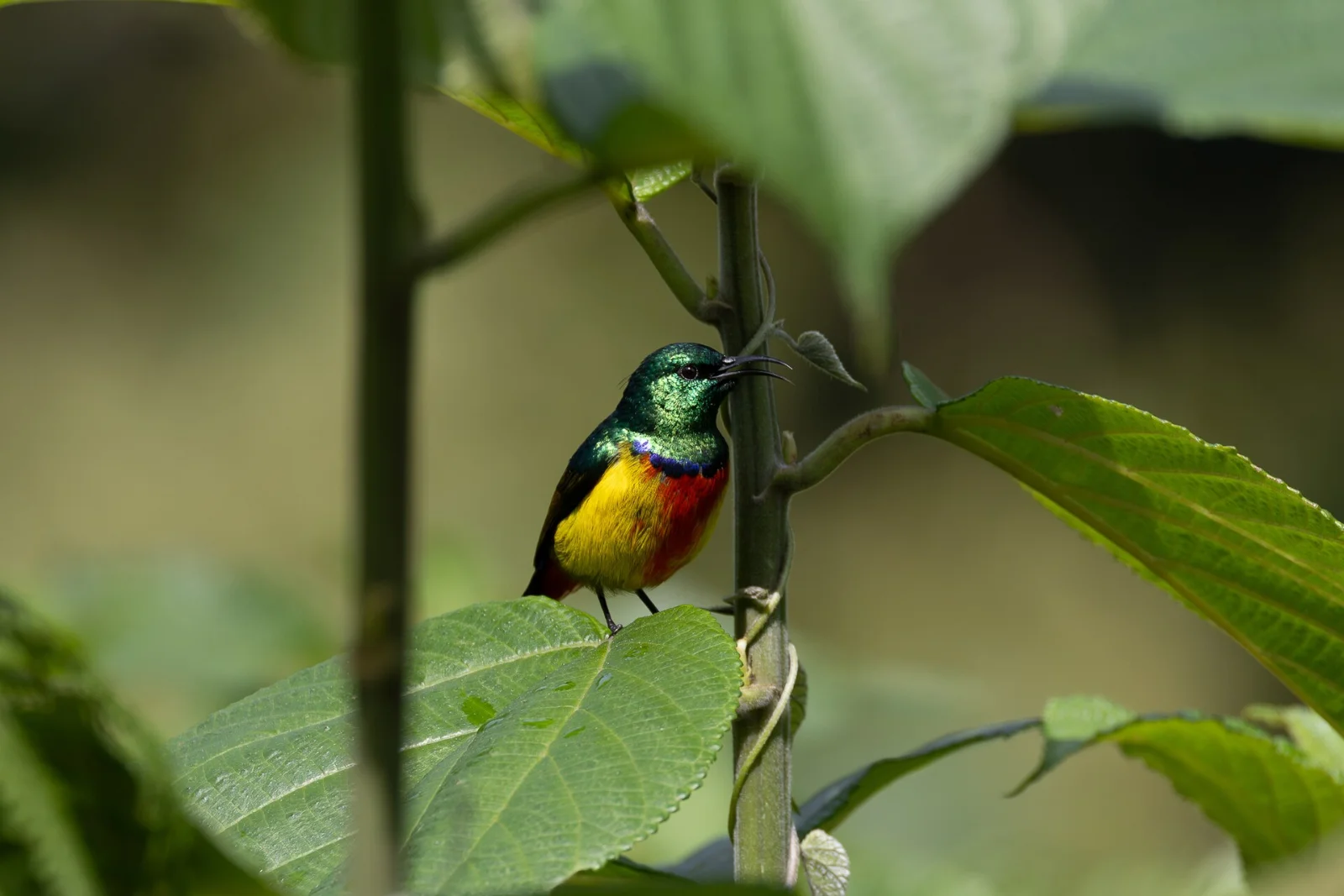
Buhoma: the lower forest
Buhoma is the lower, warmer sector, and gorilla treks start here. The main trail is deep forest. In July 2023 Birding Ecotours walked it for most of a day and found Bar-tailed Trogon, Grey-throated and Yellow-spotted Barbets, Cassin’s Honeyguide, Chestnut Wattle-eye, Pink-footed Puffback, Black-faced Rufous Warbler and a displaying African Broadbill. Neumann’s Warbler called and never showed. A Yellow-backed Duiker had no such reserve and walked down the path towards them.
The entrance road is as good as the trail. Field Guides found it so productive in November 2025 that a morning covered barely a mile, which in birding is a compliment, with Grey-throated Barbet, Cassin’s Honeybird, Buff-spotted Woodpecker, Lühder’s Bushshrike, Black-throated and Grey Apalises, Green Hylia and Grey-winged Robin-Chat. Many-coloured Bushshrike came in the afternoon, and an African Wood Owl called in the lodge garden. The same report warns that rain made the roads through Buhoma village impassable for the group’s bus, and the last stretch had to be done in 4x4s.
Buhoma Lodge sits at the park entrance, a short walk from the gorilla meeting point. It has 10 chalets facing the forest, gives more than 350 species and books local qualified guides for forest walks.
Nkuringo, the southern edge
Nkuringo is on the southern edge of the park, in Kisoro district. Huduma Lodge opened here in 2026 with 8 villas, its own trails and birding outings through forest, bamboo and tea. The nearest airstrip is at Kisoro, and the lodge puts the road from Kigali at roughly 4 to 5 hours via the Cyanika border. The same road links Bwindi with Rwanda’s Nyungwe forest and its own Albertine Rift endemics, so the list keeps growing across the border; see our Rwanda birding guide.
Fees, permits and when to go
The Uganda Wildlife Authority’s tariff for July 2024 to June 2026 set Bwindi park entry at US$40 a day for foreign non-residents and the guided birding walk at another US$40. No newer official tariff could be found in November 2026, and the prices quoted on agency websites conflict, so confirm with UWA or your operator. In February 2026 UWA kept the gorilla permit at US$800 for foreign non-residents and added US$600 low-season permits for April, May and November. Gorilla permits for foreign visitors are booked through licensed tour operators.
Briggs puts the best birding in Uganda from late May to September, with the main nesting season in Bwindi in May and June and heavy rain from mid-April to mid-May. That matches the broadbill’s May to July window, so for once the bird and the weather agree. For the rest of the country, from Mabamba’s Shoebill to Kibale’s pitta, see our Uganda birding guide, and for Black-billed and Rwenzori Turacos, Africa’s turacos and where to find each one.
Where to stay
The 3 Bwindi places in the directory, one in each birding sector:
| Place to stay | Where | For birders | From |
|---|---|---|---|
| Ruhija Gorilla Lodge | Ruhija, Bwindi, Uganda | 6 am Mubwindi Swamp walk, African Green Broadbill | US$180 per standard cottage FB |
| Buhoma Lodge | Buhoma, Bwindi, Uganda | Local qualified guides, 350+ species, at park entrance | US$380 pp sharing FB |
| Huduma Lodge | Nkuringo, Bwindi, Uganda | Own trails, birding outings, bamboo and forest | US$250 pp sharing FB |
Fees, permit rules and lodge rates change, and no official schedule replacing UWA’s 2024 to 2026 tariff could be found. Facts were checked on 14 November 2026 with trip reports from Birding Ecotours (July 2023) and Field Guides (November 2025), the Ornis Birding Uganda itinerary, Philip Briggs’s birding notes and each place’s Birding Dispatch listing. Confirm fees with the Uganda Wildlife Authority or a licensed operator before you book.
More from the Journal
 Namib-Naukluft and Sossusvlei for Birders: Dune Lark, Desert Raptors and the Naukluft SpecialsA lark that lives on the dunes and nowhere else, Lappet-faced Vultures nesting in the desert, coursers on the gravel plains and the northern specials around the Naukluft cliffs, in one of Africa's largest parks.
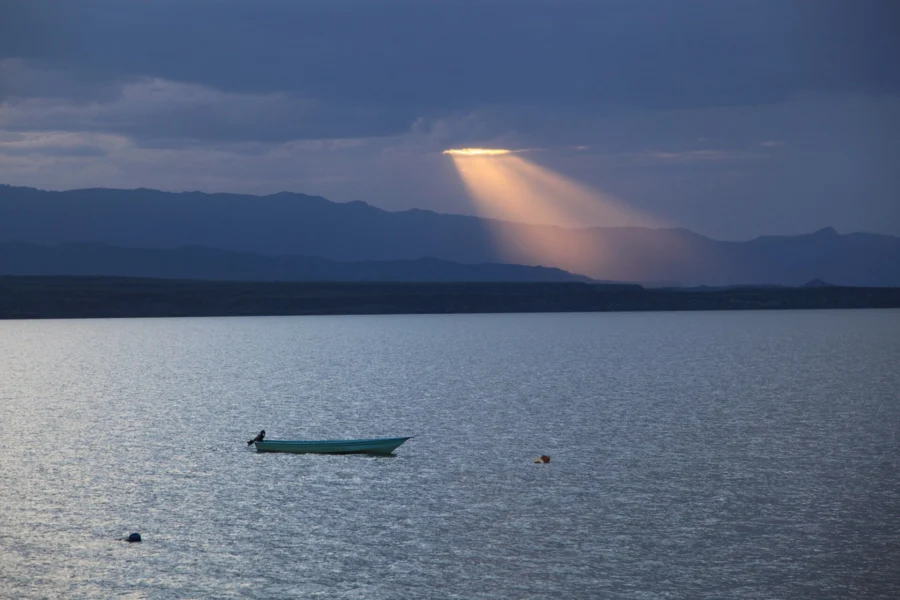 Lake Baringo and Lake Bogoria Birding: The Owl Walks, the Cliffs and the FlamingosA local guide who knows where every nightjar and eagle-owl slept last night, thorn scrub full of hornbills, a Goliath Heron colony on a rock, and the flamingo lake next door that keeps rising.
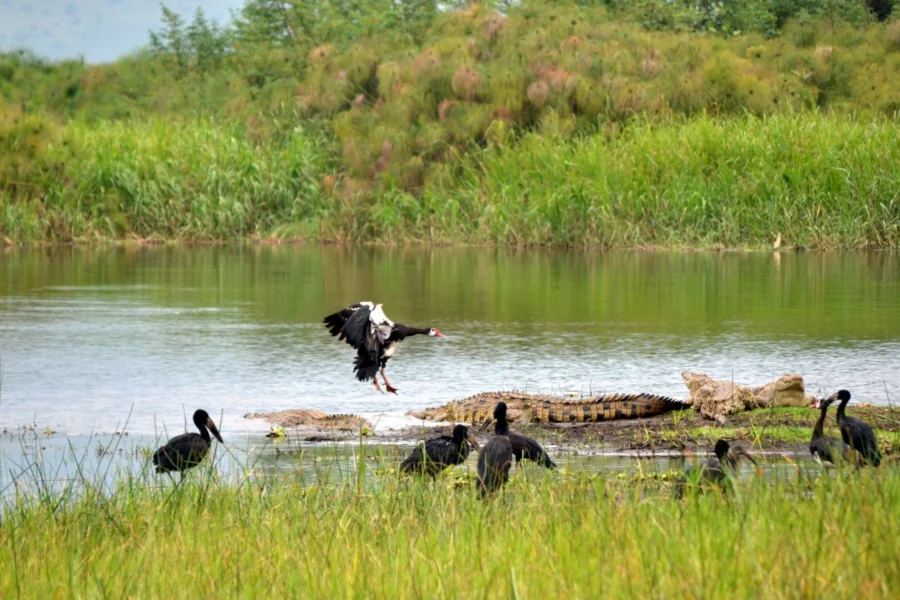 Akagera Birding: Rwanda’s Savanna, Lakes and Papyrus, and the Shoebill ChancesRed-faced Barbet in the southern woodland, Papyrus Gonolek and Carruthers's Cisticola in the swamps, a lake of hippos and lapwings, and a Shoebill that hides in the wetlands more than it shows.
The Pigeon Post
Every Thursday: 1 bird, 1 place to go and 1 place to stay, by email. Sign up and get our printable checklist of the 163 endemics of southern Africa.