
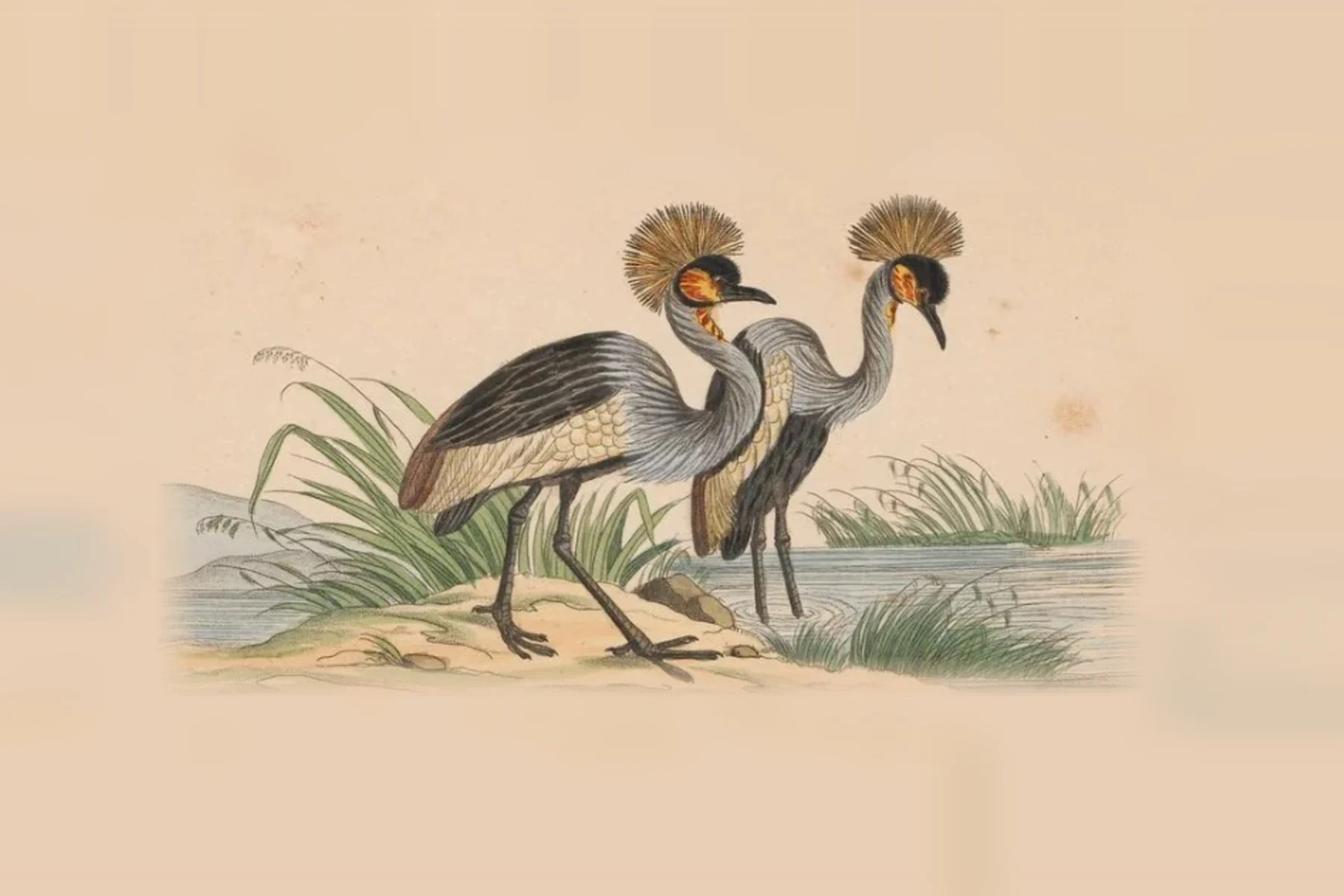
Where to See a Grey Crowned Crane: the KZN Midlands, Mpumalanga and East Africa
The crane with the gold crown is holding steady in South Africa while most of Africa's decline. Where the 2026 census found them, the farm dams and hides, and East Africa's wetland lodges.
At Himeville, in the foothills of the KwaZulu-Natal Drakensberg, volunteers counting cranes in the last week of July 2026 recorded more than 150 Grey Crowned Cranes. It was the first National Crane Census in 20 years, run by the Endangered Wildlife Trust and the International Crane Foundation, and across the 4 days it logged 4,944 Grey Crowned Cranes among 18,888 cranes of all 3 South African species. That is a lot of very tall birds for volunteers to count by phone.
That figure tells you where to start. In South Africa the crowned crane is a bird of farmland, dams and wetlands, and KwaZulu-Natal holds the most cranes of any province: 5,913 of all species in the census, ahead of the Eastern Cape with 4,161. Further north, the same bird is the national emblem of Uganda and is counted every year in Rwanda. Few birds wear a crown and also get a flag.
A crane that is holding on in South Africa
The International Crane Foundation lists the Grey Crowned Crane as Endangered on the IUCN Red List, with 29,500 to 36,000 birds and a falling trend. Its range runs from the eastern Democratic Republic of Congo, Uganda and Kenya to south-eastern South Africa, and the foundation says it is most abundant in Uganda, Kenya and Tanzania. The threats it names are wetland loss, human disturbance, live capture and egg collection for the trade, poisoning, collisions with power lines and land development.
South Africa is the exception, and for once the news is mostly good. Before the census, the Endangered Wildlife Trust put the national population at about 7,000 birds and called it stable, and said it is the only population in Africa that is not in decline. Annual aerial surveys in KwaZulu-Natal show steady growth. Outside that province, the trust says, very little is known, and the data it has suggests declines elsewhere. The Witness, reporting the census results on 10 November 2026, gave the species’ South African listing as Vulnerable.
Breeding is the weak point even where numbers are steady. A study published in Bird Conservation International in January 2025, by Carmen Demmer, Stuart Demmer and Trevor McIntyre, followed nests in a key agricultural area of KwaZulu-Natal and found a hatching rate of only 38.4%, which fell further when rain was heavy. Nests that succeeded were generally on larger open water and further from the shore: a crane, it seems, likes a moat.
How to know one
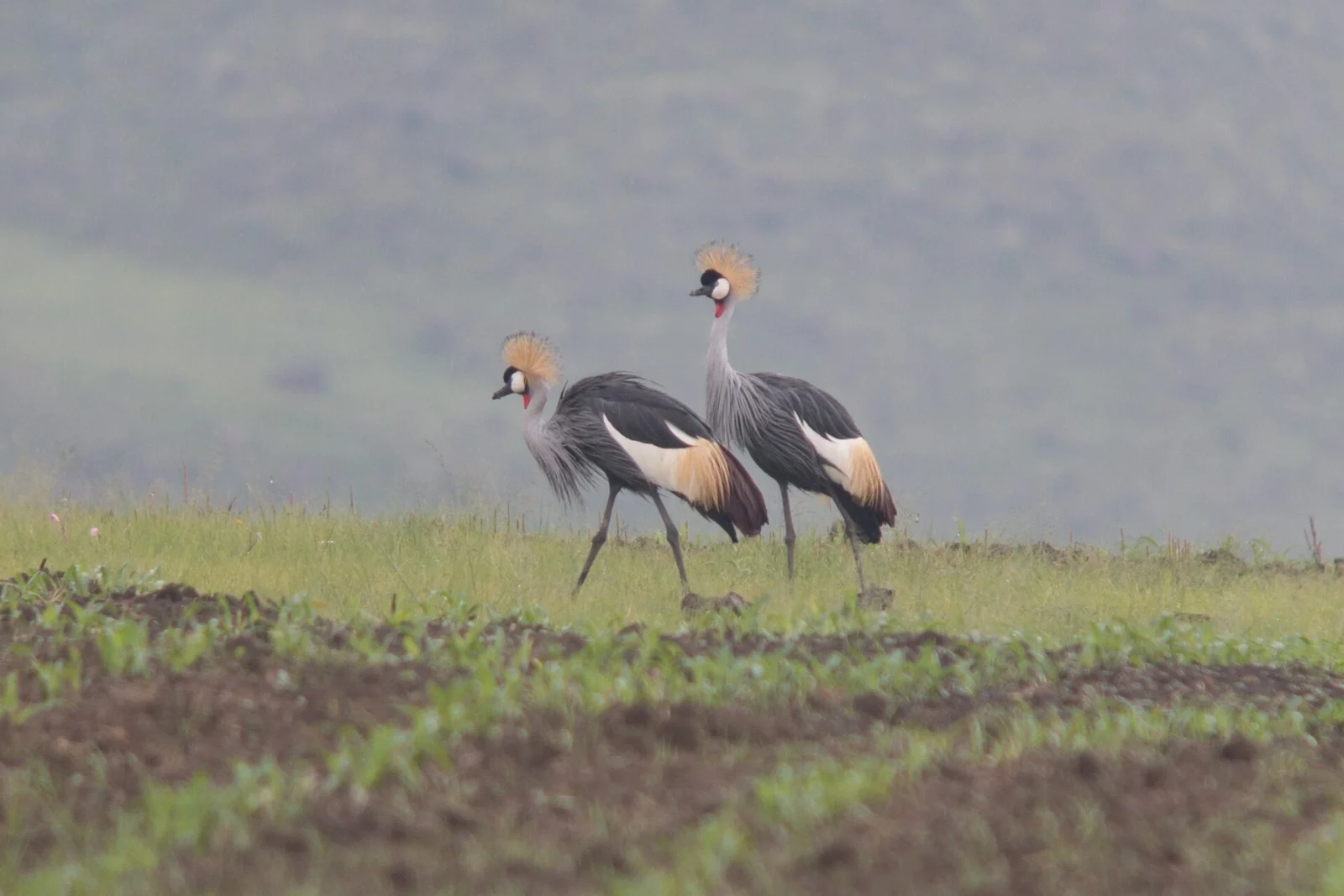
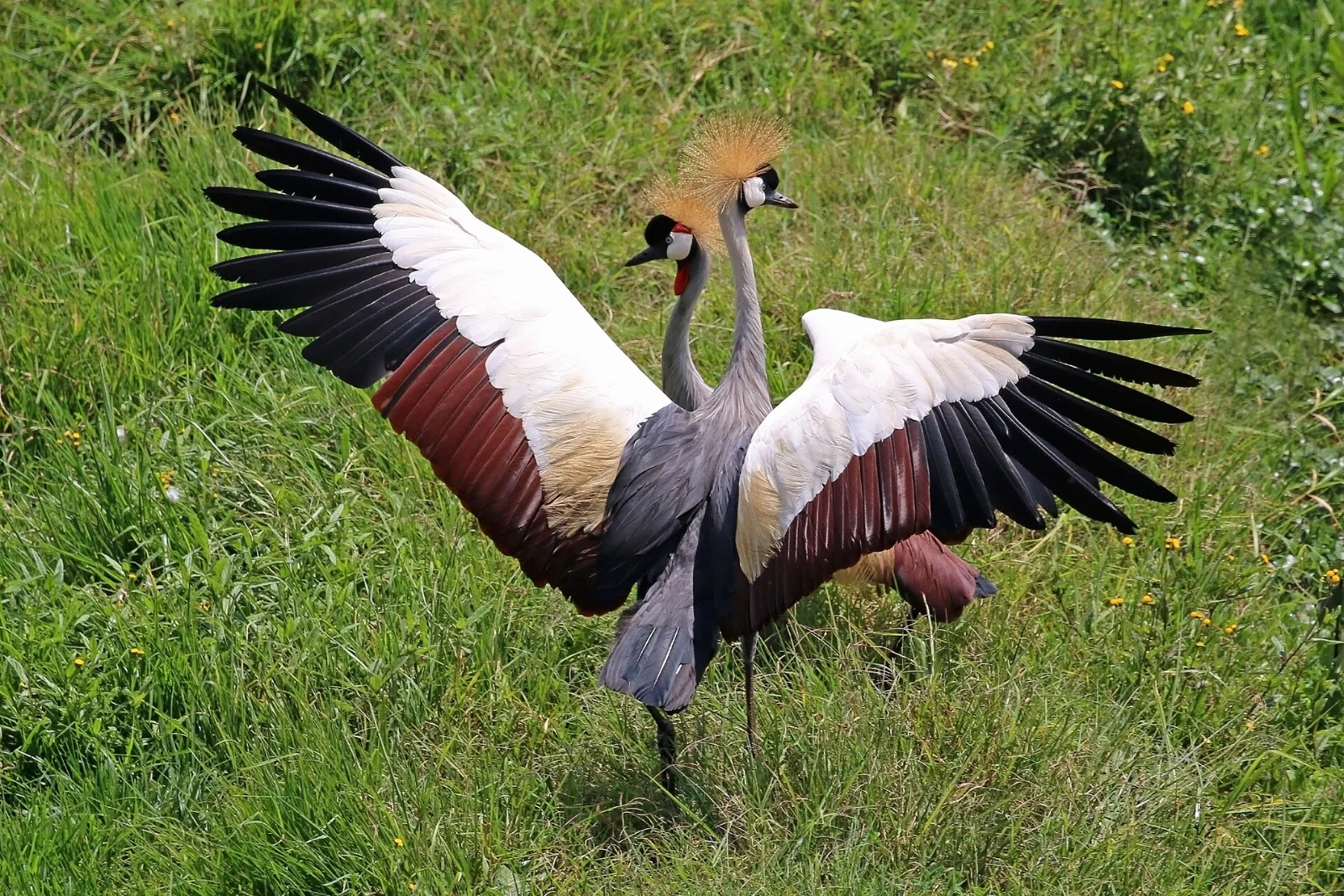
The crane foundation gives a height of about 104 cm and a weight of about 3.6 kg. Adults have a grey body, white wings with feathers that run from white through brown to gold, a crown of stiff golden feathers, a white cheek patch and a red pouch of skin under the chin. It looks like a bird that has dressed for a coronation and kept the hat on. Juveniles are greyer, with a brown nape, a buffy face and a spiky golden-buff crown.
In South Africa it often feeds beside Blue Cranes, and in the census 96 people recorded 2 crane species, mostly this pair. The golden crown settles it at any distance; no other crane has the hairstyle. Listen for the soft purring contact call, the sharp single guard call when a bird is alarmed, and the unison call, a duet a pair performs to hold its territory, the cranes’ version of a sign on the gate.
KwaZulu-Natal: the Midlands and the foothills
The Karkloof valley north of Howick is the easiest start. Gartmore Guest Farm has self-catering cottages, and guests can walk from them to the Karkloof Conservancy hides on the farm’s wetlands. All 3 cranes are named, and the farm is BirdLife South Africa Recommended. The conservancy’s evening crane roost, and the months it is busiest, are covered in our guide to where to see a Wattled Crane.
In the same valley, Rockwood Karkloof Lodges is on the Karkloof Reserve West Road, 17 km from Howick. It publishes the Karkloof Nature Reserve list of more than 185 species and names Wattled, Grey Crowned and Blue Crane in mistbelt forest, grassland and wetland. Its Forest Lodge needs a high-clearance or 4×4 vehicle; the cranes, of course, fly in.
South-west of Howick in the Dargle, Copperleigh Trout Cottages are 2 self-catering units on a working farm about 30 km from Howick and 22 km from Boston, overlooking Mavela Dam. The farm names all 3 cranes and its own photographs show Grey Crowned Cranes on the property. Tillietudlem Nature Reserve, on the D522 in the Upper Dargle, reports 250 species, names Blue, Crowned and Wattled Cranes, and gives guests at Ogram’s a hide and a viewing platform over the water, so the full crane set is at least possible from one spot.
Further south, King’s Grant Country Retreat near Ixopo reports more than 170 species on the farm. It points birders to its indigenous gardens, the Brickfield and St Isidore Dam, and names Crowned Crane alongside Cape Parrot and Blue Swallow.
Mpumalanga: Dullstroom and Wakkerstroom
On the Steenkampsberg plateau, Millstream Farm is about 3 km from Dullstroom on the R540 to Belfast. Its stone cottages are self-catering, it publishes a list of more than 200 species, it has a hide on Wordsworth Waters, and Grey Crowned Crane heads the birds it names, as a bird in a crown should. Santa Fishing Estate, 12 km from Dullstroom on the Lydenburg road, has 4 self-catering cottages with bird lists inside, and all 3 of South Africa’s cranes have been recorded on the property. The Dullstroom grassland birding guide has the routes between them.
At Wakkerstroom, DeKotzenhof publishes its own birding guide to the area and points guests to local guides. The guesthouse has 4 public wetland hides within walking distance, and the regional list it reproduces runs to more than 370 species, Grey Crowned Crane among them.
In the Eastern Cape, Kwandwe Great Fish River Lodge publishes a list of 315 species that names both Grey Crowned and Blue Crane.
East Africa
NatureUganda calls the Grey Crowned Crane Uganda’s national emblem, and says its numbers have been falling sharply for decades as wetlands are drained for farming. On a cross-border census with the Rwanda Wildlife Conservation Association, its team drove from Rubaya through the Nyombe-Mugandu wetlands to the Katuna border post and on to Kyanamira near Kabale, and counted 381 cranes, 364 adults and 17 juveniles, feeding in harvested maize and sorghum fields and in grassland. Farmland beside wetlands is where to look, the cranes being happy to glean the harvest.
In the north-west, Nile Safari Lodge at Murchison Falls gives more than 450 species for the area and names Grey Crowned Crane with Shoebill and Abyssinian Ground Hornbill.
Rwanda’s 10th consecutive national census, reported in August 2026, counted 1,438 Grey Crowned Cranes. Our Rwanda birding guide covers Rugezi Marsh, where a large share of them live. Closer to Kigali, Bugesera Lodge names Grey Crowned Crane with Papyrus Gonolek, Papyrus Canary and Ross’s Turaco.
In northern Tanzania, Gibb’s Farm is a working farm near Karatu on the slopes towards the Ngorongoro Conservation Area. It reports more than 200 species each season, its naturalists lead walks into the bush and forest on its borders, and it names Grey Crowned Crane and Abdim’s Stork. The farm gives November to April as the best months for birds.
Watching without harm
The census was run largely on cellphones, proof that a phone can be good for birds, with sightings and locations sent in by the public, and 824 of the 970 records could be mapped. If you see crowned cranes away from the known sites, report them to the Endangered Wildlife Trust with a location and, if you can, a photograph. The 2026 count also recorded 3 colour-ringed cranes, in Mpumalanga, KwaZulu-Natal and the Free State, and a ring read off a photograph tells researchers where a bird has travelled. A good zoom lens, it turns out, is a research tool.
With a hatching rate below 40% in KwaZulu-Natal farmland, a disturbed nest matters. Watch pairs in wetlands from a road or a hide, keep well back from any bird sitting tight in the reeds, and ask before birding on private farmland.
Where to stay
The places in this guide that name Grey Crowned Crane, with what each offers a birder:
| Place to stay | Where | For birders | From |
|---|---|---|---|
| Gartmore Guest Farm | Karkloof, KwaZulu-Natal | Conservancy hides on farm wetlands, all 3 cranes | R1,250 per cottage, self-catering |
| Rockwood Forest Lodge (Rockwood Lodges) | Karkloof, KwaZulu-Natal | Karkloof reserve list of 185+ species, 3 cranes | Ask the lodge |
| Copperleigh Trout Cottages | Dargle, KwaZulu-Natal | Farm dam, all 3 cranes named | Ask the lodge |
| Tillietudlem Nature Reserve | Upper Dargle, KwaZulu-Natal | Hide and viewing platform, 250 species, 3 cranes | Ask the lodge |
| King’s Grant Country Retreat | Near Ixopo, KwaZulu-Natal | 170+ species, Crowned Crane, St Isidore Dam | Ask the lodge |
| Millstream Farm | Near Dullstroom, Mpumalanga | Hide on Wordsworth Waters, 200+ species | R2,550 per cottage, self-catering |
| Santa Fishing Estate | Near Dullstroom, Mpumalanga | All 3 cranes recorded, bird lists in cottages | Ask the lodge |
| DeKotzenhof | Wakkerstroom, Mpumalanga | 4 public wetland hides within walking distance | Ask the lodge |
| Kwandwe Great Fish River Lodge | Kwandwe, Eastern Cape | 315-species list, Grey Crowned and Blue Crane | R19,400 pp sharing, fully inclusive |
| Nile Safari Lodge | Murchison Falls, Uganda | 450+ species, Shoebill, Grey Crowned Crane | US$998 per banda, full board (2026 low season, single) |
| Bugesera Lodge | Bugesera, Rwanda | Papyrus Gonolek, Papyrus Canary, Grey Crowned Crane | US$60 per bungalow or tent, B&B |
| Gibb’s Farm | Karatu, Tanzania | Naturalist-led walks, 200+ species a season | US$518 pp sharing, full board (Nov to Dec 2026) |
Crane numbers change with every count, and rates change each season. Facts were checked on 14 November 2026 with the International Crane Foundation, the Endangered Wildlife Trust, The Witness’s report on the 2026 census, NatureUganda, ATTA, Bird Conservation International and each place’s listing on Birding Dispatch. Ask before birding on private farmland.
More from the Journal
 Woodpeckers of Southern Africa, Including the One That Doesn’t Need TreesSouthern Africa's woodpeckers, from the Cardinal in every bushveld tree to the Ground Woodpecker that lives on treeless mountain slopes and eats almost nothing but ants.
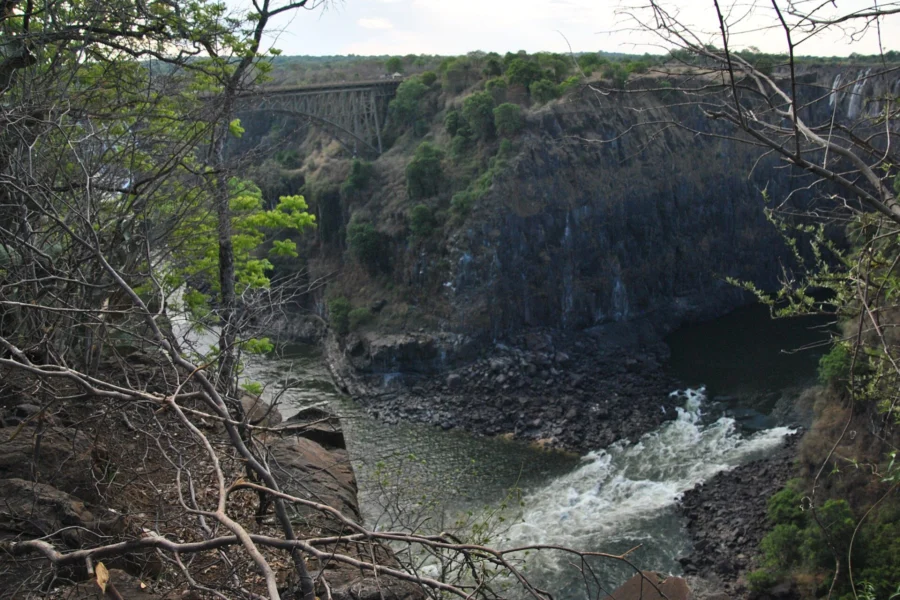 Where to See a Taita Falcon: the Strijdom Tunnel, the Blyde Cliffs and the Batoka GorgeA stocky falcon smaller than a pigeon, a handful of cliffs and surveys that keep coming back empty. Where it still nests, how to look, and the 2 roosts beside its cliffs.
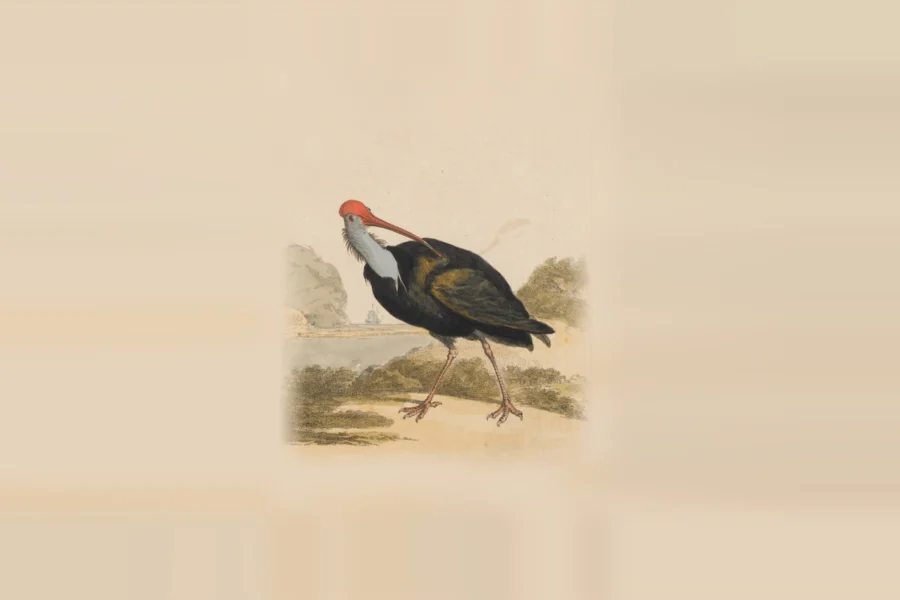 Where to See a Southern Bald Ibis: the Breeding Cliffs, Dullstroom, Wakkerstroom and LesothoA red-capped grassland ibis that nests on cliffs over waterfalls and feeds on burnt veld and maize stubble. The colonies you can watch, the fields to scan, and where to stay.
The Pigeon Post
Every Thursday: 1 bird, 1 place to go and 1 place to stay, by email. Sign up and get our printable checklist of the 163 endemics of southern Africa.