
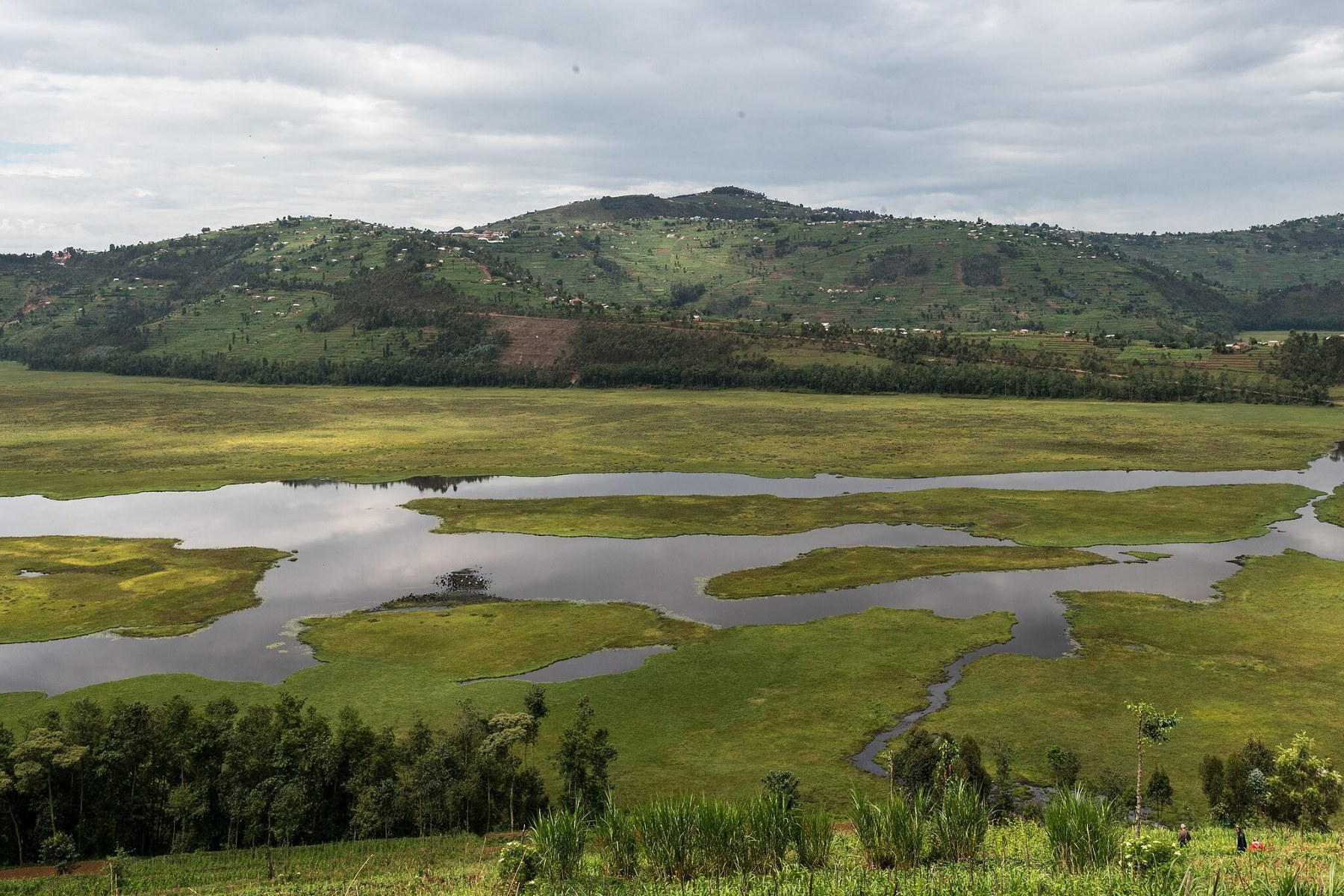
Rwanda Birding Guide: Nyungwe, Akagera, the Volcanoes and the Wetlands
How to bird Rwanda in 2026: the Albertine Rift endemics of Nyungwe, the papyrus and savanna birds of Akagera, the Volcanoes, Rugezi Marsh and Kigali, with park fees, seasons and the places to stay for birders.
Visit Rwanda, the Rwanda Development Board’s tourism site, puts the country list at 703 species, with 29 Albertine Rift endemics and several Lake Victoria Basin endemics among the residents. The country is small enough that montane forest, papyrus swamp and savanna are all within a day’s drive of Kigali, and the roads are good. That is a great deal of bird packed into a very tidy space.
Most birders build a trip around 2 parks. Nyungwe, in the south-west, is the forest for the Albertine Rift endemics. Akagera, on the Tanzanian border in the east, is savanna, lakes and swamp. The Volcanoes, the northern wetlands and Kigali itself fill the gaps, and there are fewer gaps than you might think.
The sites at a glance
| Site | What it is for | Fee (international adult) |
|---|---|---|
| Nyungwe National Park | Albertine Rift endemics, Red-collared Babbler | US$100 for 1 night, plus US$40 guided birding |
| Akagera National Park | Papyrus specials, Red-faced Barbet, Shoebill, waterbirds | US$100 for 1 day or night |
| Volcanoes National Park | Montane birds, Scarlet-tufted Sunbird | Not confirmed for birding |
| Rugezi Marsh | Grauer’s Swamp Warbler, Grey Crowned Crane | Not confirmed |
| Bugesera and Kigali | Papyrus Gonolek, wetland birds near the capital | Free at most sites |
Nyungwe National Park: the Albertine Rift forest
Nyungwe covers 1,019 km² of Afromontane forest, bamboo, grassland and swamp, according to African Parks, which has managed it with the Rwanda Development Board since 2020. It became a UNESCO World Heritage Site in 2023. The Key Biodiversity Area factsheet calls it, after the Itombwe mountains in eastern DR Congo, probably the most important forest for montane birds in the region, and certainly the most important in Rwanda. It runs from about 1,700 m to 2,950 m.
The park’s own site gives 322 species, 30 of them endemic to the Albertine Rift. Visit Rwanda names the Red-collared Babbler as the star, and says Rwanda is the only safe place to see it. The other specialities it lists are Rwenzori Turaco, Handsome Francolin, Rwenzori Nightjar, Grauer’s Warbler, Regal, Blue-headed and Purple-breasted Sunbirds and Neumann’s Warbler. With more time, it adds, Kungwe Apalis, Kivu Ground Thrush and Willard’s Sooty Boubou are possible, while Congo Bay Owl, Albertine Owlet, Shelley’s Crimsonwing and Rockefeller’s Sunbird have been reported but are seldom seen. The Key Biodiversity Area factsheet says the presence of the owl, Rockefeller’s Sunbird and Chapin’s Flycatcher still needs confirming, so treat those as rumours, the kind birders discuss in low voices at dinner.
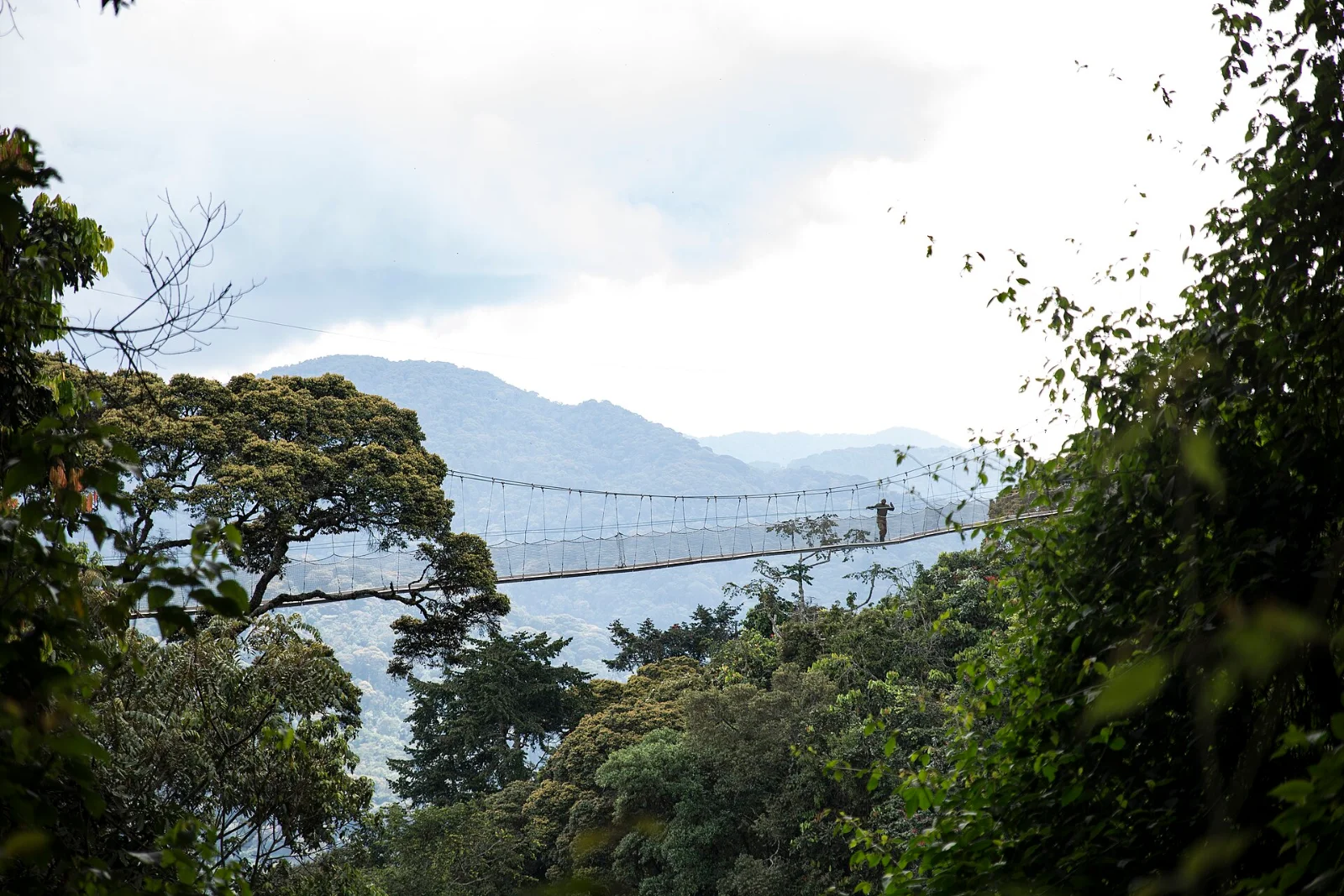
Birding is done on the trail network with the park’s bird guides. Ten trails start at Uwinka Visitor Centre and 3 at Gisakura, and the park rates birdwatching as a moderate walk. The canopy walkway also leaves from Uwinka and puts you level with the treetops, where forest birds spend most of their time and birders rarely get to.
The 2025/26 price list from the Nyungwe Management Company, the latest on the park’s booking page, charges international adults US$100 for entry for 1 night, US$150 for 2 and US$200 for 3, with nights 4 to 7 free. Guided birding is a special activity at US$40 per person, minimum 2, including the guide. Visitor centres open from 07:00 to 17:00.
Nyungwe is 225 km from Kigali, 5 to 6 hours by road, or a 40-minute flight to Kamembe Airport. Expect cool, wet forest: the park gives a steady 20°C by day and 10°C at night all year, so a fleece and a rain jacket are part of the birding kit. The park runs the Uwinka and Gisovu guesthouses, from US$95 per person a night in low season, the Gisakura campsite and the new Munazi Lodge. None of these is in the directory yet.
Akagera National Park: savanna, lakes and papyrus
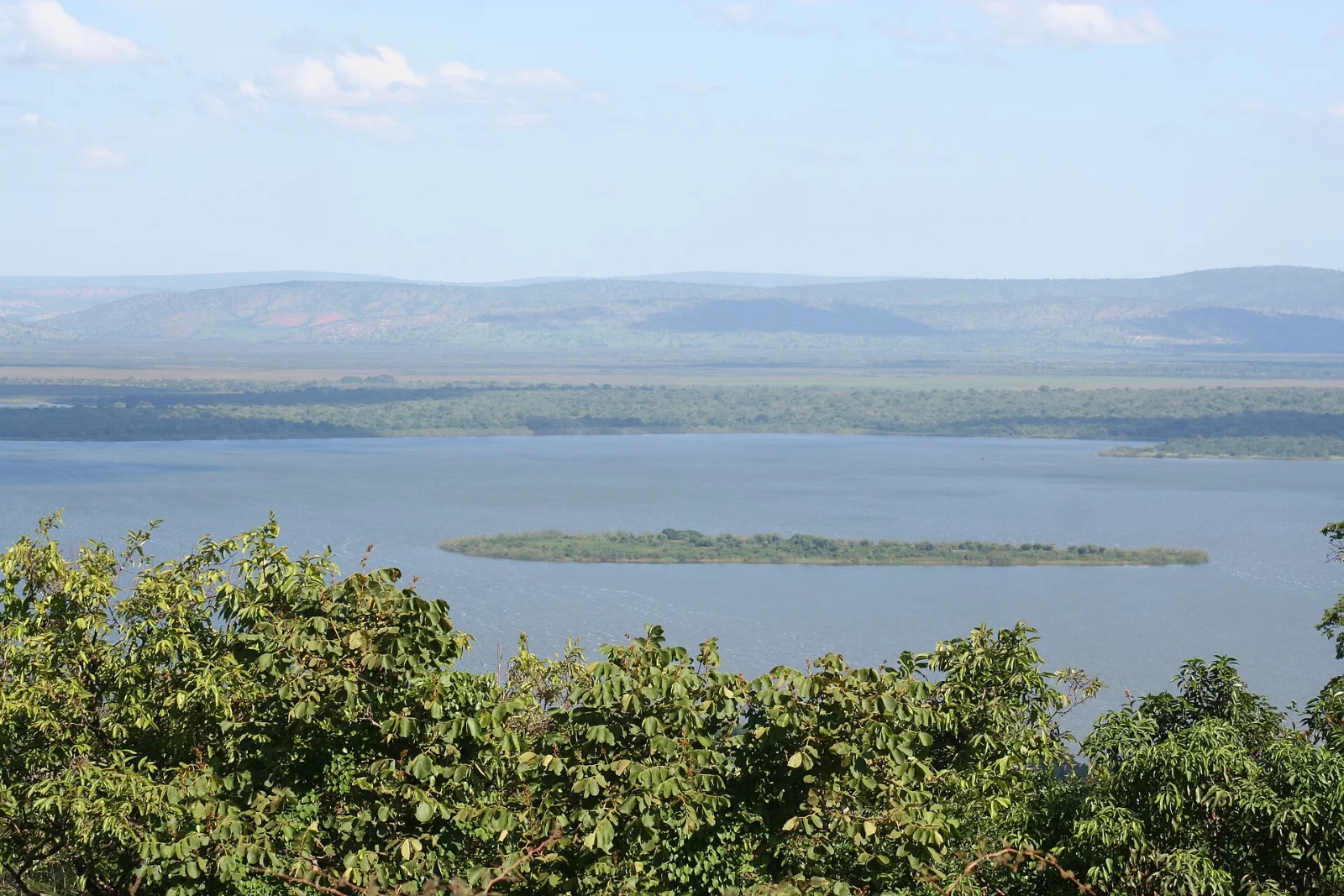
Akagera covers 1,200 km² on the Kagera River, a third of it water, and its park site calls it the largest protected wetland in central-eastern Africa. African Parks, which has run it since 2010, says almost 500 species have been documented; Visit Rwanda gives 490. Either way, it is a long list for a weekend.
The range-restricted bird most visitors want is Red-faced Barbet. Visit Rwanda says it should be easy around Akagera Game Lodge and Muyumbu campsite, which is a rare and welcome word in a birding guide. It also lists Northern Brown-throated Weaver, Papyrus Gonolek, White-winged Swamp Warbler, Carruthers’s Cisticola, White-collared Oliveback and Grey Crowned Crane, and says Shoebill is seen in the park fairly regularly. Wilderness Magashi, in the north on Lake Rwanyakazinga, names Shoebill among the residents of its wetlands. For the bird in detail, see where to see a Shoebill.
Take the boat on Lake Ihema. Visit Rwanda says it gives close views of waterbirds and a good chance of African Finfoot, which is also seen from the deck at Ruzizi Tented Lodge. Night drives look for Verreaux’s Eagle-Owl and nightjars, the shift workers of the bird world.
The Akagera Management Company’s 2026/27 price list charges international adults US$100 for 1 day or night, US$150 for 2 nights and US$200 for 3. A foreign-registered vehicle adds US$40. A community guide for a self-drive costs US$25 for half a day and US$40 for a full day, a scheduled boat trip US$35 and the night drive US$40. The park is 110 km from Kigali, about 2 hours, through Mutumba Gate in the south, and is open to self-drivers from 06:00 to 18:00. The park says the best time to visit is November to April. Ruzizi Tented Lodge, Karenge Bush Camp, the campsites, Magashi and SALT of Akagera are not yet in the directory.
Volcanoes National Park
Most visitors come to Volcanoes for the mountain gorillas, but Visit Rwanda says 200 bird species are known from the area, 17 of them Albertine Rift endemics. Scarlet-tufted Sunbird is found here and nowhere else in Rwanda, and the climb to the summit of Mount Bisoke is the best chance of it. Few sunbirds ask this much of the people who want to see them. Buhanga Eco-Park nearby has had African Pitta on migration.
The directory has 3 stays at the edge of the park. Bisate Lodge has 6 forest villas and guided birding walks on its trails with Wilderness guides, and names Rwenzori Turaco, Handsome Francolin, Shelley’s Crimsonwing and Regal Sunbird. It costs from US$2,723 per person a night, fully inclusive, from 1 March to 30 April 2027. Sabyinyo, close to park headquarters, says more than 40 species can be seen at and around the lodge, includes guided birding in its rate and names Rwenzori Turaco. It costs from US$1,613 per person a night, fully inclusive, over the same dates. At the other end of the scale, Isange Paradise Resort in Musanze, about 15 minutes from the park office, books birdwatching in its gardens, wetlands and the park buffer zone, with adventure tents from US$8.84 a night on its site, a price that leaves plenty over for the gorilla permit.
Rugezi Marsh and the Grey Crowned Crane
Visit Rwanda calls Rugezi Marsh, near Gicumbi in the north, Rwanda’s only Ramsar site, with good numbers of Grauer’s Swamp Warbler, Grey Crowned Crane and Papyrus Canary, and reports of Papyrus Yellow Warbler. A boat on Lake Nyagafunzo, at the south end of the marsh, can find White-backed Duck and Lesser Jacana.
The cranes are the conservation story, and a cheerful one. The Rwanda Wildlife Conservation Association’s 10th national census, released on 15 August 2026, counted 1,438 Grey Crowned Cranes, nearly 3 times the 487 in the first census in 2017, according to The New Times. Rugezi held 71 in 2017 and 378 in 2026, more than a quarter of the national total. The species is Endangered on the IUCN Red List. No stay near Rugezi is listed yet.
Bugesera and Kigali
The wetlands and lakes of Bugesera District, south-east of Kigali, are among the easiest birding in the country, and a gentle warm-up before the forest trails. Visit Rwanda gives 415 species for the area and good chances of Papyrus Gonolek, Papyrus Canary, White-winged Swamp Warbler, White-collared Oliveback, Lesser Jacana and White-backed Duck. Bugesera Lodge looks over the Akagera River valley about 25 minutes from Kigali, publishes its own bird checklist and describes access to the Mwogo marshes. Its list includes Papyrus Gonolek, Papyrus Canary, Grey Crowned Crane and Ross’s Turaco, and rooms start at US$60 bed and breakfast.
In the capital, Visit Rwanda singles out Nyarutarama Lake at the edge of the golf course, where the birdies are the feathered kind, with Bat Hawk, Narina Trogon, White-collared Oliveback and Grey-headed Bushshrike on its list. Nature Kigali, a 6-room hotel in Nyarutarama near the same wetland, records more than 50 species in its gardens, publishes a bird guide and books a bird guide for garden and city walks. It names Ross’s Turaco, Bat Hawk, Cinnamon-chested Bee-eater, Palm-nut Vulture and Green-headed Sunbird. It makes a good first or last night, with a turaco in the garden as a send-off.
Gishwati-Mukura
Rwanda’s newest national park, declared in 2016, joins 2 forests in the hills above Lake Kivu. Visit Rwanda gives 232 species for Gishwati and 163 for Mukura, including several Albertine Rift endemics, and says tourism there is still being developed. Check with the Rwanda Development Board before planning a visit.
When to go
Nyungwe’s price list treats 1 June to 30 September and 15 December to 28 February as high season, which tracks the drier months. The park’s weather is cool and wet all year, so pack for rain on the trails whatever the month. “Dry” in Nyungwe is a relative term. Akagera’s park site recommends November to April. A trip in December or January fits both: high season at Nyungwe, and inside Akagera’s recommended window.
Costs and a route
A simple 8-night route runs Kigali (1 night), Nyungwe (3 nights), Kigali or Bugesera (1 night), Akagera (2 nights) and Kigali (1 night). For an international visitor, park fees alone on that route come to US$200 at Nyungwe for 3 nights plus US$40 for each guided birding session, and US$150 at Akagera for 2 nights, before accommodation, transport and guides. Add the Volcanoes if gorillas are part of the plan, and budget for the permit with the Rwanda Development Board, which sets the price. For Rwanda’s neighbour and its shared Albertine Rift species, see the Uganda birding guide.
Where to stay
The places in this guide, with what each offers a birder:
| Place to stay | Where | For birders | From |
|---|---|---|---|
| Bisate Lodge | Volcanoes National Park, Rwanda | Guided birding walks, Rwenzori Turaco, Shelley’s Crimsonwing | US$2,723 pp, fully inclusive |
| Sabyinyo | Volcanoes National Park, Rwanda | Guided birding included, 40+ species, Rwenzori Turaco | US$1,613 pp, fully inclusive |
| Isange Paradise Resort | Musanze, Rwanda | Birdwatching in gardens, wetlands and the park buffer zone | US$8.84 an adventure tent |
| Bugesera Lodge | Bugesera, near Kigali, Rwanda | Own checklist, Mwogo marshes, Papyrus Gonolek | US$60 B&B |
| Nature Kigali | Nyarutarama, Kigali, Rwanda | 50+ garden species, bookable bird guide, Ross’s Turaco | Ask the lodge |
Park fees and activities change. Facts were checked on 13 November 2026 with Visit Rwanda, the Nyungwe and Akagera park sites and price lists, African Parks, the Key Biodiversity Area factsheet for Nyungwe, The New Times and each stay’s Birding Dispatch listing. Confirm fees and permits with the park or the Rwanda Development Board before you book.
More from the Journal
 Namib-Naukluft and Sossusvlei for Birders: Dune Lark, Desert Raptors and the Naukluft SpecialsA lark that lives on the dunes and nowhere else, Lappet-faced Vultures nesting in the desert, coursers on the gravel plains and the northern specials around the Naukluft cliffs, in one of Africa's largest parks.
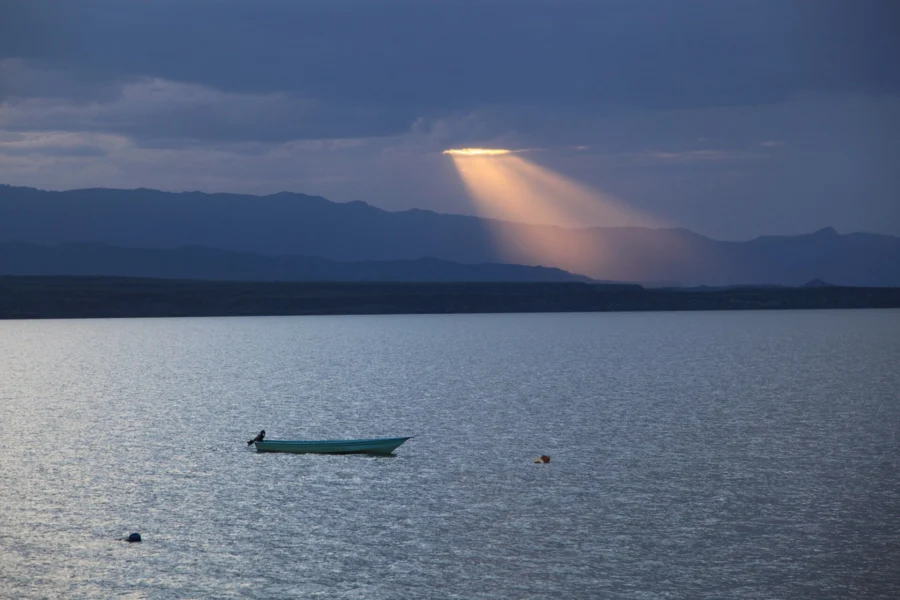 Lake Baringo and Lake Bogoria Birding: The Owl Walks, the Cliffs and the FlamingosA local guide who knows where every nightjar and eagle-owl slept last night, thorn scrub full of hornbills, a Goliath Heron colony on a rock, and the flamingo lake next door that keeps rising.
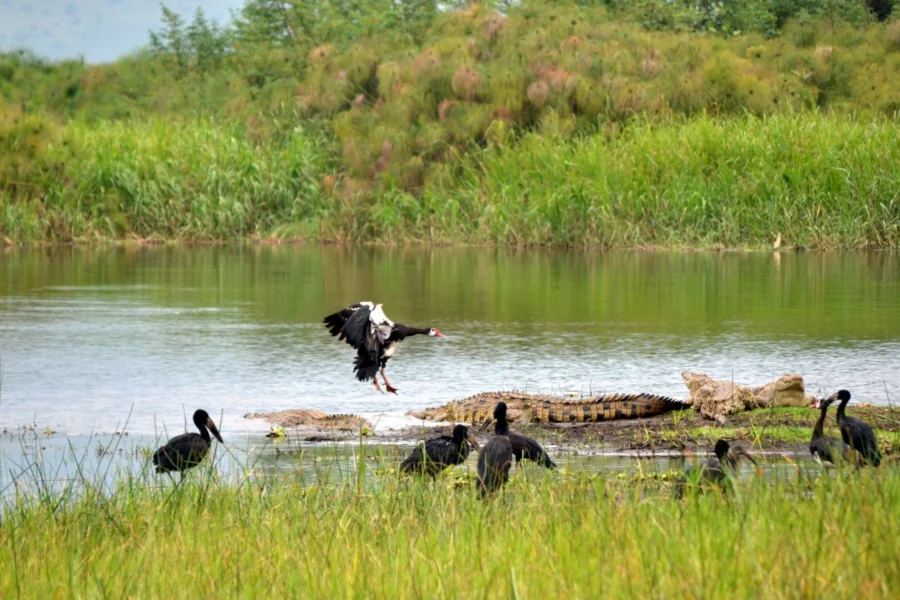 Akagera Birding: Rwanda’s Savanna, Lakes and Papyrus, and the Shoebill ChancesRed-faced Barbet in the southern woodland, Papyrus Gonolek and Carruthers's Cisticola in the swamps, a lake of hippos and lapwings, and a Shoebill that hides in the wetlands more than it shows.
The Pigeon Post
Every Thursday: 1 bird, 1 place to go and 1 place to stay, by email. Sign up and get our printable checklist of the 163 endemics of southern Africa.