
Birding for Beginners in Southern Africa: Binoculars, Field Guides, Apps and 20 Birds to Learn First
What magnification to buy, how Roberts, Sasol and Newman's differ, which apps cost money and which are free, how to learn calls, how bird clubs work, and the 20 birds that find you first.
Sasol eBirds, which its App Store listing calls South Africa’s best-selling birding app, covers 1,001 species. A beginner needs about 20 of them, which is a relief. Most of those live in an ordinary garden or along the first few kilometres of a Kruger road, and several do their own introductions: the Hadeda Ibis shouts its own name, and the Cape Turtle Dove repeats “work HAR-der” over and over, like a manager who never goes home. 4 of the 6 apps below are free, and a good first pair of binoculars costs about R3,000.
The short answer
Buy a waterproof 8×42 binocular from a brand with local repairs. Get 1 field guide, Sasol in print or as an app, and the free Merlin and BirdNET apps for calls. Log what you see on eBird or BirdLasser from the first day. Learn the 20 birds below, starting with the ones in your garden, which have the decency to turn up every day, and join the nearest BirdLife South Africa club for its outings.
Binoculars: 8x or 10x
The first number is the magnification, the second the width of each front lens in millimetres. BirdLife South Africa’s GoBirding guide to binoculars says birders use 8x or 10x, with 32 or 42 mm lenses. Its rule of thumb: 8x for dense habitats such as forest, 10x for open country, where the reach helps. Higher magnification narrows the field of view, so a bird in flight is harder to follow. Divide lens width by magnification for the exit pupil: 5.25 mm for an 8×42 against 4.2 mm for a 10×42, so the 8x looks brighter at dawn and under a forest canopy, which is where and when the birds insist on being.
For a first pair used in the garden and from a game vehicle, 8×42 is the safer choice. GoBirding warns against bargain-bin optics, favours brands with local after-sales service, and names Vortex, Nikon, Kowa and ProItUp as reliable mid-range brands. On 11 November 2026, Orms Direct listed the Nikon Prostaff P3 8×42 at R2,995 (regular price R3,795), and Cameraland listed the Vortex Diamondback HD 8×42 at R7,999. Our sister site’s guide to the best binoculars for safari compares more pairs.
Roberts, Sasol and Newman’s
Roberts goes back to Austin Roberts’ Birds of South Africa, first published in 1940 and revised since by the John Voelcker Bird Book Fund. The full handbook, Roberts Birds of Southern Africa VII (2005), is a reference work. The field version is the Roberts Bird Guide (2nd edition) by Hugh Chittenden, Greg Davies and Ingrid Weiersbye, with about 240 plates and extra attention to raptors, warblers, cisticolas, waders, females and juveniles.
Sasol is Sasol Birds of Southern Africa, by Ian Sinclair, Phil Hockey, Warwick Tarboton and Peter Ryan, in its 5th edition (2020) with more than 800 new illustrations. It is the most recently revised of the 3, and its plates link to calls through a free app.
Newman’s is Kenneth Newman’s Newman’s Birds of Southern Africa, revised by his daughter Vanessa Newman with Faansie Peacock. Its colour-coded groups are quick to flick through, but the current edition dates from 2010.
| Field guide | Edition | Price and retailer (11 Nov 2026) |
|---|---|---|
| Sasol Birds of Southern Africa | 5th, 2020 (PVC cover) | R630, Struik Nature |
| Roberts Bird Guide | 2nd (paperback) | R455, Exclusive Books |
| Newman’s Birds of Southern Africa | 2010 revision (PVC cover) | R550, Struik Nature |
Start with Sasol. Add the Roberts Bird Guide when the little brown birds, the LBJs, begin to bother you. With its extra attention to cisticolas and warblers, it is the book for that particular headache.
Which apps to put on your phone
| App | What it does | Price (South African App Store, 11 Nov 2026) |
|---|---|---|
| Sasol eBirds Southern Africa | Field guide: 1,001 species, 1,200 calls of 888 species, 4,200 photos | R399.99 once; optional Bird Call ID R179.99 a year or R29.99 a month |
| Roberts Birds | Field guide: 10,000 images, 2,200 calls, search by shape, colour and place | Free download, then a required R299.99 subscription; image ID R129.99, or R399.99 for both |
| Merlin Bird ID | Identifies birds by photo, by sound or from a few questions | Free |
| BirdNET | Identifies birds by sound | Free |
| eBird | Logs your sightings and shows what others have seen | Free |
| BirdLasser | Logs sightings and submits atlas cards to SABAP2 | Free |
Roberts Birds, released in December 2024, replaces the older Roberts Multimedia apps, which are no longer updated. It is the more detailed of the 2 field-guide apps, but its App Store rating was 1.9 from 43 ratings, with reviewers complaining about paying again; Sasol eBirds was rated 4.7 from 1,700. Merlin, from the Cornell Lab of Ornithology, lets you download a region’s birds for offline use. BirdNET is a Cornell Lab and Chemnitz University of Technology project.
For recording, BirdLife South Africa says BirdLasser handles the timekeeping and pentad grid maps for the Southern African Bird Atlas Project 2 (SABAP2), and passes records of threatened species to BirdLife South Africa, which puts the paperwork of science in a pocket. eBird is the better choice if you also bird abroad.
Learning the calls
Sound apps are weaker in Africa than in North America. A January 2026 Birding Ecotours article explains that Merlin needs at least 150 recordings of a species to identify it, and in most African countries fewer than 30% of species have that many. The Crested Barbet has more than 46,000 eBird observations but only about 110 sound recordings: plenty of people have seen it, and very few have pressed record. Treat an app’s answer as a lead and check it against the calls in Sasol or Roberts.
Learn the garden birds by call first, because you hear them every day. eBird writes the Red-eyed Dove’s song as “I am a Red-eyed Dove”, which is helpful of it, and the Black-collared Barbet pair’s duet as “two-pudley, two-pudley”, and compares the Blacksmith Lapwing’s “tink-tink-tink” to a hammer on an anvil. Record unfamiliar calls and upload them to eBird: the Cornell Lab’s Big Year of African Sounds, with partners including BirdLife South Africa, aims to record more than 1,500 African species.
Joining a bird club
BirdLife South Africa lists 38 affiliated bird clubs: 10 in the Western Cape, 9 in Gauteng, 5 in KwaZulu-Natal, and none in the Northern Cape. Club membership is separate from BirdLife South Africa membership, which costs R460 a year from 1 July 2026 to 30 June 2027 (R885 with African Birdlife magazine, R215 for seniors and R182 for students).
The Cuckoo Bird Club in Johannesburg, founded in 1998 for the graduates of a beginners’ course, shows what a club offers: a monthly evening talk at the Wanderers Club in Illovo (R20 for members, R40 for guests), a free day outing on the last Sunday of each month and a gentle midweek walk. Guests are invited to join after 2 meetings, the bird club version of a second date; the 2025 fee was R320. For your nearest club, email [email protected].
20 birds to learn first
The tips below come from the eBird species accounts. 2 of the 20, the Hadeda and the Grey Go-away-bird, do half the work by calling out something close to their own names.
In the garden
| Bird | How to tell it |
|---|---|
| Hadeda Ibis | The loud “ha-da-da” call; a white streak under the eye and a green-purple gloss on the wings |
| Cape Turtle Dove | The endless “work HAR-der” song; a dark eye with no ring of bare skin round it |
| Red-eyed Dove | The biggest of the collared doves, with a dark red eye set in red skin |
| Laughing Dove | A spotted black collar and a long tail with white corners |
| Dark-capped Bulbul | A dark face and throat, and yellow under the tail |
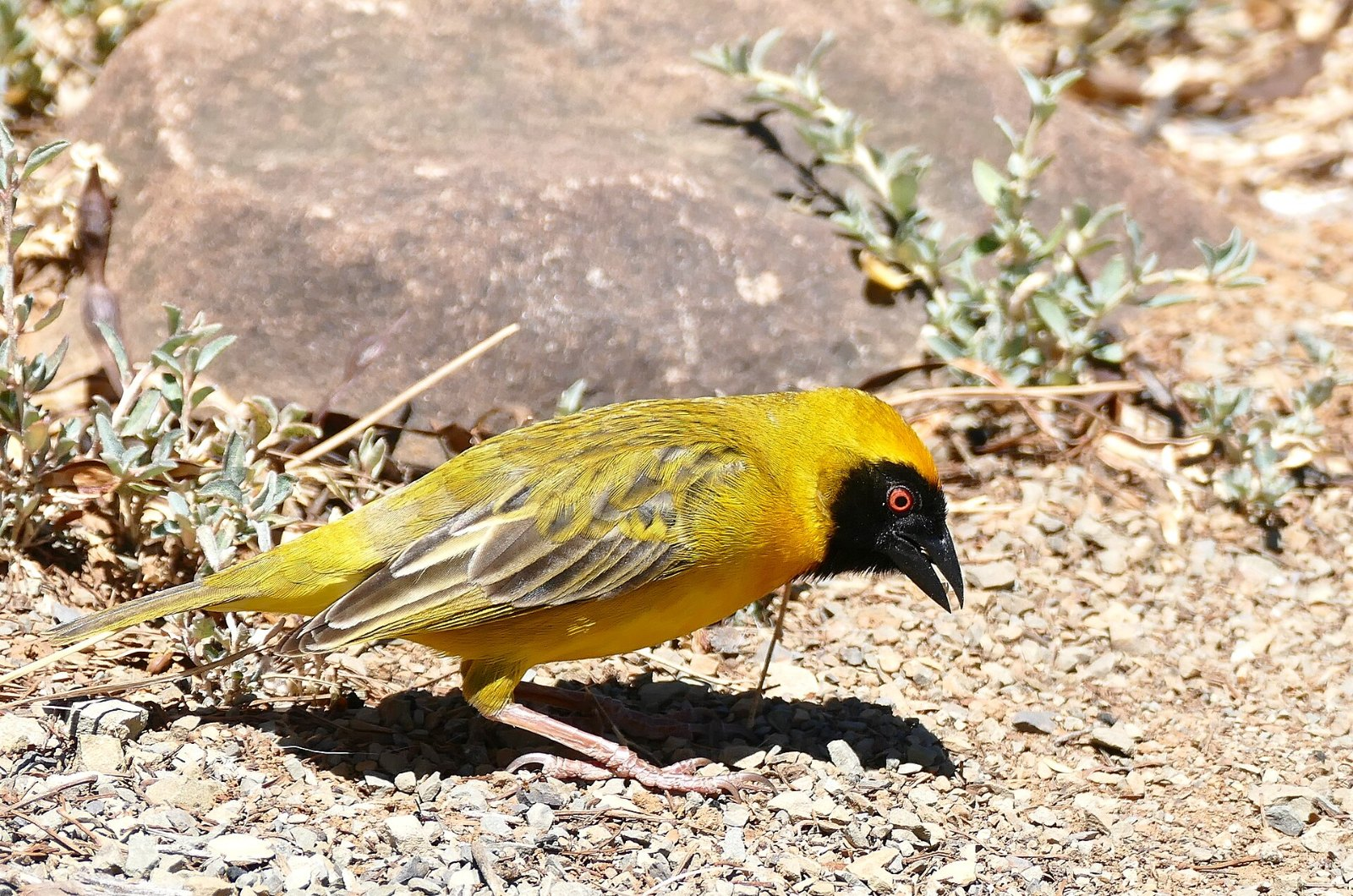
| Southern Masked Weaver | A red eye; the breeding male’s black mask reaches only a narrow band above the bill |
| Speckled Mousebird | A long, scruffy tail and a blackish face; creeps through bushes in groups |
| Black-collared Barbet | A red face edged by a bold black collar; pairs duet “two-pudley” |
| Crested Barbet | Crested and fiery-coloured, with a pale bill and a dry, insect-like trill |
On a first safari
| Bird | How to tell it |
|---|---|
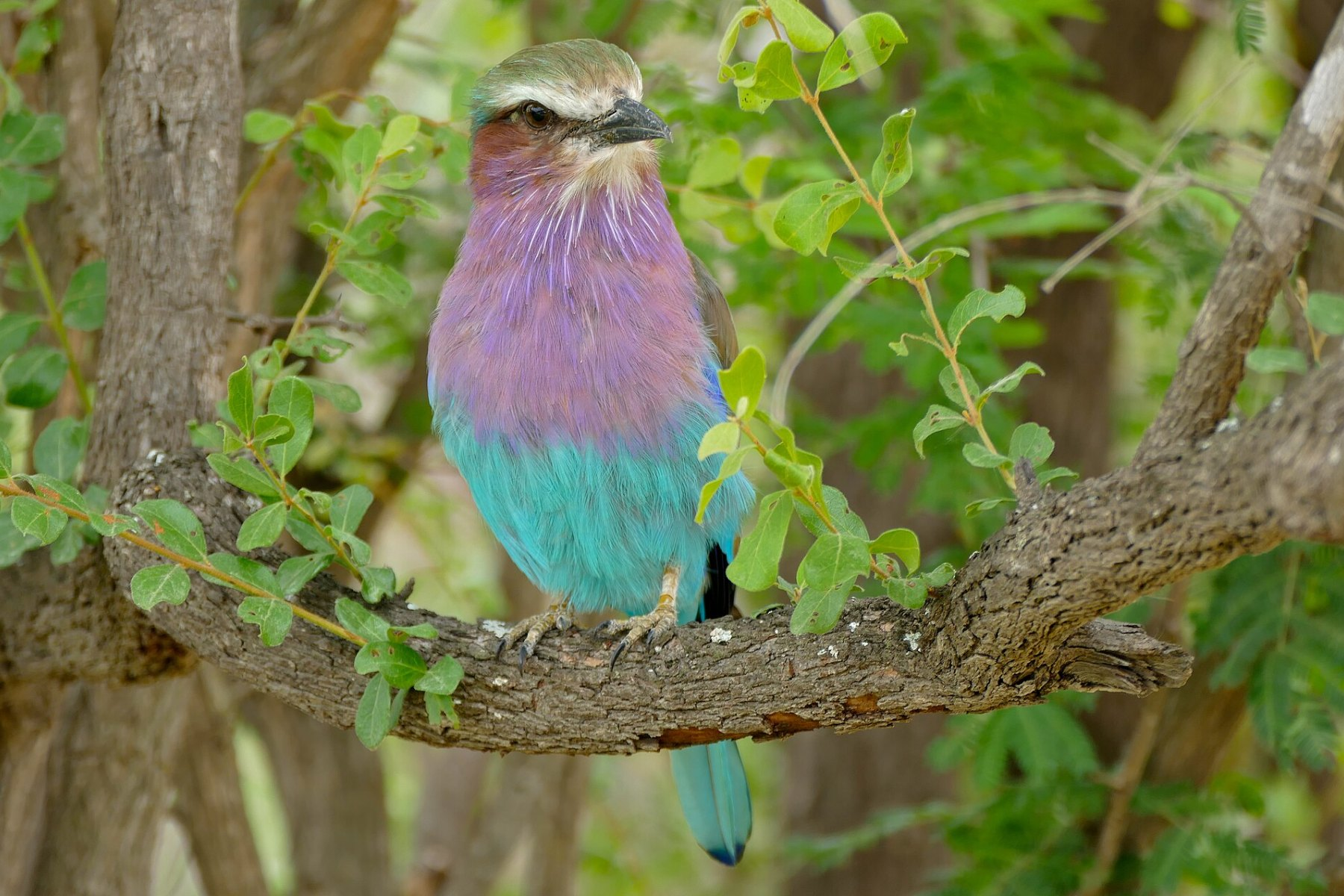
| Lilac-breasted Roller | A lilac breast, rusty cheeks and a green crown, on an open perch |
| Fork-tailed Drongo | All black with a red eye and a deeply forked tail; often near large animals |
| Southern Yellow-billed Hornbill | Black and white with a big yellow bill; common around camps |
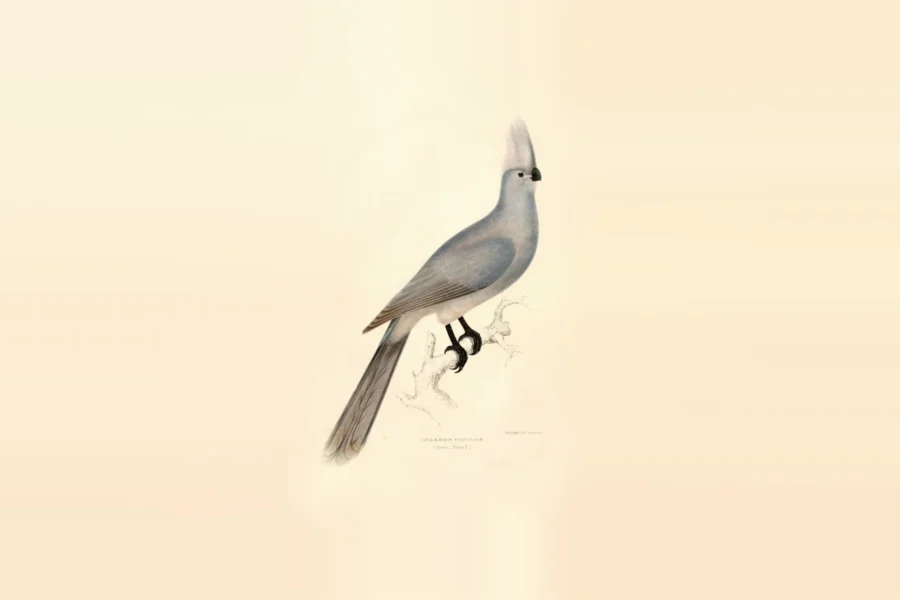
| Grey Go-away-bird | All grey with a tall crest; the nasal “go-waaay” call |
| Helmeted Guineafowl | Slate grey covered in white spots, with a bony casque on the head |
| Red-billed Oxpecker | An all-red bill and a yellow ring round the eye; rides on large mammals |
| Cape Starling | Glossy blue-green with no dark ear patch; the blue-eared starlings are smaller |
At the water
| Bird | How to tell it |
|---|---|
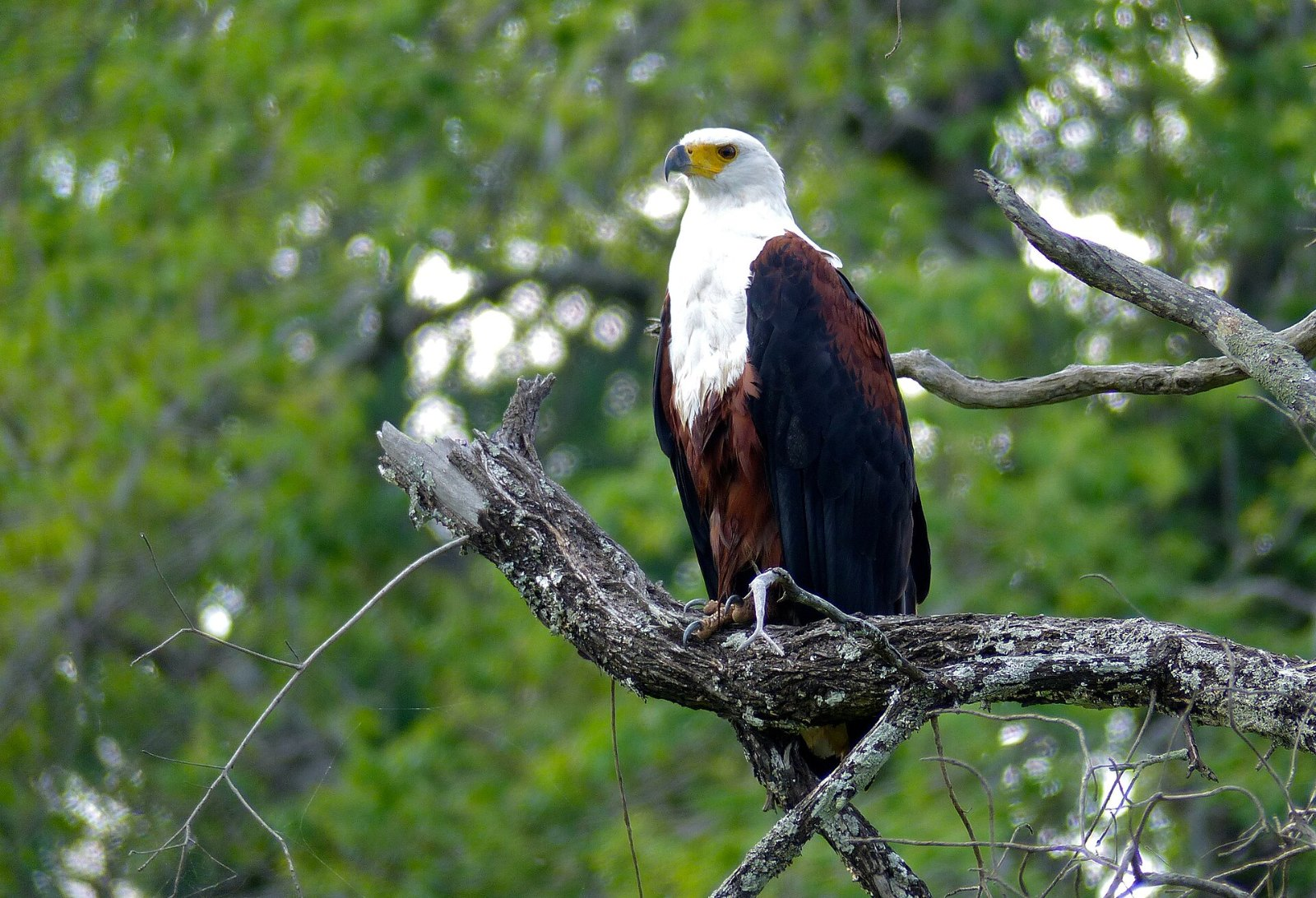
| African Fish Eagle | Chestnut and white, calling with its head thrown back |
| Blacksmith Lapwing | Grey, black and white with a white crown; the “tink-tink” call |
| Pied Kingfisher | Black and white, often hovering over the water as it hunts |
| Hamerkop | Brown, with a hammer-shaped head; builds a stick nest up to 1.5 m across |
A first weekend away
A guided morning teaches faster than any app. Heritage View Birding Retreat at Barberspan in North West, BirdLife South Africa Recommended, has a private hide and 4-hour tours with a local guide. Magoebaskloof Birders’ Cottages in Limpopo has a forest hide and a feeding table, and 152 species on its farm list, which is a lot of new names for 1 weekend. For a first safari built around birds, see our guide to birding Kruger National Park.
Your first atlas card
Once you can name the 20 birds above, your sightings are useful. Open BirdLasser in the garden, start a SABAP2 card for your pentad and list every species you see or hear. A card of nothing but Hadedas, bulbuls and doves may not feel like much, but it still records which birds live in that grid square.
Where to stay
The places in this guide, with what each offers a birder:
| Place to stay | Where | For birders | From |
|---|---|---|---|
| Heritage View Birding Retreat | Barberspan, South Africa | BirdLife Recommended, private hide, 4-hour guided tours | Ask the lodge |
| Magoebaskloof Birders’ Cottages | Magoebaskloof, South Africa | Forest hide, feeding table, 152 species | R580 pp sharing, self-catering |
Prices and apps change. Facts were checked on 11 November 2026 with BirdLife South Africa, the South African App Store, Struik Nature, Exclusive Books, Orms Direct, Cameraland, the eBird species accounts and Birding Ecotours. Confirm prices before you buy.
More from the Journal
 Do You Need a Spotting Scope? When a Scope Helps, What to Look For and Where It MattersA scope turns grey dots on a mudflat into Curlew Sandpipers and Red Knots. When it earns its place in the car, the features that matter, and why 60x fails at noon.
 Your First Birding Safari: What to Expect, From the 05:30 Gate to the Evening ListHow a birding safari day runs, what the guide does, why the vehicle stops for a brown bird when there is an elephant over there, and the other things first-timers find odd.
 How to Log Your Bird Sightings: eBird, BirdLasser or SABAP2?eBird wants short checklists with counts, BirdLasser wants the same bird logged again and again, and SABAP2 wants 2 hours in one square. What each is for, and how to feed all 3.
The Pigeon Post
Every Thursday: 1 bird, 1 place to go and 1 place to stay, by email. Sign up and get our printable checklist of the 163 endemics of southern Africa.