
Where to See a Shoebill: Uganda’s Swamps, Bangweulu and the Odds at Each
The bird with a clog for a bill and patience for a hobby: the realistic places to see a Shoebill in Uganda, Zambia and Rwanda, what each costs, when to go, and the odds.
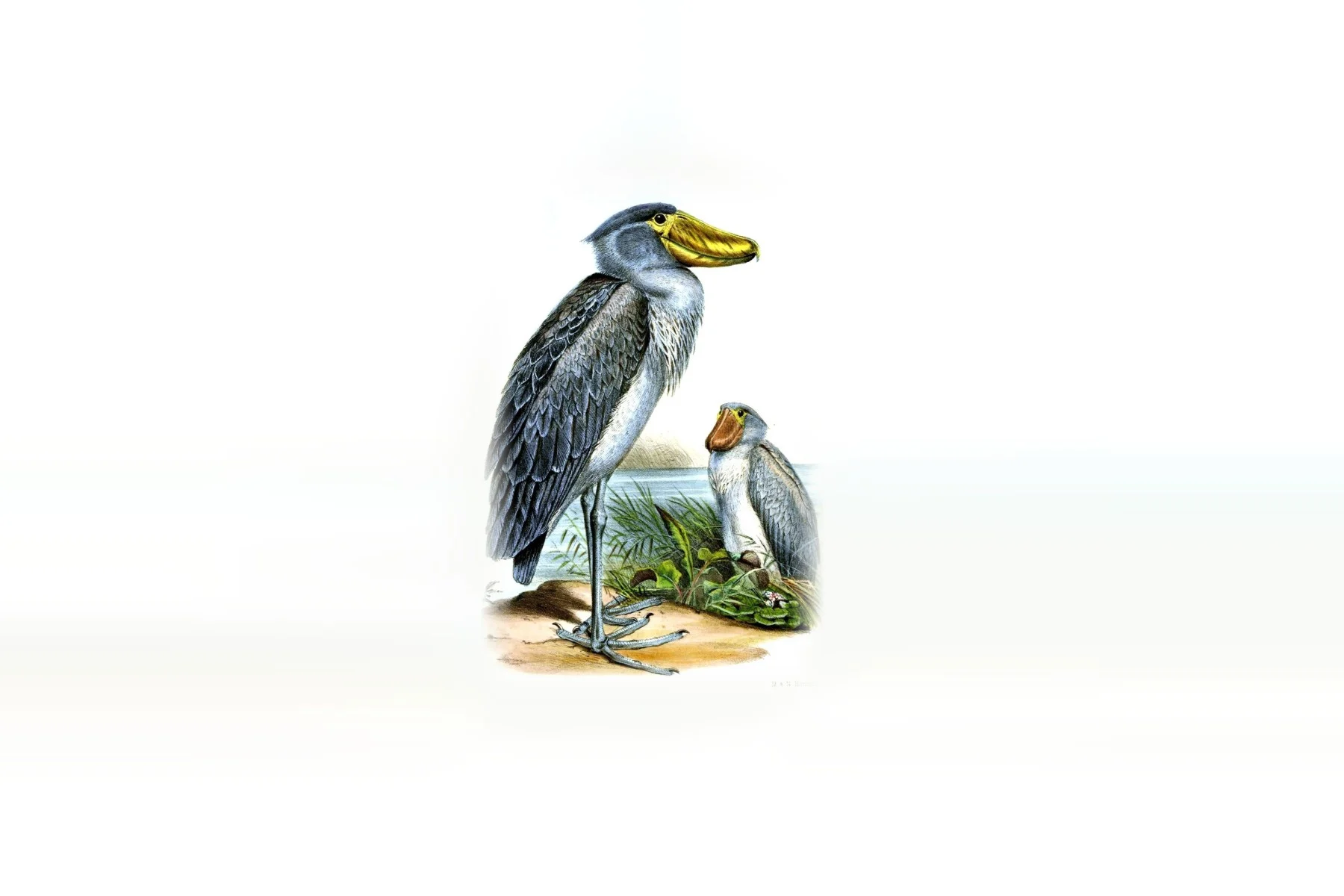
The Shoebill is the bird most African birding trips are built around. It stands more than 150 cm tall, weighs around 6 kg and carries a clog-shaped bill about 20 cm long, which Bradt calls the largest of any living bird. It can stand almost still for hours over a swamp channel before it lunges for a lungfish, which means it can out-wait most bird photographers.
It is also scarce and hard to reach. Most of the world’s Shoebills live in swamps few visitors will ever enter, so for a paying visitor the realistic choice comes down to 2 places and 2 kinds of small boat: a canoe at Mabamba Swamp outside Entebbe, and a dugout at Bangweulu in Zambia.
The short answer
Go to Mabamba Swamp, a 1.5 hour drive and a ferry ride from Entebbe, and take a morning canoe trip with a local boatman. It is the cheapest dependable Shoebill trip available: a 2026 day tour from Entebbe costs US$105 per person for 2 people, and recent tour reports from Field Guides and Naturetrek both found the bird on the first morning. Use the Murchison Falls Delta and Toro-Semliki as back-ups. If you want Shoebills in a true wilderness and can pay around US$690 per person per night, go to Bangweulu between May and July, and bring a book for the journey.
At a glance
| Where | How you look | 2026 cost (foreign visitor) | Odds |
|---|---|---|---|
| Mabamba Swamp, Uganda | Motor boat, then canoe through papyrus | Day tour US$83 to US$143 per person, park fees included | Best in Uganda |
| Murchison Falls Delta, Uganda | 4 to 5 hour boat trip from Paraa | Park entry US$45, plus private boat | Good back-up |
| Toro-Semliki, Lake Albert, Uganda | UWA shoebill boat | US$100 for 3 people, plus US$35 entry | Lower; recent misses |
| Bangweulu Wetlands, Zambia | Dugout canoe and on foot with community guides | Shoebill Island Camp from US$690 per person per night | High from May to July |
| Akagera, Rwanda | Boat trips on the lakes | Not verified | Rare |
The bird and its numbers
BirdLife International lists the Shoebill as Vulnerable, with an estimated 3,300 to 5,300 mature birds and a population that is still falling. It blames hunting, disturbance at nests, and the draining and burning of its swamps. Audubon adds a darker trade: live chicks are reported to sell for more than US$10,000 to collectors in Saudi Arabia and Dubai.
The biggest population is in South Sudan’s Sudd, the vast swamp on the White Nile. Bradt reports that aerial surveys counted 6,400 Shoebills there in 1979 to 1982 and 3,830 in 2005. Treat it as the species’ heartland, not a destination: the Shoebills there have the place largely to themselves, which seems to suit them.
Uganda, by contrast, holds no more than about 250 adult birds, according to Bradt, and none of its tourist sites is thought to have more than a dozen pairs. It is still the easiest country in which to see one, because those few birds live close to roads, landing sites and boatmen who know them, rather like minor celebrities with a regular table.
Mabamba Swamp: the best odds
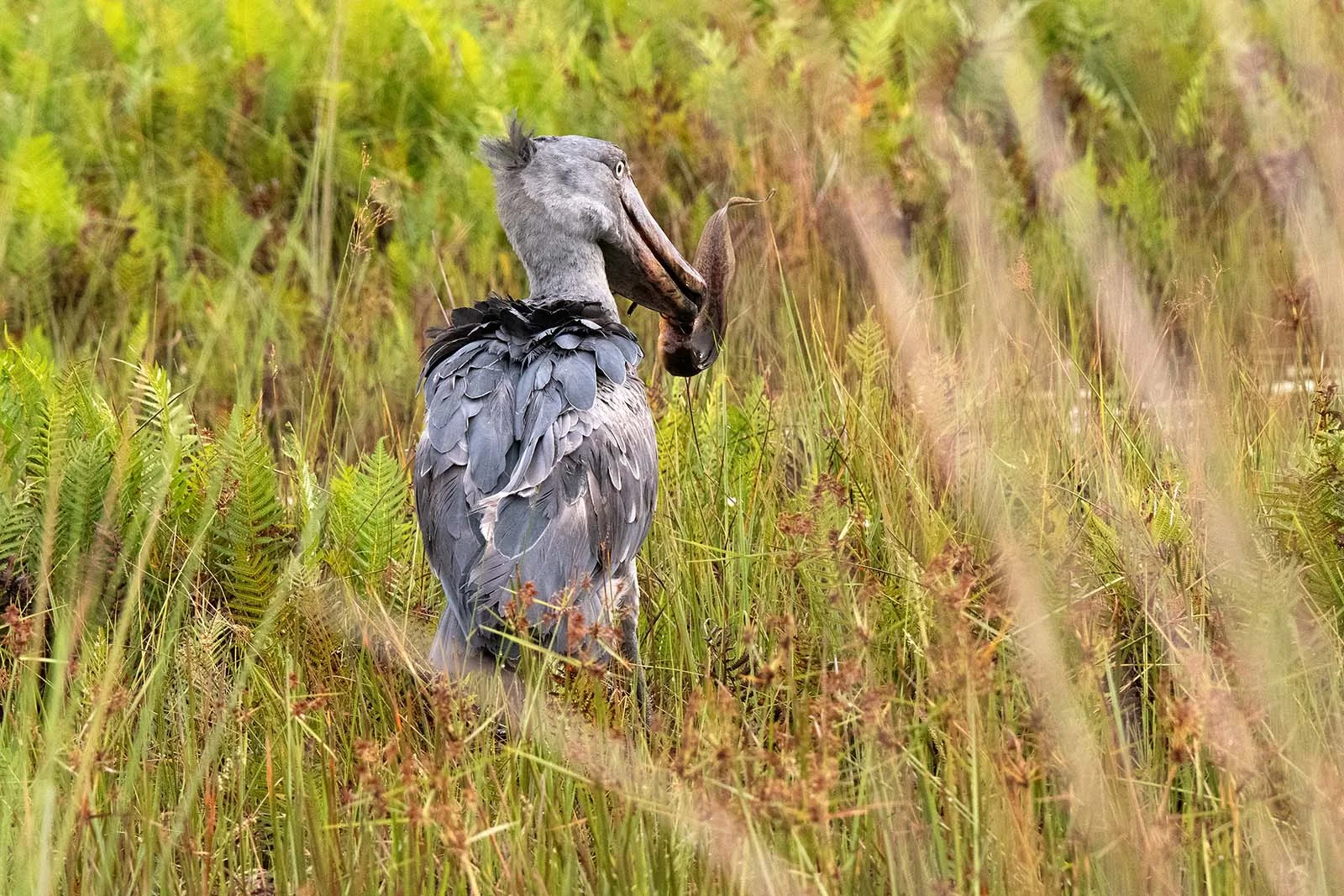
Mabamba is a papyrus wetland on the edge of Lake Victoria, near Entebbe. NatureUganda describes it as a Ramsar site and an Important Bird Area. The trip starts before dawn. Naturetrek’s October 2025 group left Entebbe at 5am, drove for 1.5 hours with a ferry crossing, then took 2 small boats through the papyrus. The final stretch was a narrow channel too tight for the outboard, so the boatmen poled. Round a bend they found a Shoebill, which stood and watched them for at least 20 minutes and then walked up to the first canoe, as if to check who had booked.
Field Guides had the same luck in November 2025. Its group crossed an arm of Lake Victoria by boat, switched to smaller canoes at Mabamba and found a Shoebill on the first morning, close enough that it flew low over one boat. A Field Guides group in 2012 found one within 10 minutes and watched it catch and swallow a lungfish, a whole morning’s ambition done before breakfast.
Shoebill Safaris, rated 4.8 from 20 reviews on SafariBookings, lists its 2026 Mabamba day tour at US$143 for a solo traveller, US$105 per person for 2, US$94 for 3 and US$83 for 4. That includes park fees, transport, a driver and guide, and water. Operators split the boat and community canoe charges differently, so ask what is included before you pay.
The drawback at Mabamba is company. Naturetrek’s group found 4 other canoes already at its bird, which did not appear to mind the audience. Leave Entebbe as early as possible for a chance of the bird to yourself.
Murchison Falls Delta
The Victoria Nile meets Lake Albert at the delta, about 20 km downstream from Paraa in Murchison Falls National Park. Wild Frontiers runs a private delta cruise of 4 to 5 hours from the jetty on the south bank at Paraa, and markets it for the Shoebill and other papyrus birds. In 2012, a Field Guides group saw a back-up Shoebill in the delta papyrus from the boat roof, after already seeing one at Mabamba.
Under UWA’s 2024 to 2026 tariff, a foreign non-resident pays US$45 a day to enter Murchison, its most expensive park category. UWA’s own launch trips cost US$30 per person, but the delta trip is booked through a private operator, so confirm the boat price with them. Bradt names Murchison as one of Uganda’s most reliable Shoebill sites. It is the right back-up if Murchison is already on your route, and the boat roof makes a fine grandstand.
Toro-Semliki and Ziwa
Toro-Semliki Wildlife Reserve, on the southern shore of Lake Albert, is the third Ugandan site Bradt rates as reliable, and UWA prices a dedicated boat: US$100 for up to 3 people, then US$20 for each extra person, plus US$35 entry. The odds are lower than Mabamba. Naturetrek’s group searched the papyrus there by motor launch in October 2025 and found none. Its local guide said fishermen see the Shoebill as a competitor, which, given its taste in fish, is fair, and does not help. Naturetrek’s group stayed at Semliki Safari Lodge.
UWA also lists a Shoebill activity at Ziwa Rhino Sanctuary, on the road north from Kampala to Murchison, for US$25 per foreign visitor plus US$20 entry. No recent trip report confirmed results there, so count it as a bonus rather than a plan. Diary of a Muzungu reports that UWA’s revised fees for some activities start on 1 January 2027, so check the new tariff before you book.
Lake Mburo is not a Shoebill site, however hopeful the papyrus looks. Its boat trip is for African Finfoot and White-backed Night Heron, both seen there by Field Guides and Naturetrek in 2025.
Bangweulu: the wilderness option
Bangweulu, in north-eastern Zambia, is a 6,000 km² mosaic of floodplain, grassland and permanent swamp. African Parks has managed it with the Department of National Parks and Wildlife since 2008, and it says Shoebill numbers have recovered since then. Audubon put the population at about 100 birds in 2018, making it the second most important in Africa after South Sudan.
The Shoebill guards are the part that matters here: a security detail for a bird that already looks like it runs one. African Parks pays local fishermen to watch nests through the breeding season. In 2024 it recorded 21 nests and guarded 16 of them, and a captive rearing and rehabilitation centre, the first of its kind for Shoebills, opened in 2022. Visits to Shoebills are run under this guardian programme, with the birds watched from a distance, according to Expert Africa.
There is only one real place to stay: Shoebill Island Camp, run by African Parks on a tree island at the edge of the swamp, with 4 tents. Chalo Africa lists it from US$690 per person per night for November 2025 to May 2026, including meals, activities, laundry, house drinks and the tourism levy. Budget options are Nkondo Tented Camp, 2 hours from the swamp, and Nsobe campsite. Day visitors pay an African Parks fee of US$10 per adult.
Getting in is the hard part, which is partly why the Shoebills like it. Expert Africa says the camp is best reached by light aircraft, to Chimbwi airstrip, about 1 km from camp, or to Inja airstrip, about 3 hours’ drive plus a canoe ride away when Chimbwi is closed. Driving means the Great North Road, 4×4 tracks and no fuel in the area. African Parks takes cash or bank transfer only, with no cards, and will not accept US dollar notes printed before 2013. Even from camp, Expert Africa warns, the nearest nest can be 3 to 4 hours away by vehicle.
Akagera, Rwanda
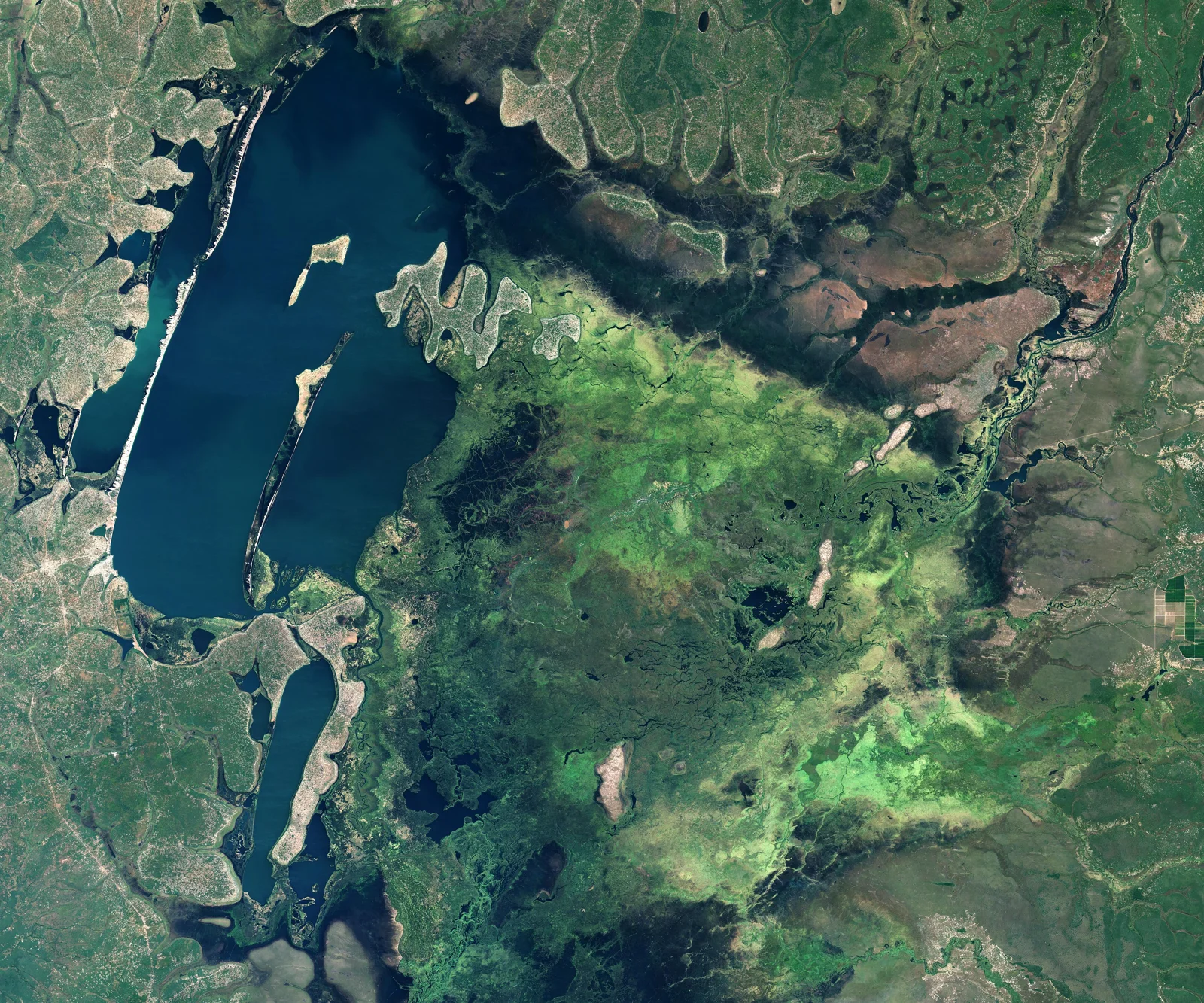
African Parks lists the Shoebill among Akagera’s rare species, and says it hides in the wetlands of Lake Rwanyakazinga, where Wilderness runs Magashi camp. No recent trip report backs up regular sightings, so count a Shoebill there as luck, and very good luck at that.
When to go
In Uganda, trip reports from Birding Ecotours, Field Guides and Naturetrek record Shoebills at Mabamba in July, August, October and November, though the October and November groups battled heavy rain. Go early in the morning whatever the month; the Shoebill will be standing still either way, but the light and the canoes are better. Bradt gives the breeding season as April to June.
Bangweulu is seasonal, and the timing is strict. February to April is the wet season, when Shoebill Island Camp and Nsobe are closed by high water. The camp opens on 1 May, and African Parks calls May to July the best time for Shoebills, which follow the water as it drops. Expert Africa puts the best window at May to late July or early August. From September the birds move north with the receding water, and African Parks says sightings become much harder. The camp closes after October, and the Shoebills carry on without visitors.
The verdict
Book Mabamba first. It costs about US$105 per person, takes a morning from Entebbe, and both tour groups that reported from there in late 2025 found the bird on their first morning. Leave as early as the boatmen allow, and keep Murchison’s delta as a back-up if you are heading north anyway. Bangweulu is the better experience and the worse bargain: go between May and July, give it 2 to 3 nights, and expect to pay US$690 per person per night before the charter flight. No site guarantees a Shoebill, because the birds move with the water, but Mabamba comes closest. Once found, at least, it is unlikely to hurry off.
Where to stay
Places to stay in the directory near the sites in this guide, with what each offers a birder:
| Place to stay | Where | For birders | From |
|---|---|---|---|
| Mabamba Lodge | Mabamba Wetland, Lake Victoria, Uganda | Shoebill boat trips, local wetland guides, feeders | US$215 a room DB&B (2025) |
| Karibu Guesthouse | Entebbe, Uganda | 50-species garden list; describes Mabamba Shoebill trips | US$195 a single room B&B |
| Nile Safari Lodge | Murchison Falls National Park, Uganda | Specialist birding guide, Shoebill, Abyssinian Ground Hornbill | US$998 a banda, full board (single, low season) |
| Semliki Safari Lodge | Toro-Semliki Wildlife Reserve, Uganda | Lake Albert boat trips for Shoebill, guided birdwatching | Ask the lodge |
Shoebill numbers, water levels and park fees change. Facts were checked on 9 November 2026 with BirdLife International, African Parks, the Uganda Wildlife Authority tariff, Bradt, Audubon, Field Guides, Naturetrek and Expert Africa. Confirm boat prices, camp dates and access with the operator or African Parks before you book.
More from the Journal
 Woodpeckers of Southern Africa, Including the One That Doesn’t Need TreesSouthern Africa's woodpeckers, from the Cardinal in every bushveld tree to the Ground Woodpecker that lives on treeless mountain slopes and eats almost nothing but ants.
 Where to See a Taita Falcon: the Strijdom Tunnel, the Blyde Cliffs and the Batoka GorgeA stocky falcon smaller than a pigeon, a handful of cliffs and surveys that keep coming back empty. Where it still nests, how to look, and the 2 roosts beside its cliffs.
 Where to See a Southern Bald Ibis: the Breeding Cliffs, Dullstroom, Wakkerstroom and LesothoA red-capped grassland ibis that nests on cliffs over waterfalls and feeds on burnt veld and maize stubble. The colonies you can watch, the fields to scan, and where to stay.
The Pigeon Post
Every Thursday: 1 bird, 1 place to go and 1 place to stay, by email. Sign up and get our printable checklist of the 163 endemics of southern Africa.