
Birding Kenya: Kakamega, the Rift Valley Lakes and the Coast
Kenya has more birds than a first trip can hold. How to split one between the highlands, Lake Baringo, Kakamega Forest and Arabuko-Sokoke, with real park fees and the guides to hire.
Kenya has one of the longest bird lists in Africa. Avibase counted 1,164 confirmed species as of October 2024, 11 of them endemic. Exotic Birding says a 3-week tour can see more than 600 species, and Birdquest’s 2025 Kenya Specialities tour recorded around 630 in two and a half weeks. That is a busy notebook.
That list is spread across very different country: cold moorland in the Aberdares, thorn scrub at Lake Baringo, a slice of Congo Basin rainforest at Kakamega and dry coastal forest at Arabuko-Sokoke. A first trip has to choose. The mistake most first-timers make is to build the trip around the Maasai Mara and the flamingo lakes, which are the 2 things that matter least to a birder, however good they look on a fridge magnet.
The short answer
Give a first birding trip about 2 weeks and split it 5 ways. Start with a morning in Nairobi National Park, then spend 2 days in the Aberdares and on Mount Kenya for the highland birds, 2 days at Lake Baringo with a local guide for the owls and nightjars, 2 full days at Kakamega Forest for the Guinea-Congo forest species, and a night at Lake Nakuru on the way back. Finish on the coast with 2 days at Arabuko-Sokoke Forest and a tide at Mida Creek. Go in November or early December, when the short rains bring breeding plumage and the Palearctic migrants are in. Leave the Mara for a second trip; the lions will wait.
At a glance
| Region | Birds to target | Days | Entry, non-resident adult |
|---|---|---|---|
| Nairobi National Park | Almost 500 species recorded | Half a day | USD 80 (KWS 2025 schedule) |
| Aberdares and Mount Kenya | Jackson’s Spurfowl, Aberdare Cisticola | 2 | USD 70 each (KWS 2025 schedule) |
| Lake Baringo | Slender-tailed Nightjar, eagle-owls, Heuglin’s Courser | 2 | Not a KWS park; pay the local guide |
| Kakamega Forest | Great Blue Turaco, Blue-headed Bee-eater, Turner’s Eremomela | 2 | USD 50 (KWS 2025 schedule) |
| Lake Nakuru | Waterbirds, Hildebrandt’s Spurfowl | 1 | USD 90 (KWS 2025 schedule) |
| Arabuko-Sokoke and Mida Creek | Sokoke Scops Owl, Sokoke Pipit, Amani Sunbird, Crab-plover | 2 | Ticket at the Forest Station, valid 24 hours |
What the park fees cost
The Kenya Wildlife Service introduced new fees under the Wildlife Conservation and Management (Access, Entry and Conservation) (Fees) Regulations 2025, which Parliament approved on 25 September 2025 and KWS began charging on 1 October 2025. For non-resident adults, the schedule sets Nairobi National Park at USD 80 (up from USD 43), Lake Nakuru at USD 90, the Aberdares at USD 70, Mount Kenya at USD 70 and Kakamega Forest National Reserve at USD 50. Children pay about half.
There is a catch. On 2 October 2025 the High Court in Nairobi suspended the new fees while it hears a challenge by the Kenya Tourism Federation. Kambu Campers, a Nairobi operator, reported that KWS told it visitors should keep paying the new rates on KWSPay, with refunds if the court strikes them down. No final ruling turned up in the reporting reviewed for this guide, so budget on the 2025 figures.
The Maasai Mara is run by Narok County. Non-resident adults pay USD 100 a day from 1 January to 30 June 2026 and USD 200 a day from 1 July 2026, on a 12-hour ticket. That is a lot to pay for savanna birds that are just as happy to be seen elsewhere on this route.
The highlands: Aberdares and Mount Kenya
The Aberdares hold Kenya’s endemic Aberdare Cisticola, which BirdLife International lists as Vulnerable, and both mountains hold Jackson’s Spurfowl, still called Jackson’s Francolin in many field guides. On Birdquest’s 2025 tour the group found plenty of Jackson’s Spurfowl in Aberdare National Park and again on the Sirimon Track on Mount Kenya, along with the cisticola, Moorland Chat and Scarlet-tufted Sunbird. They also had fog, drizzle and rain on both days, which up there counts as the normal forecast rather than bad luck.
Birdquest stayed at Castle Forest Lodge on Mount Kenya, where Scaly Spurfowl and Scarce Swift were seen at the lodge. Build in a spare half day for the weather, because a fogged-out morning on the moorland is a morning spent looking at the inside of a cloud.
Lake Baringo: book the local guide
Baringo is the one place on this route where a local guide changes the result most. The specialities here are roosting nightbirds, and they are found by people who check the roosts every day. On Birdquest’s 2025 visit, the local guide found a roosting Slender-tailed Nightjar and both Spotted and Greyish Eagle-Owls, which meet and sometimes hybridise around Baringo. A 2022 trip report on Window to Wildlife describes a local guide pointing out a Slender-tailed Nightjar and a Three-banded Courser, also called Heuglin’s Courser, that he had found while the group was at lunch. A travel blogger at Travel2Unlimited photographed a Verreaux’s Eagle-Owl roosting above a bungalow on the lake.
By day, Birdquest added Jackson’s and Hemprich’s Hornbills, Northern White-faced Owl and the localised Abyssinian Sunbird. Baringo’s water level has risen sharply in recent years, and the 2022 report describes flooded lodge buildings, so check what your accommodation looks like now.
The Birding Dispatch guide to owls you can find without a guide covers the easy ones. Baringo’s are the opposite: pay the guide, and let someone who checks the roosts every day do the hard part.
Kakamega Forest: the best 2 days of the trip
Kakamega is the easternmost outlier of the Congo Basin forests, about 40 km north of Kisumu. The Key Biodiversity Areas factsheet for the site lists 194 forest-dependent bird species, the highest total for any Kenyan forest, and at least 16 species that occur nowhere else in Kenya. It describes Turner’s Eremomela as reasonably common here, and Blue-headed Bee-eater as one of several species with isolated, relict populations in the forest.
Birdquest had only 1 day and a morning in 2025 and wrote that it “had to work hard and score quickly”. Small flocks of Turner’s Eremomela showed early on the first morning, Blue-headed Bee-eater was tracked down in the canopy, and Great Blue Turaco and Black-and-white-casqued Hornbill called from the tall trees before showing. The group stayed at the Rondo Retreat, where Ross’s Turaco, African Emerald Cuckoo and White-spotted Flufftail were all seen in the garden. Give it 2 full days rather than a day and a half. The forest is dense, many targets live in the canopy, and the extra morning is where the skulkers come in.
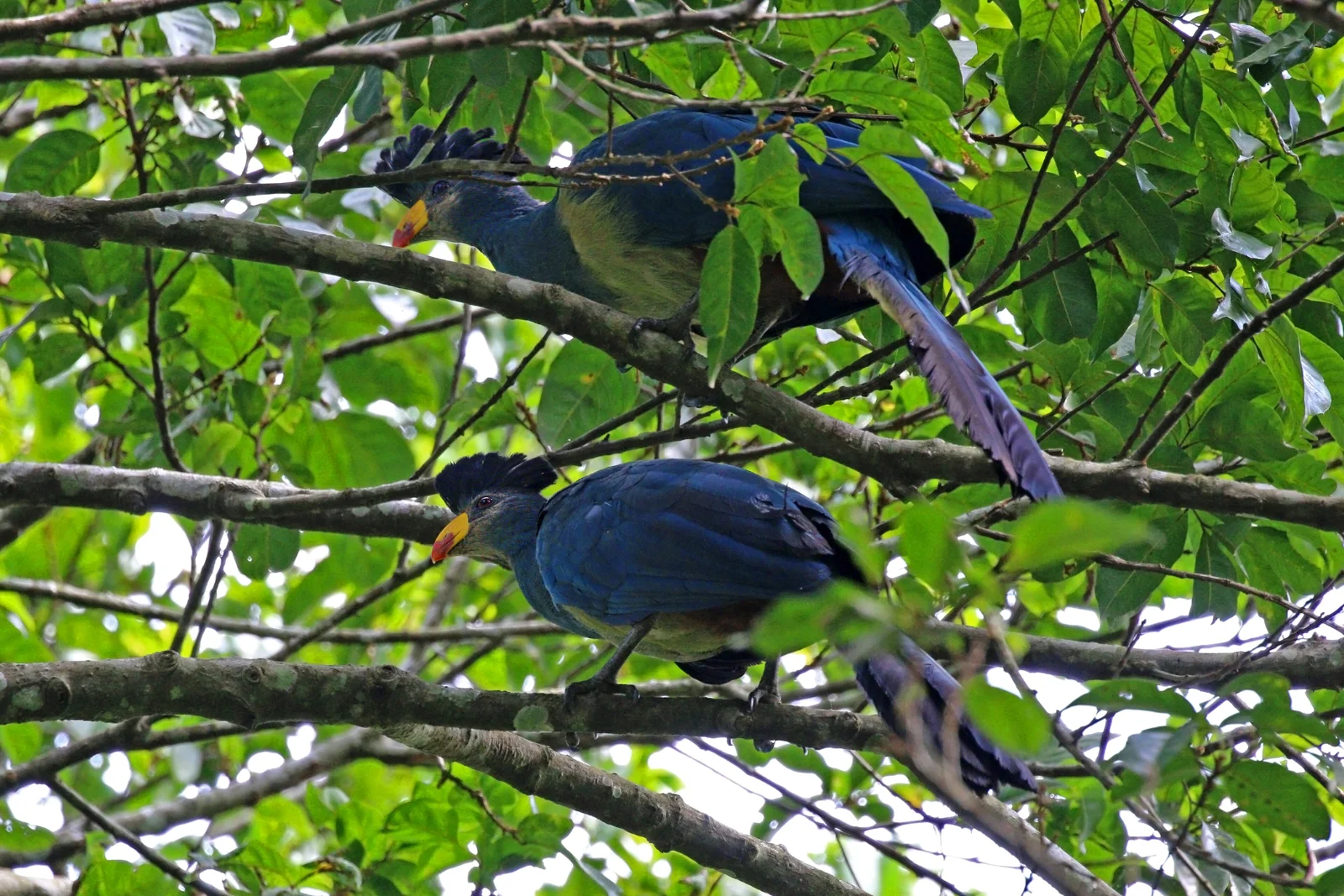
The same factsheet notes that a forest guides association of skilled local naturalists works in Kakamega and runs an ecotourism enterprise. Hire one. They know which fruiting trees the turacos are using that week, which is something no field guide can print.
Lake Nakuru and the flamingo problem
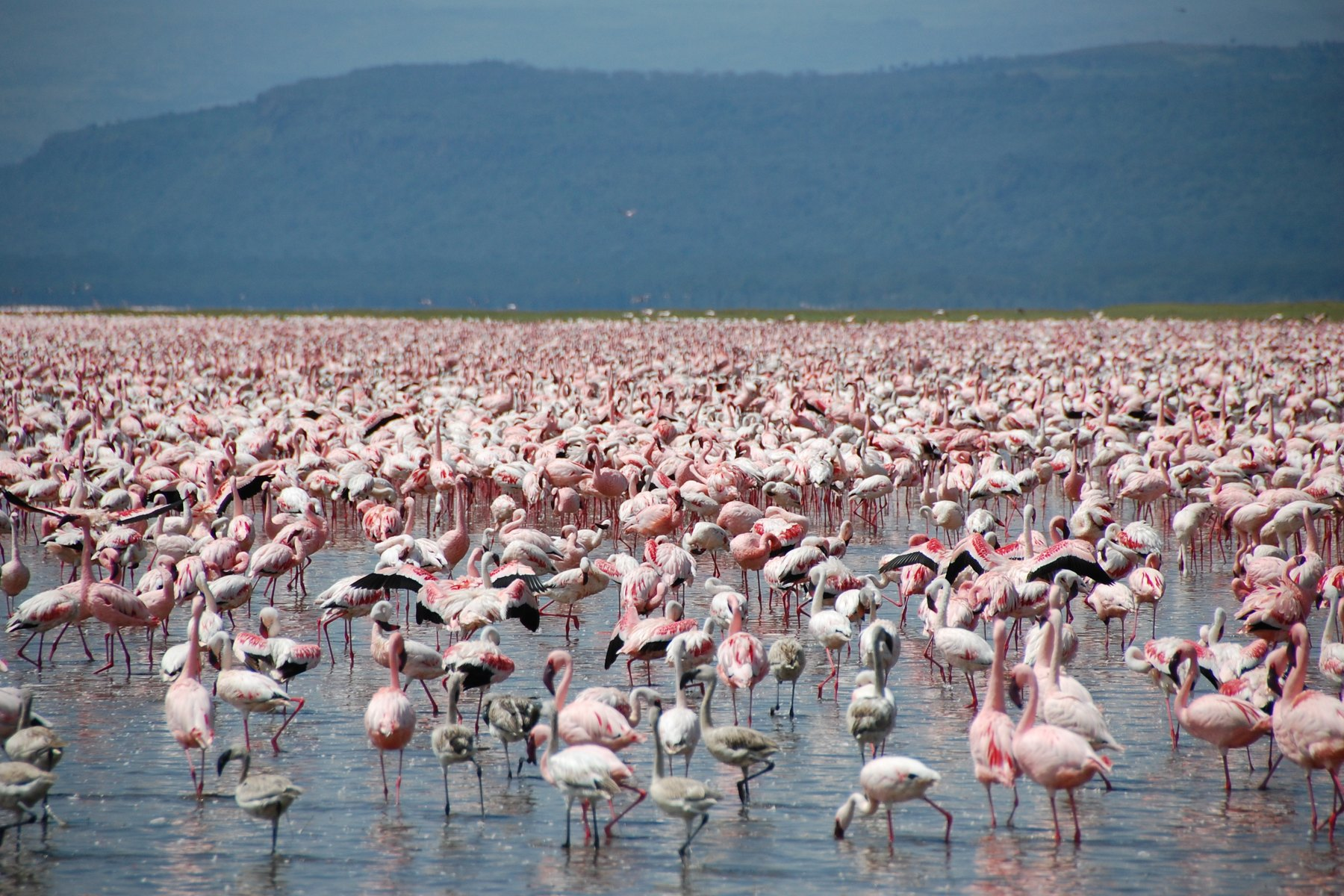
Lake Nakuru is still a good stop for waterbirds, and Birdquest’s 2025 morning there produced Great White Pelicans in large numbers, Hildebrandt’s Spurfowl and a colony of Horus Swifts. What it no longer reliably produces is the pink shoreline of the postcards, which these days is mostly found on the postcards.
In May 2026 The Standard reported that Lakes Nakuru, Bogoria and Elementaita have all kept rising, diluting the salty water and reducing the bacteria Lesser Flamingos feed on. It quoted the National Wildlife Census 2025 Technical Report: total waterbirds at Nakuru fell from 22,533 in 2023 to 15,543 in 2025, Bogoria dropped from 54,711 in 2024 to 21,903 in 2025, and Lesser Flamingos at Elementaita fell from over 202,000 to 1,476 in 3 years. Nature Kenya’s Paul Gacheru told the paper the Kenya Lake System World Heritage site is now rated of “significant concern”. Visit Nakuru for the birds on the day, not for a flamingo spectacle you may not get.
The coast: Arabuko-Sokoke and Mida Creek
Arabuko-Sokoke is the last large remnant of East African coastal forest, about 420 square kilometres. Nature Kenya lists 5 globally threatened birds there: Clarke’s Weaver, Sokoke Pipit, Amani Sunbird, Spotted Ground Thrush and Sokoke Scops Owl. It says the forest holds 20% of Kenya’s bird species, and that with Mida Creek it forms part of a UNESCO Biosphere Reserve.
Base in Watamu, as Birdquest did. Its 2025 group spent 2 days in the forest, working the Brachystegia patches that several specialities favour, and found a pair of rufous Sokoke Scops Owls at their roost a few metres away. Sokoke Pipit drew a blank on day 1 and showed on day 2, and the tiny Amani Sunbird took real effort, as tiny sunbirds in tall trees tend to. Mida Creek produced plenty of Crab-plovers and Greater Sand Plovers.
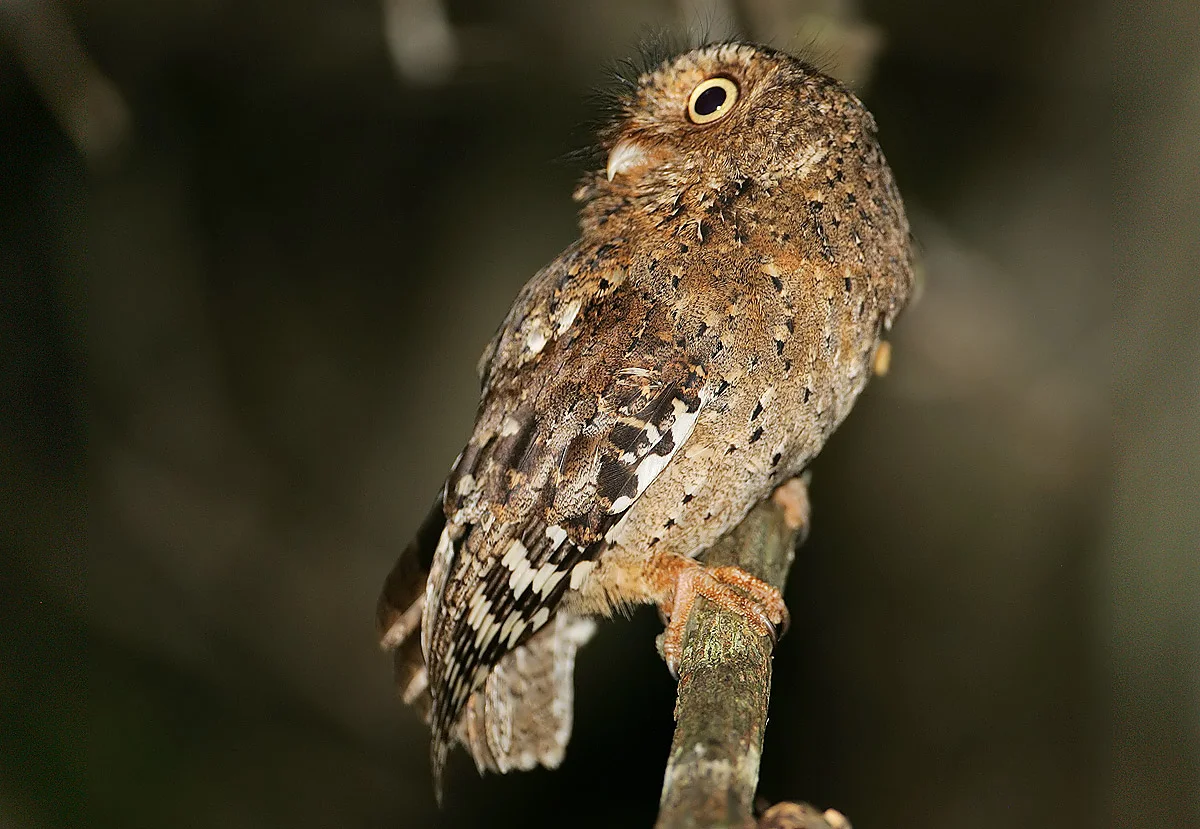
Guides come from the Arabuko-Sokoke Forest Guides Association. Watamu Marine Association says the Visitor Centre at the Forest Station is open from 6 am to 4 pm daily and that the entrance ticket is valid for 24 hours, so plan both forest days around it.
Nairobi National Park
BirdLife International says almost 500 bird species have been recorded in the park, and a Nature Kenya and BirdLife walk there in July 2023 logged more than 110 species in 3 hours. It is the easiest place to learn the common savanna birds on day 1, before the jet lag has quite worn off.
When to go
Exotic Birding recommends the short rains of November and early December, when most species are in breeding plumage, whydahs and widowbirds are displaying, and many Palearctic migrants are present. Governors’ Camp links the Palearctic migrants to the rains of October to November and March to April. By January breeding activity has tapered off.
The long rains in April and May are a second option, but Exotic Birding warns that parts of some reserves become impassable in the mud. June is often better, with birds still in breeding plumage and drier roads. July and August are dry season, when bird activity is low and the Mara fee is at its USD 200 peak: quiet birds and a loud bill.
The verdict
Book 14 days, hire a local guide at Baringo, Kakamega and Arabuko-Sokoke, and go in November. Put the most time into Kakamega and the coast, because those forests hold birds you cannot see anywhere else in the country. Treat the flamingo lakes as a bonus and the Mara as a different holiday. Check the KWS fee schedule the week you book, because the court case may still change it.
Where to stay
Places to stay in the directory near the sites in this guide, with what each offers a birder:
| Place to stay | Where | For birders | From |
|---|---|---|---|
| Aberdare Country Club | Mweiga, Aberdares, Kenya | Guided bird walks in its sanctuary, Tacazze Sunbird | Ask the lodge |
| Rhino Watch Safari Lodge | Near Mweiga, Aberdare foothills, Kenya | Photographic bird hide at a raised bathing pool, feeders | KES 9,000 pp sharing, full board (residents) |
| Castle Forest Lodge | Southern slopes of Mount Kenya | Lodge guides for forest birding, about 175 species | Ask the lodge |
| Samatian Island | Island in Lake Baringo, Kenya | Bird guide for cliff walks, boat trips, 470+ species | US$1,600 a night for up to 4, full board |
| Lake Elmenteita Serena Camp | Lake Elmenteita, near Nakuru, Kenya | Resident naturalist’s lakeshore bird walk, Great White Pelican | US$405 a deluxe tent |
| The Pelican Lodge | Lake Elementaita, near Nakuru, Kenya | Flamingos and pelicans in front; boat outings | Ask the lodge |
| Hemingways Watamu | Watamu, near Arabuko-Sokoke, Kenya | Guided Arabuko-Sokoke walks, Sokoke Scops Owl, Clarke’s Weaver | US$255 a single room B&B |
Park fees, lake levels and guide arrangements change. Facts were checked on 9 November 2026 with the KWS 2025 fee schedule as reported by Kenyans.co.ke and Kambu Campers, Masai Mara Travel’s 2026 Narok County fee page, Birdquest’s Kenya Specialities 2025 tour report, Nature Kenya, the Kakamega Forest Key Biodiversity Areas factsheet, The Standard’s May 2026 report on the Rift Valley lakes and Exotic Birding’s Kenya overview. Confirm fees on KWSPay before you travel.
More from the Journal
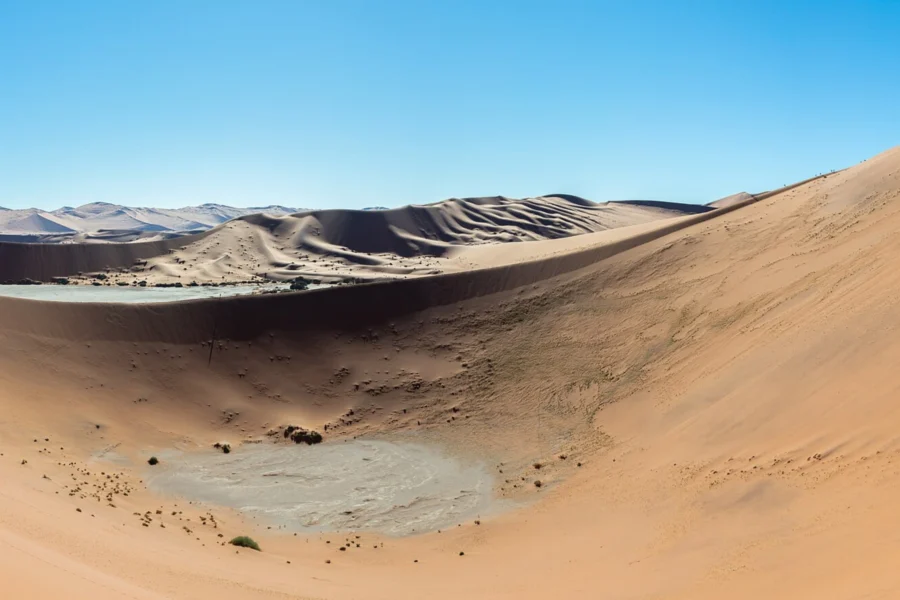 Namib-Naukluft and Sossusvlei for Birders: Dune Lark, Desert Raptors and the Naukluft SpecialsA lark that lives on the dunes and nowhere else, Lappet-faced Vultures nesting in the desert, coursers on the gravel plains and the northern specials around the Naukluft cliffs, in one of Africa's largest parks.
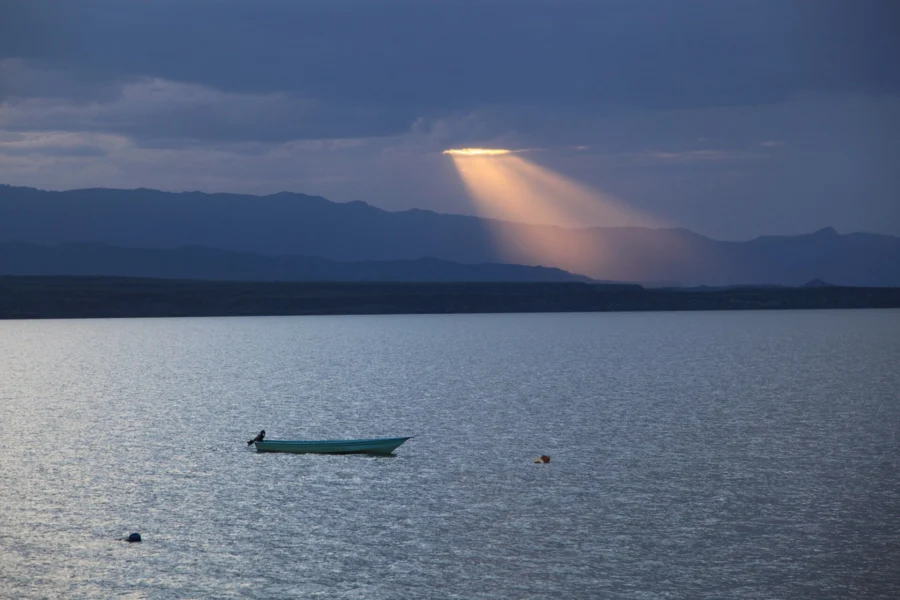 Lake Baringo and Lake Bogoria Birding: The Owl Walks, the Cliffs and the FlamingosA local guide who knows where every nightjar and eagle-owl slept last night, thorn scrub full of hornbills, a Goliath Heron colony on a rock, and the flamingo lake next door that keeps rising.
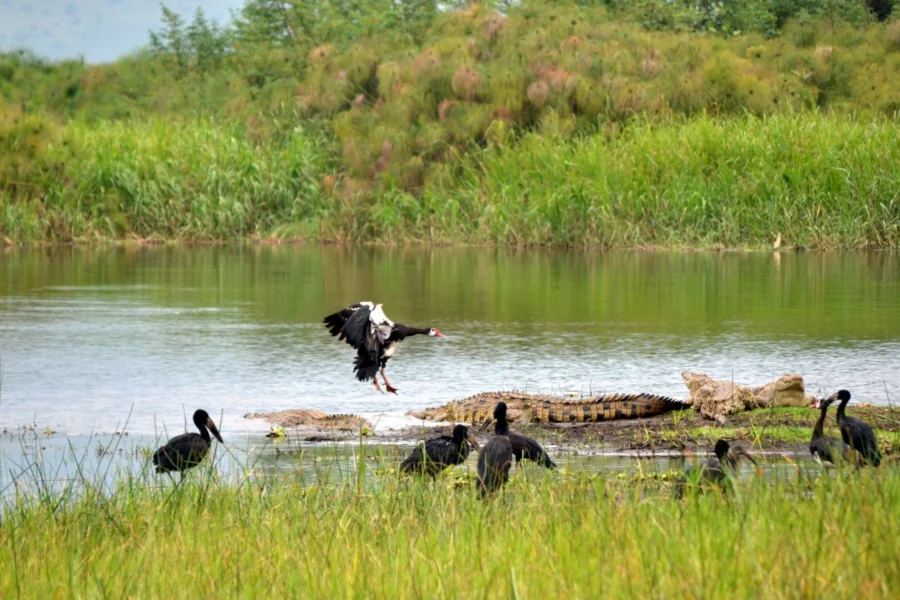 Akagera Birding: Rwanda’s Savanna, Lakes and Papyrus, and the Shoebill ChancesRed-faced Barbet in the southern woodland, Papyrus Gonolek and Carruthers's Cisticola in the swamps, a lake of hippos and lapwings, and a Shoebill that hides in the wetlands more than it shows.
The Pigeon Post
Every Thursday: 1 bird, 1 place to go and 1 place to stay, by email. Sign up and get our printable checklist of the 163 endemics of southern Africa.