
Namaqualand and the Richtersveld for Birders
Come for the flowers, stay for the larks: the Succulent Karoo specials from Cinnamon-breasted Warbler to Barlow's Lark, and where to stay between Springbok, Kamieskroon and the Orange River.
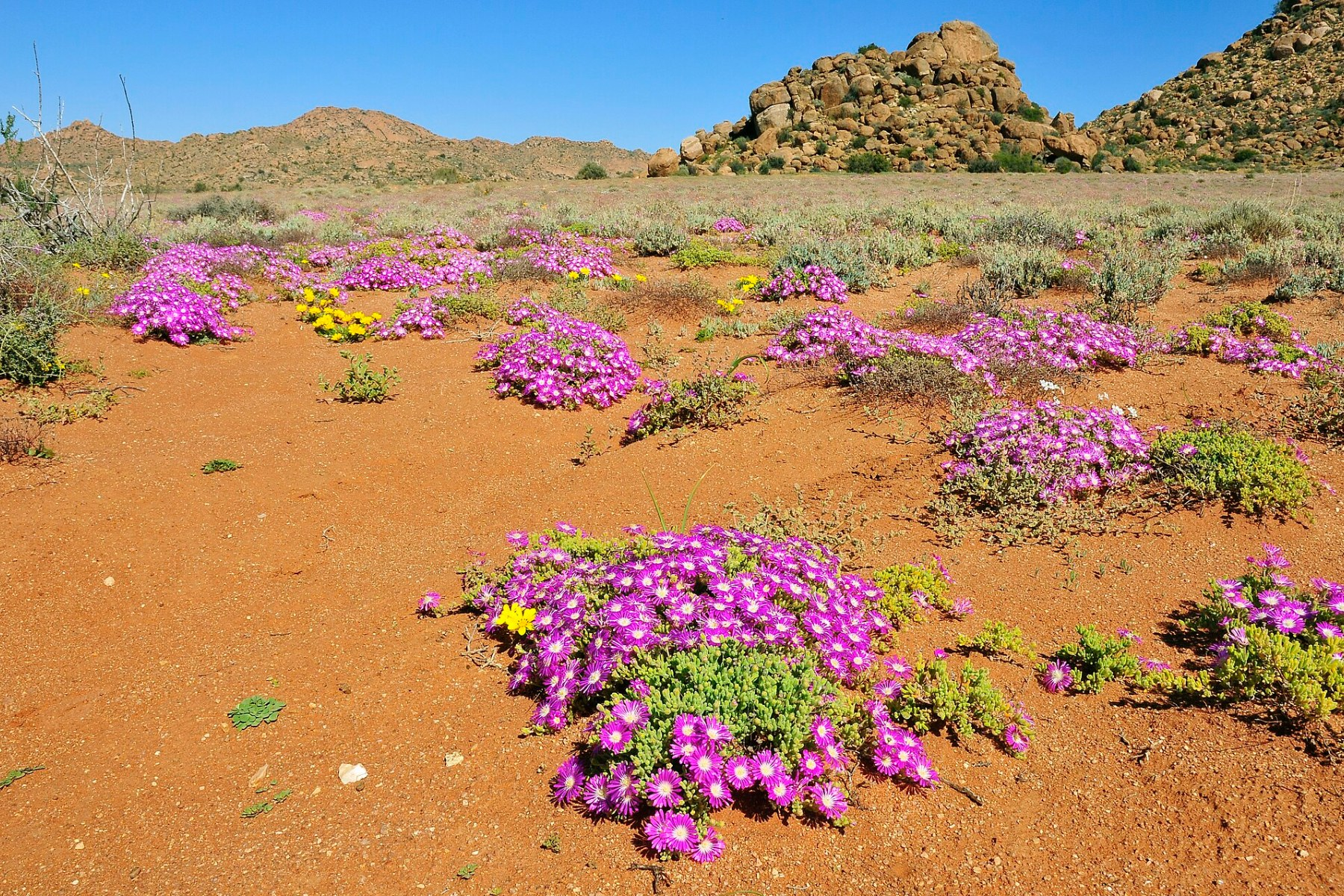
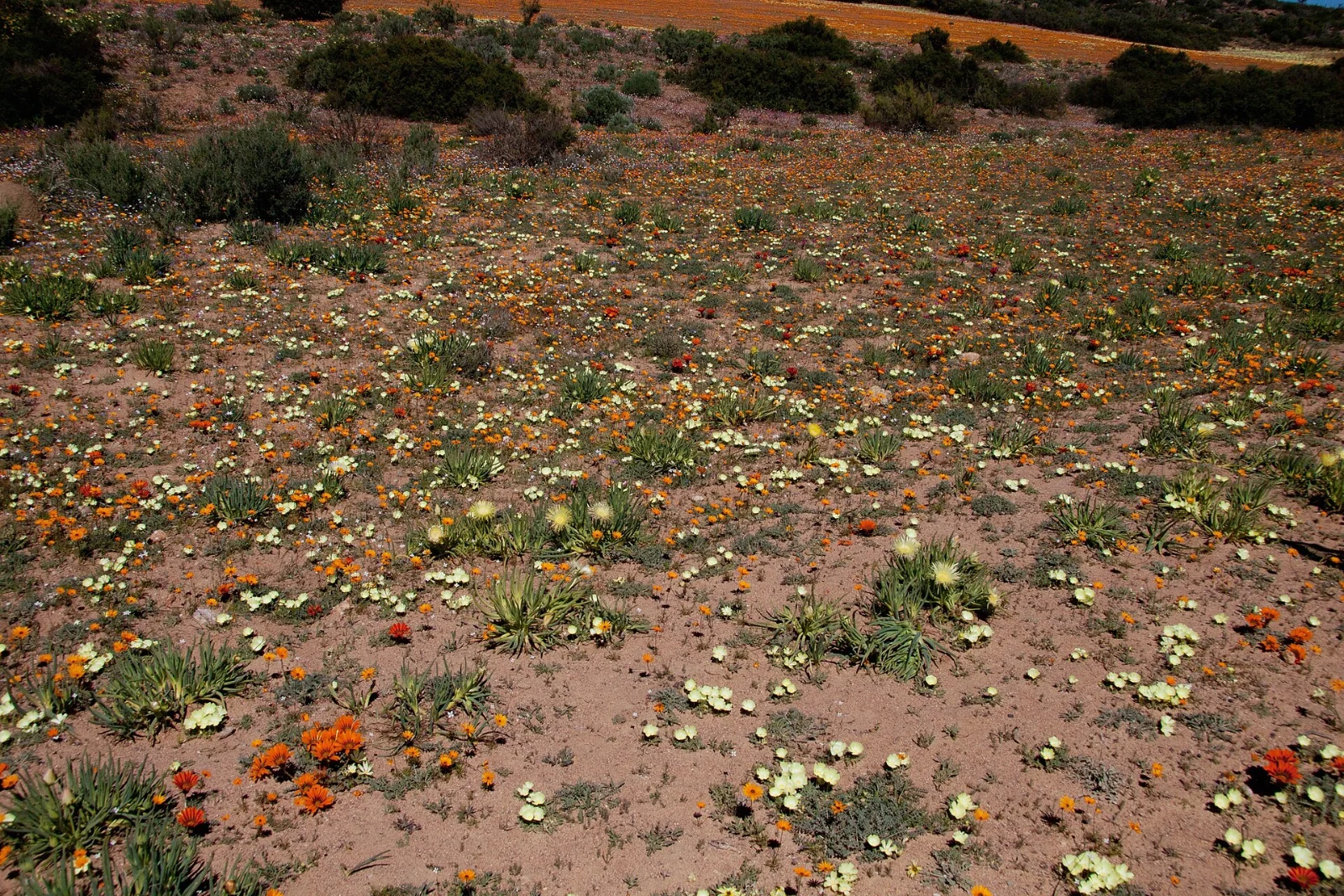
Namaqualand sells itself on flowers, which is hard on the birds. The Succulent Karoo here holds more than 3,000 plant species, half of them found nowhere else, according to BirdLife South Africa’s GoBirding guide, and in a good spring the daisies cover old fields from Kamieskroon to Springbok. The birds are fewer and harder to see than the flowers, and unlike the daisies they do not stand still for photographs, but they include some of South Africa’s most range-restricted species: Cinnamon-breasted Warbler on the rocky ridges, Karoo Eremomela on the plains, Red Lark near Gamoep and Barlow’s Lark on the coast at Port Nolloth, the only place in the country to find it. Modest-looking birds, big bragging rights.
Flower season and the birds
This is a winter-rainfall region. GoBirding’s guide to Namaqua National Park puts the annual rainfall at about 340 mm, falling mainly from June to August. Spring follows, and GoBirding notes that while the specials around Springbok are present all year, spring is when the landscape looks its best and many birds are breeding and calling. That makes August and September the obvious months for a combined flower and birding trip, when the birds are singing and the hillsides are showing off. Book early for those months; Papkuilsfontein Guest Farm, for one, sets separate flower-season rates for August and September.
Summer is hard going. GoBirding warns that December and January can pass 42°C, while winter nights in June and July drop below freezing and the Kamiesberg sometimes gets snow. Cell signal is patchy, and fuel stops are far apart, so fill up whenever the chance appears, needed or not.
Namaqua National Park
Most visitors stay in the Skilpad section, near Kamieskroon. GoBirding says birding is slow outside flower season, when the park is mostly a very handsome collection of rocks, but at any time a short circular drive, open to sedans, can produce Southern Black Korhaan, Cape Clapper Lark and Black-headed Canary; do it before breakfast or at sunset, when the korhaan and the lark display in the breeding season and put on the closest thing the Karoo has to a floor show. The gravel road to Skilpad crosses rocky ridges for Layard’s Tit-babbler, Cinnamon-breasted Warbler and Fairy Flycatcher, with Pririt Batis, Karoo Chat, Grey-backed Cisticola and Large-billed and Red-capped Larks in the vegetated stretches. Raptors include Jackal Buzzard, Martial, Booted and occasionally Verreaux’s Eagles.
There is no shop, restaurant or fuel in the park, so bring food, and then a bit more; GoBirding puts the nearest fuel at Kamieskroon, about 20 km away. Sedans can do the north-east circular drive, and a 4×4 is recommended for the other routes. SANParks’ daily conservation fee from 1 November 2026 is R65 for South African adults and R143 for international adults.
Goegap and the Springbok loops
Goegap Nature Reserve, about 15 km south-east of Springbok, covers more than 7,000 ha and is the first stop for most birders, GoBirding says. Around the offices, look for Acacia Pied Barbet, White-backed Mousebird, White-throated Canary and Dusky Sunbird. A 17 km route suits sedans and mountain bikes, and an 80 km 4×4 route goes further. Search the rocky ridges for Cinnamon-breasted Warbler and the flatter plains for Karoo Eremomela. In the first 10 km you pass 2 rocky areas worth scanning for Ground Woodpecker, Grey Tit, Mountain Wheatear and Layard’s Tit-babbler. Ludwig’s Bustard occurs from time to time, on its own schedule. Gate hours when GoBirding’s page was written were 07:30 to 16:30, so check before you go.
The Aardvark Kloof loop is the longer day, and despite the name, it is the larks you are there for. Take the R355 past Goegap to Gamoep, then turn east towards Pofadder and Aggeneys for about 7 km, where GoBirding says Red Lark is relatively easy to find. Back at Gamoep, a 76 km gravel road runs to Kamieskroon, with Cinnamon-breasted Warbler, Pale-winged Starling and Fairy Flycatcher on the ridges and Karoo and Large-billed Larks on the plains; scan Black-headed Canary flocks for the white-headed form sometimes split as Damara Canary. There is no fuel, food or water on the route, so pack as if for a small expedition, because it is one. Cape Eagle-Owl and Freckled Nightjar are possible on the roads after dark, but GoBirding advises against night driving on these gravel roads: punctures are common and in places there is no phone signal.
Port Nolloth and Barlow’s Lark
From Springbok, drive 50 km north to Steinkopf, then roughly 95 km west on the R382 to Port Nolloth. GoBirding says the dune scrub here is the hybrid zone between Karoo Lark and Barlow’s Lark, where 2 species have not quite agreed where one ends and the other begins. South towards McDougall’s Bay the birds have streaked flanks; heading north towards Alexander Bay the streaking fades, and after 40 km or more you should be in pure Barlow’s Lark country. Watch the poles for Lanner and Peregrine Falcons, and check McDougall’s Bay and Alexander Bay for Crowned and Bank Cormorants and, in summer, breeding Damara Terns. Dense fog rolls in off the sea, so pack a raincoat even in summer, in a desert. GoBirding lists no BirdLife Recommended accommodation in the town.
The Richtersveld
The |Ai-|Ais/Richtersveld Transfrontier Park is mountain desert along the Orange River. SANParks’ checklist has 211 species, including Secretarybird, Dusky Sunbird and Malachite Sunbird, and its birding page says “almost 200”. Reaching the park is a commitment, the birding equivalent of a long-distance relationship: the Birding Dispatch listings put the Sendelingsdrift entrance more than 300 km from Springbok, with about 80 km of dirt from Alexander Bay. Internal roads are mainly suited to 4x4s, and sedans are not allowed, which settles that argument. The daily conservation fee from 1 November 2026 is R91 for South African adults, R185 for SADC nationals and R420 for international adults.
The listed habitats are the Orange River, mountain desert and sandy plains, and the 2 river campsites below put you on the water at first light, with no commute at all. GoBirding’s Port Nolloth page lists Orange River White-eye among the region’s key species.
Where to stay
The places in this guide, with what each offers a birder:
| Place to stay | Where | For birders | From |
|---|---|---|---|
| Naries | West of Springbok, South Africa | 170+ species, birding walks, Burchell’s Courser, Black Harrier | Ask the lodge |
| Pedroskloof Farm | Kamiesberg, South Africa | 113-species farm list, gardens, hills and a lake | Ask the lodge |
| Papkuilsfontein Guest Farm | Nieuwoudtville, South Africa | 145 species, Orange-breasted Sunbird, Booted Eagle, fynbos, Hantam Karoo | R300 per site, solo camper |
| Tatasberg Wilderness Camp | Richtersveld, South Africa | Near the Orange River, park checklist of 211 species | R1,278 for 2 |
| Gannakouriep Wilderness Camp | Richtersveld, South Africa | Rocky valley, park checklist of 211 species | R1,141 for 2 |
| Potjiespram Campsite | Richtersveld, South Africa | On the Orange River at first light, 211-species park list | R322 per site |
| De Hoop Campsite | Richtersveld, South Africa | On the Orange River at first light, 211-species park list | R386 per site |
Naries, 27 km west of Springbok, is the strongest base for birders in Namaqualand, and it comes with a homework list. It has a manor house, mountain suites and self-catering cottages on a 7,500 ha private reserve, more than 170 species recorded, birding walks and a Top 10 list that includes Burchell’s Courser, Black Harrier, Cape Clapper Lark and Cinnamon-breasted Warbler. It can put you in touch with professional bird guides for the wider region.
In the Kamiesberg, Pedroskloof Farm, about 25 km east of Kamieskroon on gravel, has 6 self-catering units for about 14 guests and a farm list of 113 species across its gardens, hills and lake. It is well placed for Skilpad and the Aardvark Kloof loop. Further south, Papkuilsfontein Guest Farm at Nieuwoudtville reports 145 species across sandstone fynbos, shale renosterveld, Hantam Karoo and wetlands, and names Orange-breasted Sunbird and Booted Eagle. Its cottages sleep 4, and a solo camper can take the whole campsite from R300 a night in August and September, a kingdom for 1.
In the Richtersveld, all 4 listed stays are SANParks self-catering. Tatasberg Wilderness Camp has reed cabins near the Orange River from R1,278 a night for 2. Gannakouriep Wilderness Camp has 4 canvas cabins in a rocky valley from R1,141 for 2. For camping on the river, Potjiespram Campsite, the largest in the park and about 11 to 15 km from Sendelingsdrift, is from R322 a site, and De Hoop Campsite from R386. SANParks adds a 1% community levy, and you pay the conservation fee on top.
For the coastal flower route further south, see West Coast National Park birding, and for the arid birds over the border, the Namibia birding guide.
Flower seasons vary with the winter rain, and gate hours and rates change. Facts were checked on 13 November 2026 with BirdLife South Africa’s GoBirding guides to Springbok, Port Nolloth and Namaqua National Park, SANParks’ 2026/27 conservation fee schedule and Richtersveld birding pages, and the Birding Dispatch listings. Confirm road conditions and bookings before you set off.
More from the Journal
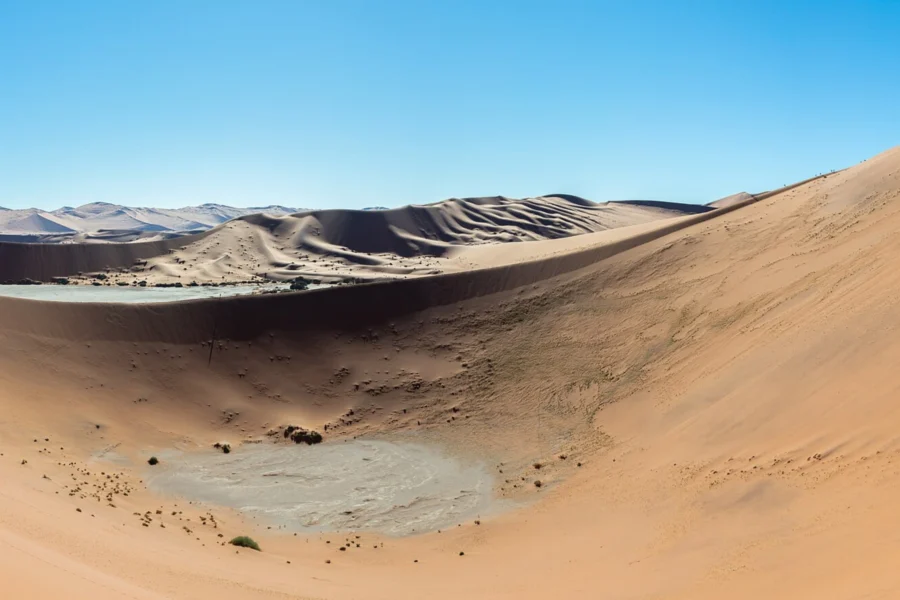 Namib-Naukluft and Sossusvlei for Birders: Dune Lark, Desert Raptors and the Naukluft SpecialsA lark that lives on the dunes and nowhere else, Lappet-faced Vultures nesting in the desert, coursers on the gravel plains and the northern specials around the Naukluft cliffs, in one of Africa's largest parks.
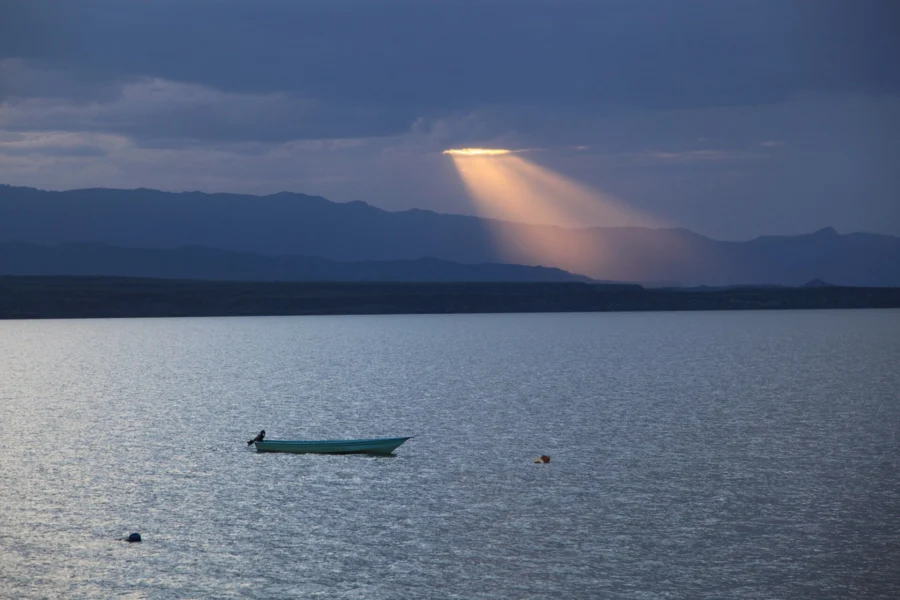 Lake Baringo and Lake Bogoria Birding: The Owl Walks, the Cliffs and the FlamingosA local guide who knows where every nightjar and eagle-owl slept last night, thorn scrub full of hornbills, a Goliath Heron colony on a rock, and the flamingo lake next door that keeps rising.
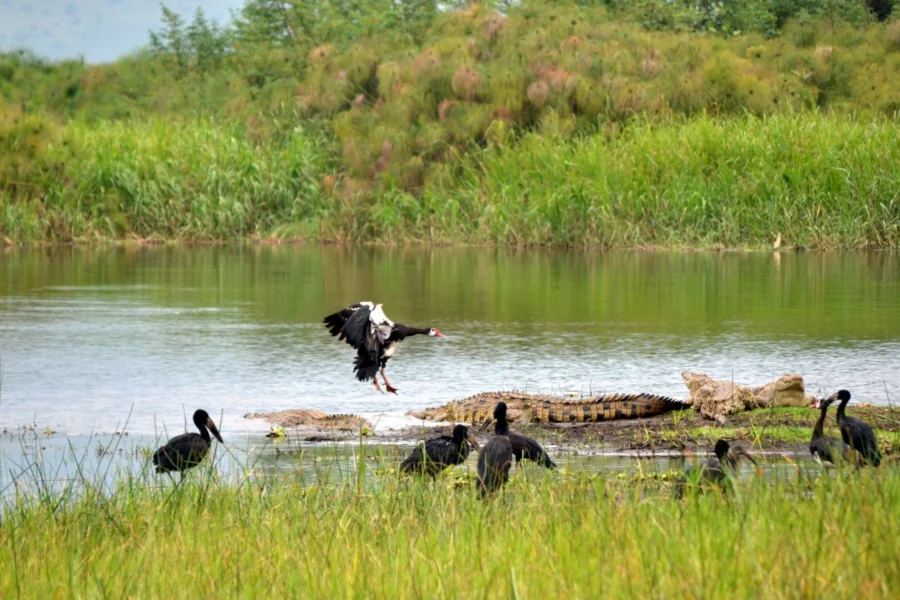 Akagera Birding: Rwanda’s Savanna, Lakes and Papyrus, and the Shoebill ChancesRed-faced Barbet in the southern woodland, Papyrus Gonolek and Carruthers's Cisticola in the swamps, a lake of hippos and lapwings, and a Shoebill that hides in the wetlands more than it shows.
The Pigeon Post
Every Thursday: 1 bird, 1 place to go and 1 place to stay, by email. Sign up and get our printable checklist of the 163 endemics of southern Africa.