
Mozambique Birding Guide: Panda, Gorongosa, the Coast and the Specials
Where to find Olive-headed Weaver, the Gorongosa race of Green-headed Oriole, African Pitta and Crab-plover in Mozambique, with the seasons, the border practicalities and the places to stay for birders.
Mozambique’s birds change as you travel up its Indian Ocean coast. In the far south, the sand forest of Maputo National Park holds the same specials as Zululand. Inland of Inhambane, a patch of lichen-hung miombo near Panda holds a weaver that lives more than 600 km from any other known population, which is a long way to go for a bit of privacy. In the centre, Gorongosa has a mountain with its own race of oriole and a floodplain lake full of storks. Further north, the lowland forests near the Zambezi are where southern African birders go each December for African Pitta, a seasonal pilgrimage with mosquitoes.
Few birders do all of it in one trip. The country is big, the roads are slow and the best sites sit far apart, as if spaced out on purpose. Most visits take 1 of 2 shapes: a road trip north from South Africa through Maputo, Panda and the Inhambane coast, or a fly-in trip to Beira for Gorongosa and the lowland forests.
At a glance
| Place | Where | What it offers birders | From |
|---|---|---|---|
| Dunes de Dovela Eco Lodge | Inharrime, Inhambane | Resident bird guide, forest hide, 25 km of trails | US$130 pp sharing, full board (2026) |
| Naara Eco-Lodge & Spa | Chidenguele, Gaza | Birdwatching walks by a lagoon and dune forest | US$160 per tent |
| Covane Community Lodge | Massingir | Birding boat trips on Massingir Dam | R430 pp, bush hut (2026) |
| Anantara Bazaruto Island Resort | Bazaruto Archipelago | Island birding in a wader Important Bird Area | Not confirmed |
| Nkwichi Lodge | Lake Niassa shore | Sunrise kayak birding | US$130 per chalet, self-catering |
Maputo National Park: the sand forest specials
The park south of Maputo is the closest Mozambican birding to South Africa, and it shares its best birds with the Tembe and Ndumo side of the border. BirdLife International’s factsheet for the Maputo Special Reserve Important Bird Area lists Neergaard’s Sunbird, Near Threatened, and Pink-throated Twinspot as residents, and the Key Biodiversity Areas factsheet for the same site adds Rudd’s Apalis. The park’s own birding brochure puts Rudd’s Apalis and Pink-throated Twinspot among its hotspot species. Neergaard’s Sunbird is a sand forest bird, so ask any guide to take you into the thickets rather than along the lake shore. The view is worse; the sunbird odds are better.
For the South African end of the same habitat, see the guide to Zululand birding at Mkhuze, Ndumo and St Lucia.
Panda and the Olive-headed Weaver
Panda is the reason many birders cross the border at all, and the panda in question is a small town, not a bear. The Animal Demography Unit’s weaver project puts the population there at about 100 pairs, and says it sits more than 600 km from any other known site. The bird lives in mature miombo woodland hung with Usnea lichen, the grey-green “old man’s beard”. It forages by probing the lichen on trunks and branches, and both sexes build the nest entirely out of it: dinner and the house, from the same material.
BirdLife lists Olive-headed Weaver as Near Threatened and says slash-and-burn farming is turning Mozambique’s woodland into fields. The weaver project’s own pages say the habitat around Panda is disappearing. A group in March 2019 searched the sandy forest roads and failed to find the bird, a classic dip (birders’ slang for the one that got away), so plan more than one morning. A 2015 group trip on the Mostly Birding blog drove through dense woodland near Panda and added Green Tinkerbird, Woodward’s Batis and Livingstone’s Flycatcher to the weaver.
Panda is inland from the Inhambane coast, and the 2 listings in the area put a birder within reach of it. Dunes de Dovela Eco Lodge sits in coastal forest on the dunes near Inharrime, with the Indian Ocean in front and a lake behind. Its resident bird guide, Thomas, takes guests birding from a hide among the trees, and about 25 km of marked forest trails can be walked with a guide or alone with a map. It shares a 100 ha conservation area with Dovela village. Access is by private 4×4 over sand, so leave the sedan at home, guests must arrive before dusk, and rates start at US$130 per person sharing for a dome tent in the bush camp in 2026, with all meals and guided walks included.
Further south in Gaza Province, Naara Eco-Lodge & Spa has 10 safari tents and a family villa beside Chidenguele Lagoon, about 60 km north of Xai-Xai on the EN1. It organises birdwatching and nature walks through the lagoon edge, dune forest and beach, and rates start at US$160 per superior tent per night, depending on the season.
Massingir and the Limpopo side
For birders coming from Kruger through the Giriyondo border, Covane Community Lodge at Massingir is the first stop, so time the drive around the gate hours below. It runs boat trips on Massingir Dam for birdwatching, and lists them as bird-viewing boat safaris. Its website names no species and gives no bird count, so the dam keeps its secrets until you are on it. Rates are low and published: R430 per person in a bush hut from 1 February 2026 to 31 January 2027, R940 per lake view chalet, and camping at R150 per person, plus a community bed levy of R90 per person. It is cash only, in rand or meticais. Giriyondo closes at 15:00, and the last entry at the Phalaborwa and Massingir gates is 12:00, so leave Kruger early.
The Bazaruto Archipelago: waders and Crab-plover
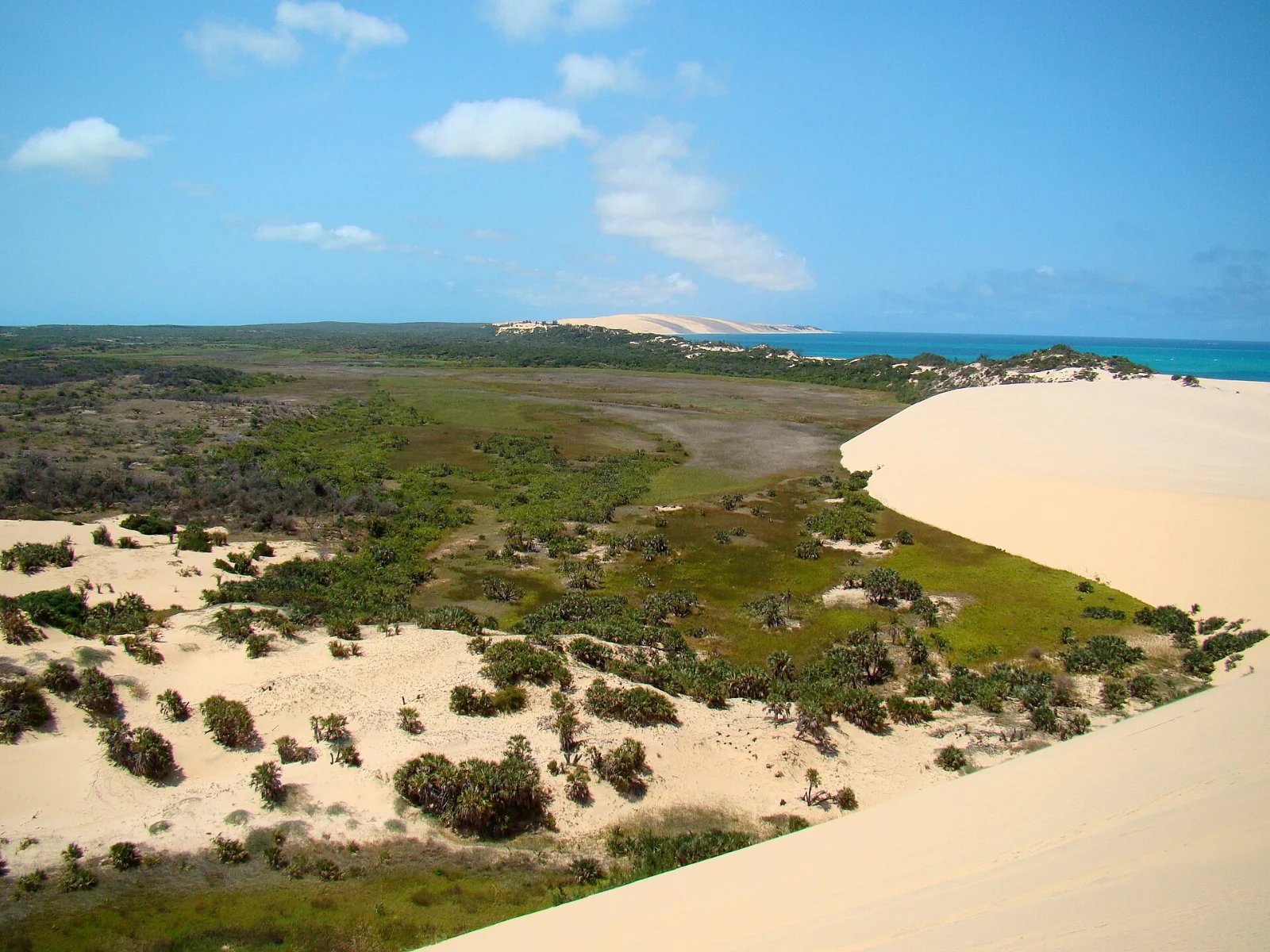
BirdLife’s Greater Bazaruto Important Bird Area covers about 5,236 sq km of the archipelago and the San Sebastian Peninsula in Inhambane Province, and qualifies on its waterbird numbers. A survey led by Gary Allport, published after fieldwork in late 2023, found half of all the shorebirds counted in The Sanctuary on the peninsula, and globally important numbers of White-fronted and Chestnut-banded Plovers in the northern mangrove bays. An International Wader Study Group bulletin recorded 14,600 waders on the archipelago’s intertidal flats in January 1996 and 43,943 in January 1997, most of them on the western coast of Bazaruto Island.
Crab-plover is the bird birders come for, and as the name promises, it is serious about crabs. A 1958 article in Ostrich described Crab-plovers feeding in fair numbers on the Bazaruto mudflats, and Birding Ecotours’ current Mozambique tour expects to see it on the San Sebastian Peninsula.
Anantara Bazaruto Island Resort is on Bazaruto Island itself, and tour operators list birdwatching among its activities. Rates were not published at the time of checking.
Gorongosa: the lake and the mountain
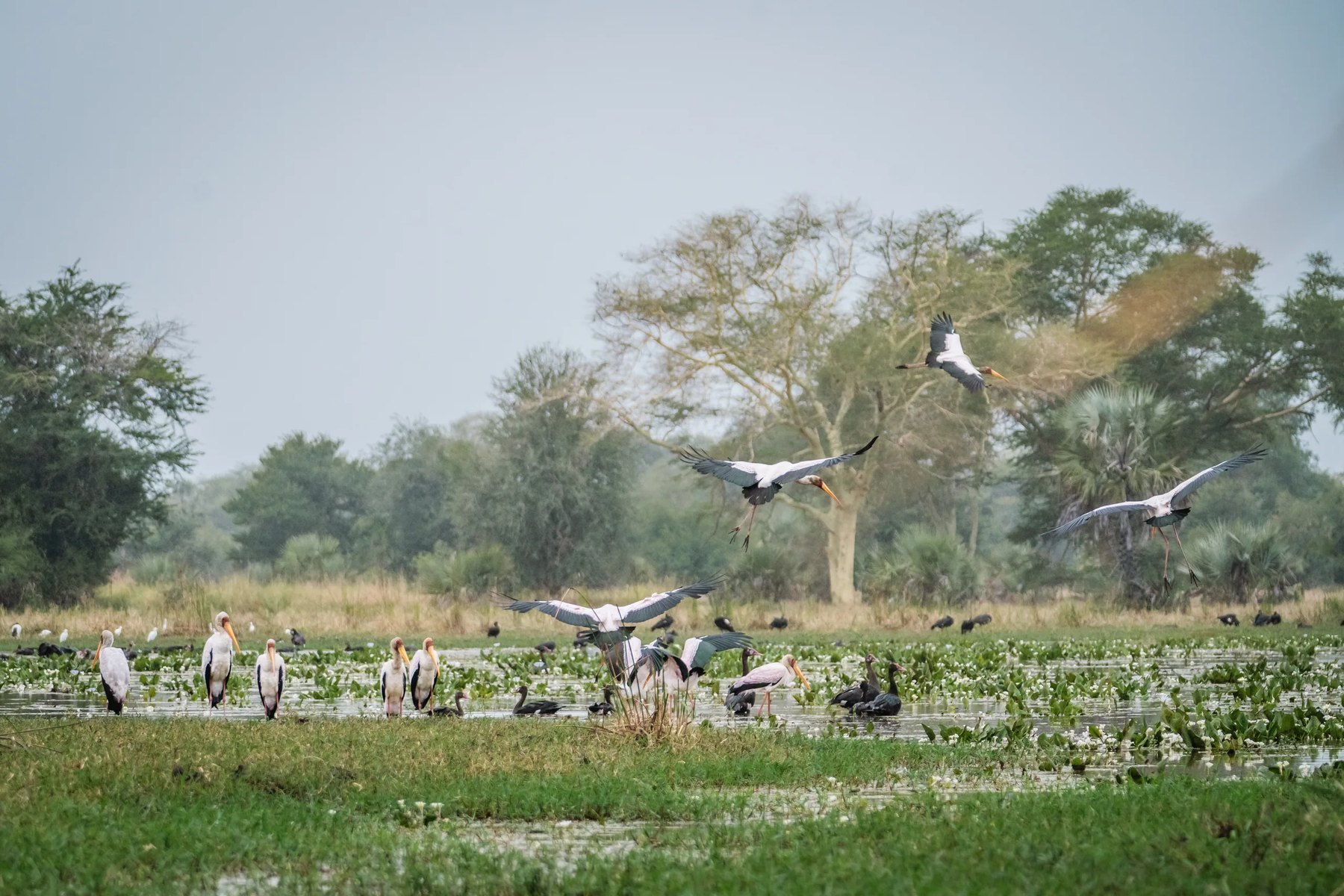
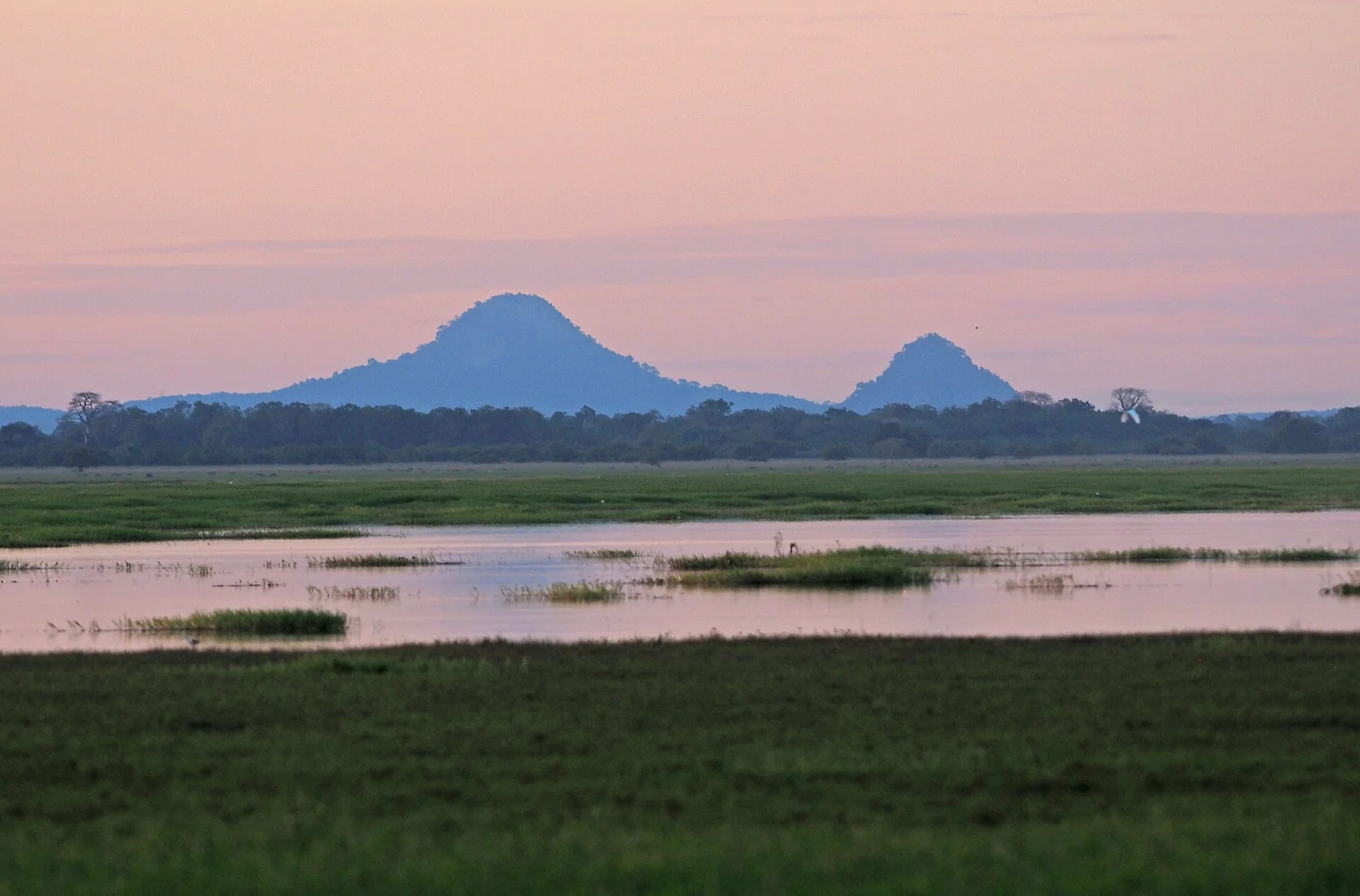
Gorongosa National Park in Sofala Province is the centre of most fly-in birding trips. The Key Biodiversity Areas factsheet for Gorongosa and the Marromeu complex lists Wattled Crane among its threatened birds. On the Urema floodplain, the park’s count of the Lake Urema waterbird colony in April 2025 found 1,040 active nests of 9 species, with African Darter and Yellow-billed Stork the most numerous.
Mount Gorongosa is the other half, and it has an oriole that dresses differently from the rest of its species. BirdLife lists Green-headed Oriole as a trigger species for the Gorongosa Mountain and National Park Important Bird Area. The birds on the mountain belong to their own race, speculifer, which the park says has a white wing panel that other Green-headed Orioles lack, and which lives in the old-growth forest near the top. The park’s activities page lists a Mount Gorongosa excursion with a visit to the Gorongosa Coffee Project at US$200 per international visitor, with a minimum of 4 people, and advises birders to book a private vehicle for flexibility. That page is headed 2024, and older Birding Ecotours material and a University of Cape Town publication both describe periods when the mountain was closed by local disputes. Ask the park whether the oriole trail is open before you build a trip around it, or the oriole may be the only one on the mountain that day.
Lodge guides for 2026 give the park’s conservation fee as US$20 per international visitor per day, and the park says its fees move with the exchange rate. No Gorongosa lodge is in the directory yet.
Catapu and the African Pitta
The lowland forest of the coutadas, the old hunting blocks south of the Zambezi, holds the birds that southern African listers find hardest and talk about longest. Birding Ecotours’ December tour spends 2 nights at M’Phingwe Lodge in Catapu for White-chested Alethe, East Coast Akalat and Livingstone’s Flycatcher. Its African Pitta trip of 21 November to 5 December 2023 found a displaying male and had prolonged views. A 2016 trip report gives the window: the pitta starts calling and displaying when the rains arrive, usually in late November or early December. Its calendar runs on weather, not on flight bookings.
Lake Niassa and the north
Nkwichi Lodge is on the Mozambican shore of Lake Malawi, called Lake Niassa on this side, in the Manda Wilderness Community Conservancy. It runs a sunrise kayak safari for birds along the shore, and its Rift Valley outings include bird identification. African Fish Eagle is the bird it names, and it usually announces itself long before the paddle starts. Guests arrive by boat from Likoma Island, Cobue or Messumba, or by a rough road from Lichinga to Cobue and then a boat. Chalets start at US$130 a night for 1 or 2 guests, self-catering, with a chef who cooks your own provisions. For the Malawi side of the lake, see the Malawi birding guide.
The far north is a different matter. The UK Foreign, Commonwealth and Development Office advises against all travel to Cabo Delgado Province, except Palma town and the area around Pemba and Afungi, because of attacks by groups linked to Islamist extremism. It gives the same advice for the Memba and Eráti districts of Nampula and the Mecula and Marrupa districts of Niassa, which is where the Niassa Special Reserve lies. It also warns that travelling against its advice can invalidate travel insurance.
Getting in
Mozambique has allowed visitors from 29 countries to enter visa-free for tourism for up to 30 days since 1 May 2023. South Africans need no visa for short visits. The government relaunched its eVisa portal, evisa.gov.mz, on 11 February 2026, and reports since then disagree on whether visa-exempt visitors must register online before they arrive, so check the portal the week you travel. Malaria is present in every listed area.
When to go
Safari Bookings puts the migrant season, and the best birding at Maputo National Park, from November to April. That is also the hot, humid and wet season, when malaria risk is higher. For African Pitta the window is narrow: late November and early December. For Crab-plover and the Palearctic waders on Bazaruto, go in the southern summer. Gorongosa’s walking safaris run from April to September, the dry months, so a trip that wants both the pitta and a walk on the floodplain has to choose, or come back.
Where to stay
The places in this guide, with what each offers a birder:
| Place to stay | Where | For birders | From |
|---|---|---|---|
| Dunes de Dovela Eco Lodge | Inharrime, Inhambane | Resident bird guide, forest hide, 25 km of trails | US$130 pp sharing full board |
| Naara Eco-Lodge & Spa | Chidenguele Lagoon, Gaza | Birdwatching walks by the lagoon and dune forest | US$160 per tent |
| Covane Community Lodge | Massingir Dam, Gaza | Birding boat trips on Massingir Dam | R430 pp, bush hut |
| Anantara Bazaruto Island Resort | Bazaruto Island | Island birding, 180+ species for Bazaruto | Ask the lodge |
| Nkwichi Lodge | Lake Niassa shore, Niassa | Sunrise kayak birding, African Fish Eagle | US$130 per chalet self-catering |
Fees, access and security advice change, especially for Mount Gorongosa and the north. Facts were checked on 13 November 2026 against each place’s listing on Birding Dispatch, BirdLife International’s Important Bird Area factsheets for the Maputo Special Reserve, Greater Bazaruto and Gorongosa Mountain and National Park, the Animal Demography Unit’s weaver pages, Gorongosa National Park’s own pages, Birding Ecotours tour pages and reports, and the FCDO’s Mozambique travel advice. Confirm access and fees with the park or lodge before you go.
More from the Journal
 Namib-Naukluft and Sossusvlei for Birders: Dune Lark, Desert Raptors and the Naukluft SpecialsA lark that lives on the dunes and nowhere else, Lappet-faced Vultures nesting in the desert, coursers on the gravel plains and the northern specials around the Naukluft cliffs, in one of Africa's largest parks.
 Lake Baringo and Lake Bogoria Birding: The Owl Walks, the Cliffs and the FlamingosA local guide who knows where every nightjar and eagle-owl slept last night, thorn scrub full of hornbills, a Goliath Heron colony on a rock, and the flamingo lake next door that keeps rising.
 Akagera Birding: Rwanda’s Savanna, Lakes and Papyrus, and the Shoebill ChancesRed-faced Barbet in the southern woodland, Papyrus Gonolek and Carruthers's Cisticola in the swamps, a lake of hippos and lapwings, and a Shoebill that hides in the wetlands more than it shows.
The Pigeon Post
Every Thursday: 1 bird, 1 place to go and 1 place to stay, by email. Sign up and get our printable checklist of the 163 endemics of southern Africa.