
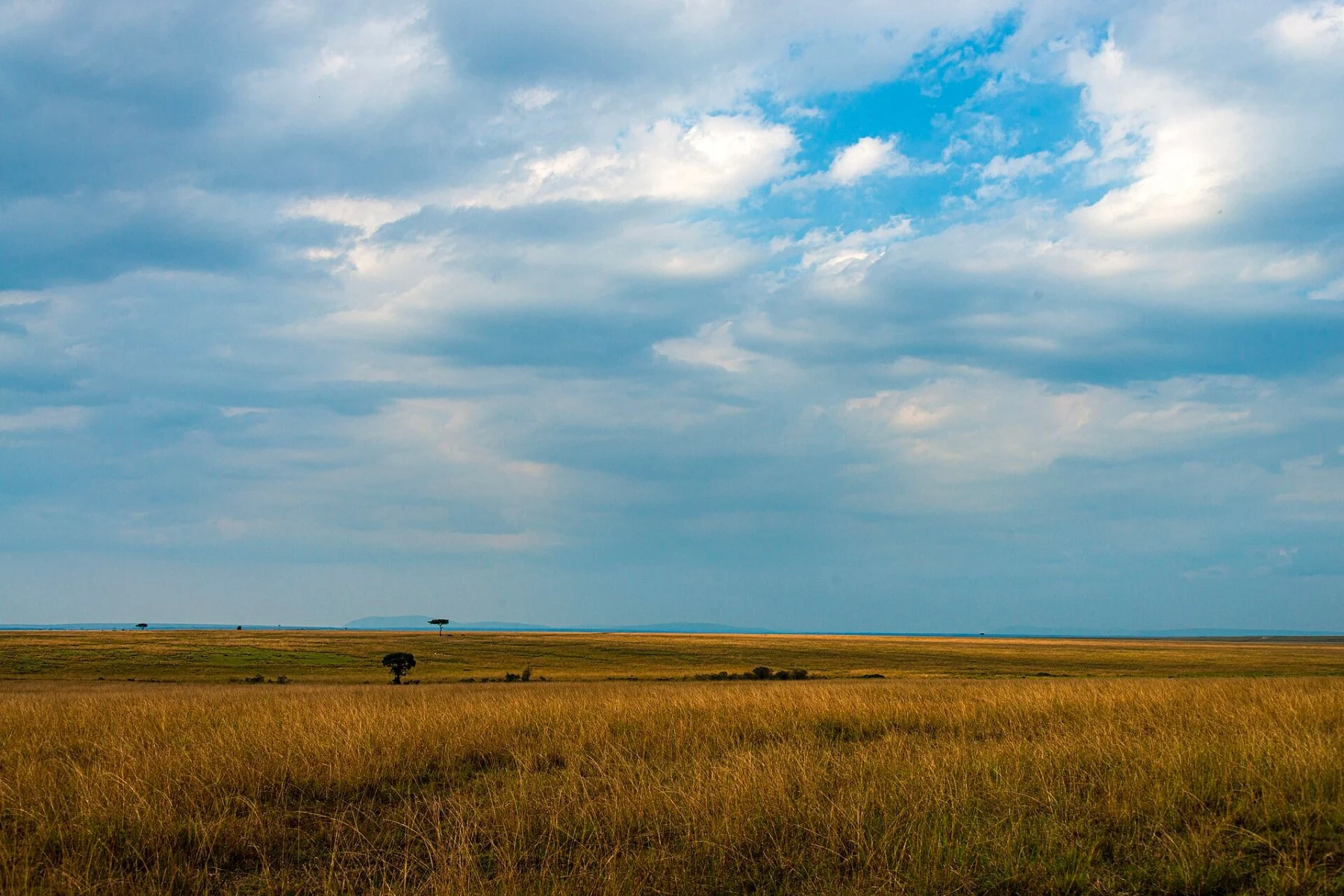
Masai Mara for Birders: The Grassland Specials, the Raptors and the River
Rufous-bellied Herons in the Musiara marshes, turacos in the riverine forest, 53 birds of prey over the plains and a lazy cisticola on the escarpment: the Mara when you look up from the lions.
About 18 Rufous-bellied Herons were standing in the Musiara wetlands, in the north-west of the reserve, when Field Guides’ group came through in August 2024, at the height of the wildebeest season, when most binoculars in the Mara are pointed at something with four legs. That is the reserve in one scene: world famous for big cats and wildebeest, and home to a bird list of more than 500 species that gets far less attention. The heron is a localised bird in Kenya, and BirdLife International’s site account lists it among the Mara’s “local and unusual” species.
The name helps. In the Maa language, Mara means “spotted”, for the scattered bushes and small trees that dot the plains. Every one of those spots is a perch, and on a good morning most of them are occupied.
The Mara by the numbers
BirdLife’s Important Bird Area account, now held on the Key Biodiversity Areas database, describes the site as the Masai Mara National Reserve, 181,200 ha, plus 482,800 ha of surrounding wildlife dispersal areas on Maasai group ranches. Together they are often called the Greater Mara. The permanent Mara and Talek rivers run through the reserve and roughly divide it into 3, and rainfall rises from about 800 mm a year in the drier east to about 1,200 mm in the wetter west.
The account gives more than 500 bird species, including 12 cisticolas and 53 birds of prey. Twelve cisticolas is a fine number for a birder who enjoys a challenge, and a cruel one for anyone who does not. It calls the extensive grasslands a stronghold for the migratory Corn Crake and for the restricted-range Jackson’s Widowbird, and says the woodlands around the reserve are probably the centre of abundance for Grey-crested Helmetshrike, the scarce bird that also draws birders to the Serengeti next door.
Large numbers of Palaearctic migrants spend the northern winter here, including Caspian Plover and White Stork. The same account lists Denham’s Bustard, Black Coucal, Pel’s Fishing Owl and African Finfoot among the Mara’s residents and regional rarities, and notes a single record of Shoebill, from the Musiara swamp. Do not plan the trip around that one.
The river, the marshes and the riverine forest
The wet ground in the north-west of the reserve, around the Musiara marsh and the Mara River, is where the Mara’s list stops being a plains list. Field Guides’ 2024 group stayed 3 nights at Little Governors’ Camp, now Wilderness Mara, and its report reads like a forest checklist: Schalow’s and Ross’s Turacos, Black-and-white-casqued Hornbill, a female Narina Trogon in the camp grounds, Brown-throated Wattle-eye, Grey-headed Bushshrike and African Blue Flycatcher. The wetlands gave about 26 Black Crakes, a dozen Long-toed Lapwings, 25 African Jacanas and the herons.
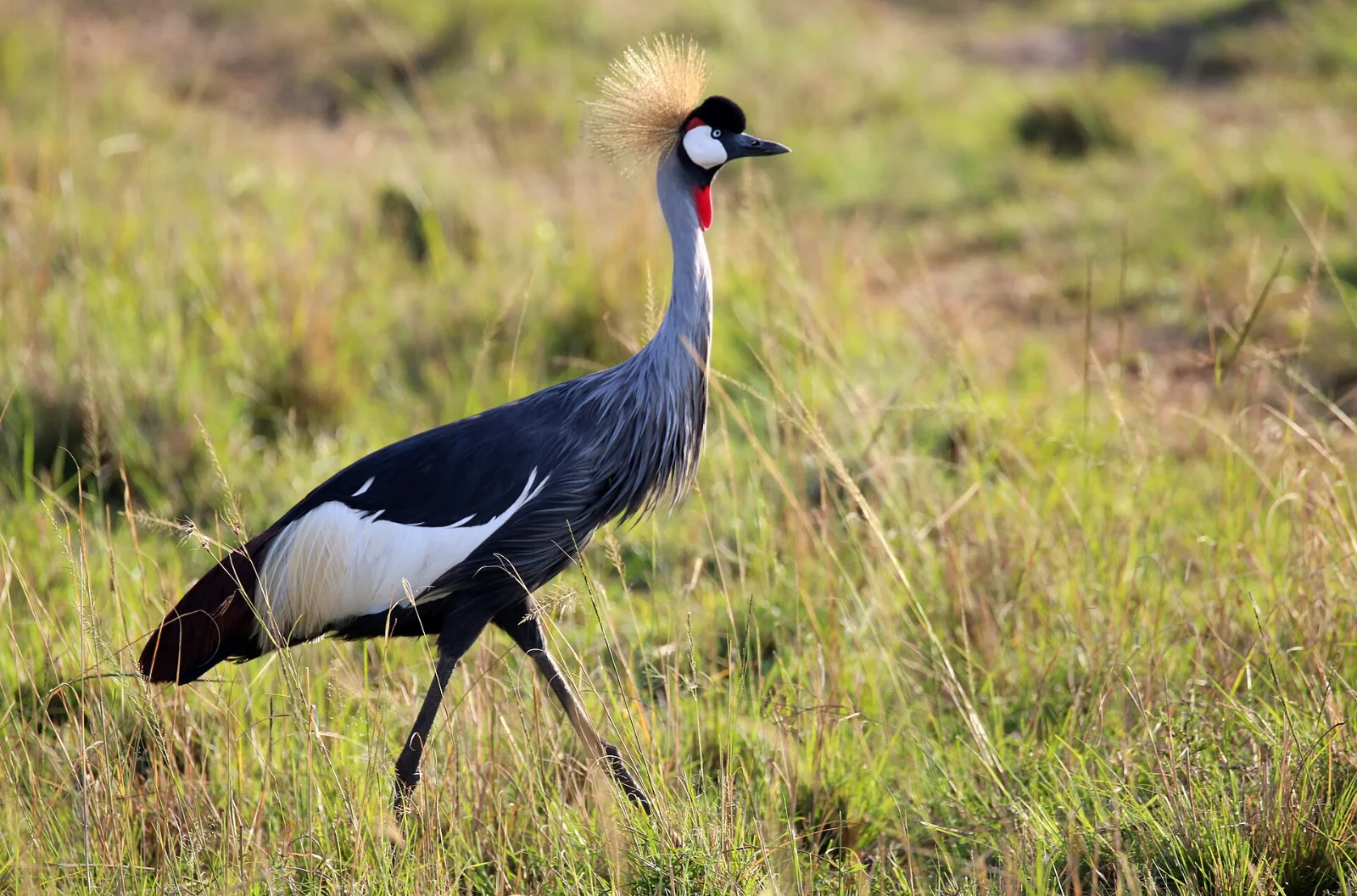
On the river itself, the group logged Squacco and Purple Herons and an adult Saddle-billed Stork with 2 juveniles, and BirdLife says several pairs of Saddle-billed Storks nest in the area. For the crane in the photograph, and the farm dams and wetlands where it is easier still, see where to see a Grey Crowned Crane.
The grasslands and the escarpment
Away from the water, the Mara is a lark-and-longclaw sort of place. Field Guides found Rosy-throated Longclaw, more than 20 Yellow-throated Longclaws, more than 20 Rufous-naped Larks and Stout Cisticola “very common” in the grasslands. Birding Ecotours’ September 2024 group, on one full day’s drive, logged more than 70 species, with White-bellied and Hartlaub’s Bustards, Secretarybird, Yellow-throated Sandgrouse, Coqui Francolin, Fischer’s Sparrow-Lark and Silverbird among the highlights.
Along the Tanzanian border, with the Serengeti on one side and the Mara on the other, the same group added Temminck’s Courser, Red-winged Francolin and Rufous-tailed Weaver, a bird it describes as almost endemic to Tanzania and only just reaching Kenya. BirdLife’s account says the weaver has been seen in the south of the reserve and may be spreading north.
The Oloololo, or Siria, Escarpment on the western edge is worth a morning of its own. BirdLife names it as one of the few Kenyan sites for Lazy Cisticola, and Field Guides found Bare-faced Go-away-bird, Usambiro Barbet, Hildebrandt’s Starling and Black Saw-wings there. The barbet is the localised race of D’Arnaud’s Barbet that Birding Ecotours calls a localised East African endemic; the Serengeti has it too, and Serengeti birding covers the rest of that ecosystem’s specials.
The raptors
Fifty-three birds of prey is the Mara’s real headline. Field Guides counted about 45 White-backed Vultures, plus Lappet-faced and Rüppell’s Vultures, Bateleur, Black-chested Snake Eagle, Tawny Eagle and Secretarybird. Birding Ecotours added Martial Eagle, White-headed and Hooded Vultures, Grey Kestrel, Dark Chanting Goshawk and a Wahlberg’s Eagle that swooped on a Harlequin Quail and missed.
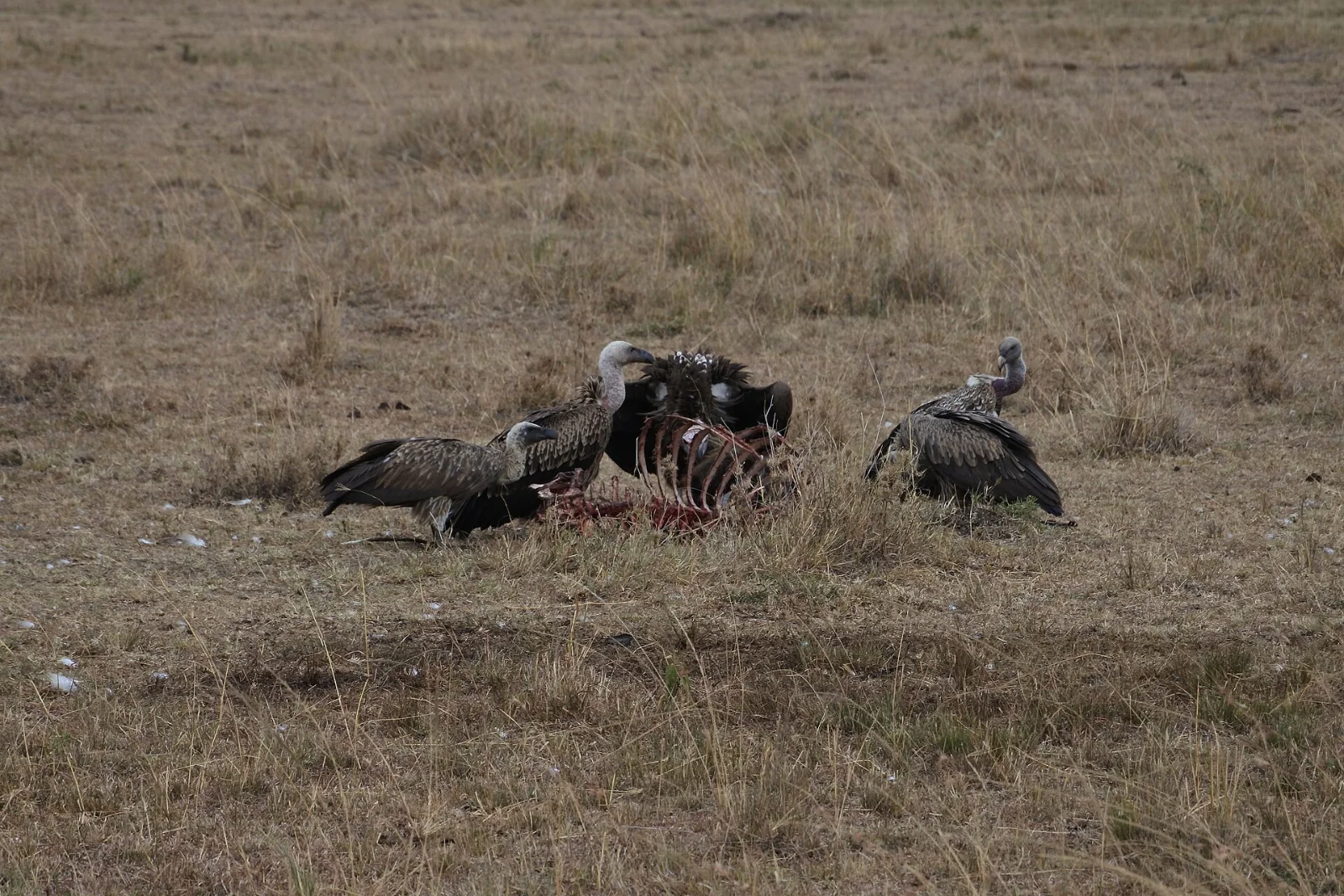
When a kill draws a crowd of vehicles, look at the vultures in the trees and on the ground around it, not only at the lions. The photograph above shows 3 species at a single carcass, and picking the Lappet-faced and Rüppell’s out of the White-backs is good practice for the rest of the trip.
The seasons
The wildebeest set the calendar here, and they arrive from the Serengeti from about July and head back south around October. The long rains fall for about 6 to 8 weeks in April and May, and the short rains for about 4 weeks in November and December. Oltukai Mara Camp points birders to the green season for bird activity, and the Palaearctic migrants in BirdLife’s account are present in the northern winter.
Rain changes the driving too. Field Guides reported that exceptional rains earlier in 2024 had left the grass taller than usual, so the group drove further than normal to find its birds. Birding Ecotours’ September group had a puncture that turned into a stroke of luck: a small flock of European Bee-eaters migrating south passed overhead just as everyone stepped out of the vehicle.
Fees and rules
Masai Mara Travel’s fee page gives the 2026 Narok County rates for non-resident adults as US$100 a day from 1 January to 30 June 2026 and US$200 a day from 1 July 2026. Tickets are valid for 12 hours, and guests leaving by road must exit by 10 am or pay another day. The Mara Triangle, in the west, is run by the Mara Conservancy and takes only cashless payment, by card or M-Pesa. A BirdForum trip report from a May tour calls the Triangle the better area for birding because it has fewer visitors, which also means fewer vehicles flushing the coursers.
For the wider trip, from Kakamega to the coast, see the Kenya birding guide.
Where to stay
The places to stay in the Mara with birding activities, in the order they appear above:
| Place to stay | Where | For birders | From |
|---|---|---|---|
| Wilderness Mara | Mara Triangle, Masai Mara, Kenya | Formerly Little Governors’ Camp; birding activity, 470 species | US$1,324 pp, fully inclusive (2026 to 2027) |
| Oltukai Mara Camp | Maasai Mara, Kenya | Guided birding drives and walks paced to targets | US$250 a single tent, low season, non-resident |
| Mara Serena Safari Lodge | Mara Triangle, Masai Mara, Kenya | Specialist-led nature walks and birdwatching outings | Ask the lodge |
Fees, rules and camp details in the Mara change. Facts were checked on 15 November 2026 with BirdLife International’s Masai Mara site account, the Field Guides and Birding Ecotours 2024 tour reports, Masai Mara Travel’s 2026 fee page and each listing on Birding Dispatch. Confirm the current Narok County and Mara Conservancy fees with your operator before you travel.
More from the Journal
 Namib-Naukluft and Sossusvlei for Birders: Dune Lark, Desert Raptors and the Naukluft SpecialsA lark that lives on the dunes and nowhere else, Lappet-faced Vultures nesting in the desert, coursers on the gravel plains and the northern specials around the Naukluft cliffs, in one of Africa's largest parks.
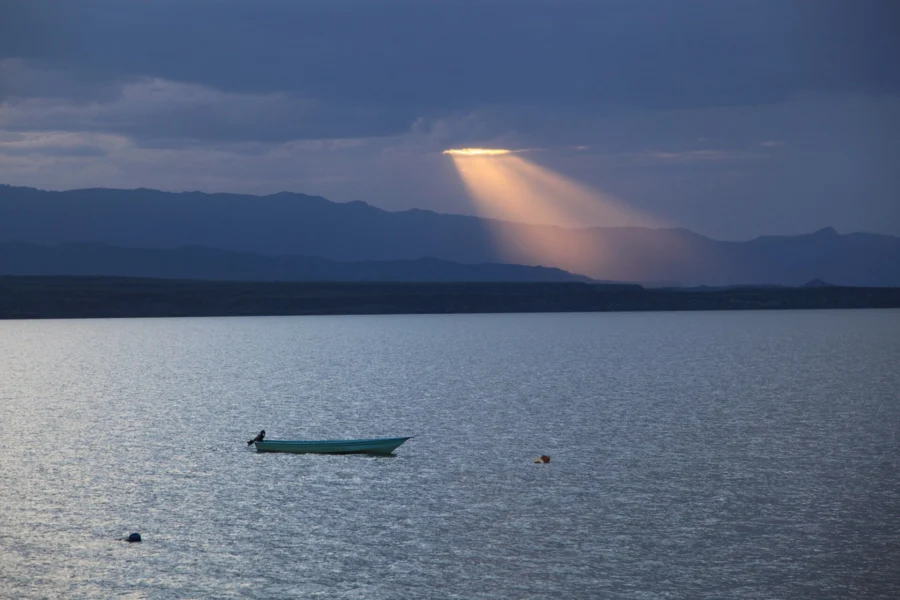 Lake Baringo and Lake Bogoria Birding: The Owl Walks, the Cliffs and the FlamingosA local guide who knows where every nightjar and eagle-owl slept last night, thorn scrub full of hornbills, a Goliath Heron colony on a rock, and the flamingo lake next door that keeps rising.
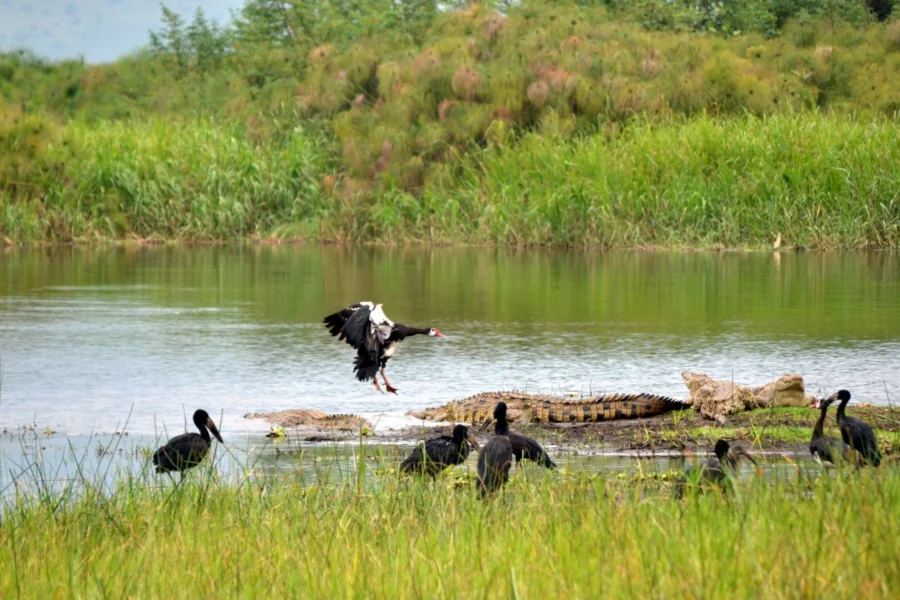 Akagera Birding: Rwanda’s Savanna, Lakes and Papyrus, and the Shoebill ChancesRed-faced Barbet in the southern woodland, Papyrus Gonolek and Carruthers's Cisticola in the swamps, a lake of hippos and lapwings, and a Shoebill that hides in the wetlands more than it shows.
The Pigeon Post
Every Thursday: 1 bird, 1 place to go and 1 place to stay, by email. Sign up and get our printable checklist of the 163 endemics of southern Africa.