
Ethiopia Birding Guide: Bale, Yabelo, the Rift Valley Lakes and the Travel Advice
How an Ethiopia birding trip works in 2026: endemics on the Roof of Africa in Bale, Yabelo's bushcrows, the Rift Valley lakes, the classic route, the seasons and the parts the travel advice rules out.
Ethiopia is a high country with its own birds. The Avibase-based list on Wikipedia counted 880 confirmed species in 2021, 20 of them endemic, and Birdquest puts the total of endemics and near-endemics at more than 40, many shared with Eritrea, with the exact number depending on whose taxonomy you follow. Most of them live on the plateaus above 2,000 m, which is why the country is called the Roof of Africa and why its birds get to look down on everyone else’s.
Birdquest makes a further point that changes how the trip feels. Ethiopia’s parks hold almost no dangerous mammals, so birders walk at will instead of sitting in a vehicle. Few African countries allow that, and it is a strange luxury for birders used to being told to stay in the car.
The difficulty in 2026 is access. Large parts of the north and the far south-east are under travel warnings, and the classic route has shrunk to fit the parts of the country that remain open.
At a glance
| Area | Birds to target | Days | Base |
|---|---|---|---|
| Bale Mountains and Sanetti Plateau | Blue-winged Goose, Spot-breasted Lapwing, Rouget’s Rail, Moorland Francolin | 3 | Goba or Robe |
| Harenna Forest | Abyssinian Catbird, Ayres’s Hawk-Eagle, Abyssinian Owl | Part of the Bale days | Goba |
| Yabelo and Meta Gafersa | Stresemann’s Bushcrow, White-tailed Swallow, Ruspoli’s Turaco | 3 | Yabelo |
| Lake Langano and Lake Ziway | Yellow-fronted Parrot, Black-winged Lovebird, Banded Barbet | 2 | Langano |
| Hawassa and Wondo Genet | Thick-billed Raven, African Spotted Creeper, Yellow-fronted Parrot | 1 to 2 | Hawassa |
| Gibe Valley | Red-billed Pytilia, Abyssinian Waxbill | 1 | Welkite |
The endemics, and where they live
Birdquest’s target list for its Classic Ethiopia tour reads like a field guide index for the highlands: Wattled Ibis, Blue-winged Goose, Rouget’s Rail, Spot-breasted Lapwing, White-collared Pigeon, Black-winged Lovebird, Yellow-fronted Parrot, Ruspoli’s Turaco, Banded Barbet, Abyssinian Woodpecker, Abyssinian Longclaw, White-tailed Swallow, Abyssinian Catbird, Rüppell’s Black Chat, White-winged Cliff Chat, Thick-billed Raven, Stresemann’s Bushcrow, Ankober Serin and Ethiopian Siskin among them, with Abyssinian doing a fair share of the naming.
They fall into 3 groups. The Afro-alpine birds (goose, lapwing, rail, francolin, siskin) are in Bale. The dry-country specials (bushcrow, swallow, turaco) are around Yabelo in the south. The woodland and fig-tree birds (parrot, lovebird, barbet, cliff chat) are along the Rift Valley lakes. A route that covers those 3 areas sees most of the endemics. The ones it misses are mostly in places the travel advice now closes off, covered further down.
Bale Mountains: the Sanetti Plateau and Harenna
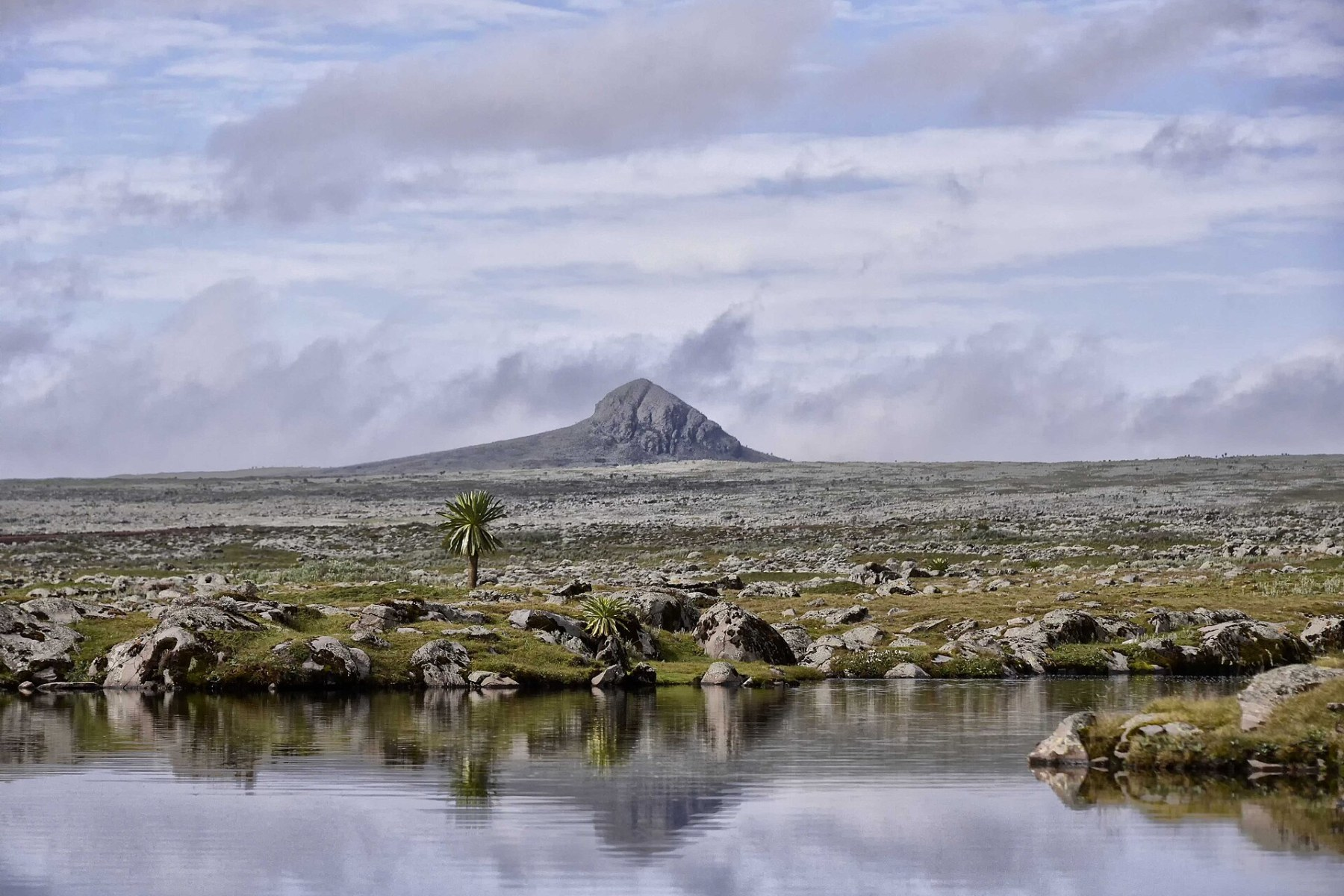
Bale is the centre of any Ethiopian birding trip. Birdquest says the national park was set up to protect 2 endemic mammals, the Mountain Nyala and the Ethiopian Wolf, and that it holds 14 of Ethiopia’s endemic birds as a bonus. The road from Dinsho over the Sanetti Plateau passes close to the summit of Tullu Deemtu, at 4,377 m the highest peak in the range, on what Birdquest calls the highest all-weather road in Africa.
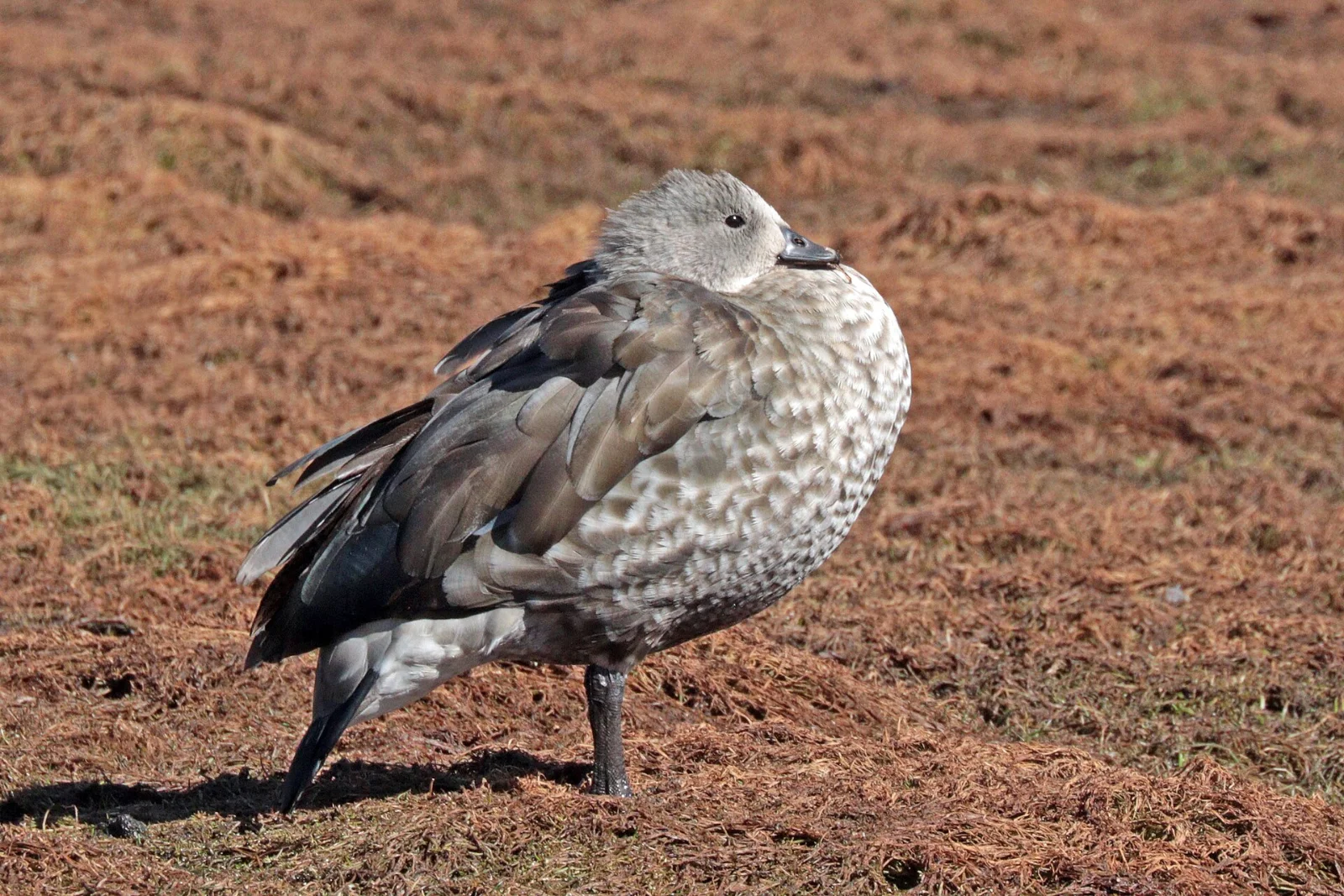
Naturetrek’s tour of 7 to 20 November 2025, led by Abiy Dagne, gives a good picture of what the plateau produces. On the way up from Robe the group had Rouget’s Rail, Wattled Ibis and Ethiopian Siskin. A pond at the edge of the plateau held Blue-winged Goose and Spot-breasted Lapwing, and the crossing produced Lanner Falcon, Pallid Harrier and Golden, Tawny and Steppe Eagles. A second day on the plateau brought a pair of Wattled Cranes and a group of Moorland Francolins. Earlier, the grassland around Dinsho gave Cape Eagle-Owl, Abyssinian Owl and Abyssinian Longclaw.
The wolves are the other reason to go. The Ethiopian Wolf Conservation Programme’s 2024 estimate is about 450 wolves in 99 packs across 6 isolated populations, with more than half in Bale. Naturetrek saw its first wolf at a distance and then had very close views on the second day, after driving around the plateau to find them.
South of the plateau the road drops into the Harenna Forest, where Naturetrek added Ayres’s Hawk-Eagle, Mountain Buzzard, African Emerald Cuckoo and Abyssinian Catbird. The farmland above Goba gave Rüppell’s Robin-Chat and White-backed Black Tit.
Book 3 nights, and a warm hat. Birdquest stays 3 nights in Goba, and the high ground is cold: SafariBookings warns that Bale’s upper slopes can be very cold and unpleasant in the rains.
Yabelo: bushcrows and termite mounds
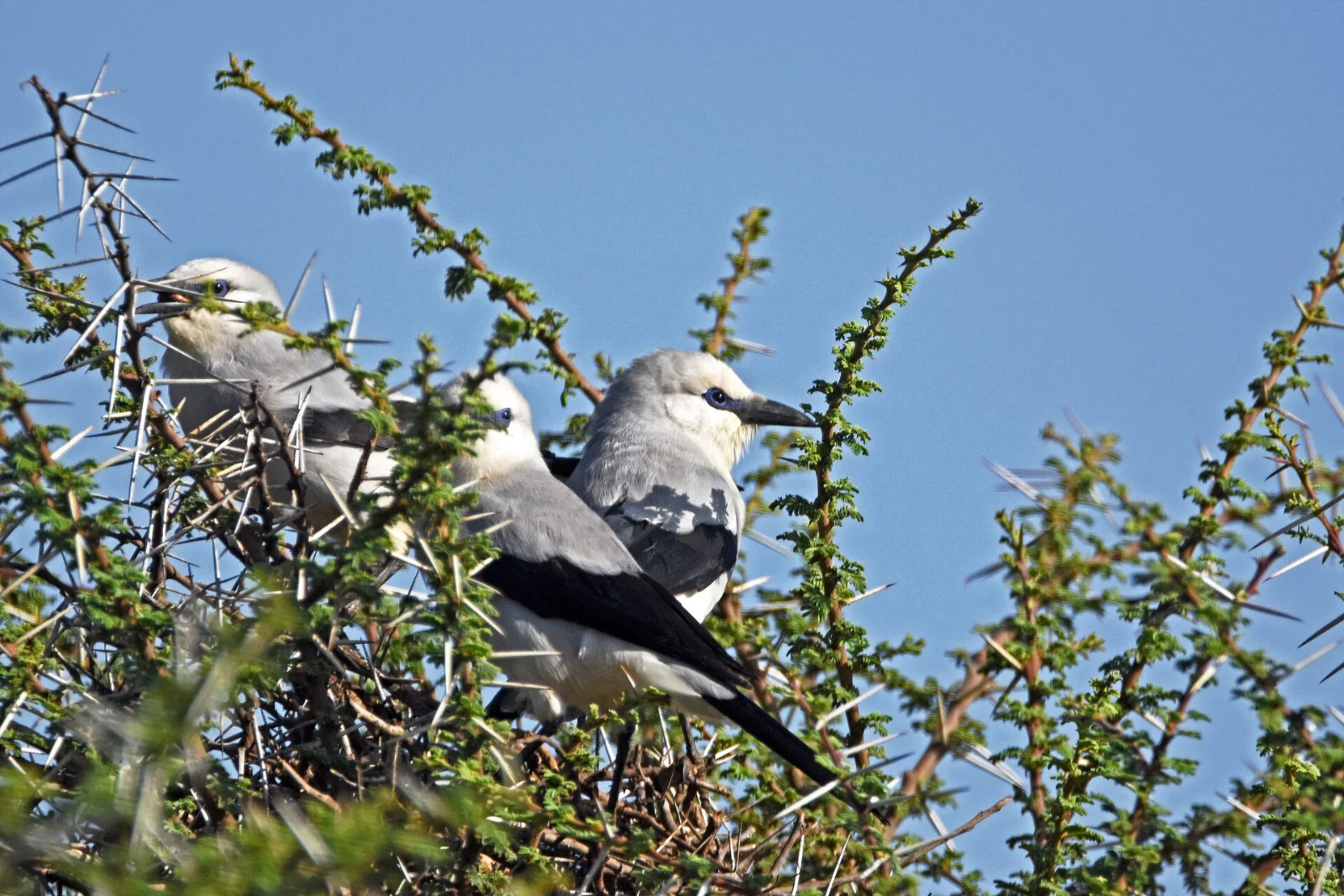
Yabelo, in the Borana country of the south, is where the 2 strangest endemics live. Stresemann’s Bushcrow and White-tailed Swallow are both found in the open savanna among what Birdquest describes as chimney-stack termite mounds, which the swallow uses for nesting.
Naturetrek flew from Addis Ababa to Yabelo and was in the scrub north-east of town the same afternoon. The next day, a 5.30 am start for Mega, about 100 km south-east, produced both endemics among 103 species. A day later, at Meta Gafersa about 80 km east, the group saw Ruspoli’s Turaco at close range early in the morning and had fleeting views of Salvadori’s Seedeater. The Black-fronted Francolin, searched for in the gorge near Mega, did not show: the trip’s dip (a bird you went for and missed).
Birdquest gives Yabelo 3 days and warns that the hotel there is very simple, though rooms have private bathrooms.
The Rift Valley lakes
The lakes south of Addis Ababa are each different in character. Birdquest bases its group at Lake Langano for 2 nights. Langano itself holds fewer waterbirds than most of the others, but its acacia woodland and groundwater forest of large figs hold Yellow-fronted Parrot, Black-winged Lovebird, Banded Barbet, White-winged Cliff Chat, White-cheeked Turaco and Ethiopian Boubou. Lake Ziway, on the way, is the stop for waterbirds.
At Hawassa, Naturetrek’s morning at the fish market produced Great White Pelican, Gull-billed and Whiskered Terns, Grey-headed Gull and Marabou Stork at close range, all of them there for the same reason as the customers, and an evening in Amora Gedel Park gave African Spotted Creeper and Banded Barbet. The best morning of that leg was at Wondo Genet, on the forested eastern edge of the Rift Valley, where a local guide found Narina Trogon, Crowned Eagle and Yellow-fronted Parrot.
Further south, a boat trip on Lake Chamo at Arba Minch produced African Fish Eagle, Goliath Heron and Northern Carmine Bee-eater, plus very large Nile Crocodiles. Even the first afternoon of Naturetrek’s trip, at Bishoftu Lake and Cheleklek Lake near Addis, gave 65 species including Black Crowned Crane.
What the travel advice rules out
The UK Foreign, Commonwealth and Development Office updated its Ethiopia advice on 30 October 2026, and it was still current on 13 November. It advises against all travel to Tigray, Amhara and Gambela, and against all travel in several parts of Oromia, including south and west of the A3 road in North Shewa, with the A3 itself included. It advises against all but essential travel to most of East Shewa, to the rest of Afar beyond the Eritrean and Tigray border strips, and to the Guji and West Guji zones, except the Hawassa to Mega road. The US State Department rates Ethiopia at Level 3, Reconsider Travel.
For birders, that removes several classic sites. The Ankober escarpment, home of the Ankober Serin, is in Amhara. Debre Libanos and the Jemma Valley, for Harwood’s Francolin, lie off the A3 north of Addis Ababa; Birdquest now visits Jemma only if local conditions allow and has an alternative site for the other targets. Negele and the Liben Plain sit in Guji zone. Birdquest says the Negele region has been off-limits for many years, so the Liben Lark, which BirdLife International lists as Critically Endangered with 50 to 249 mature individuals at 2 known sites, is not on its route. The Awash lowlands and the Aledeghe plains, for Arabian Bustard, are in or beside Afar.
What remains open on the FCDO map is the core route: the A7 corridor south to Hawassa, which is excepted from the East Shewa warning, Bale, Arba Minch and the Hawassa to Mega road to Yabelo. Check the advice the week you book, and check what your travel insurance covers.
Getting around and where to stay
There are no Ethiopian listings in the Birding Dispatch directory yet. Birders stay in town hotels and resorts, and road transport is by 4×4 on roads that Birdquest describes as good to bad.
Naturetrek’s 2025 tour used the Dreamland Hotel at Bishoftu, Kanta Lodge near Konso, the Haile Resorts at Arba Minch and Hawassa, a small hotel in Robe and the Wabe Shebele Hotel in Goba. It had planned to stay at Bale Mountain Lodge in the Harenna Forest, but the report says the lodge had been taken over by the government and closed a few weeks before the group arrived in November 2025. Confirm its status before planning around it.
Domestic flights save long drives. Naturetrek flew from Addis Ababa to Yabelo at the start and home from Goba airport at the end, which cut out 2 of the longest road days.
What a tour costs
Most birders go with a tour company and a local guide. Birdquest’s 16-day Classic Ethiopia tour, 20 November to 5 December 2027, costs US$6,600 from Addis Ababa, with a US$480 single supplement and a group limit of 7, and the price includes accommodation, meals, transport, entrance fees and tips. Rockjumper ran small-group Ethiopia endemics tours of 17 days from 23 October to 8 November 2026 and from 2 to 18 December 2026.
When to go
Exotic Birding’s Ethiopia overview says the dry season runs until March, that April and May bring moderate rains when many birds start breeding, and that June to August is the wettest period. The main tour season sits in the dry months of October to December, when the Palearctic migrants are in, having picked the same season as the tour companies; Naturetrek’s November list included Steppe Eagle, Pallid Harrier, Common Crane, Northern Pintail and Pied Wheatear alongside the endemics. Avoid the high plateau in the heavy rains of June to August.
Travel advice, lodge status and tour prices change. Facts were checked on 13 November 2026 against the FCDO’s Ethiopia travel advice, Naturetrek’s November 2025 tour report, Birdquest’s Classic Ethiopia tour page, BirdLife International’s Liben Lark factsheet, the Ethiopian Wolf Conservation Programme and Exotic Birding. Check the FCDO and US State Department advice before you book.
More from the Journal
 Namib-Naukluft and Sossusvlei for Birders: Dune Lark, Desert Raptors and the Naukluft SpecialsA lark that lives on the dunes and nowhere else, Lappet-faced Vultures nesting in the desert, coursers on the gravel plains and the northern specials around the Naukluft cliffs, in one of Africa's largest parks.
 Lake Baringo and Lake Bogoria Birding: The Owl Walks, the Cliffs and the FlamingosA local guide who knows where every nightjar and eagle-owl slept last night, thorn scrub full of hornbills, a Goliath Heron colony on a rock, and the flamingo lake next door that keeps rising.
 Akagera Birding: Rwanda’s Savanna, Lakes and Papyrus, and the Shoebill ChancesRed-faced Barbet in the southern woodland, Papyrus Gonolek and Carruthers's Cisticola in the swamps, a lake of hippos and lapwings, and a Shoebill that hides in the wetlands more than it shows.
The Pigeon Post
Every Thursday: 1 bird, 1 place to go and 1 place to stay, by email. Sign up and get our printable checklist of the 163 endemics of southern Africa.