
Birding With Children: Easy Birds, Family Stays and What Works
SANParks guided drives take children from age 6 and walks from 12, but birding can start much younger. Easy first birds, children's bird books, family stays with hides, and how to keep it fun.
The hide at Kwa Maritane Bush Lodge, at the Kwa Maritane Gate of Pilanesberg National Park, is reached through a 180 m tunnel and looks out over a waterhole. Children aged 12 and younger stay and eat free in eligible rooms, and there is a Junior Rangers programme. A tunnel to a hidden room, with birds coming down to drink at the end of it, is half spy film to a 7-year-old and a far better first lesson than a long walk through the bush.
That is most of the secret of birding with children: short sessions, close birds and something to do, which is not so different from what adult birders want. The rest is choosing places that welcome families, knowing the age rules before you book, and giving a child their own list to keep.
Know the age rules first
SANParks does not allow children under 6 on its guided game drives, for their own safety, and its guided walks and trails take participants of 12 and older. In Kruger that means families with young children bird from their own car, from camp and from hides. Mopani Rest Camp in the north, for example, takes children of all ages; those aged 2 to 11 pay the child conservation fee, and the camp has 2 hides, the Pioneer Dam bird hide and the Shipandani sleep-over hide, where the whole family can spend the night with the birds.
Private places set their own rules, so read the children’s line on each listing before you book. Hutwini Walking Camp, a walking camp in the Makuleke Contractual Park, takes guests from age 16. Nearby, Pafuri Camp has family tents and a child rate for ages 3 to 17, and Baobab Hill House welcomes children of all ages. Both are in a malaria area, while Kwa Maritane and Garden Route Game Lodge describe themselves as malaria-free and Mopani as low risk. Ask a doctor about malaria and young children before you choose.
Start with big, bright and loud birds
A child’s first birds should be easy to see and easy to name. Water helps, because waterbirds sit in the open and stay put, unlike the LBJs (little brown jobs) that dart about in the bushes. Mopani Rest Camp overlooks Pioneer Dam, where African Fish Eagles are seen through the day. At Rocherpan Nature Reserve on the West Coast, the birds named by the reserve include Great White Pelican and both Greater and Lesser Flamingo, big birds that need no binoculars. Lake Naverone near Underberg publishes a list of 108 species for its estate that includes African Fish Eagle, and its own photos show Egyptian Geese at the water’s edge.
Turn the day into a hunt. BirdLife South Africa’s shop sells My First Book of Kruger Birds, which sets young readers a challenge instead of an identification task: 6 categories of 5 birds, 30 in all, to find in the park, at R210 on 14 November 2026. A list of 10 easy birds written on a card before the drive works the same way at home, and costs nothing.
Let the child be the recorder, with full authority over the list. A notebook with the date, the place and a tick for each new bird gives a reason to keep watching after the first 20 minutes. The atlas project, SABAP2, accepts lists from beginners as ad hoc cards, so a family list from a morning walk can go into the national bird atlas with a parent’s help.
Hides, short walks and early mornings
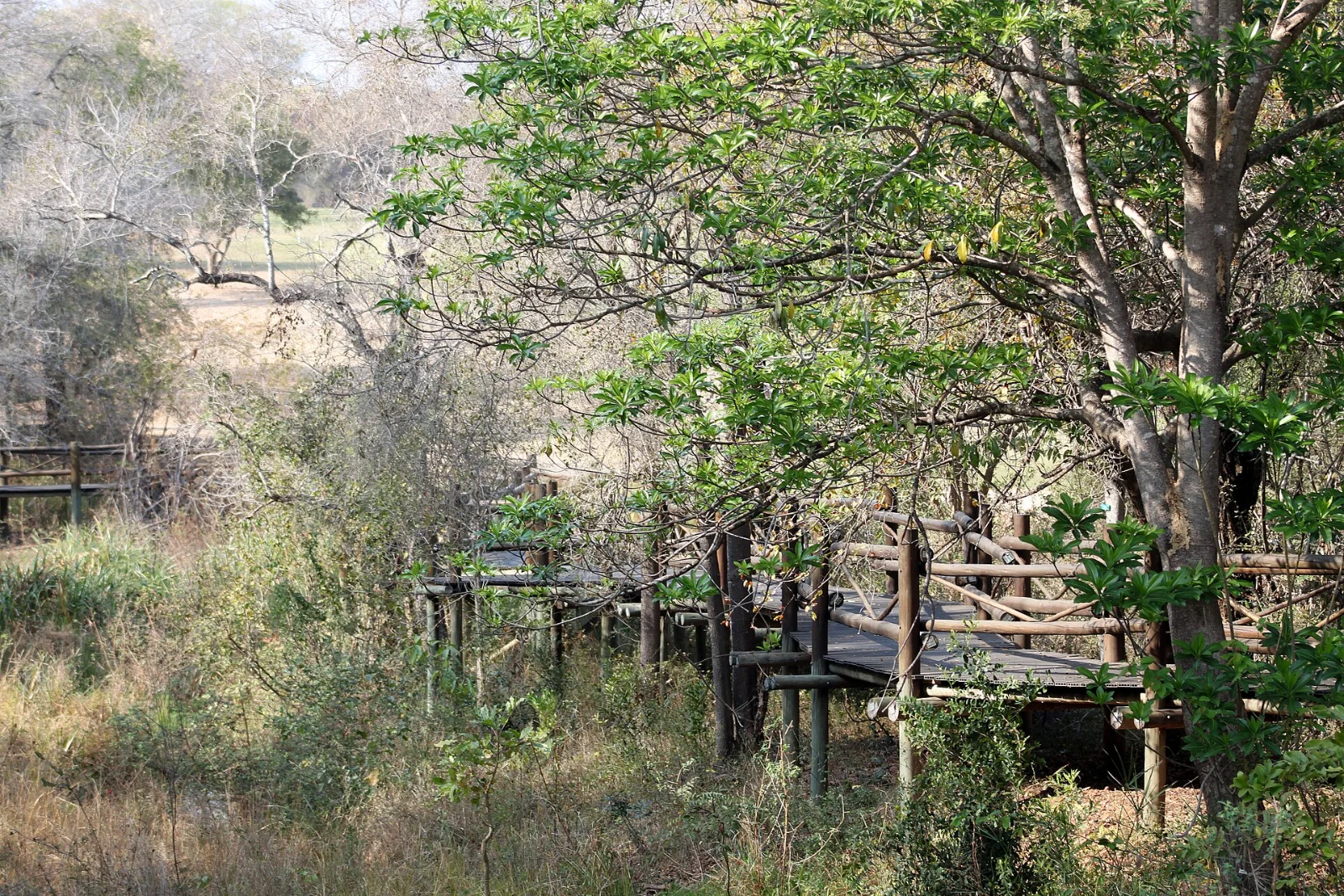
Hides suit children. They are seated, shaded and close to the water, and the rules are simple: whisper, keep hands inside, and no banging on the shutters. These are good rules for adults too. Bonamanzi Game Lodge near Hluhluwe, which is BirdLife South Africa Recommended and listed as family-friendly, has hides at its waterholes and tree houses for 2 adults and 2 children under 16. Rocherpan has 3 hides on its vlei, and cabins that take up to 2 children. Garden Route Game Lodge near Albertinia lists bird walks and hide visits for children among its activities, and has a birding trail with notes on the birds placed along it by its head guide.
Our guide to places to stay with their own bird hide has more.
Plan around the child as much as the birds. An hour after sunrise and another before dusk often works better than 1 long outing; bring snacks, water and something to sit on, and stop before anyone is bored, including the adults.
Books, binoculars and clubs
A book of their own makes the birds stick, and gives a child something to point at. On BirdLife South Africa’s shop on 14 November 2026:
| Book | For | What it covers | Price |
|---|---|---|---|
| My First Book of SA Birds Vol 1 | Ages 3 to 7 | 56 common species, text in 4 languages | R180.01 (out of stock) |
| My First Book of SA Birds Vol 2 | Young readers | A further 58 birds, from the seashore to gardens | R180.01 |
| My First Book of Kruger Birds | Young readers in Kruger | 30 birds to find, in 6 groups of 5 | R210 |
| Kids’ Birds of Southern Africa, Hélène Loon | Older children | More than 60 bird groups, over 500 photographs | R190 |
Kids’ Birds of Southern Africa comes in English, Afrikaans and isiZulu. A child also needs binoculars of their own rather than a turn with an adult’s pair, since birds rarely wait for turns; our binoculars guide explains magnification and size.
Bird clubs are the next step, and the Cape Bird Club makes it an easy one for the young. Founded in 1948, it lets students under 18 join free, runs an Education Programme of workshops, field outings and camps for youngsters from under-resourced communities, and has a Mentorship Programme that pairs young birders with experienced ones. BirdLife South Africa’s 2025 Bird Fair, held on 6 September at the Pretoria National Botanical Garden, ran a children’s programme of book readings, craft sessions and scavenger hunts alongside dawn bird walks and a bird-ringing demonstration by BirdLife Northern Gauteng.
Then there is Birding Big Day, BirdLife South Africa’s free 24-hour count on a Saturday in late November or early December. Teams have up to 6 people, and BirdLife says the day is as much for a family on a morning walk in the local park as for serious atlasers, and the 6 km category keeps the count inside a small circle around a point you choose, and everyone within reach of the snacks. Our Birding Big Day guide has the details.
Where to stay
Places in the directory that welcome children and give them something to watch, with their children’s terms on each listing:
| Place to stay | Where | For birders | From |
|---|---|---|---|
| Kwa Maritane Bush Lodge | Pilanesberg, North West | Hide reached by 180 m tunnel, Junior Rangers | R5,967 a night, midweek offer |
| Mopani Rest Camp | Northern Kruger | Pioneer Dam hide, Shipandani sleep-over hide | R1,888 a night for 2 (Sep 2026) |
| Pafuri Camp | Makuleke, northern Kruger | BirdLife Recommended, family tents, child rate ages 3 to 17 | R8,450 pp sharing, fully inclusive |
| Baobab Hill House | Makuleke, northern Kruger | Private house, guided birding, children of all ages | Ask the lodge |
| Bonamanzi Game Lodge | Hluhluwe, KwaZulu-Natal | BirdLife Recommended, waterhole hides, family tree houses | R200 pp, low-season camping |
| Lake Naverone | Underberg, KwaZulu-Natal | Bird hide, 108-species list, family cottages | R600 pp, self-catering (2026 low season) |
| Rocherpan Nature Reserve | Velddrif, Western Cape | 3 hides on the vlei, cabins for families | R1,430 a cabin for 2, off peak |
| Garden Route Game Lodge | Albertinia, Western Cape | Bird walks and hide visits for children | R3,350 pp sharing, B&B (Jan to Apr 2026) |
Age rules, children’s rates and prices change. Those here are from SANParks, BirdLife South Africa’s shop and each place’s listing, checked on 14 November 2026; confirm children’s terms with the place, and malaria advice with a doctor, before you book.
More from the Journal
 Do You Need a Spotting Scope? When a Scope Helps, What to Look For and Where It MattersA scope turns grey dots on a mudflat into Curlew Sandpipers and Red Knots. When it earns its place in the car, the features that matter, and why 60x fails at noon.
 Your First Birding Safari: What to Expect, From the 05:30 Gate to the Evening ListHow a birding safari day runs, what the guide does, why the vehicle stops for a brown bird when there is an elephant over there, and the other things first-timers find odd.
 How to Log Your Bird Sightings: eBird, BirdLasser or SABAP2?eBird wants short checklists with counts, BirdLasser wants the same bird logged again and again, and SABAP2 wants 2 hours in one square. What each is for, and how to feed all 3.
The Pigeon Post
Every Thursday: 1 bird, 1 place to go and 1 place to stay, by email. Sign up and get our printable checklist of the 163 endemics of southern Africa.