
Birding With a Non-Birding Partner: Trips and Stays That Work for Both of You
Audubon defines a birder's spouse as someone who pledged their life to one. How to plan a trip that suits both of you, from lagoon cruises on wine estates to river camps.
At Benguela Cove, a wine estate on the Bot River Lagoon near Hermanus, one guest can spend the morning on the Lady Bonnie eco-cruise counting Greater Flamingos, Great White Pelicans and Chestnut-banded Plovers, while another spends it in the tasting room counting nothing in particular. The estate reports 86 species for the Bot-Kleinmond estuary and is BirdLife South Africa Recommended. It also offers guided nature walks, wine tasting and adventure golf, which covers most of the ways two people can disagree about a holiday.
Birders have a word for the other half of this arrangement. In the birding vocabulary collected by Audubon and others, SOB stands for “spouse of birder”, a non-birding partner, and Audubon’s dictionary defines one as “a person who has had the misfortune of pledging their life to a birder”. This guide is for both of you: how to shape the days, and where to stay so that neither person spends the trip waiting in the car.
Split the day the way the birds do
Birds keep their own hours, and they make the plan for you. Birders’ slang has a name for the middle of the afternoon, siesta time, when birds, and therefore birders, are least active. That gives a working pattern for a mixed couple: the birder goes out early, when the birding is best, and the shared plans fill the middle of the day, when the birder has the least to lose. A long lunch on a wine farm costs the birder very little, whereas a tour that leaves at 10:00 eats the best of the morning.
It helps to agree the birding hours before the trip rather than during it. A birder who has a protected dawn walk every day is less likely to stop the car for every roadside roller, and a partner who knows the afternoons are theirs is less likely to mind when it happens anyway.
Choose places with a second reason to be there
The easiest trips are to places that would be worth the journey without the birds. Our directory’s guide to birder-friendly places explains what a good birding stay offers; for a mixed couple, look for that plus one thing the non-birder would book anyway.
Wine country. Benguela Cove sits between its vineyards and the lagoon, on the R43 at Walker Bay. The villas are self-catering, with 3 to 5 bedrooms, so it suits 2 couples as easily as 1. The birder gets the estuary and the cruise; the specials the estate names include Blue Crane, Black Harrier, African Oystercatcher and Caspian Tern, which are reasons enough for an early start.
A fynbos reserve with a spa. Grootbos Private Nature Reserve, near Gansbaai and about 2 hours from Cape Town, offers dedicated birding outings with its guides, short trails and bird lists and bird books for guests, and counts 118 species. Cape Sugarbird and Black Harrier are the birds it names. For the other half there is horse riding, coastal cave visits and, at extra cost, boat-based whale watching and spa treatments. Rates start at R8,450 per person sharing a night, full board, on its Fynbos Superbloom special. Our guide to places to stay near Cape Town has more within a 2-hour drive.
The bush. On a safari, the non-birder’s interest is often bigger and furrier. Chitwa Chitwa in the Sabi Sand describes its guides as expert birders and counts more than 300 species, with summer migrants such as Woodland Kingfisher and European Roller. Rates include game drives and walks, so the non-birder gets the drives they came for, and a spa is on offer for the afternoons. In a private reserve, it is worth asking whether a birding drive can be arranged for one person while the other follows the big game. The rate, from R28,447 per person sharing a night in 2026, is the other conversation to have early.
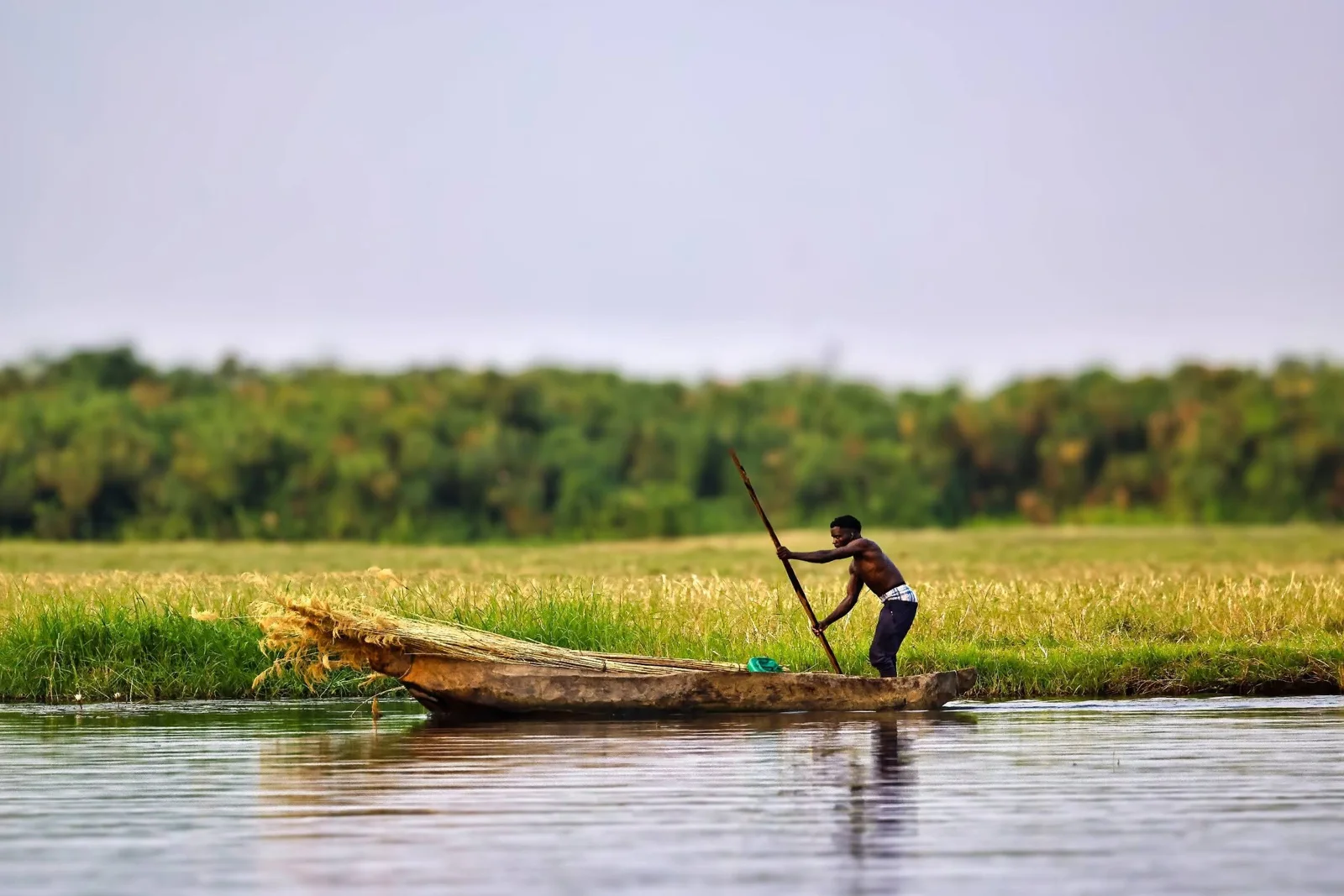
The river. Chobe River Camp, in Namibia’s Zambezi Region, 4 km from the Ngoma border post, runs a guided birding drive of about 3 hours, seasonal and dependent on the river level, which can only be booked at the camp. Its boat cruises of about 3 and 6 hours go into the channels, and there is canoeing, guided walks, village visits and day trips into Chobe National Park. A boat on the Chobe is one of the few places where a birder and a non-birder can be equally pleased with the same seat. Our Chobe River birding guide covers what lives along it.
Habits that keep the peace
Some practical points help any mixed trip. Bring a second pair of binoculars, so the partner can see what the fuss is about without waiting for the first pair. Keep the bird talk short at dinner. Say yes to the partner’s plans in the middle of the day, and mean it. Choose self-catering or a lodge with a flexible breakfast, so that an early start for one does not mean an early start for both.
Be careful with hides. An hour in a hide is a treat for a birder and a long sit for anyone else, so offer it as an option rather than a plan, and pick hides near a camp or a picnic site, where the partner can leave when they have had enough. A short visit at the busy time of day, with a flask, is an easier sell than a long one at noon.
And keep the target list realistic. The birding vocabulary has a word for a bird that keeps eluding you, the nemesis bird, and another for missing a bird you went looking for: a dip. Neither improves with a reluctant passenger in the car. Twitching a rarity 3 hours away is a solo trip.
When the partner starts noticing birds
It happens. Birders call the bird that started their obsession the spark bird, and on a trip like these it could be anything, a fish eagle from the boat or a roller from the lodge deck. If it happens, let it happen slowly. If it does not, the trip still worked, because both of you had the holiday you came for.
Where to stay
Places where the birding and the other attractions sit side by side:
| Place to stay | Where | For birders | From |
|---|---|---|---|
| Benguela Cove Lagoon Wine Estate | Bot River Lagoon, near Hermanus | BirdLife Recommended, lagoon eco-cruise, 86 estuary species | Ask the lodge |
| Grootbos Private Nature Reserve | Near Gansbaai, Western Cape | Guided birding outings, 118 species, Cape Sugarbird | R8,450 pp sharing, full board (special) |
| Chitwa Chitwa | Sabi Sand, Greater Kruger | Guides described as expert birders, over 300 species | R28,447 pp sharing, full board |
| Chobe River Camp | Zambezi Region, Namibia | Guided birding drive, Chobe boat cruises | N$2,600 pp sharing, B&B |
Rates and activities are as the places’ listings give them, checked on 15 November 2026. Confirm what is included, and which activities cost extra, when you book.
More from the Journal
 Do You Need a Spotting Scope? When a Scope Helps, What to Look For and Where It MattersA scope turns grey dots on a mudflat into Curlew Sandpipers and Red Knots. When it earns its place in the car, the features that matter, and why 60x fails at noon.
 Your First Birding Safari: What to Expect, From the 05:30 Gate to the Evening ListHow a birding safari day runs, what the guide does, why the vehicle stops for a brown bird when there is an elephant over there, and the other things first-timers find odd.
 How to Log Your Bird Sightings: eBird, BirdLasser or SABAP2?eBird wants short checklists with counts, BirdLasser wants the same bird logged again and again, and SABAP2 wants 2 hours in one square. What each is for, and how to feed all 3.
The Pigeon Post
Every Thursday: 1 bird, 1 place to go and 1 place to stay, by email. Sign up and get our printable checklist of the 163 endemics of southern Africa.