
Cederberg Birding: Cape Rockjumper, Protea Canary and the Sandstone Valleys
Habituated Cape Rockjumpers at the Wolfberg Cracks, the Protea Canary that makes birders work for it, Karoo birds on the dry eastern side, and the farm stays and campsites that put you there at dawn.
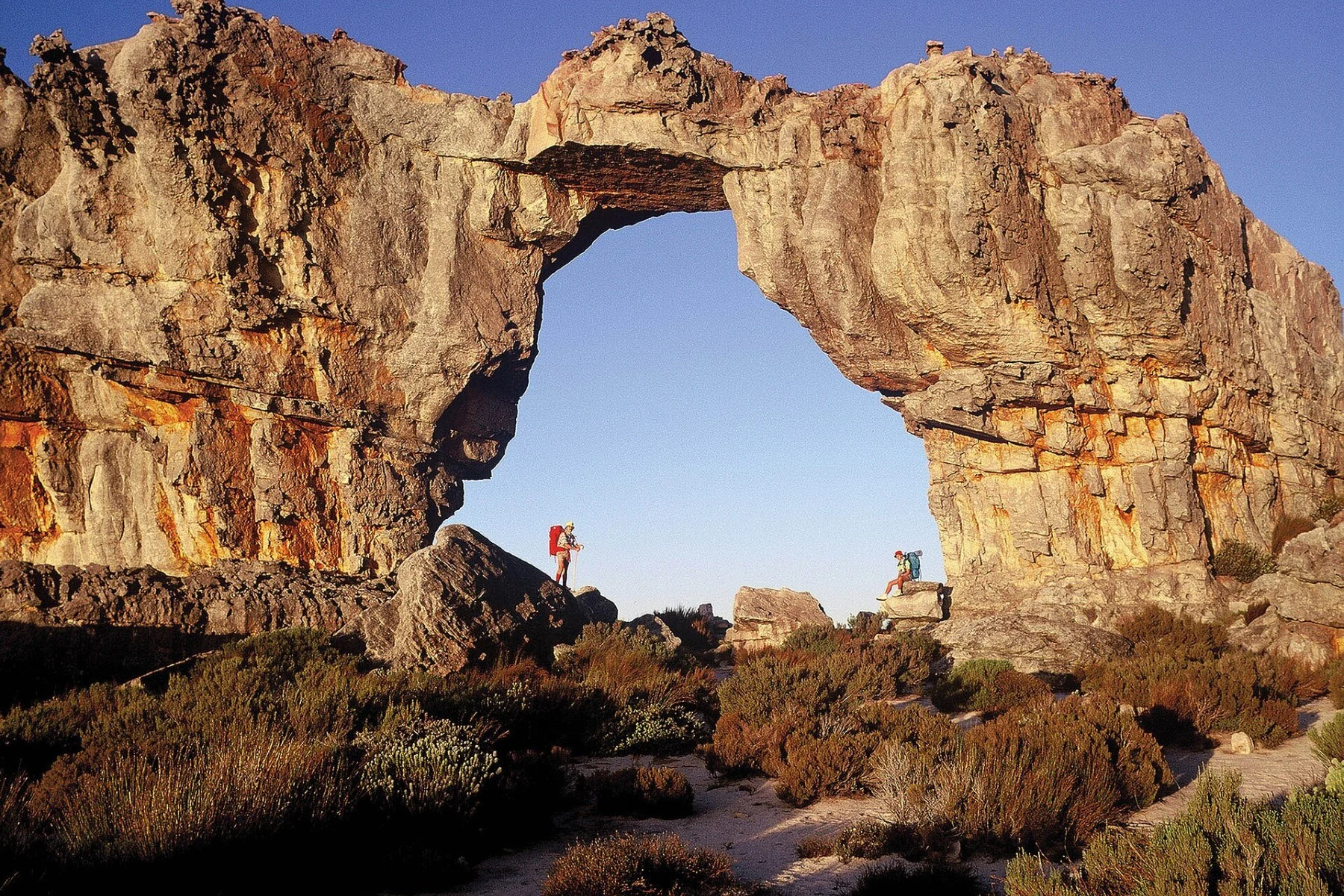
In the Cederberg, the Cape Rockjumpers have got used to people. Krista Oswald and Alan Lee of BirdLife South Africa, writing in African Birdlife in 2021, named the Wolfberg Arch and the Wolfberg Cracks as the best sites for habituated rockjumpers, birds relaxed enough to photograph. Getting to them is the hard part: CapeNature rates the Wolfberg Arch trail at about 8 hours and says it is not for beginners or the unfit. The rockjumpers wait at the top, which seems fair, since they live there.
The Cederberg lies off the N7 between Citrusdal and Clanwilliam, about 3 hours from Cape Town, a range of sandstone with more than 2,500 rock art sites. CapeNature proclaimed the Cederberg Wilderness in 1973, and BirdLife International’s Important Bird Area for the Cedarberg and Koue Bokkeveld complex covers 754,290 ha of mountain fynbos and the karroid plains around it. It is fynbos birding with a dry edge: the same day can hold a Cape Sugarbird and a Karoo Chat.
The Important Bird Area
BirdLife International’s factsheet says the mountain fynbos of the complex holds all of the Cape fynbos range-restricted and biome-restricted species, the set of birds found only in this corner of the continent. It lists the site under the A1, A2 and A3 criteria, which in plain terms means threatened species, restricted-range species and a biome-restricted community, all in the one place. Its most recent assessment, in 2013, rated the threat to the site as high.
On the ground, the two birds most visitors come for are Cape Rockjumper and Protea Canary, the seedeater older field guides call Protea Seedeater. The farm stays add Cape Sugarbird and Orange-breasted Sunbird to their lists, and most of them name Verreaux’s Eagle, which in a range with this many cliffs is no surprise.
Cape Rockjumper: the Wolfberg Cracks
CapeNature sells day permits for the Wolfberg Arch at 3 places in the Cederberg, Driehoek Guest Farm among them. The trail begins as a strenuous walk and eases as it approaches the arch through the Wolfberg Cracks. The photograph that ran with Oswald and Lee’s piece shows a male Cape Rockjumper standing guard at the Cracks, and their advice is simple: some hiking is required, and the reward is a bird that sits still.
Start early, carry water, and listen as you climb. For the bird’s other sites, from Rooi-Els to the Swartberg, see where to see a Cape Rockjumper.
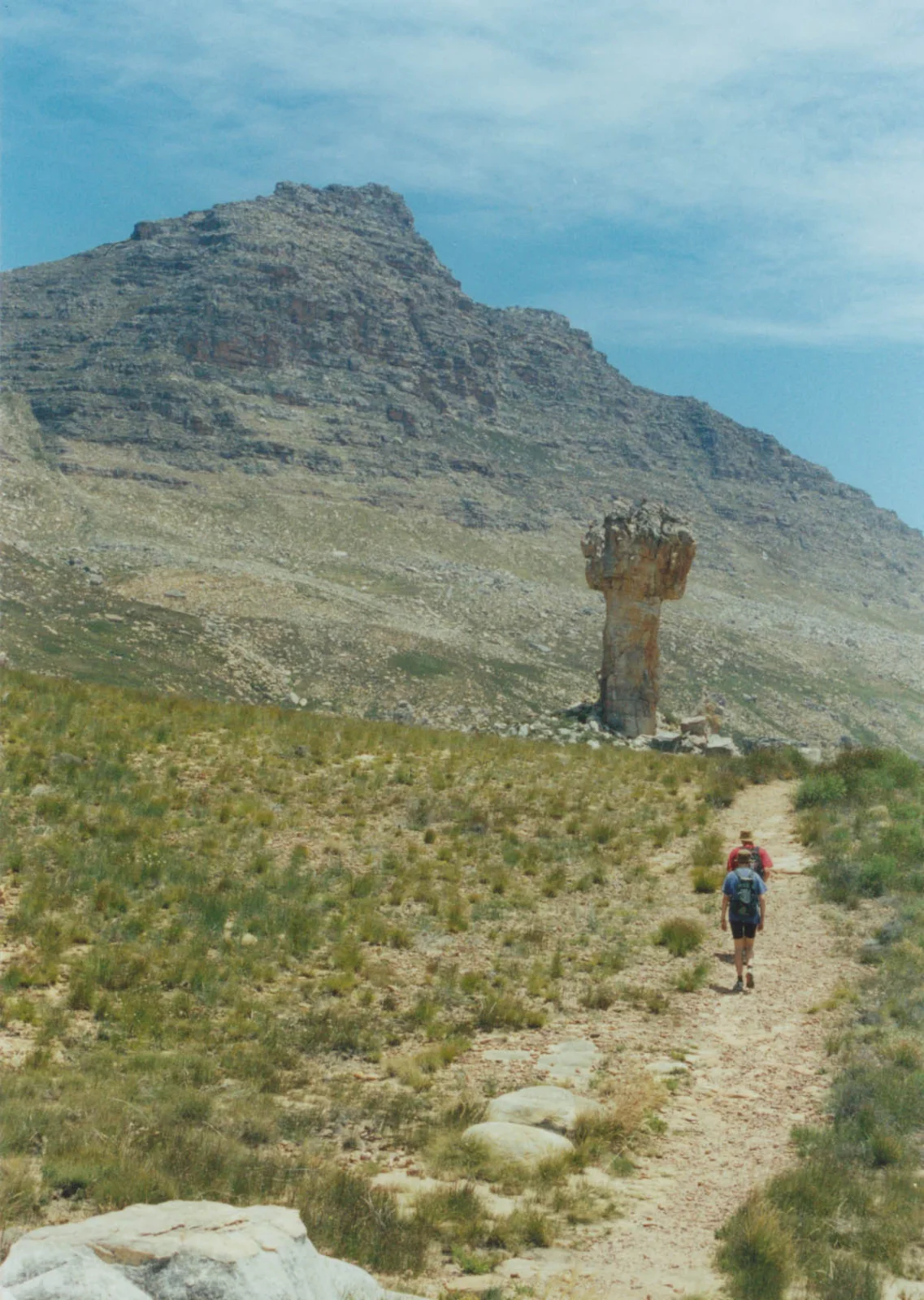
The Maltese Cross trail is the shorter alternative, a well-marked walk of about 5 hours that also needs a permit. CapeNature limits the wilderness to 50 people per block per day, across 3 blocks of about 24,000 ha each, with groups of 3 to 12, so book ahead for overnight hikes.
Protea Canary: the one that makes you work
Protea Canary is listed as Near Threatened, and it has a reputation for making birders wait. On a 3-day Tankwa trip in January 2022, a Birding Ecotours group stopped in the mountain fynbos on the way in for it, and it did not show.
The Cederberg edge is one of the better bets. On a private tour in September 2025, Birding Ecotours found a singing bird at Kransvlei Poort outside Clanwilliam after a long search, with Verreaux’s Eagle, Southern Boubou, Fairy Flycatcher, Cape Rock Thrush and Streaky-headed Seedeater in the same area. In October 2024, another Birding Ecotours group found one in the karroid fynbos on the Skitterykloof road, where the Karoo scrub gives way to protea bushes on the Tankwa side of the mountains, with Cape Sugarbirds feeding in the same proteas.
The pattern in both reports is the same: a long search, then a bird that suddenly obliges, as if it had been there all along. Learn the song before you go, and give it a morning.
The dry side: Biedouw and the Karoo edge
East of the main range the rain falls away and the fynbos thins into Succulent Karoo. Enjo Nature Farm, in the Biedouw Valley about 65 km and an hour from Clanwilliam via the R364 and a gravel section, publishes its own checklist of 123 species. It names Grey-winged Francolin, Verreaux’s Eagle, Black Harrier, Karoo Chat, Rufous-eared Warbler, African Black Duck and Cape Sugarbird, along a seasonal river and in the veld around it. That is a fynbos sugarbird and a Karoo warbler on one farm list, which tells you which side of the mountains you are on: both.
Further east, the R355 runs up the Tankwa Karoo, with the Cederberg as its western skyline. The Tankwa Karoo birding guide covers the larks, the Cinnamon-breasted Warbler and the gravel roads, and the Cederberg makes a base for the fynbos half of a combined trip.
The Pakhuis side and Clanwilliam
The R364 leads out of Clanwilliam into the Pakhuis side of the range. CapeNature’s Kliphuis campsite is about 17 km along it, roughly 280 km and 3 hours from Cape Town, and the donkey cart trail to Heuningvlei, one of the 14 Moravian mission outposts, starts at the top of the pass. The ride takes about 2 and a half hours, at the pace of the donkey.
de Pakhuys, a farm on this side of the range, publishes its own birding page covering the garden, the Brandewyn River, the farm dams and the fynbos trails. It names Cape Rockjumper, Protea Canary, Verreaux’s Eagle, Orange-breasted Sunbird and Cape Siskin. CapeNature lists de Pakhuys among the places that sell permits for the Pakhuisberg and for Rocklands, the bouldering area, so the rockjumpers here may have to share their boulders with climbers.
For a local guide, BirdLife South Africa’s GoBirding lists Johnny van Rooyen, an accredited bird guide whose operating area runs from Lambert’s Bay and Velddrif to Clanwilliam (+27 71 270 0754).
Algeria and the central valleys
CapeNature’s Algeria camp, where the wilderness office sits, is the main CapeNature base in the range. From Cape Town take the N7 past Citrusdal, turn right after 28 km at the Cederberg and Algeria turn-off, and follow the gravel for 17 km; CapeNature puts the drive at about 250 km and 3 hours. Reception is open from 07:30 to 19:00 between September and April, and check-in for overnight guests is strictly 14:00 to 16:00. Algeria has 2 mountain-bike tracks, one of them called the Rock Jumper trail, which at 3.3 km is the only rockjumper in the range guaranteed to be where the map says.
CapeNature’s self-catering accommodation in the Cederberg starts at R1,310 and camping at R220, and the wilderness trail conservation fee is R85 for a day entry and R70 a night for adults, with lower rates for children, as the reserve page gave them on 15 November 2026.
Further into the valleys, Kromrivier Cederberg Park, on Kromrivier Farm, says 235 species have been recorded in what it describes as an Important Bird Area. It names Orange-breasted Sunbird, Cape Sugarbird and Verreaux’s Eagle among the fynbos, mountain streams and rock, and its guests can hike to Truitjieskraal; CapeNature sells day permits for Truitjieskraal and the Stadsaal Cave there. Mount Ceder, deeper in the mountains, publishes its own Top 8 list of birds on the property and offers early-morning bird watching from its villas. Driehoek Guest Farm links to its own checklist of 92 species, marks birdwatching points along its walks, and names Cape Batis, Karoo Chat, Jackal Buzzard, Bokmakierie and Cape Bunting. Driehoek says the road over the Uitkyk Pass is closed for now and gives a way in through Ceres, so check the route with the farm before you drive.
When to go
Spring suits the Cederberg. Birding Ecotours calls spring the best time of year for many of the dry-country specials, because that is when they start displaying, and both of its Protea Canary sightings above fell in September and October. CapeNature asks hikers to check the forecast before they set out, to pack a warm jacket and raincoat in winter, and warns that trails may be closed at times because of the weather. For a longer loop that adds the West Coast and the Tankwa, see the West Coast and Karoo birding route.
Where to stay
The places to stay for birders in the Cederberg, in the order they appear above:
| Place to stay | Where | For birders | From |
|---|---|---|---|
| de Pakhuys | Pakhuis side, near Clanwilliam | Own birding page; Cape Rockjumper, Protea Canary | Ask the lodge |
| Enjo Nature Farm | Biedouw Valley, 65 km from Clanwilliam | 123-species checklist, fynbos and Succulent Karoo | R140 per adult camping |
| Kromrivier Cederberg Park | Kromrivier Farm, Cederberg | 235 species recorded, Cape Sugarbird, Verreaux’s Eagle | R1,250 a tent for 1, self-catering (winter 2027) |
| Driehoek Guest Farm | Cederberg, near Clanwilliam | 92-species checklist, birdwatching points on walks | Ask the lodge |
| Mount Ceder | Deep in the Cederberg | Own Top 8 bird list, early-morning birding | Ask the lodge |
Trail permits, road conditions and rates in the Cederberg change, and farm roads can close. Facts were checked on 15 November 2026 with CapeNature, BirdLife International, the trip reports named above and each listing on Birding Dispatch. Confirm permits with CapeNature and routes with each place to stay before you travel.
More from the Journal
 Namib-Naukluft and Sossusvlei for Birders: Dune Lark, Desert Raptors and the Naukluft SpecialsA lark that lives on the dunes and nowhere else, Lappet-faced Vultures nesting in the desert, coursers on the gravel plains and the northern specials around the Naukluft cliffs, in one of Africa's largest parks.
 Lake Baringo and Lake Bogoria Birding: The Owl Walks, the Cliffs and the FlamingosA local guide who knows where every nightjar and eagle-owl slept last night, thorn scrub full of hornbills, a Goliath Heron colony on a rock, and the flamingo lake next door that keeps rising.
 Akagera Birding: Rwanda’s Savanna, Lakes and Papyrus, and the Shoebill ChancesRed-faced Barbet in the southern woodland, Papyrus Gonolek and Carruthers's Cisticola in the swamps, a lake of hippos and lapwings, and a Shoebill that hides in the wetlands more than it shows.
The Pigeon Post
Every Thursday: 1 bird, 1 place to go and 1 place to stay, by email. Sign up and get our printable checklist of the 163 endemics of southern Africa.