
Birding South Africa on a Budget: Free Roads, Park Fees and Cheap Beds
A public road with 150 species a day, Marievale's hides for R41, SANParks campsites from R322 a night, the day a Wild Card pays for itself, and self-catering stays that do something for birders.
On the 20 km of gravel between Pienaarsrivier and the village of Kgomo-Kgomo, north of Pretoria, BirdLife South Africa says a birder can expect well over 150 species in a day at any time of year. In March it is one of the best places in the country for the rare River Warbler. It is a public road, so the day costs fuel and a packed lunch, which works out at a very good price per species.
Park fees and beds are the 2 costs a birder can plan around; the 04:30 alarm, sadly, comes free with all of them. This guide gives the 2026/27 SANParks fees, the point at which a Wild Card pays for itself, and the campsites, cabins and farm cottages in our directory that cost least.
Start with the free and nearly free sites
The Zaagkuilsdrift road. BirdLife’s GoBirding page calls it one of the country’s top bushveld birding destinations and a regular rarity hotspot. Between December and March, Southern Carmine Bee-eater, Amur and Red-footed Falcons and European Roller use the farmland near Pienaarsrivier, which is a lot of colour for no entry fee, and late summer, March and April, brings the Palearctic warblers. Several sections become virtually impassable in wet years, when a high-clearance 4×4 is needed.
Wakkerstroom. The hills behind the village are commonage, and GoBirding says anyone may walk them; from October to March, breeding Yellow-breasted Pipits display on the slopes of Ossewakop. The best views of the wetland are from the raised road north towards Amersfoort and from the picnic spot below it. Fickland Pan, on community land, charges an entrance fee.
Marievale Bird Sanctuary. The 1,000 ha sanctuary at the southern end of the Blesbokspruit Ramsar site, 1 to 1.5 hours from OR Tambo International Airport, has 5 hides and is open every day. Its fees from 1 April 2025 are R41 an adult, R37 for a child or pensioner and R28 a vehicle. GoBirding calls it the best place in Gauteng for Goliath, Black, Squacco and Purple Herons, and notes that the Shelduck hide is run down and not recommended. Our guide to birding near Johannesburg adds more sites around the city.
What a day in a national park costs
SANParks charges a daily conservation fee for every person in the park, on top of accommodation. These are the adult rates from 1 November 2026 to 31 October 2027; children aged 2 to 11 pay about half.
| Park | South Africans | SADC nationals | International |
|---|---|---|---|
| Kruger | R140 | R296 | R692 |
| Kgalagadi | R134 | R283 | R662 |
| Addo Elephant | R115 | R242 | R565 |
| Mapungubwe, Marakele, Golden Gate, Karoo | R76 | R158 | R358 |
| West Coast (outside flower season) | R85 | R141 | R166 |
| Agulhas | R63 | R130 | R295 |
| Boulders, Table Mountain | R57 | R118 | R282 |
SADC nationals from a country in a transfrontier agreement pay the South African rate at that park, so a Mozambican or Zimbabwean in Kruger pays R140. Members of WILD, SANParks’ loyalty programme, pay no conservation fee when they show their ID and WILD card on arrival.
When a Wild Card pays for itself
A Wild Card is a year’s entry to a group of parks. From 1 November 2026 to 31 October 2027, SANParks prices them as follows:
| Card | Individual | Couple | Family |
|---|---|---|---|
| SANParks cluster (21 national parks) | R950 | R1,535 | R1,835 |
| All Parks cluster (80+ parks, including CapeNature, Msinsi and Eswatini) | R985 | R1,615 | R1,980 |
| CapeNature cluster (24 reserves) | R850 | R1,395 | R1,670 |
| International All Parks | R5,265 | R8,225 | R9,840 |
The local cards are for South African and SADC nationals, and for foreigners with a South African residence or work permit; other visitors can buy only the international card. A couple card covers 2 people, and a family card up to 7.
The sums are simple, which is not often said of park fees. In Kruger, at R140 a day, an individual South African card costs less than paying at the gate from the 7th day in a year, and a couple card from the 6th. At Marakele or Mapungubwe, at R76 a day, an individual needs 13 days before the card wins. For a foreign visitor, the international individual card beats Kruger’s R692 a day from the 8th day, which a 2-week trip with a week in Kruger and a few days in other parks can reach.
Sleep at a campsite or cook for yourself
The cheapest beds in South Africa’s parks are campsites, and several in the directory are close to hides or rivers, so the dawn chorus comes with the pitch.
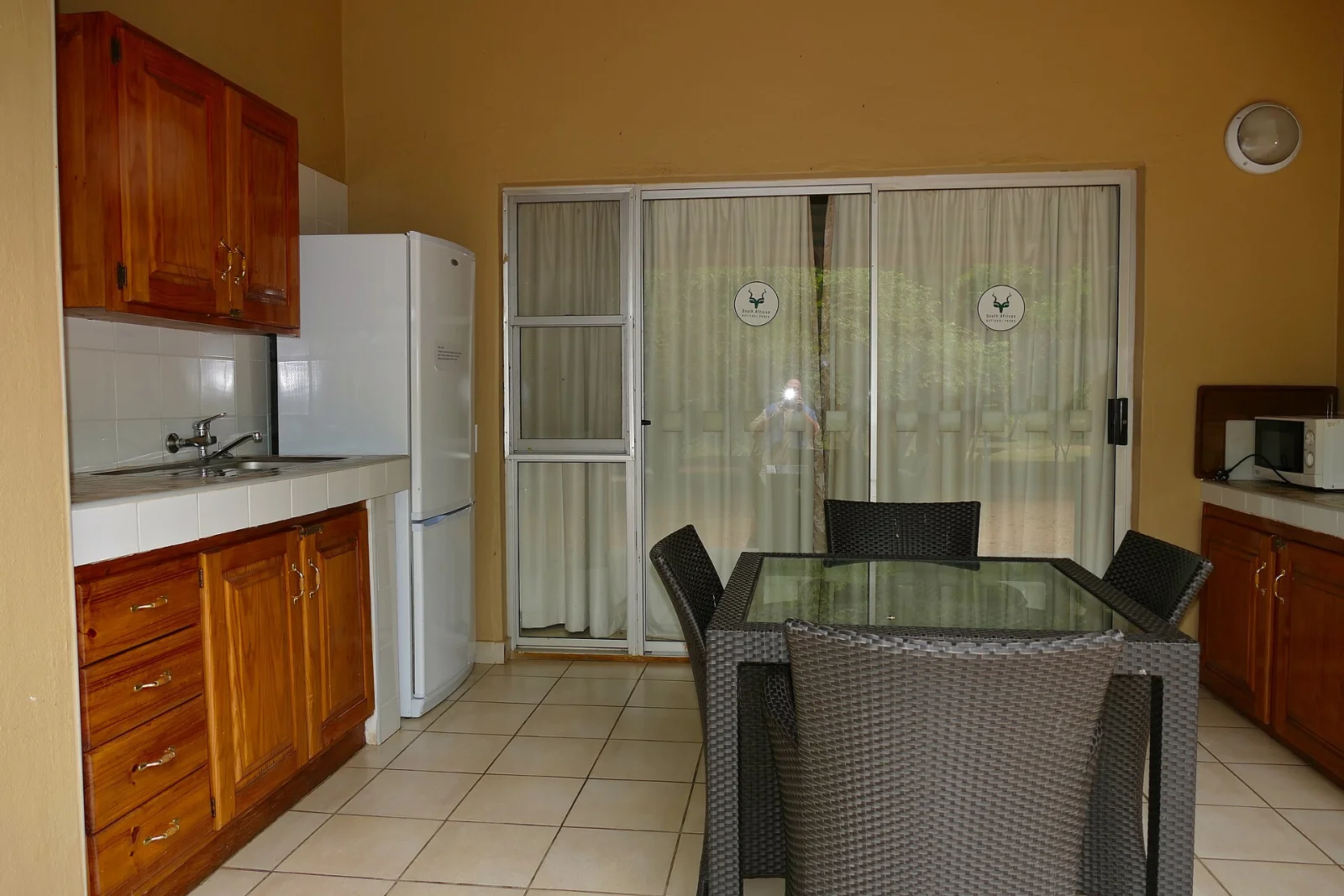
In Mapungubwe, Mazhou Camp Site has 10 powered sites, from R404 a night for 2 people with power (rate listed in November 2026), with the conservation fee and a 1% community levy on top; the Maloutswa Pan hide is nearby. On the Orange River in the Richtersveld, Potjiespram Campsite starts at R322 a site and De Hoop Campsite at R386, and the park’s checklist runs to 211 birds; the roads there are for 4×4 vehicles. In Kruger’s north, Mopani Rest Camp has no camping, but its self-catering bungalows start at R1,888 a night for 2 (September 2026), and the camp has the Pioneer Dam hide and the Shipandani sleep-over hide.
KwaZulu-Natal has 2 cheap bases for coastal and Zululand specials. Bonamanzi Game Lodge, about 5 km from Hluhluwe, has hides at its waterholes and camping from R200 a person in the low season, with at least 2 people to a site. River Valley Nature Reserve in Margate, which names African Crowned Eagle, Narina Trogon and African Finfoot among its 130 recorded species, charges from R130 a person sharing to camp out of season. Inside Mkhuze Game Reserve, GoBirding describes the Emshopi campsite as 35 electrified stands with shared ablutions, and asks visitors to bring all their own food and fuel.
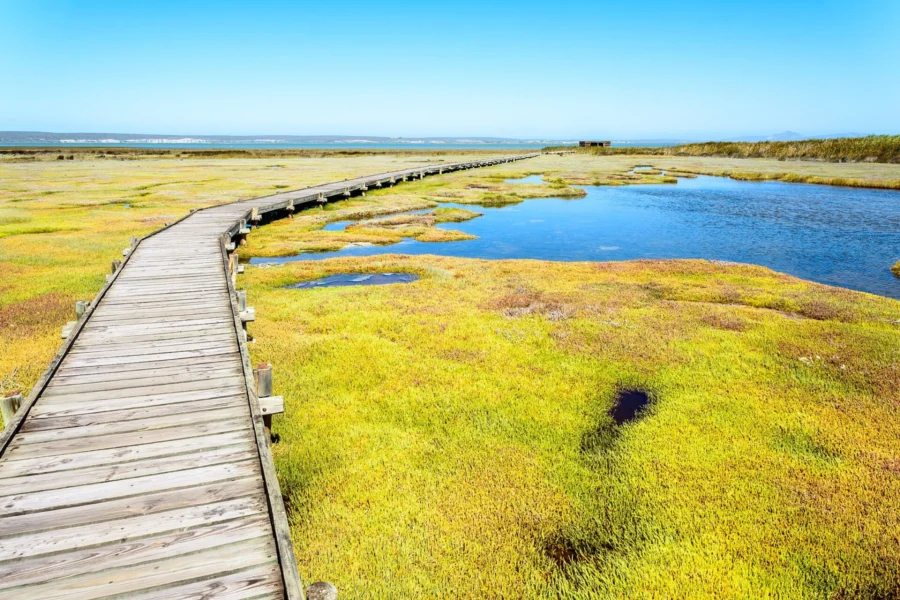
In the Western Cape, CapeNature’s cabins are the budget choice. Rocherpan Nature Reserve, about 25 km north of Velddrif, has 3 hides on the vlei and cabins from R1,430 a night for 2 off peak, and CapeNature records 183 species there. Grootvadersbosch, near Heidelberg, has 2 hides that look into the forest canopy, Narina Trogon among its specials, and cabins from R1,375 a night for 1 or 2 guests off peak.
Farm cottages can match those prices, and at least 1 throws in a feeding table. Magoebaskloof Birders’ Cottages charges from R580 a person sharing, self-catering, until February 2027, and has a hide in the farm’s forest, a feeding table and a list of 152 species. Greystone Lodge, between Dullstroom and Belfast, has chalets from R1,200 a night on weekdays in 2026 and a dam wetland with breeding Blue Cranes and Red-chested Flufftail. Our guide to self-catering birding cottages lists more.
Other ways to spend less
Travel in a group and split a cottage; birders already share hides, so sharing a kitchen is a small step. Millstream Farm near Dullstroom rents self-catering cottages that sleep up to 10 from R2,550 a night, about R255 a person when full, with a hide on Wordsworth Waters and 200 species recorded.
Choose weekday and off-peak nights, which several of the places above price lower, and leave the expensive specials for one paid day with a local guide rather than a full tour. And use free tools: our guide to birding apps and field guides explains which apps cost nothing.
Where to stay
The places in this guide, with what each offers a birder:
| Place to stay | Where | For birders | From |
|---|---|---|---|
| Mazhou Camp Site | Mapungubwe National Park | 10 powered sites, Maloutswa Pan hide nearby | R404 a night for 2 (Nov 2026) |
| Potjiespram Campsite | Richtersveld, Orange River | Riverside camping, 211-bird park checklist | R322 a campsite |
| De Hoop Campsite | Richtersveld, Orange River | Riverside camping, Dusky Sunbird, Secretarybird | R386 a campsite |
| Mopani Rest Camp | Northern Kruger | Pioneer Dam hide, Shipandani sleep-over hide | R1,888 a bungalow for 2 (Sep 2026) |
| Bonamanzi Game Lodge | Near Hluhluwe, KwaZulu-Natal | BirdLife Recommended, hides at the waterholes | R200 pp camping (low season) |
| River Valley Nature Reserve | Margate, KwaZulu-Natal | BirdLife Recommended, 130 species, African Finfoot | R130 pp sharing camping (out of season) |
| Rocherpan Nature Reserve | North of Velddrif, Western Cape | 3 hides on the vlei, flamingos, pelicans | R1,430 a 2-person cabin (off peak) |
| Grootvadersbosch Cabins | Near Heidelberg, Western Cape | 2 forest hides, Narina Trogon | R1,375 a cabin for 1 or 2 (off peak) |
| Magoebaskloof Birders’ Cottages | Magoebaskloof, Limpopo | BirdLife Recommended, forest hide, 152 species | R580 pp sharing, self-catering |
| Greystone Lodge | Between Dullstroom and Belfast | BirdLife Recommended, breeding Blue Cranes | R1,200 a chalet (weekdays, 2026) |
| Millstream Farm | Near Dullstroom, Mpumalanga | Hide on Wordsworth Waters, 200 species recorded | R2,550 a self-catering cottage |
Conservation fees and Wild Card prices are SANParks’ for 1 November 2026 to 31 October 2027, and the other prices are from each place’s listing or BirdLife South Africa’s GoBirding pages, checked on 14 November 2026. Rates change; confirm them when you book.
More from the Journal
 Zululand Birding Route: a 10-Day Loop by Car from DurbanA 10-day self-drive from King Shaka airport: Dlinza's canopy, Green Barbet at Ongoye, the Cape Vidal road, Hluhluwe-iMfolozi's vultures, the uMkhuze hides and Ndumo's pans, with a birder-friendly roost every night.
 West Coast and Karoo Birding Route: 10 Days by Car from Cape TownA 10-day self-drive from Cape Town: Langebaan's waders, the Berg River pans, Rocherpan's hides, 40,000 gannets at Lambert's Bay, Cape Rockjumper in the Cederberg and larks in the Tankwa, with a birder-friendly roost every night.
 Where to Stay for Birding Big Day: The Best Bases for a Big CountOn Saturday 5 December, teams all over South Africa count from wherever they draw their circle. 9 places to stay whose 50 km circle takes in river, forest, grassland, wetland and dry bush, from Pafuri Camp in the far north of Kruger to De Hoop on the south coast.
The Pigeon Post
Every Thursday: 1 bird, 1 place to go and 1 place to stay, by email. Sign up and get our printable checklist of the 163 endemics of southern Africa.