
The Gambia Birding Guide: The Coast, the River Camps and Where to Stay
Africa's easiest birding trip from Europe, from Kotu Creek and Kartong on the coast to Tendaba, Bao Bolong and the Egyptian Plovers near Janjanbureh, with the lodges in our directory and what a guide costs.
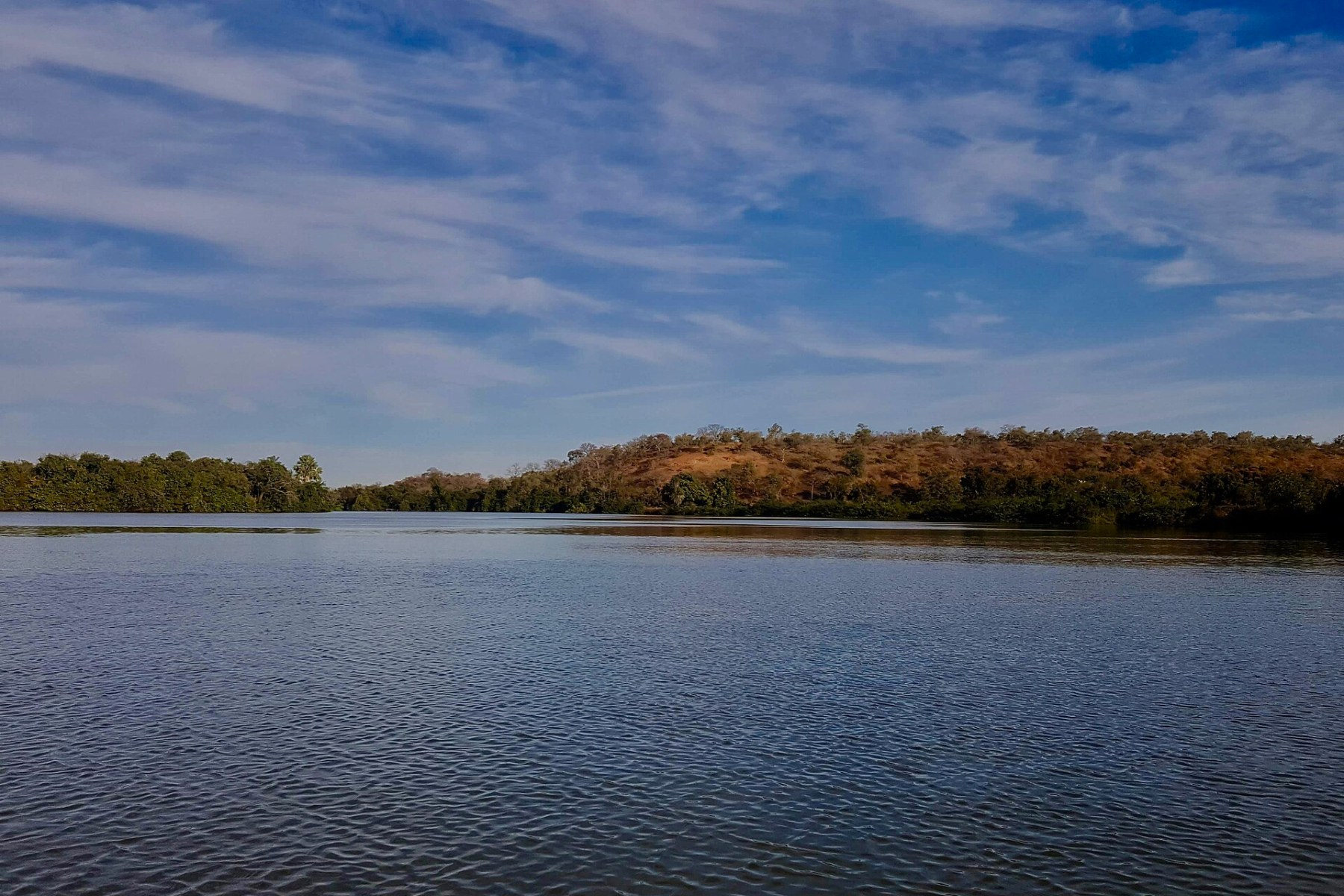
The Gambia covers 11,300 sq km, a strip of land along both banks of the Gambia River, and the African Bird Club puts its list at about 580 recorded species. Bradt’s guide calls it close on 600. Either way, that is a long list for a country you can cross in a day, and a country shaped like a river with a border drawn round it.
What makes it the easiest birding trip in Africa from Europe is the journey. Flights from London Gatwick take about 6 hours, TUI flies the route direct in the winter season, and The Gambia keeps GMT all year, so there is no jet lag to blame for a missed Western Bluebill. The dry season, when the birding is best, is also the British winter, which is a neat bit of planning on the part of the birds.
The coast: where every trip starts
Most birders base themselves on the Atlantic coast for the first few days, and the sites are close enough together that the hardest part is choosing which one to do before breakfast. The African Bird Club lists Kotu Creek, Tanji Bird Reserve, Cape Point, Pirang Ponds and the Kartong wetland for waterbirds, terns and gulls, including West African Crested Tern, Grey-headed Gull and Western Reef Heron. For forest birds it names Abuko Nature Reserve, Brufut Woods, Pirang-Bonto and Farasuto forests and the Gunjur-Konoto forest, with Guinea Turaco, Ahanta Spurfowl, African Pygmy Kingfisher, Western Bluebill and Green Hylia among the targets.
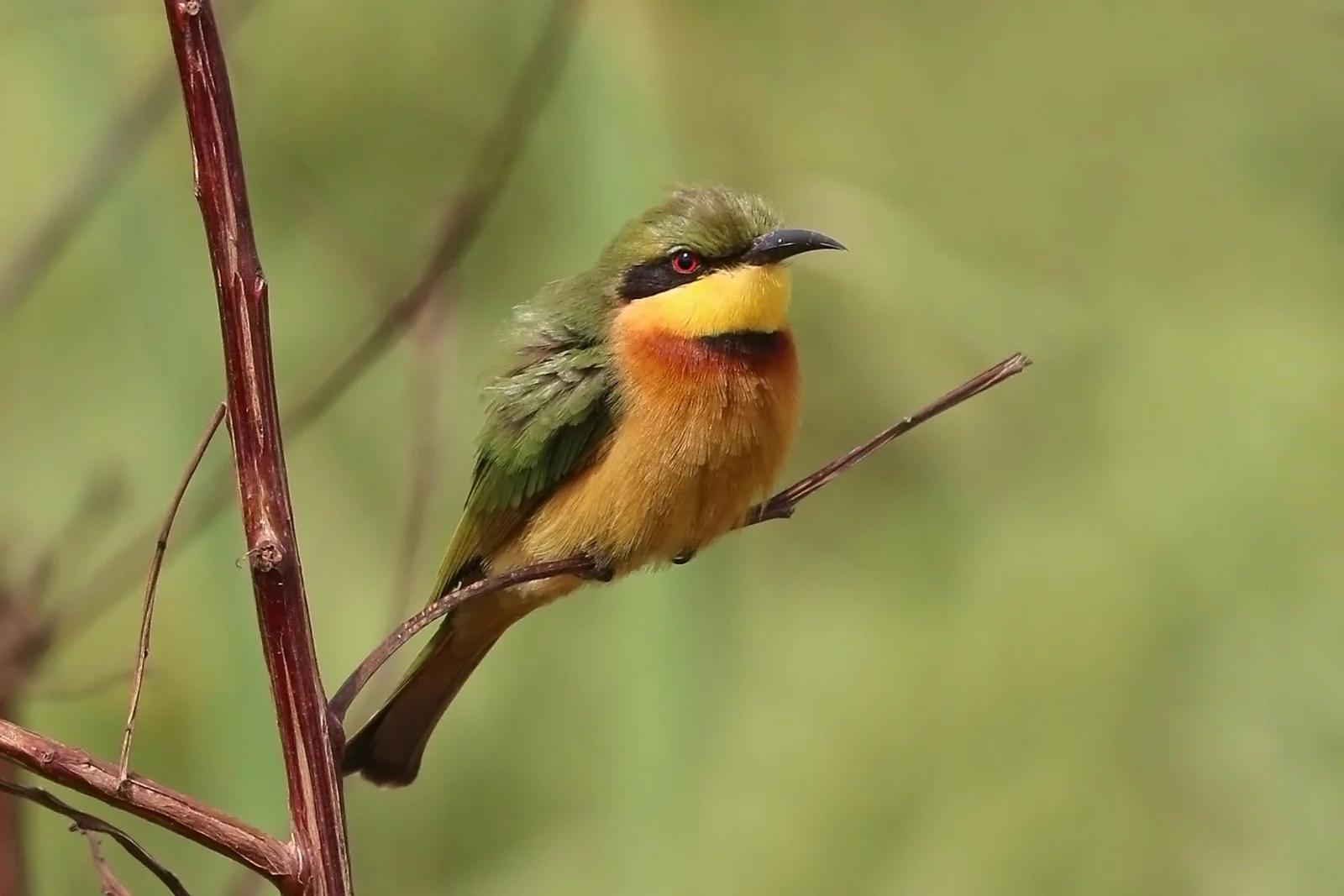
Kotu is where most people begin. Bradt describes the stream, best reached where it passes under the road at Kotu Bridge, as a good introduction to Gambian birding, and says a newcomer walking it with a guide for 2 to 4 hours could see 40 to 50 species, with an experienced Africa birder closer to 70. Not bad for a stroll along a stream beside a road. Guides wait at the Bird Guides Association kiosk north of the bridge. At low tide the mangrove-lined mud holds Senegal Thick-knee, Whimbrel and Greater Painted-snipe, and up to 6 kingfisher species work the creek. The Kotu Ponds, a short walk away, add Blue-bellied Roller and Yellow-crowned Gonolek in the scrub around the edge.
Further south, Kartong Bird Observatory was set up in 2010 and is, according to Bradt, the only permanent ringing station in the country. More than 375 species have been recorded around its reed-fringed pool, over 4,000 birds are ringed each year, and in the evening about 1,000 herons of 8 species come in to roost, which makes for a busy and opinionated hour at the pool. Brufut Woods protects about 1 sq km of coastal woodland with good footpaths, and Bradt rates it the best woodland site after Abuko, for African Pied Hornbill, Striped Kingfisher and raptors such as Lizard Buzzard and Palm-nut Vulture.
At a glance
| Place | Where | What it offers birders | From |
|---|---|---|---|
| Bakotu Hotel | Kotu Beach | Viewing platform over the Kotu Stream | Not published |
| Footsteps Eco-Lodge | Near Gunjur, south coast | 2 hides, feeders, early breakfast, 2 resident guides | GBP 21.50 pp B&B |
| Belgambia Lodge Mandinari | Tanbi Wetlands | Photo hides, private guide included | EUR 490 pps, 8 days full board |
| AbCa’s Creek Lodge | Kassagne, inland creek | Canoe and bicycle birding, bookable guide | EUR 43 a night, B&B |
| Morgan Kunda Lodge | Jarjari, by Bao Bolong | Wetland platform, local guides, boat trips | EUR 46 pp half board |
Where to stay on the coast
Bakotu Hotel sits on Kotu Stream Road beside the creek, with mature gardens and an open viewing platform above the stream basin. It names Malachite Kingfisher, Little Bee-eater and Black Heron, and it puts the Kotu walk on the doorstep. Rooms run from singles to 1-bedroom apartments for 4; it does not publish a rate.
Footsteps Eco-Lodge, an adults-only lodge of roundhouses, chalets and villas near Gunjur, is the most birder-focused stay in our directory here. It has a hide over a water feature and a second at the villa, puts out food and water, serves early breakfasts, and records more than 100 species on its grounds, among them Yellow-crowned Gonolek, Abyssinian Roller and Long-tailed Nightjar. Its 2 guides, Soloman and Mariama, run day trips of 4 to 8 hours with transport and lunch at GBP 90 for a solo birder or GBP 60 each for 2. A 1-week package with 3 full guided days, site entry fees, packed lunches and dinners costs GBP 490 per person or GBP 780 a couple on top of the room, which starts at GBP 21.50 per person with breakfast. The lodge is open from 2 November to 1 May.
Belgambia Lodge Mandinari is a solar-powered, full-board lodge beside the Tanbi Wetlands, about 40 minutes from the airport. Bradt says the 45 sq km Tanbi reserve, created in 2001, is one of the best sites in the country for rarities. The lodge has photo hides at and near the lodge, includes a private guide in its packages and names Senegal Thick-knee, Yellow-crowned Gonolek and Palm-nut Vulture. Its Relax Birding package starts at EUR 490 per person sharing for 8 days, full board, with the guide, the hide and airport transfers.
AbCa’s Creek Lodge is inland at Kassagne, about 75 km from the airport, on a tidal creek with mangroves and forest. Guests bird on foot, by bicycle or by canoe, and the lodge books outings with an experienced guide. It names African Finfoot, White-backed Night Heron and Blue-bellied Roller, which makes it a halfway house between the coast and the river, with a canoe for the commute, and rooms start at EUR 43 a night for 1 person with breakfast.
Up the river: Tendaba, Kiang West and Bao Bolong
The second half of a Gambia trip moves inland, where savanna replaces coastal scrub, the species change and the coastal comforts thin out. The African Bird Club lists Tendaba Camp and Kiang West National Park for Bronze-winged Courser, White-headed Vulture, Abyssinian Ground Hornbill, White-crested Helmetshrike and White-fronted Black Chat. Honeyguide’s December 2025 tour spent 3 nights at Tendaba Safari Camp, and warned that facilities on the river reflect a poor country, so set expectations accordingly.
Bradt calls Bao Bolong, at 220 sq km, the largest of the country’s 6 protected areas, and recommends Tendaba’s twice-daily boat trips along the Kisi and Tunku bolongs. It rates the creeks as probably the best place in the country for African Finfoot, with White-backed Night Heron, Goliath Heron and Blue-breasted Kingfisher likely, and White-crested Tiger Heron and Pel’s Fishing Owl as rarer prizes for the patient and the lucky.
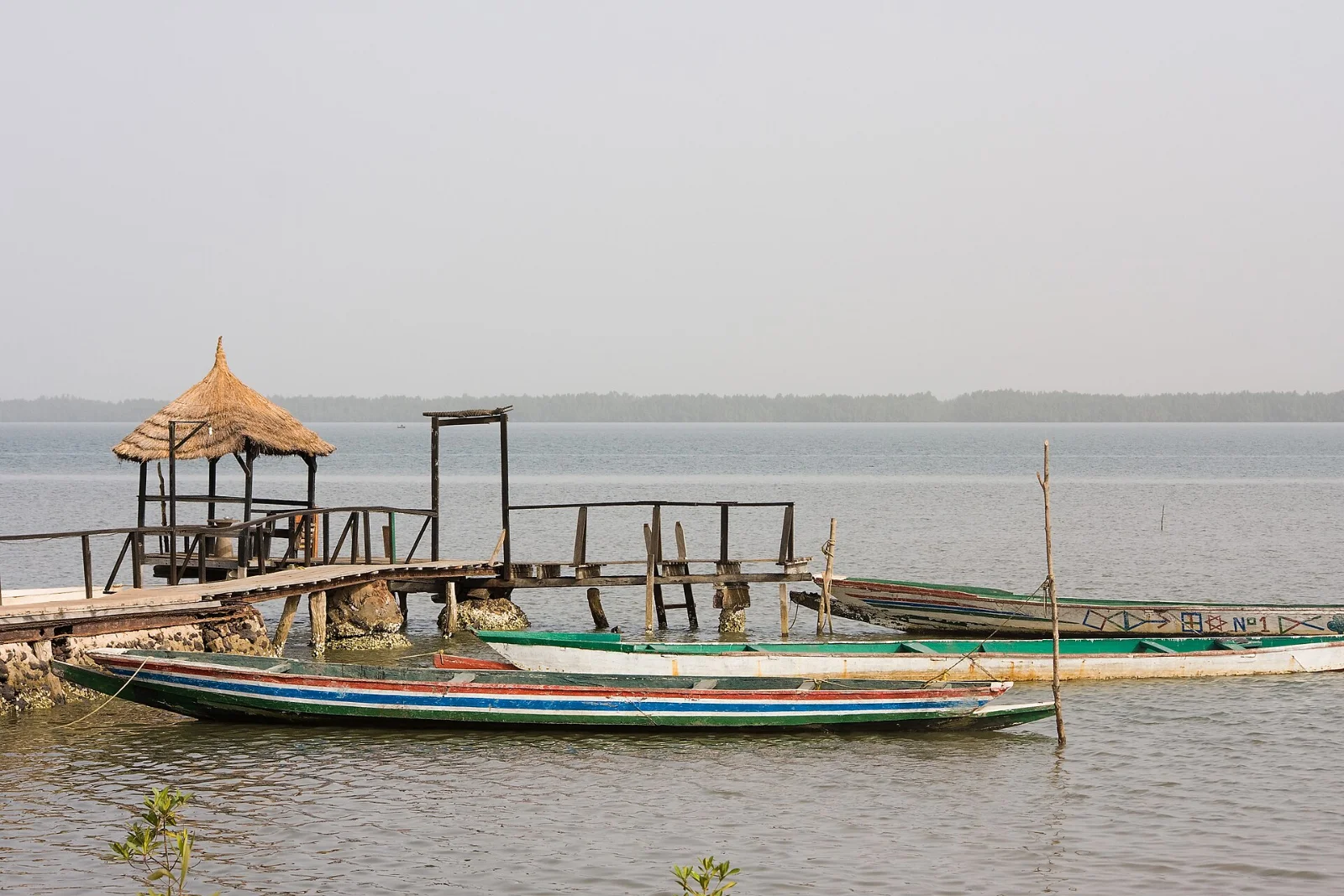
On the north bank of the same wetland, Morgan Kunda Lodge is a community lodge of twin rooms in Jarjari village. Guests have a viewing platform over Bao Bolong, local guides lead birding walks and boat trips, and the lodge publishes its own checklist. It names Abyssinian Ground Hornbill, Beaudouin’s Snake Eagle and Bearded Barbet, and it sets out a calendar: late October and November for arriving migrants, December for general birding, and March and April for coursers, sandgrouse and raptors. Its 2026 to 2027 offer is EUR 46 per person a night with dinner and breakfast, for a minimum of 5 nights. The African Bird Club adds that the North Bank is the area for Savile’s Bustard, Black Crowned Crane and Temminck’s Courser.
Janjanbureh and the Egyptian Plover
The bird that pulls birders furthest upriver is the Egyptian Plover, the only member of its family and one of the smartest-dressed waders anywhere. The African Bird Club gives the Upper River around Basse Santa Su as its site, and the Central River wetlands, the Janjanbureh area and the Jakhaly rice fields for African Pygmy Goose, African Finfoot, Red-throated and Northern Carmine Bee-eaters, Adamawa Turtle Dove and Exclamatory Paradise Whydah.
A Quest Nature Tours group in November 2025, written up by its leader Josh Vandermeulen, stayed on Janjanbureh Island, crossed to the north bank wetlands near the Senegal border and found 8 Egyptian Plovers. A February 2025 tour reported by Birds of Kuwait had to cross to Janjanbureh by boat after the river ferry broke down, which is a fair picture of upriver logistics: the birds keep to schedule more reliably than the ferries. Build a spare day into any itinerary that goes this far east.
None of the upriver camps, Tendaba and Janjanbureh included, is in our directory yet, so book them through a guide or tour operator who knows the current state of the rooms and the roads.
Guides and what they cost
Local guides do most of the finding in The Gambia, which leaves the visitor free to do the looking. The African Bird Club lists the Bird Watchers’ Association among the country’s bird organisations, and Bradt points to the guides’ kiosk at Kotu Bridge as the place to meet one. Agree the day’s route, the price and whether site fees and lunch are included before you set out. The Footsteps rates of GBP 60 to GBP 90 a day with transport and lunch are a useful benchmark for a full guided day on the coast. The country has no BirdLife Partner, but the Kartong Bird Observatory and the West African Bird Study Association are active.
For a field guide, the African Bird Club recommends Borrow and Demey’s Birds of Senegal and The Gambia (2023), and Dave Gosney’s Finding Birds in The Gambia (2019) for site directions.
When to go
The African Bird Club advises the dry season, from November to May, when access to sites is best, and says to avoid the main rains from July to September. November brings the Palearctic migrants in and the north bank wetlands are still wet enough for the plovers, as the Quest group found. For March and April, Morgan Kunda points to the window for coursers, sandgrouse and raptors. Footsteps closes from 2 May to 1 November, which tells you when the season ends more clearly than any weather chart.
Where to stay
The places in this guide, with what each offers a birder:
| Place to stay | Where | For birders | From |
|---|---|---|---|
| Bakotu Hotel | Kotu Beach, The Gambia | Viewing platform over the Kotu Stream, Malachite Kingfisher | Ask the lodge |
| Footsteps Eco-Lodge | Near Gunjur, The Gambia | 2 hides, feeders, early breakfast, 2 bird guides | GBP 21.50 pp B&B |
| Belgambia Lodge Mandinari | Tanbi Wetlands, The Gambia | Photo hides, private guide in packages | EUR 490 pp sharing, 8 days FB |
| AbCa’s Creek Lodge | Kassagne, The Gambia | Canoe and bicycle birding, bookable guide, African Finfoot | EUR 43 single, B&B |
| Morgan Kunda Lodge | Jarjari, Bao Bolong, The Gambia | Wetland platform, local guides, boat trips, own checklist | EUR 46 pp DB&B |
Rates, flights, ferries and guide prices change. Facts were checked between 11 and 13 November 2026 against each place’s listing on Birding Dispatch and the lodges’ own websites, the African Bird Club’s Gambia country page, Bradt’s guide to The Gambia’s birding sites, Josh Vandermeulen’s November 2025 trip report, Honeyguide and Birds of Kuwait tour pages and flight schedule sites. Confirm prices and opening dates with each lodge before you book.
More from the Journal
 Namib-Naukluft and Sossusvlei for Birders: Dune Lark, Desert Raptors and the Naukluft SpecialsA lark that lives on the dunes and nowhere else, Lappet-faced Vultures nesting in the desert, coursers on the gravel plains and the northern specials around the Naukluft cliffs, in one of Africa's largest parks.
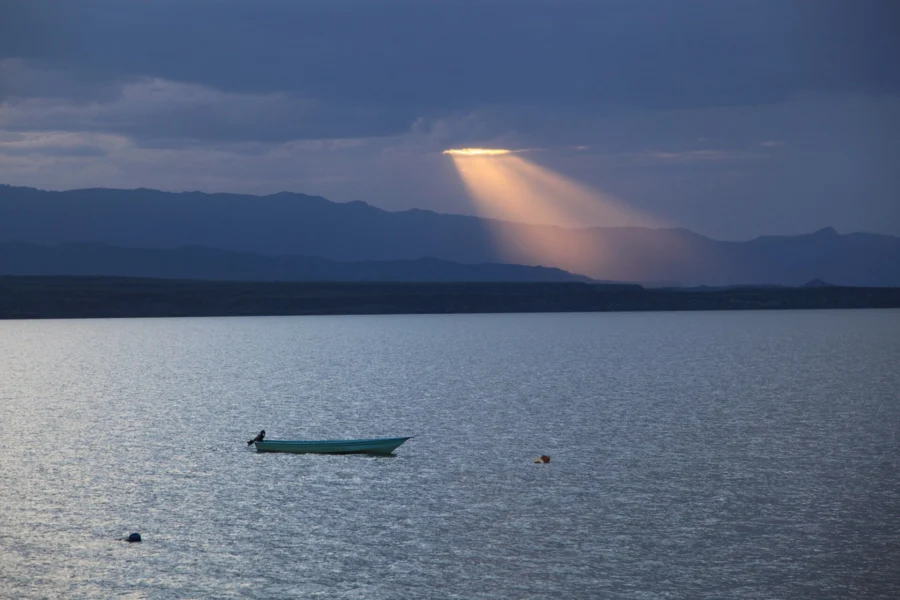 Lake Baringo and Lake Bogoria Birding: The Owl Walks, the Cliffs and the FlamingosA local guide who knows where every nightjar and eagle-owl slept last night, thorn scrub full of hornbills, a Goliath Heron colony on a rock, and the flamingo lake next door that keeps rising.
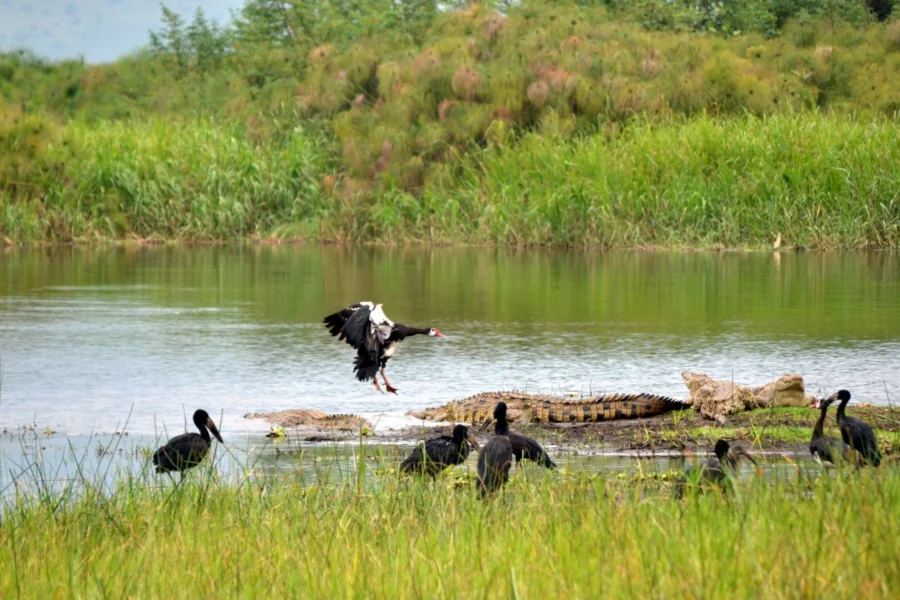 Akagera Birding: Rwanda’s Savanna, Lakes and Papyrus, and the Shoebill ChancesRed-faced Barbet in the southern woodland, Papyrus Gonolek and Carruthers's Cisticola in the swamps, a lake of hippos and lapwings, and a Shoebill that hides in the wetlands more than it shows.
The Pigeon Post
Every Thursday: 1 bird, 1 place to go and 1 place to stay, by email. Sign up and get our printable checklist of the 163 endemics of southern Africa.