
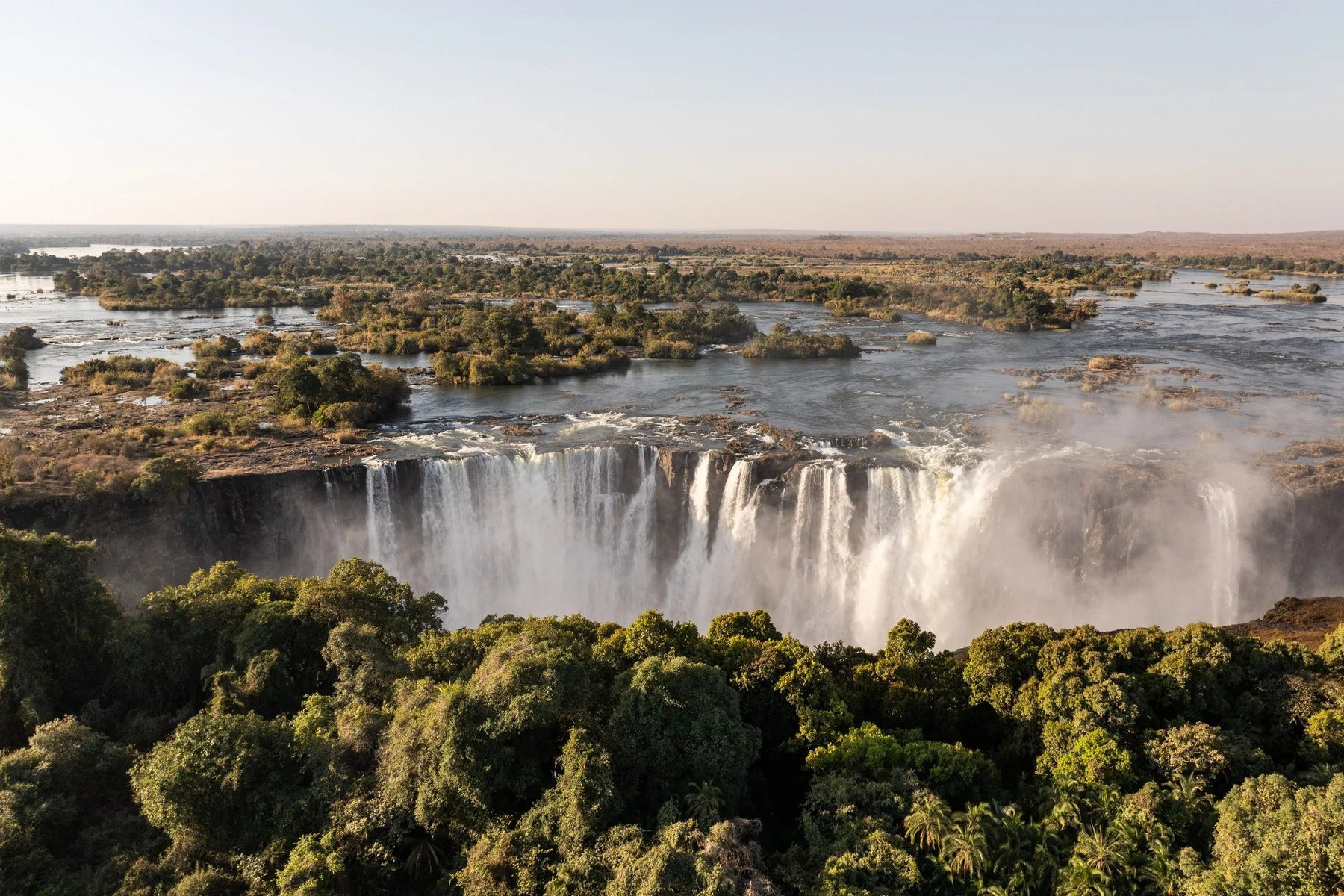
Victoria Falls Birding: the Rainforest, the Gorges and the River Above the Falls
Schalow's Turaco and Collared Palm Thrush in the spray forest, Taita Falcon and Rock Pratincole in the Batoka Gorge, finfoot and skimmers on the upper Zambezi, and the lodges on the Zimbabwe and Zambia banks.
Most visitors give Victoria Falls a morning on the rainforest path, an evening on a sunset cruise and a wet shirt. A birder can fill 4 days without going far: the forest kept wet by the spray, a gorge system that runs about 120 km downstream, and a broad, island-studded river above the lip. BirdLife Zimbabwe’s guide to the area adds the floodplains at Kazungula, to the west, where Botswana, Namibia and Zambia meet the Zimbabwean bank.
The falls sit on the border, so the birding and the beds are split between Victoria Falls town in Zimbabwe and Livingstone in Zambia. The birds ignore the border entirely. The area around the falls was declared a World Heritage Site in 1989.
At a glance
| Place to stay | Where | For birders | From |
|---|---|---|---|
| Taita Falcon Lodge | Batoka Gorge rim, Zambia | Free birding walks over the gorge, Taita Falcon | US$220 pp DB&B (2027 green season, self-drive) |
| Chundu Island | Zambezi National Park, Zimbabwe | Bird walks, Schalow’s Turaco, 400+ species | US$520 pp sharing, full board and activities |
| Victoria Falls River Lodge, Island Treehouse Suites | Kandahar Island, Zimbabwe | Guided birding walks, rooftop decks, 75+ species | US$1,640 pp sharing, fully inclusive (green season) |
| Matetsi Victoria Falls | Upper Zambezi, Zimbabwe | Bird guide on staff, 178 species on Birding Big Day | US$1,150 pp sharing, fully inclusive |
| Waterberry Zambezi Lodge | Upper Zambezi near Livingstone, Zambia | Lodge guides lead birding, benches by the dam | US$662 pp, fully inclusive |
The rainforest
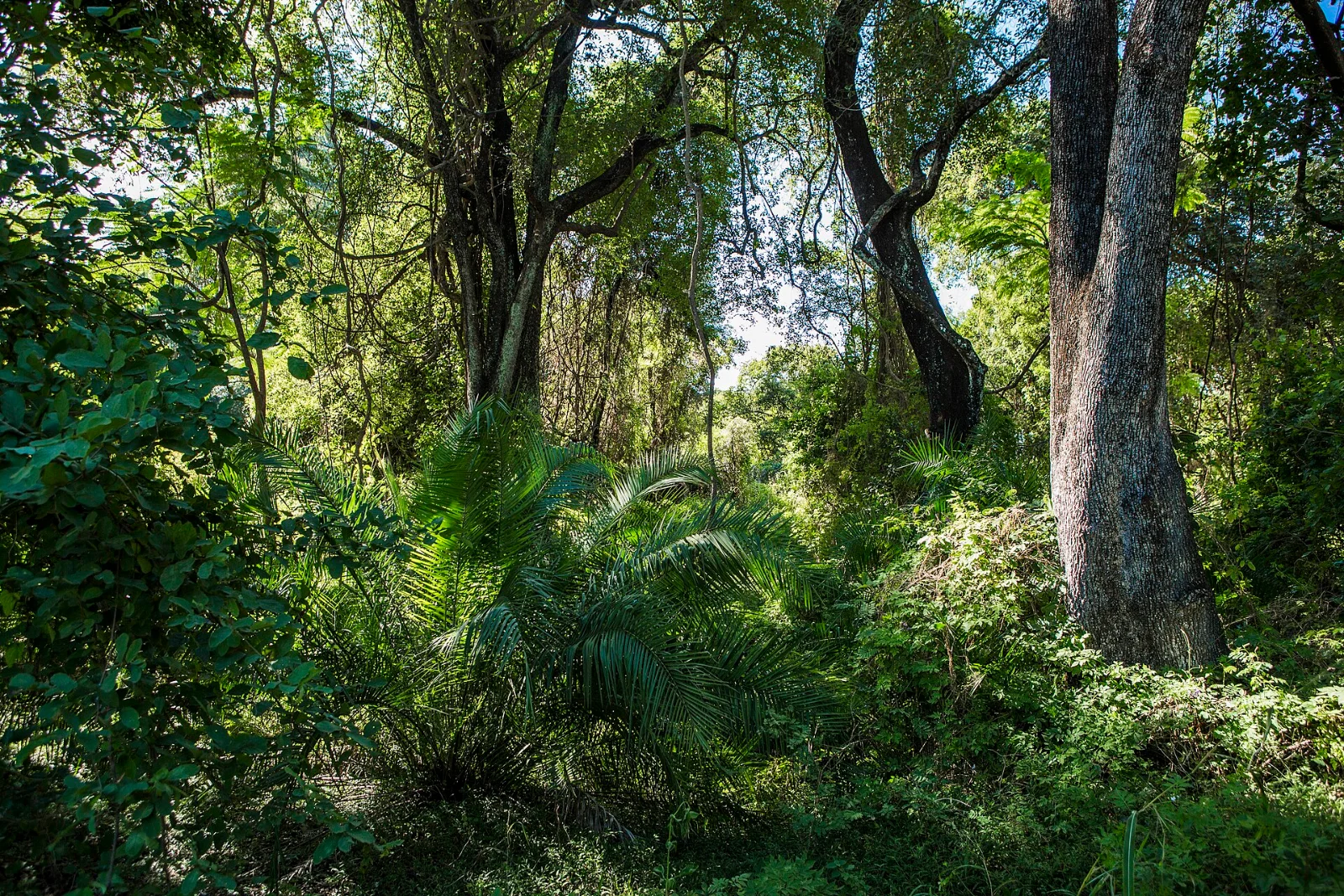
The spray from the falls keeps a strip of evergreen forest alive on the Zimbabwean bank, with a path and viewpoints along the lip of the gorge. BirdLife Zimbabwe lists Brown Firefinch, Schalow’s Turaco, Olive Woodpecker, Northern Grey-headed Sparrow and Collared Palm Thrush among the birds the falls area can give, to anyone willing to look away from the waterfall for a moment.
ZimParks raised the rainforest entry fee for international visitors from US$50 to US$58 a person in early 2026, according to a report by ATTA on 13 February 2026. On the Zambian side, Mosi-oa-Tunya National Park’s foreign entry fee was reported as rising from US$20 to US$30 from 1 January 2026. The Zimbabwean fee is charged per entry, so plan the forest as a single long visit rather than several short ones, and bring something waterproof for the binoculars.
The Batoka Gorge
Below the falls, the Zambezi has cut a 140 m deep gorge through the basalt, and BirdLife Zimbabwe lists the Batoka Gorge system as a global Important Bird Area of about 12,000 ha. Its account describes the gorge as once a haven for Taita Falcon, a species that has since declined there and whose status is now thought to be threatened. A 2019 paper in the Journal of Raptor Research says the falcon was first recorded in the gorge in the late 1950s and that surveys in the 1990s found 6 breeding pairs. BirdLife South Africa’s Taita Falcon survey team has monitored the gorge system since 2013.
The gorge holds more than the falcon, and it is busy. The IBA account gives about 18 pairs of Peregrine Falcon, 34 other raptor species including Bat Hawk, at least 4 nesting pairs of Black Stork, and a count of 103 Rock Pratincoles from a rafting survey. African Black Swifts are common in the gorges, and BirdLife Zimbabwe notes that the mottled local race has led to mistaken reports of Mottled Swift, a confusion that is easy to forgive at swift speed. Its Victoria Falls page says the adventure activities in the gorges have threatened the Taita Falcon, while the Peregrines tolerate disturbance better.
The first 12 km below the falls lie inside the Victoria Falls National Park; after that the gorge is communal land. BirdLife Zimbabwe and BirdWatch Zambia have opposed the proposed Batoka Dam, whose 196 m wall would flood almost the entire IBA.
Taita Falcon Lodge, on the Zambian rim of the gorge, is the one place in the directory to watch it from. It has 5 chalets and a family cottage, offers free birding walks on the property, and names Taita Falcon, Verreaux’s Eagle and Peregrine Falcon as birds of the gorge. Rates start at US$220 per person, dinner, bed and breakfast, on its 2027 green-season self-drive rate. The lodge is about 45 minutes from Livingstone, and the last 11 km is a dirt road that needs a high-clearance vehicle.
The river above the falls
Upstream of the lip, the Zambezi is wide and slow, with islands, reedbeds and rocks. This is where the waterbirds are, and where the finfoot lurks along the edges. Chundu Island’s operator lists African Finfoot, Pel’s Fishing Owl, African Skimmer, Long-toed Lapwing and Rock Pratincole for the island and the park around it, and Victoria Falls River Lodge names African Finfoot, African Pygmy Goose and Western Banded Snake Eagle on Kandahar Island. BirdLife Zimbabwe adds that Ross’s Turaco has been reported from the river.
Do not skip the sewage ponds. Birders have never been fussy about where the good birds turn up. BirdLife Zimbabwe’s Victoria Falls page recommends them for Western Banded Snake Eagle, Rufous-bellied Heron, Rock, Collared and Black-winged Pratincoles, African Skimmer and waders including Grey Plover and Ruddy Turnstone, with the rare Lesser Sand Plover.
Kazungula and the Zambezi National Park
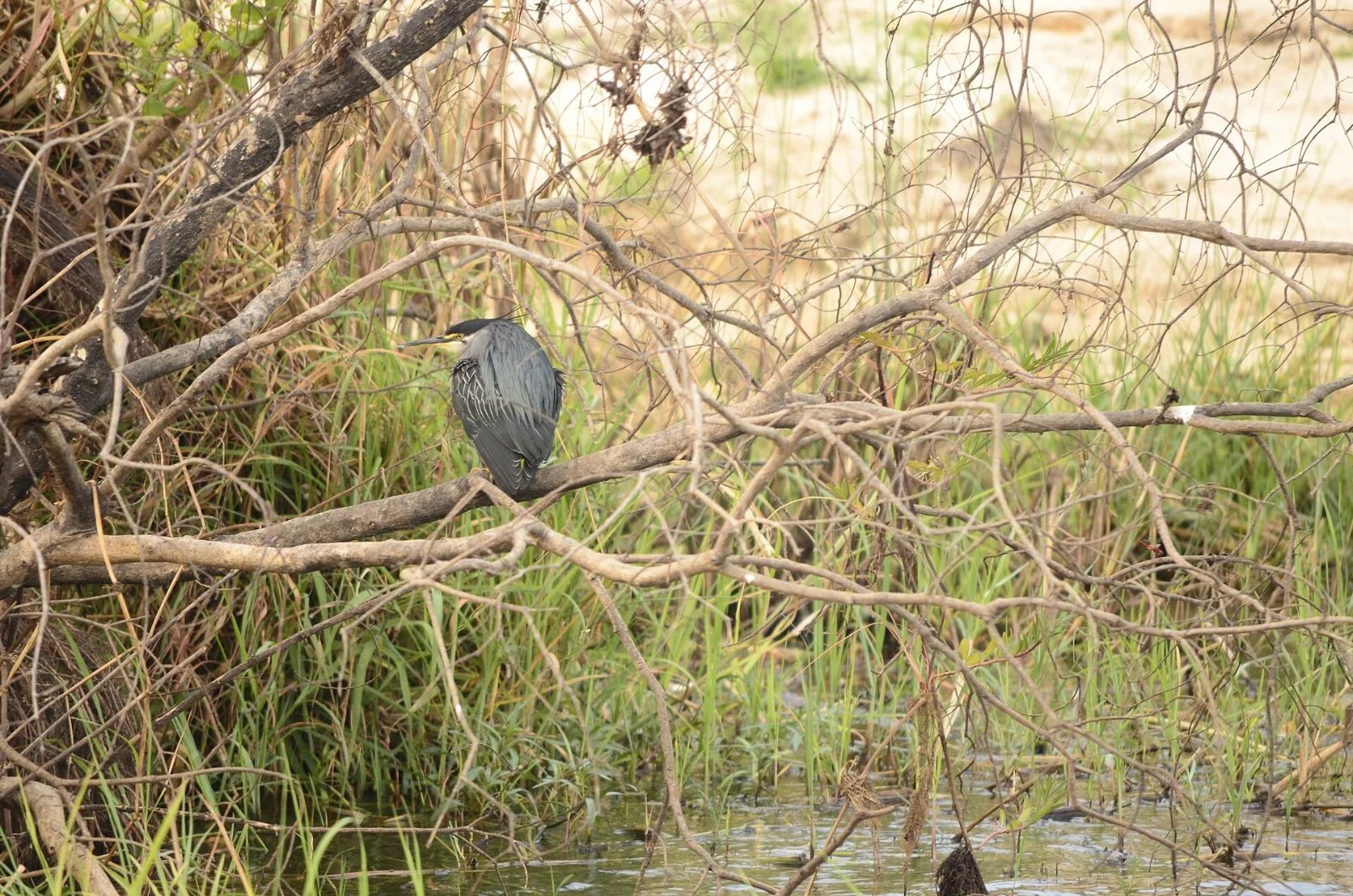
BirdLife Zimbabwe treats the falls, the Zambezi National Park and Kazungula as 1 birding area, and warns that some species on its checklist occur only around Kazungula, so a bird list that skips it will have holes. The floodplains there hold Slaty Egret, Long-toed Lapwing, Coppery-tailed Coucal, Swamp Nightjar, Hartlaub’s Babbler, Greater Swamp Warbler, Luapula and Chirping Cisticolas, Southern Brown-throated Weaver and Swamp Boubou. Bradfield’s Hornbill, Broad-tailed Paradise Whydah, Orange-winged Pytilia and Olive-tree Warbler are in the woodlands, and Denham’s Bustard in the national park.
Where to stay
Zimbabwe: the Zambezi National Park and Matetsi
Chundu Island is a lodge on its own island in the Zambezi National Park, and the most bird-focused stay on the Zimbabwean bank in the directory. It offers bird walks on the island, calls Schalow’s Turaco a regular sighting there, and gives a count of more than 400 species for the island and the park. The operator recommends April to November. It has 6 River View Suites and 2 family suites, from US$520 per person sharing a night from 1 October 2026 to 28 February 2027, with all meals, drinks, 2 activities a day and a guided visit to the falls. Park and rainforest fees are extra. From the park gate, a game-drive vehicle takes about an hour, then a 5-minute pontoon crossing, which is a fine way to arrive anywhere.
Victoria Falls River Lodge, Island Treehouse Suites are on Kandahar Island, reached only by boat. The lodge says more than 75 species have been documented on the island, and the suites have rooftop sitting areas for watching birds. Birding runs on foot, by boat or by vehicle; a walk with a professional guide costs extra and takes about 2 hours. November to March is the recommended time. Island Treehouse Suites cost US$1,640 per person sharing a night in the green season and US$1,800 in high season, for guests aged 12 and over.
Matetsi Victoria Falls is a riverfront lodge on a private reserve on the upper Zambezi. On its Birding Big Day in November, guests and guides recorded 178 species on the reserve, led by senior guide Ophious, among them Secretarybird, Scarlet-chested Sunbird and Jacobin Cuckoo. Habitats run from the river to floodplain, vleis and waterholes. Rates start at US$1,150 per person sharing a night, fully inclusive, from 1 October to 15 December 2026, with transfers from Victoria Falls included.
Zambia: Livingstone and the gorge
Waterberry Zambezi Lodge is on the upper Zambezi near Livingstone, 22 km out on the Kazungula road and then 6 km of dirt. Its guides lead birding along the riverbank and through the woodland on the property and can take keen birders further afield, and there are benches set out by the dam for watching birds. Rates start at US$662 per person a night, fully inclusive, on its 2026 rate sheet. For the gorge, see Taita Falcon Lodge above.
When to go
The lodges disagree, and they are all right, because the birds change through the year. Chundu Island recommends April to November, the dry months. Victoria Falls River Lodge recommends November to March, the rains, when the summer migrants are present. Matetsi holds its Birding Big Day in November, which takes in both. For a single trip that covers the gorge, the forest and the river, early summer, from late October to early December, is the compromise that keeps everyone, and most birds, happy.
Both towns have airports, and most of the lodges listed here include transfers. Check the visa rules for both countries before planning to bird both banks.
Fees, rates and access change. Facts were checked on 13 November 2026 with each listing on Birding Dispatch, BirdLife Zimbabwe’s Victoria Falls page and its Batoka Gorge IBA account, the Journal of Raptor Research, ATTA’s report on the 2026 ZimParks tariff and reports on the 2026 Mosi-oa-Tunya fee. Confirm fees with ZimParks and Zambia’s National Heritage Conservation Commission before you go.
More from the Journal
 Namib-Naukluft and Sossusvlei for Birders: Dune Lark, Desert Raptors and the Naukluft SpecialsA lark that lives on the dunes and nowhere else, Lappet-faced Vultures nesting in the desert, coursers on the gravel plains and the northern specials around the Naukluft cliffs, in one of Africa's largest parks.
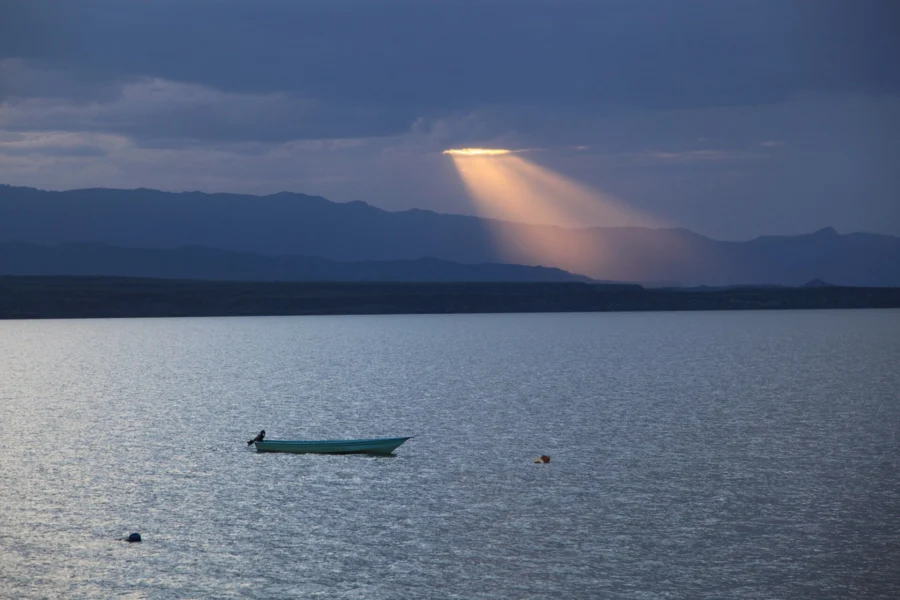 Lake Baringo and Lake Bogoria Birding: The Owl Walks, the Cliffs and the FlamingosA local guide who knows where every nightjar and eagle-owl slept last night, thorn scrub full of hornbills, a Goliath Heron colony on a rock, and the flamingo lake next door that keeps rising.
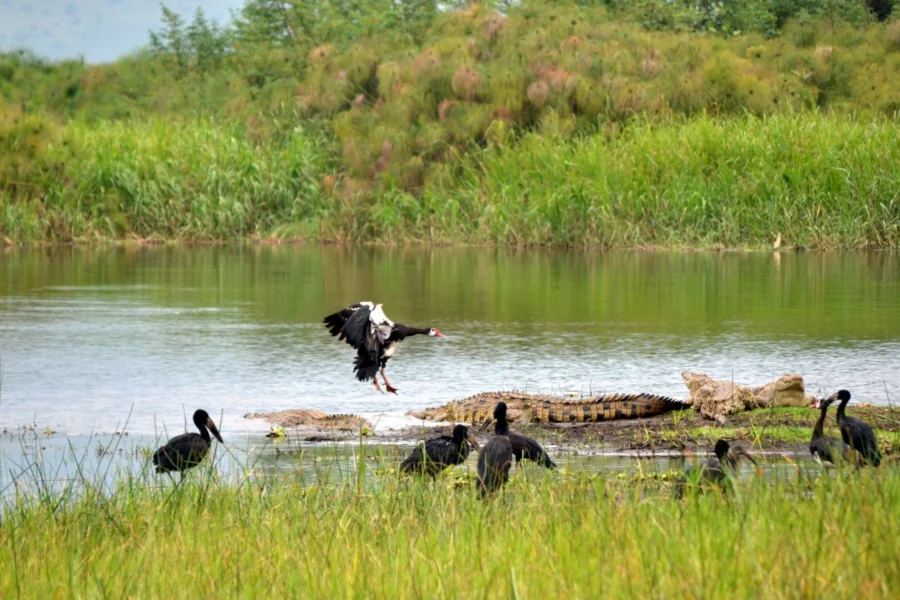 Akagera Birding: Rwanda’s Savanna, Lakes and Papyrus, and the Shoebill ChancesRed-faced Barbet in the southern woodland, Papyrus Gonolek and Carruthers's Cisticola in the swamps, a lake of hippos and lapwings, and a Shoebill that hides in the wetlands more than it shows.
The Pigeon Post
Every Thursday: 1 bird, 1 place to go and 1 place to stay, by email. Sign up and get our printable checklist of the 163 endemics of southern Africa.