
Birding Namibia: The Near-Endemics and Where to Find Them
Herero Chat, Rockrunner, Dune Lark, Bare-cheeked Babbler and the other arid-country specials, with the self-drive route from Walvis Bay to Etosha that covers them.
Namibia is where southern African birders go for the dry-country specials, many of them near-endemics the country shares mainly with Angola: Herero Chat, Hartlaub’s Spurfowl, Rüppell’s Parrot, Carp’s Tit, plus Rockrunner, Monteiro’s Hornbill and White-tailed Shrike. Add Dune Lark and Gray’s Lark in the Namib, and the most important coastal wetland in southern Africa, and no neighbour matches it for arid specials. It is a dry country with a very full bird list.
Almost all of them sit on one self-drive loop. 2 of them are a gamble, though: Herero Chat and Hartlaub’s Spurfowl are birds that recent tour groups have missed even with a guide, and both seem to know it.
The short answer
Start at Walvis Bay for Dune Lark at Rooibank, Gray’s Lark on the gravel plains near Swakopmund, and the flamingos, Damara Terns and Chestnut-banded Plovers on the lagoon and salt works. Drive inland via Spitzkoppe for Herero Chat to the Erongo Mountains for Rockrunner, Monteiro’s Hornbill, White-tailed Shrike and Hartlaub’s Spurfowl, and check the Omaruru riverbed for Rüppell’s Parrot. Then give Etosha 3 nights: Okaukuejo for the larks, Halali for Bare-cheeked Babbler, the Andoni Plains for Blue Crane. Finish at Waterberg or carry on east to the Zambezi Region for a completely different, wetter bird list. Go in November.
At a glance
| Special | Where | Notes |
|---|---|---|
| Dune Lark | Rooibank, Kuiseb riverbed | About 30 minutes from Walvis Bay; reliable |
| Gray’s Lark | Gravel plains inland of Swakopmund | Easy to hear, hard to see |
| Chestnut-banded Plover, Damara Tern | Walvis Bay lagoon and salt works | Walvis Bay holds about 60% of the world’s Chestnut-banded Plovers |
| Herero Chat | Spitzkoppe, Erongo | Hit and miss, even for tour groups |
| Rockrunner, Monteiro’s Hornbill, White-tailed Shrike | Erongo Mountains | Common around the granite koppies |
| Hartlaub’s Spurfowl | Erongo, Okonjima, Waterberg | Calls at dawn from rocky outcrops |
| Rüppell’s Parrot | Omaruru riverbed, Waterberg | Big camel thorns along dry rivers |
| Bare-cheeked Babbler, Violet Wood Hoopoe | Halali Camp, Etosha | Walk the camp grounds |
| Pink-billed Lark | Plains around Okaukuejo | With Spike-heeled and Red-capped Larks |
| Blue Crane | Andoni Plains, eastern Etosha | A tiny, isolated population |
Walvis Bay and the Namib: larks and flamingos
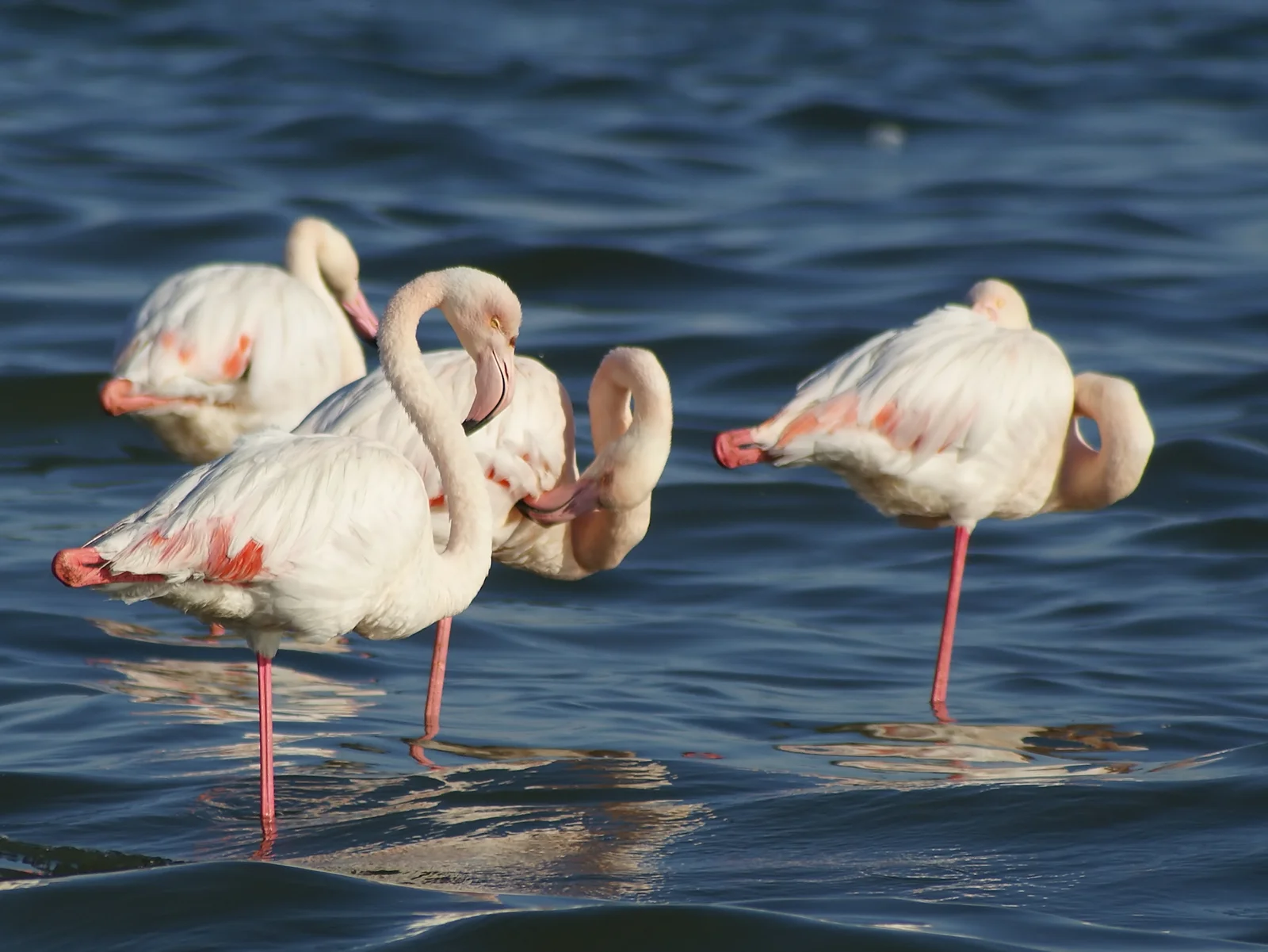
The Key Biodiversity Areas factsheet for Walvis Bay, drawn from the BirdLife IBA directory, calls it the most important coastal wetland in southern Africa by numbers and species of birds. It regularly holds over 100,000 birds in summer, with a maximum count of 162,000, and about 50,000 in winter. Between 80% and 90% of the subregion’s flamingos winter here, and the lagoon holds about 60% of the world population of Chestnut-banded Plover. Damara Terns breed here too. This is easy birding, the kind where the car park counts as a hide: Birding Ecotours groups in 2023 and 2025 worked the promenade, lagoon and salt works from the vehicle and on foot for Greater and Lesser Flamingos, Chestnut-banded and White-fronted Plovers, Damara Tern and Bar-tailed Godwit.
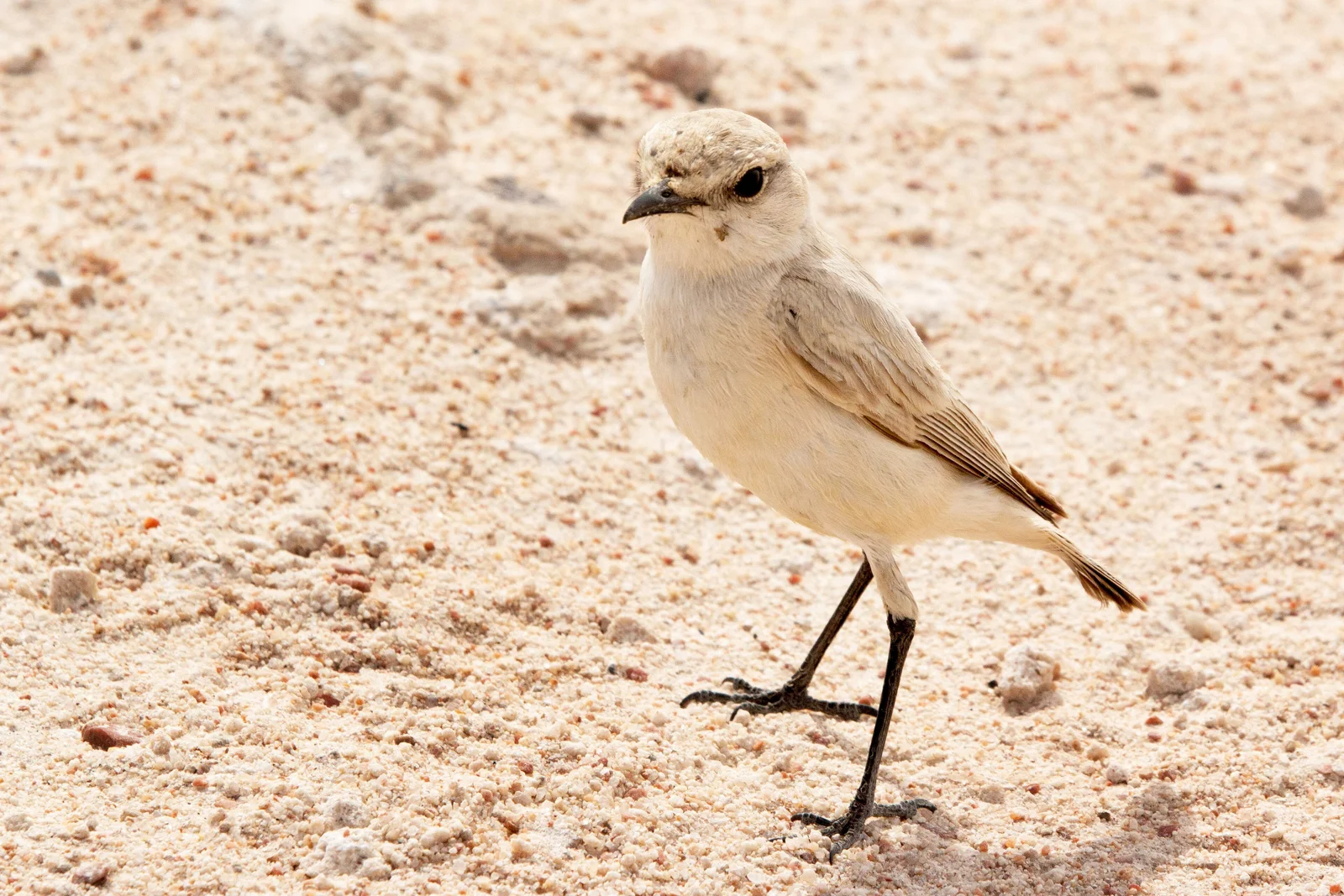
The 2 larks take more work, as larks do. Dune Lark lives in the low red dunes at Rooibank, in the bed of the almost permanently dry Kuiseb River, about 30 minutes’ drive from Walvis Bay. Birding Ecotours calls it reliable there; listen for the rattling call at dawn. It was long sold as Namibia’s only true endemic, but the 2025 Birding Ecotours report notes it has since been lumped with Barlow’s Lark of South Africa, which makes it a near-endemic like the rest. The bird, for its part, has not changed at all. Gray’s Lark is a pale, off-white lark of the gravel plains inland of Swakopmund. The 2025 group heard it for about 45 minutes before getting decent views, which is roughly how long a Gray’s Lark considers a reasonable audition.
For another lark-heavy trip, the Wakkerstroom larks guide covers the grassland side of the family.
Spitzkoppe and the Erongo Mountains: the escarpment birds
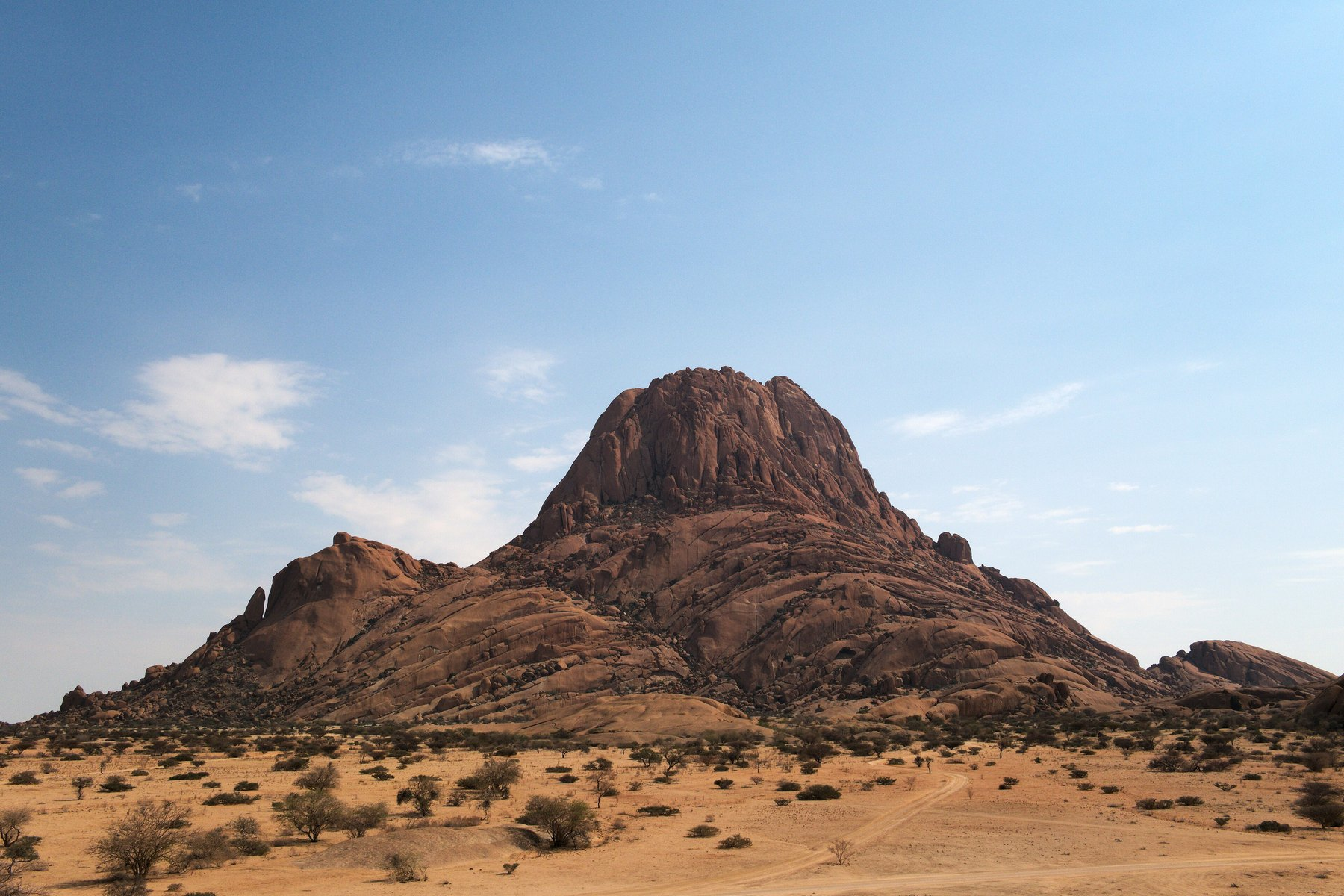
BirdLife’s Endemic Bird Area factsheet for the Namibian escarpment names Herero Chat as the defining species of its mountain slopes, which extend into extreme southern Angola, in mixed Acacia and Commiphora woodland. It is the only bird in its genus, a family of 1, and the one to plan around. Spitzkoppe, the huge inselberg on the way inland from the coast, is the usual first try. Results vary, in both directions. A 2023 Birding Ecotours group heard one over breakfast in the foothills and then found a pair that showed well. The 2025 group searched for a couple of hours at Spitzkoppe, tried again in the Erongo the next day, and missed it. Get there early, before the heat, and be ready to give it a second morning, and possibly your patience.
The Erongo Mountains are the easiest place on the route for the rest of the escarpment set. Both Birding Ecotours reports found Rockrunner, Monteiro’s Hornbill, White-tailed Shrike and Rosy-faced Lovebird on walks around the granite koppies near the lodge, with Carp’s Tit and Short-toed Rock Thrush as extras.
Hartlaub’s Spurfowl is the hard one here, a bird that is much easier to hear than to find. The 2025 report says it has proven tricky in the Erongo in the last couple of years; the group heard a distant bird on day 1 and only got scope views of at least 4 birds on its last morning, at a rocky outcrop where they were calling at dawn. Plan 2 nights in the Erongo, not 1. The spurfowl clearly operates on its own timetable. The 2023 group stayed at Ai-Aiba.
On the way out towards Etosha, stop at the dry Omaruru riverbed. Both groups found Rüppell’s Parrot in the big camel thorns there, along with Violet Wood Hoopoe and Damara Red-billed Hornbill.
Etosha: babblers, larks and a relict crane
At Okaukuejo, sit at the floodlit waterhole after dinner for Rufous-cheeked Nightjar: birding with a chair and dessert. In November 2025 Birding Ecotours found Pink-billed, Spike-heeled and Red-capped Larks, Double-banded Courser and Pygmy Falcon on the open plains north and south of camp.
Bare-cheeked Babbler is the target at Halali Camp, in the middle of the park. Both the 2023 and 2025 groups found it on a walk around the camp, with some effort, which is the babbler’s way of keeping standards up, alongside Violet Wood Hoopoe and Carp’s Tit. Further east, the Andoni Plains north of Namutoni are open grassland with a busy waterhole, where the 2025 group saw South African Shelduck, Chestnut-banded Plover and several Blue Cranes. Black-faced Babbler turned up in the grounds of Mokuti Lodge, outside the eastern gate, in 2023, and at Roy’s Camp on the road north-east in 2025.
The Blue Cranes are an oddity, South Africa’s national bird living a long way from home: a small outlying population, far from the bulk of the species in South Africa. Writing in Travel News Namibia in 2018, Ann and Mike Scott put the Namibian count at 80 in 1988, 60 in 1994, 35 in 2011, then only 23, before a rise to 32 in 2017. The birds breed in Etosha from about November to April and gather at Andoni first on their return from August.
Waterberg and the Zambezi Region
Waterberg Plateau Park lies about 60 km east of Otjiwarongo, a 50 km sandstone plateau that NACSO says has recorded more than 200 bird species, including Hartlaub’s Spurfowl, Rüppell’s Parrot, Monteiro’s Hornbill, Bradfield’s Hornbill, Carp’s Tit and Rockrunner. It also holds Namibia’s last breeding Cape Vultures. It is the best backup if the Erongo lets you down, a second chance with cliffs, and Bernabé de la Bat Rest Camp has bungalows and camping. The 2023 Birding Ecotours group used Okonjima Nature Reserve for the same job and found Hartlaub’s Spurfowl, Rockrunner and Rüppell’s Parrot there.
The Zambezi Region, the old Caprivi Strip, is the opposite of everything above: big rivers, floodplains and tropical woodland, as if someone had turned the taps on. Boat trips on the Zambezi at Katima Mulilo produced African Finfoot, African Skimmer and White-backed Night Heron for both groups, and Mahango in Bwabwata National Park added Slaty Egret and Wattled Crane in 2025. A vagrant Ross’s Turaco has been at Taranga Safari Lodge on the Kavango River since at least 2023, which makes it less of a vagrant and more of a long-stay guest. The 2023 trip spent 6 days going from eastern Etosha through the Kavango and Zambezi Regions and back, so add it only if you have that time.
Park fees and self-drive practicalities
The Ministry of Environment, Forestry and Tourism raised park fees from 1 April 2026. At premium parks, which include Etosha, Namib-Naukluft, Dorob and Waterberg Plateau, foreign adults pay N$280 per day (N$140 entrance plus N$140 conservation fee), SADC nationals N$180 and Namibians N$60. Foreign children aged 9 to 15 pay N$180, and children under 8 are free. A vehicle with 10 seats or fewer is N$60 per day, so 2 foreign adults in a hire car pay N$620 a day in Etosha, up from N$350. Bwabwata, Mudumu and Nkasa Rupara in the Zambezi Region charge foreign adults N$200. In Etosha the fee is paid at the first gate, runs for 24 hours from entry, and extra days are paid at the resorts.
Namibia’s roads mix tar and graded gravel. Self-drive guides recommend a high-clearance 2WD or a 4×4 for the gravel, a spare tyre and water, refuelling whenever you see a station, and no driving after sunset. In the rains, some gravel roads in Etosha turn muddy or flood.
When to go
Go in November, as both Birding Ecotours trips did, and the birds seem to agree. Walvis Bay holds about twice as many birds in summer as in winter, Damara Terns are present, the Blue Cranes are back at Andoni, and the Etosha pan is normally dry, so birds and game stay near the waterholes.
The green season, roughly November to April, brings the rain. February is one of the wettest months in Etosha, with short, heavy storms, migrants in large numbers and breeding birds, but wildlife spreads out and some roads suffer. The dry season, May to October, has cooler mornings and the best mammal viewing at the waterholes, and Etosha campsites can sell out months ahead between June and October.
The verdict
Give the arid core 10 days: 2 nights at Walvis Bay, Spitzkoppe on the drive inland, 2 nights in the Erongo, 3 in Etosha split between Okaukuejo and the east, and 1 at Waterberg or Okonjima for anything missed. Add about 6 days for the Kavango and Zambezi Regions only if a second, tropical bird list appeals. Herero Chat and Hartlaub’s Spurfowl are the 2 birds that decide whether the trip feels complete, so put the spare morning in the Erongo, not in Etosha. Etosha will still be there; the chat may not be.
Where to stay
Places to stay in the directory near the sites in this guide, with what each offers a birder:
| Place to stay | Where | For birders | From |
|---|---|---|---|
| Erongo Rocks Farmhouse & Camping | Erongo Mountains, Namibia | Bird hide, Hartlaub’s Spurfowl, Monteiro’s Hornbill | Ask the lodge |
| Hohenstein Lodge | Erongo Mountains near Usakos, Namibia | Bush hide at a bird bath, feeders | N$2,300 pp sharing DB&B (low season) |
| Anderssons at Ongava | Ongava, south of Etosha, Namibia | Underground hide, guided birding outings, Rosy-faced Lovebird | N$23,400 pp sharing, fully inclusive |
| Ongava Lodge | Ongava, south of Etosha, Namibia | Photographic hide, guided birding outings | N$11,800 pp sharing, full board |
| Etosha Mountain Lodge | Etosha Heights, south-west of Etosha, Namibia | 2-level waterhole hide, birdwatching, guided walks | N$3,736 pp sharing DB&B (2026 green season, 8+ nights) |
| Safarihoek | Etosha Heights, west of Etosha, Namibia | 2-storey waterhole hide, walking allowed | N$4,926 pp sharing DB&B (2026 green season, 8+ nights) |
| Onguma Bush Camp | Onguma, near Namutoni Gate, Namibia | Treetop waterhole hide, 300+ species | N$3,060 pp sharing DB&B |
| Zambezi Mubala Lodge | East of Katima Mulilo, Namibia | Boat cruise, guided Carmine Bee-eater colony walk | N$3,541 pp sharing B&B |
| Zambezi Mubala Camp | East of Katima Mulilo, Namibia | Carmine Bee-eater colony walk, river cruises | N$1,150 pp sharing, self-catering |
| Chobe River Camp | Near Ngoma, Namibia | Guided birding drive, boat cruises into the channels | N$2,600 pp sharing B&B |
| Camp Kwando | Kongola, Namibia | Birding cruise on request, 450+ species | Ask the lodge |
| Ndhovu Safari Lodge | Near Divundu, Kavango, Namibia | Boat trips, Pel’s Fishing Owl, White-backed Night Heron | Ask the lodge |
Fees, access and bird reports change. Facts were checked on 9 November 2026 with MEFT’s 2026 fees as reported by the Windhoek Observer, Birding Ecotours’ 2023 and 2025 Namibia trip reports, BirdLife and KBA factsheets, NACSO and Travel News Namibia. Confirm fees with MEFT before you go.
More from the Journal
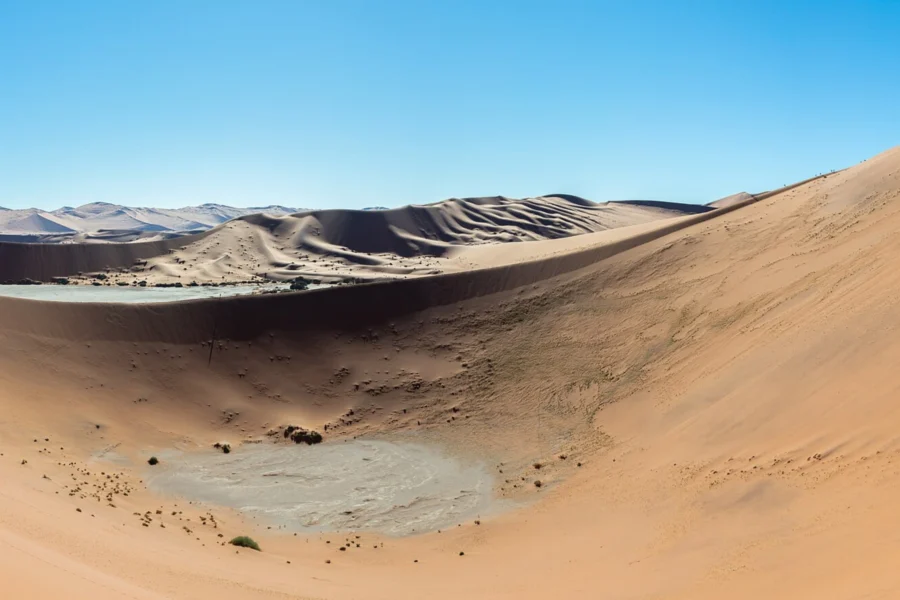 Namib-Naukluft and Sossusvlei for Birders: Dune Lark, Desert Raptors and the Naukluft SpecialsA lark that lives on the dunes and nowhere else, Lappet-faced Vultures nesting in the desert, coursers on the gravel plains and the northern specials around the Naukluft cliffs, in one of Africa's largest parks.
 Lake Baringo and Lake Bogoria Birding: The Owl Walks, the Cliffs and the FlamingosA local guide who knows where every nightjar and eagle-owl slept last night, thorn scrub full of hornbills, a Goliath Heron colony on a rock, and the flamingo lake next door that keeps rising.
 Akagera Birding: Rwanda’s Savanna, Lakes and Papyrus, and the Shoebill ChancesRed-faced Barbet in the southern woodland, Papyrus Gonolek and Carruthers's Cisticola in the swamps, a lake of hippos and lapwings, and a Shoebill that hides in the wetlands more than it shows.
The Pigeon Post
Every Thursday: 1 bird, 1 place to go and 1 place to stay, by email. Sign up and get our printable checklist of the 163 endemics of southern Africa.