
Birding Botswana: The Okavango Delta, the Panhandle and Chobe
Where to find Pel's Fishing Owl, Slaty Egret, Wattled Crane and African Skimmer in Botswana, what the parks charge, and which season suits birders in a delta that floods in the dry season.
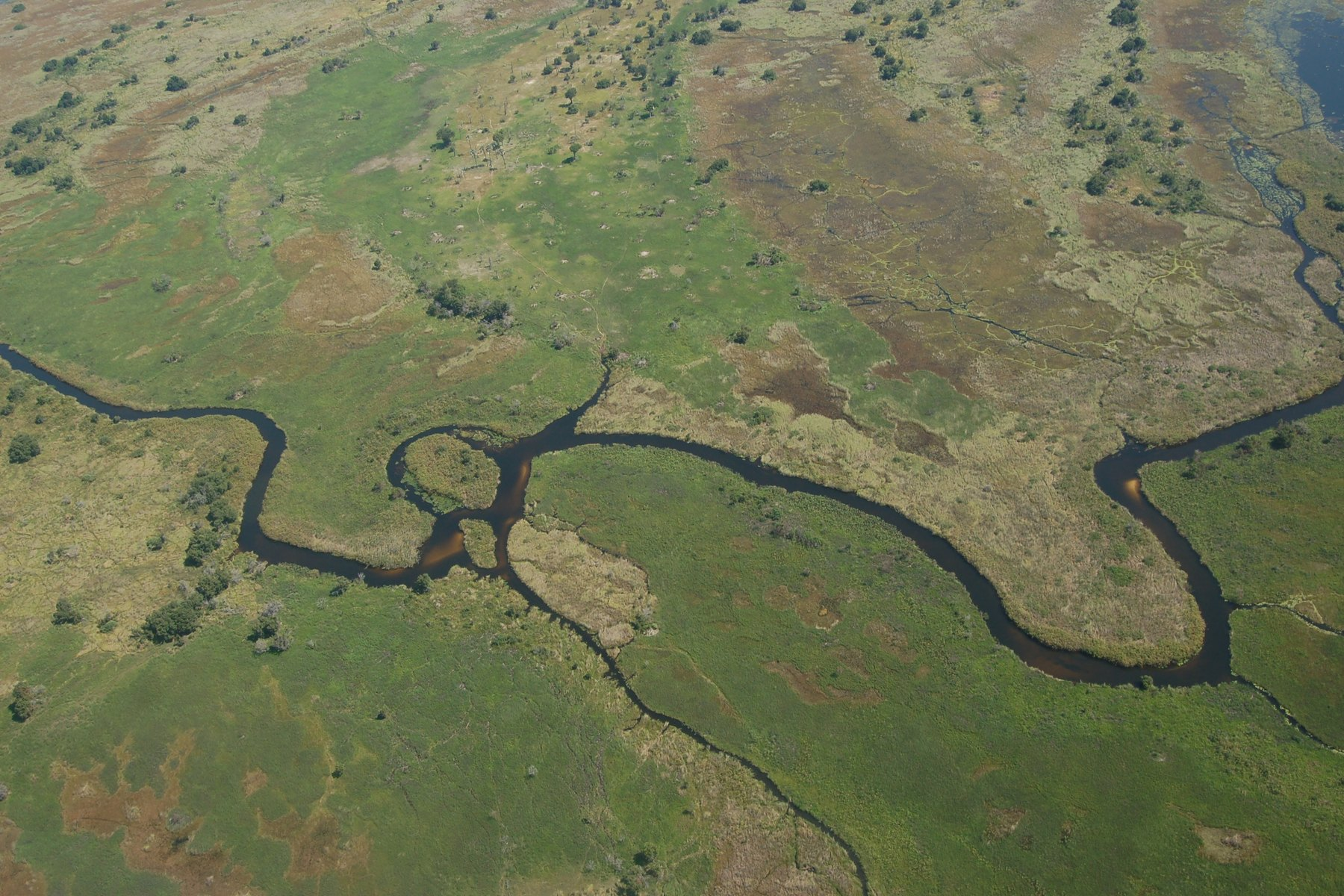
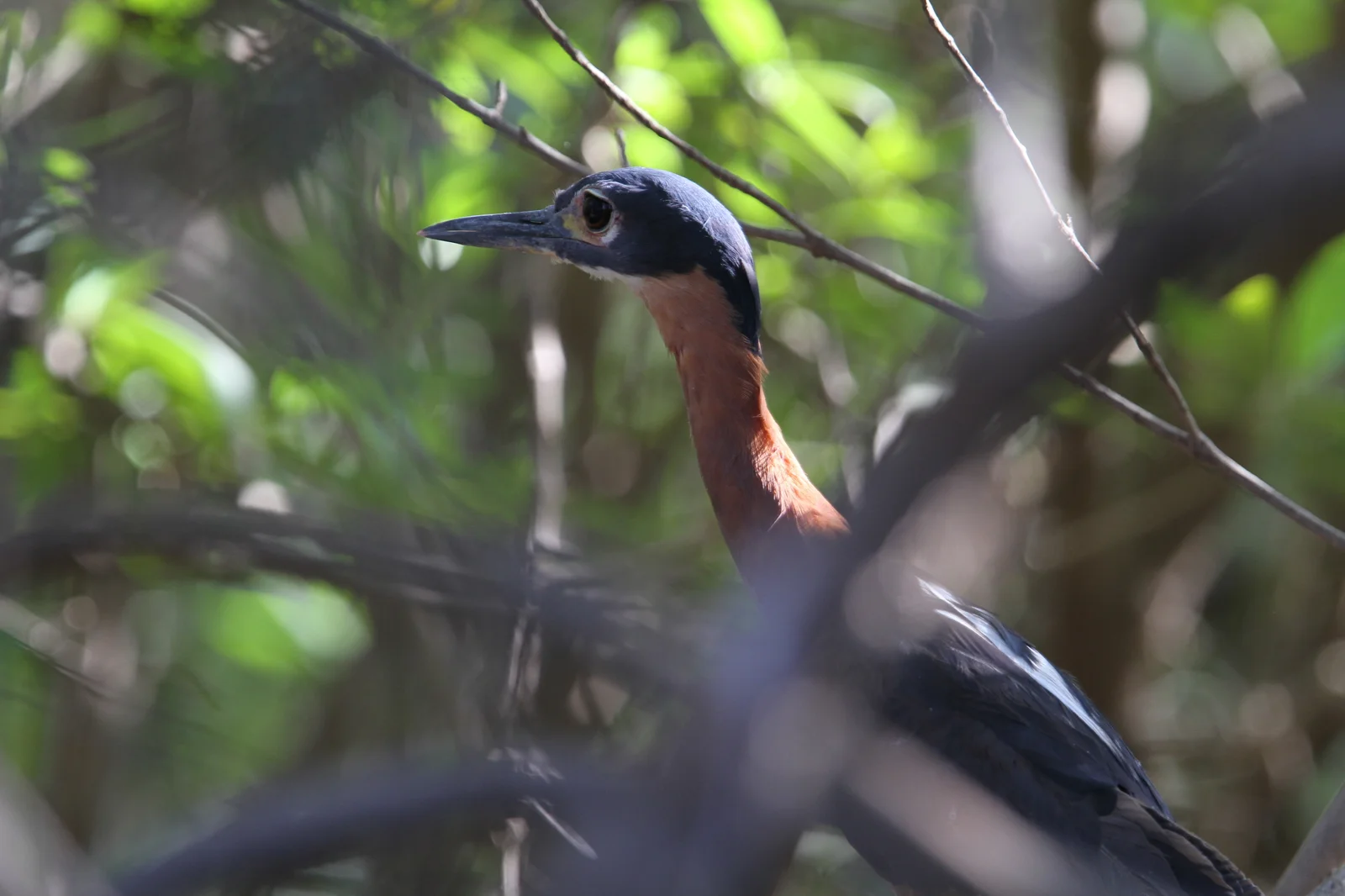
Northern Botswana is where southern African birders go for the wetland birds they cannot find at home, which is to say a long list of lifers (birds seen for the first time). The Okavango River runs through papyrus and riverine forest in the Panhandle near Shakawe, spreads out into the Delta, and the Chobe River marks the country’s northern edge at Kasane. Between them they hold Pel’s Fishing Owl, White-backed Night Heron, Slaty Egret, Wattled Crane, Rosy-throated Longclaw and large flocks of African Skimmer and Collared Pratincole.
2 things get in the way: money and water. The top fly-in Delta camps charge thousands of dollars per person per night, and the flood that drives the whole system changes from year to year, so a channel that takes a mokoro one season can be dry the next. It is a wetland that rearranges itself between visits.
The short answer
Start in the Panhandle at Shakawe for Pel’s Fishing Owl, White-backed Night Heron and nesting African Skimmers, staying at Drotsky’s Cabins or Xaro Lodge and birding by boat. Then move into the Delta: a camp at Xakanaxa in Moremi Game Reserve gives you boat trips to the heronries and drives for Wattled Crane and Slaty Egret. Finish on the Chobe River at Kasane, where boat cruises bring African Skimmer, Collared Pratincole and Rock Pratincole, and Puku Flats holds Rosy-throated Longclaw. For the specials, go from September to November, when the water is low, the skimmers are nesting and the heronries are full of chicks. Go between December and April for migrants and for Nxai Pan.
At a glance
| Special | Where | Notes |
|---|---|---|
| Pel’s Fishing Owl | Okavango Panhandle near Shakawe, by boat | The best-known site in the region |
| White-backed Night Heron | Drotsky’s Cabins and Xaro Lodge | 2 seen at Drotsky’s on a November 2023 tour |
| African Skimmer | Panhandle sandbanks, Chobe River | Nests on exposed sandbanks in spring |
| Slaty Egret | Delta floodplains, Moremi, Chobe’s Kasai Channel | About 85% of the world population is in the Okavango region |
| Wattled Crane | Delta floodplains, Panhandle | The Okavango holds the largest concentration |
| Rosy-throated Longclaw | Delta grasslands, Puku Flats in Chobe | Wet grassland |
| Collared Pratincole | Chobe River | Large flocks on afternoon cruises |
| Brown Firefinch | Xaro Lodge grounds, Kasane | Riverine thicket |
The Panhandle: Shakawe, Drotsky’s and Xaro
The Panhandle is the first stop for most birding tours, and the reason is Pel’s Fishing Owl. Our guide to finding Pel’s Fishing Owl covers the roosts, the boat trips and how to search, so this section deals with everything else, and there is a lot of everything else.
Drotsky’s Cabins sits about 8 km from Shakawe on the western side of the Panhandle and has a campsite under big knob-thorn, jackal-berry and sausage trees as well as cabins. Xaro Lodge, its sister lodge, is a 24-bed tented camp reached only by boat from a jetty where guests leave their cars and switch to the local transport. Xaro’s boats all go out with a driver and guide, and fuel is charged on top.
A Field Guides tour in November 2023 shows what a few days here can produce: about 30 African Skimmers along the river, including breeding birds on a sandbank, 2 White-backed Night Herons at Drotsky’s, a Pel’s Fishing Owl from the boat near Shakawe, Wattled Cranes near Drotsky’s, and African Pygmy Goose, Chirping Cisticola and Southern Brown-throated Weaver. Xaro says African Skimmers arrive in late winter as the sandbanks appear, and that almost every exposed sandbank has a nesting pair in spring. The lily-covered backwaters of the Ngarange channel, just downstream of Xaro, are good for Lesser Jacana, African Pygmy Goose and Allen’s Gallinule. Swamp Boubou, Hartlaub’s Babbler and Brown Firefinch live in the forest around the lodge, so some of the birding needs no boat at all.
The Delta: Moremi, Xakanaxa and the heronries
The Delta proper is where Slaty Egret and Wattled Crane become regular birds rather than rumours. Wilderness, which runs camps in the Jao Reserve, says about 85% of the world’s Slaty Egrets live in the Okavango region and that they breed between March and June, when the floodplains are high. It also says the Okavango holds the largest concentration of Wattled Cranes, and it lists Rosy-throated Longclaw, African Pygmy Goose and Lesser Jacana among the specials seen from boats and mokoros. On the same November 2023 Field Guides tour, the group found Slaty Egret and 8 Wattled Cranes around Macatoo Camp in the north-western Delta.
In Moremi, the Xakanaxa area is the place for birders. Birding Ecotours bases its Botswana tour at Camp Moremi there, with a morning boat cruise for Pel’s Fishing Owl, afternoon drives for Wattled Crane, Slaty Egret, Coppery-tailed Coucal and Bradfield’s Hornbill, and a boat trip to a big heronry with African Spoonbill, Yellow-billed Stork, Great and Intermediate Egrets and African Openbill. Camp Moremi offers powerboat trips to the heronries on the Gadikwe and Xakanaxa lagoons in the summer months.
Gcodikwe (also spelt Gadikwe or Gcudikwa) is the best known of these heronries: a near-circular oxbow lagoon with fig-tree islands where thousands of pairs of herons, egrets, storks, ibises and cormorants breed. Nest-building starts around August, and chicks hatch around October and November, when the water is low and fish are easy to catch. The parents have timed it well.
Khwai, on Moremi’s northern boundary, is community land, so camps there can run night drives, which are not allowed inside Moremi. It is also the cheaper way into this part of the Delta: Sango Safari Camp in the Khwai concession publishes rates of $435 per person per night in low season to $760 in high season.
Chobe riverfront and Kasane
The Chobe River is the most reliable place in Botswana for African Skimmer. Birding Ecotours says skimmers and African Fish Eagles are always present in good numbers on afternoon cruises, along with large flocks of Collared Pratincole, colonies of Southern Carmine and White-fronted Bee-eaters, Pink-backed and Great White Pelicans, and Long-toed Lapwing. It makes for a busy afternoon for the binoculars. The rocks at the Kasane Rapids are the place for Rock Pratincole and African Finfoot, and the Kasai Channel, which links the Chobe to the Zambezi, has Slaty Egret, Lesser Jacana, Allen’s Gallinule and Rufous-bellied Heron.
Away from the water, Birding Ecotours looks for Brown Firefinch and Collared Palm Thrush around Kasane, and spends an afternoon at Puku Flats in the park for Rosy-throated Longclaw. Chobe Game Lodge is the only lodge inside Chobe National Park.
Nxai Pan and Makgadikgadi in the rains
Nxai Pan National Park covers 2,100 sq km of grassed-over pans dotted with acacia islands, about 50 km off the Nata to Maun road. Botswana Tourism says the smaller pans fill with water in the rainy season and that December to April is the best time to visit if the rains are good. BirdLife International’s Important Bird Area account for the Makgadikgadi Pans lists important populations of Kori Bustard, Ostrich and Secretarybird, and notes that the amount of water varies widely from year to year. When the pans hold water at Nata Bird Sanctuary, on the eastern side, thousands of flamingos, pelicans, ducks and geese gather there. Treat it as a summer detour, and skip it in a dry year, when the flamingos will have had the same idea.
What it costs
Moremi and Chobe are Botswana’s 2 Category A parks. Non-residents pay P270 per person per day (about $20), or P190 as the client of a licensed Botswana tour operator; SADC and Botswana residents pay P205. Children from 8 to 15 pay half and under-8s go free. Fees are charged every calendar day, including the day you leave, so 3 nights cost 4 days of entry. A foreign-registered vehicle adds P75 a day in Moremi and P115 in Chobe. Nxai Pan and the other parks are Category B, at P190 per non-resident per day. You cannot enter Moremi without a confirmed campsite booking, and the campsites are run by private concessionaires, so the P60 DWNP camping fee is only part of the bill.
A large increase, taking non-resident entry to P500, was due on 1 April 2026 and was postponed on 31 March 2026. It has been delayed, not cancelled.
Park fees are the small part. At the top end, Mombo Camp on Chief’s Island publishes 2026 rates of $2,889 per person per night in low season and $5,043 in high season. Drotsky’s and Xaro quote rates on request only.
When to go
The Okavango floods in the dry season, not the rains, which is one of the Delta’s better tricks. Water that falls on the Angolan highlands in summer takes 4 to 5 months to reach the Delta, so the floodplains usually peak between June and September, and mokoro trips normally run from about April to October. December to March is the low-water green season, when migrants are present and lodge prices are at their lowest.
For birders, the late dry season is the best time to go. From September to November the sandbanks are out, the skimmers are nesting in the Panhandle, the carmine colonies are active and the Gcodikwe heronry is full of chicks. Summer brings the migrants, the Nxai Pan pans and lower rates, but the Delta’s specials are more spread out.
Water levels vary from year to year. Wilderness describes 2026 as a high-water year after several seasons of uneven flooding, with channels reopening and mokoro trips running in areas where they had not been possible for years. A visitor guide to Moremi says the Third Bridge area stayed closed after the 2026 floods, and the Gcodikwe island campsites are reached by boat from the Third Bridge boat station. In low-water years some camps become mostly land-based. Ask each camp what the water is doing before you book.
The verdict
Give it at least 7 nights: 2 or 3 in the Panhandle, 3 in the Delta and 2 on the Chobe. The Panhandle is the best value in the country for birders, because Drotsky’s and Xaro put Pel’s Fishing Owl, White-backed Night Heron and nesting skimmers within reach of a car and a boat. Choose a Delta camp for its water and its guides, not its luxury, since the owls do not mind the thread count, and pick one that runs boats to a heronry. Go in October if you can, and leave Nxai Pan for a wet summer.
Where to stay
Places to stay in the directory near the sites in this guide, with what each offers a birder:
| Place to stay | Where | For birders | From |
|---|---|---|---|
| Drotsky’s Cabins | Near Shakawe, Okavango Panhandle, Botswana | Boat trips, guided walks, African Skimmer, Carmine Bee-eater | Ask the lodge |
| Xaro Lodge | Near Shakawe, Okavango Panhandle, Botswana | Boat and island birding, Pel’s Fishing Owl, African Skimmer | US$450 per room DB&B |
| Kashete Plains Expedition & Campsite | Kauxwi, eastern Panhandle, Botswana | Guided bird walk, boat and mokoro birding, Pel’s Fishing Owl | Ask the lodge |
| Mbamba Camp | NG12, north-western Delta, Botswana | Mokoro and boat outings, Wattled Crane, Pel’s Fishing Owl | US$995 a night, fully inclusive |
| Mokolwane | Xudum concession, southern Delta, Botswana | Mokoro and boat trips, Wattled Crane, Pel’s Fishing Owl | US$660 pp sharing, fully inclusive (expired green-season rate) |
| Gomoti River Lodge | Gomoti River, Okavango Delta, Botswana | Bird guide on staff, bird-focused walks, Saddle-billed Stork | Ask the lodge |
| San and Nature Safaris | Mobile trips from Maun, Botswana | Green-season Bird Tour, November to April | US$1,200 pp sharing (2027, groups of 4+) |
| Shokomokwa Camping Resort | Near South Gate, Moremi, Botswana | Birding outings, mokoro trips, Pel’s Fishing Owl | US$40 per adult, camping |
| Shokomokwa Mobile Tented Camp | Moremi Enclave, Botswana | Guided birding, mokoro trips with local polers | US$275 pp, meals and drinks |
| Nata Lodge | Near Nata, Makgadikgadi, Botswana | Guided drive into Nata Bird Sanctuary, 165 species | Ask the lodge |
| Eselbe Camp Backpackers | Nata, Makgadikgadi, Botswana | Canoe trips towards the pans, Secretarybird, 150+ species | Ask the lodge |
Park fees, camp rates and water levels change. Facts were checked on 9 November 2026 with the Botswana national parks tariff as reported by moremipark.com, Birding Ecotours’ Northern Botswana itinerary, the Field Guides November 2023 Namibia and Botswana trip report, Xaro Lodge and Camp Moremi lodge information, Wilderness, Botswana Tourism, BirdLife International and Africa Geographic. Confirm fees with the Department of Wildlife and National Parks and water conditions with your camp before you go.
More from the Journal
 Namib-Naukluft and Sossusvlei for Birders: Dune Lark, Desert Raptors and the Naukluft SpecialsA lark that lives on the dunes and nowhere else, Lappet-faced Vultures nesting in the desert, coursers on the gravel plains and the northern specials around the Naukluft cliffs, in one of Africa's largest parks.
 Lake Baringo and Lake Bogoria Birding: The Owl Walks, the Cliffs and the FlamingosA local guide who knows where every nightjar and eagle-owl slept last night, thorn scrub full of hornbills, a Goliath Heron colony on a rock, and the flamingo lake next door that keeps rising.
 Akagera Birding: Rwanda’s Savanna, Lakes and Papyrus, and the Shoebill ChancesRed-faced Barbet in the southern woodland, Papyrus Gonolek and Carruthers's Cisticola in the swamps, a lake of hippos and lapwings, and a Shoebill that hides in the wetlands more than it shows.
The Pigeon Post
Every Thursday: 1 bird, 1 place to go and 1 place to stay, by email. Sign up and get our printable checklist of the 163 endemics of southern Africa.