The Big Six Birds of Kruger and Where to Find Each One
Southern Ground Hornbill, Kori Bustard, Lappet-faced Vulture, Martial Eagle, Saddle-billed Stork and Pel's Fishing Owl: where each one lives in Kruger, how rare it is, and the best place to look.
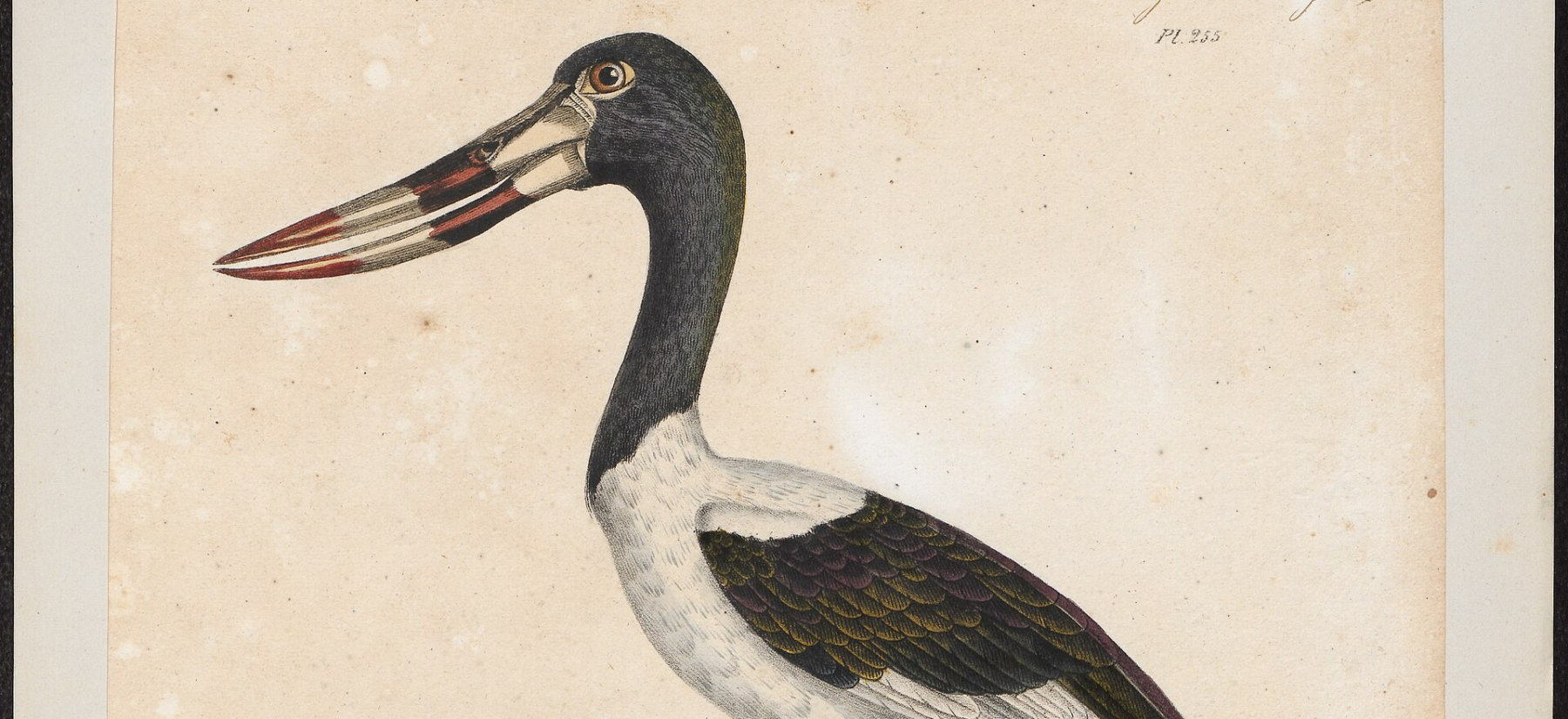
Kruger’s Big Six birds were invented to do for birds what the Big Five do for mammals: give first-time visitors a short list of large, unmistakable species to look for. SANParks calls the grouping fanciful and admits it is subjective, but it works. All 6 are big enough to identify from a car, and all 6 now depend on large protected areas like Kruger, because their numbers outside parks have fallen sharply.
The list is the Southern Ground Hornbill, Kori Bustard, Lappet-faced Vulture, Martial Eagle, Saddle-billed Stork and Pel’s Fishing Owl. 5 of them can turn up almost anywhere in the park. The sixth is the reason serious birders book a week in the far north.
The short answer
SANParks says 5 of the Big Six are seen relatively easily and occur throughout Kruger: the ground hornbill, kori bustard, lappet-faced vulture, martial eagle and saddle-billed stork. Drive slowly in the early morning, check every dead tree for raptors, scan open grassland for bustards and stop at every river pool for storks, and a week in the park gives you a fair chance at all 5. Pel’s Fishing Owl is the hard one. It roosts by day in tall riverine trees on the big rivers, so your best chances are the Luvuvhu River at Pafuri in the far north, the Olifants River, or a wilderness trail or night drive in those areas.
At a glance
| Bird | Where in Kruger | Best chance | South African status |
|---|---|---|---|
| Southern Ground Hornbill | Throughout, in family groups on open ground | Early morning drives | Endangered (2015) |
| Kori Bustard | Open grassland and sparse bushveld | The grassy plains of the central park | Near Threatened |
| Lappet-faced Vulture | Throughout, at carcasses | Any kill or carcass | Critically Endangered (BirdLife South Africa, 2025) |
| Martial Eagle | Throughout, perched high or soaring | Tall dead trees in the morning | Endangered |
| Saddle-billed Stork | Rivers, dams and pools | Slow drives along the rivers | Endangered |
| Pel’s Fishing Owl | Luvuvhu, Olifants and Limpopo rivers | Pafuri, Olifants night drives, wilderness trails | Endangered (2015) |
Southern Ground Hornbill
The ground hornbill is the easiest of the 6 to recognise: a black bird the size of a turkey, with a heavy black bill and bare red skin on the face and throat. It walks rather than flies, and it lives in family groups that work through the grass together, picking up insects, frogs, lizards and anything else they can overpower. Before dawn the groups call with a deep booming that carries for kilometres, and it is one of the sounds of a Kruger camp at first light.
The species is regionally Endangered in South Africa, and BirdLife International lists it as globally Vulnerable. South Africa’s population was put at roughly 1,700 to 2,000 birds in 2018 reports, and a large share of it lives in the greater Kruger. Groups breed slowly and raise 1 chick at a time, which is why the Mabula Ground Hornbill Project, founded in 1999, rears chicks for release into the wild.
Where to look: groups turn up throughout the park on roadsides and open ground, most often in the first 2 hours after the gates open. SANParks says that around Orpen rest camp, 5 of the Big Six, the ground hornbill included, are seen regularly and breed in the area.
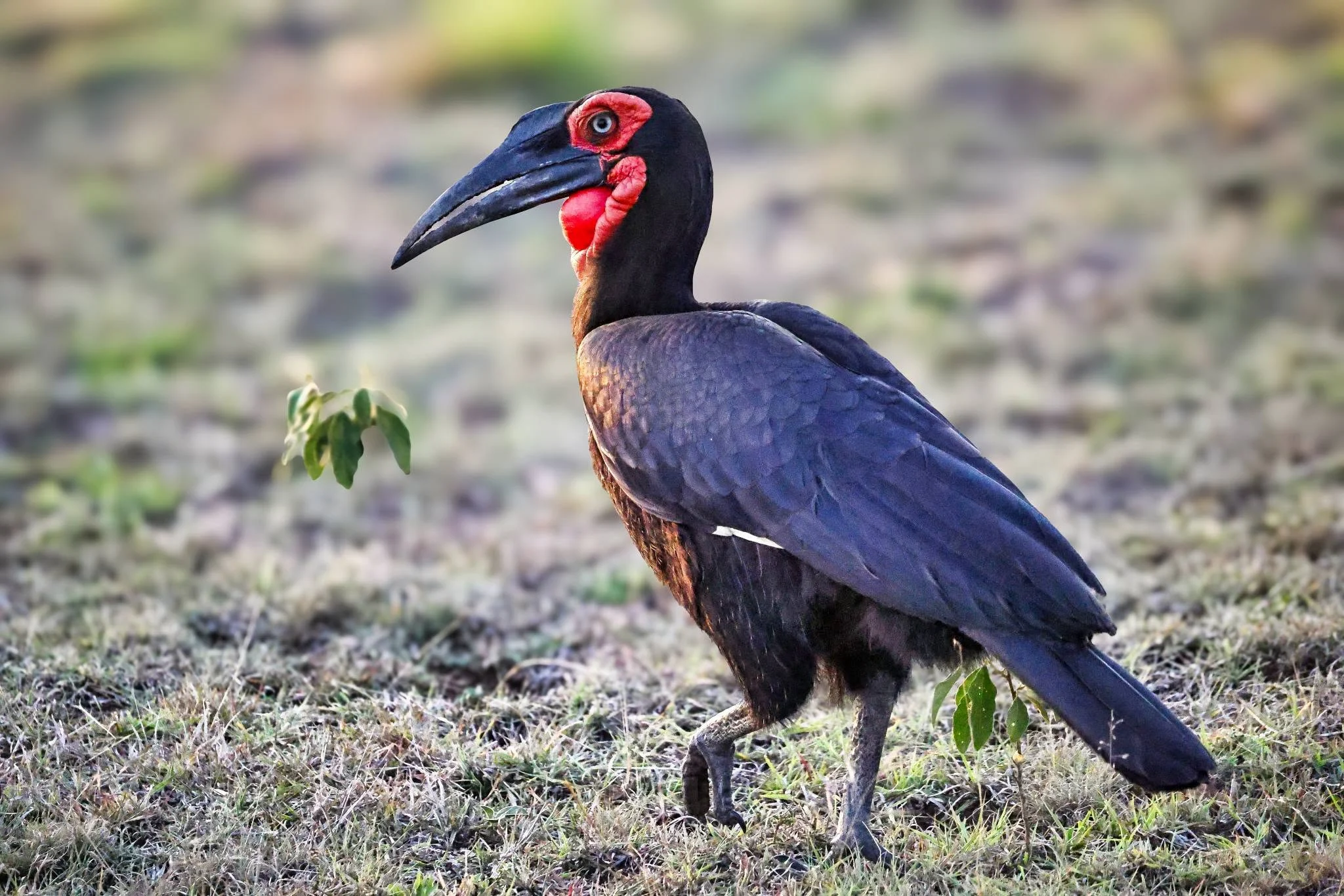
Kori Bustard
The kori is the world’s largest bustard and one of the heaviest birds that can fly. SANBI gives an average weight of about 12.4 kg for males, which stand 1.2 to 1.5 m tall, and about 5.7 kg for females. It is a grey-brown, long-necked bird that walks slowly through short grass and only takes off when it has to.
Its South African status is Near Threatened, and the regional population is thought to be declining. Like the other open-country bustards, it is hit by collisions with power lines outside protected areas.
Where to look: open grassland and lightly wooded plains, not thick bush. The grassy plains of the central park, around Satara and Orpen, are the classic area. In the breeding season males display by inflating the neck and fanning out white feathers under the tail, and a displaying kori can be seen from a long way off.
Lappet-faced Vulture
This is Africa’s largest vulture, with a bare, wrinkled pink head and heavy folds of skin, the lappets, hanging from the sides of the face. At a carcass it dominates the other vultures, and its massive bill can tear skin the smaller species cannot open.
It is in serious trouble. BirdLife South Africa’s 2025 assessment lists it as regionally Critically Endangered, and it is globally Endangered. A 2013 survey estimated 78 pairs in Kruger, and SANParks notes that there has not been a single breeding record in Limpopo outside Kruger since the 1960s. Poisoning, collisions with power lines and electrocution are the main threats.
Where to look: at any carcass, usually arriving after the White-backed Vultures, which are far more common. Pairs nest on top of flat-crowned trees, often thorn trees, and the nest is a large platform of sticks.
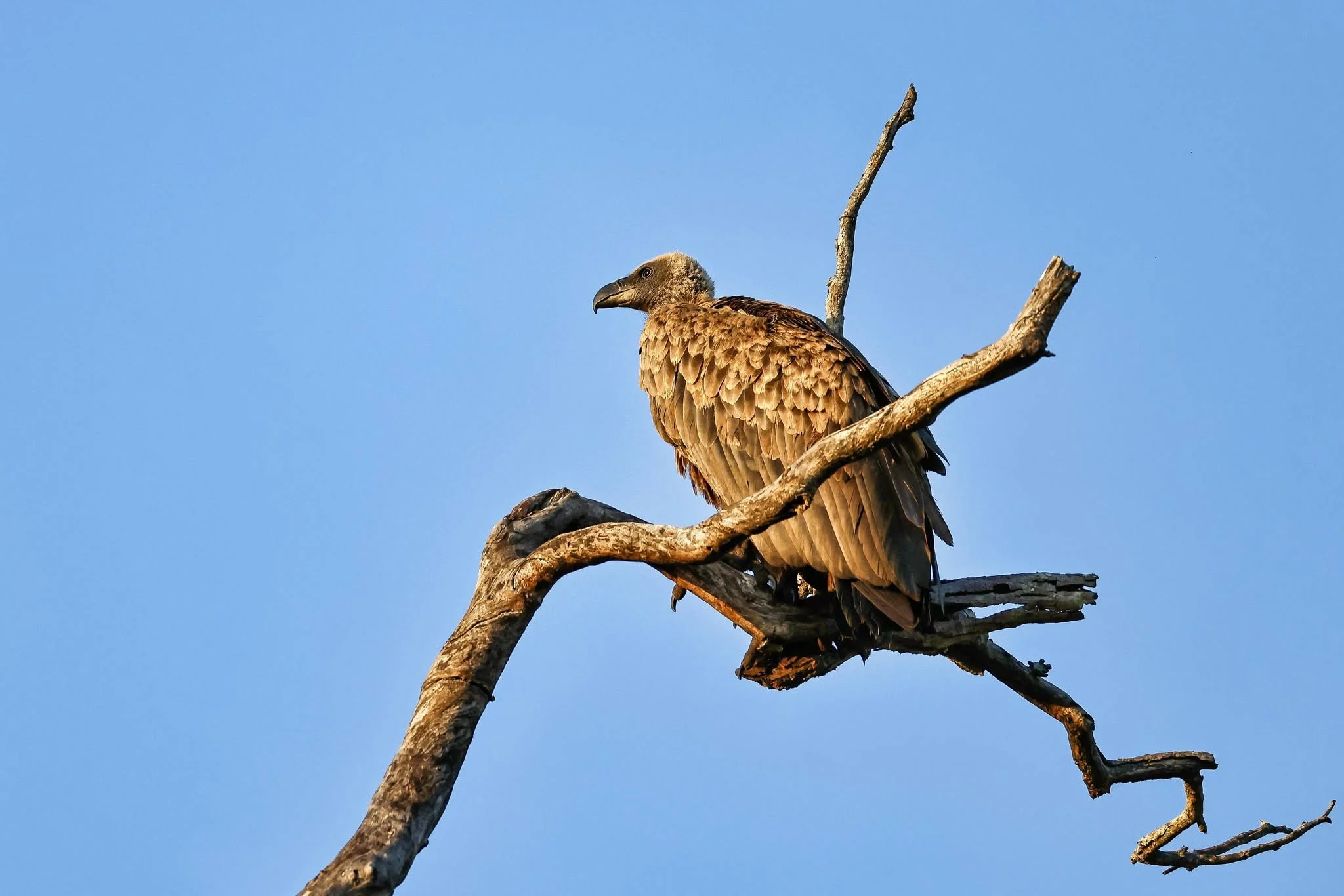
Martial Eagle
Africa’s largest eagle is dark grey-brown above with a white belly spotted with dark brown, and it hunts from a high perch or a long soar. It takes prey up to the size of a monitor lizard, guineafowl or small antelope.
It is declining even inside protected areas. Comparing the 2 Southern African Bird Atlas Projects showed a 54% fall in how often Martial Eagles were reported in Kruger, and a University of Cape Town study found that low breeding success inside the park could on its own explain the decline. BirdLife South Africa estimates 950 to 1,100 mature birds in the country and lists the species as Endangered.
Where to look: the tops of tall dead trees, particularly in the early morning, and soaring over open woodland later in the day. Check every large raptor: the Brown Snake Eagle and Tawny Eagle are far more common and often mistaken for it.
Saddle-billed Stork
At about 1.5 m tall, the saddle-bill is one of the tallest storks in the world and the easiest in Kruger to name: a black and white body, very long legs, and a red and black bill with a yellow saddle on top. Males have dark eyes and females yellow eyes, so you can sex the bird from the car.
It is far rarer than it looks. SANParks estimates only 25 to 30 breeding pairs in the park, plus a few non-breeding birds, which makes it rarer than cheetah or wild dog in Kruger. It is regionally Endangered because the South African population is under 250 mature birds. Visitors see it regularly only because it is big and stands in the open at the water’s edge.
Where to look: pools, river bends and dams, where it walks slowly in shallow water and stabs at fish and frogs. SANParks names Sunset Dam near Lower Sabie, where several stork species can be on view at once, and Kanniedood Dam below Shingwedzi, and says a pair breeds just outside Talamati bushveld camp. Pairs hold large territories, so the same bird is often at the same stretch of river for months.
Pel’s Fishing Owl
The Pel’s is the bird that makes the Big Six a challenge. It is a big ginger owl with dark eyes and no ear tufts, and it hunts fish at night from low branches over slow water. By day it roosts high in the dense riverine trees, so most people who see one find it at roost, or hear its call at night.
SANParks names the Limpopo, Luvuvhu and Olifants rivers as its strongholds, and says it is recorded less often on the Letaba, Shingwedzi and Sabie. It is regionally Endangered, with an estimated 70 to 100 mature birds in South Africa. A survey of the Olifants River in Kruger found 9 owls, fewer than the surveys of the 1990s.
Where to look:
- Pafuri. Drive the Nyalaland Drive (S64) and the picnic site and Crook’s Corner loop (S63) along the Luvuvhu, and scan every large riverine tree for a roosting bird. The Pafuri picnic site and the tar road bridge over the Luvuvhu are both worth time. Our guide to Crook’s Corner on Safari Dispatch covers the area.
- Olifants. SANParks says to search the riverside trees on the Olifants near Balule camp. The owl is occasionally seen on night drives from Olifants rest camp at the low-level bridge beside Balule, usually on the same sandbank by the same pool, and less often from the high-level bridge on the main tar road.
- On foot. The Nyalaland and Olifants wilderness trails walk through the owl’s habitat with an armed guide, and SANParks names them as the best way to see one.
A local guide who knows where the current roosts are makes a large difference. Roosts change, and a guide who checked them that week will save you days.
When to go
The 5 resident species can be seen all year. Summer, from about November to March, is the busiest time for birding in Kruger because the migrants are in and the bush is full of song, but the long grass and thick leaves make ground hornbills and bustards harder to spot. In the dry winter months, roughly May to September, the grass is short and the trees are bare, so big birds stand out and the raptors are easier to find on their perches. Water is limited in winter, which pulls storks to the remaining pools. For Pel’s Fishing Owl, the drier months make roosting birds easier to see in the less leafy trees.
The verdict
Give the Big Six a week and plan the trip around the north. Spend the first days in the central and southern park for the ground hornbill, kori bustard, the 2 raptors and the saddle-billed stork, which all occur widely, then finish at Pafuri or the Olifants for the Pel’s Fishing Owl. Drive slowly in the first 2 hours of daylight, stop at every river pool and carcass, and book a guide or a wilderness trail for the owl. Seeing all 6 in one trip is not guaranteed, but it is a realistic goal for a birder with time.
Bird numbers and conservation status change. Facts were checked on 9 November 2026 with SANParks, the SANBI Red List of South African Species, BirdLife South Africa and BirdLife International. Check current park rules, gate times and trail bookings directly with SANParks.
Header: Saddle-billed Stork (as Mycteria senegalensis), hand-coloured plate by Paul Louis Oudart, 1825 to 1834. University of Amsterdam, Special Collections. Public domain.
New places, by email
An email when we add places worth a birder's trip. Unsubscribe in one click.